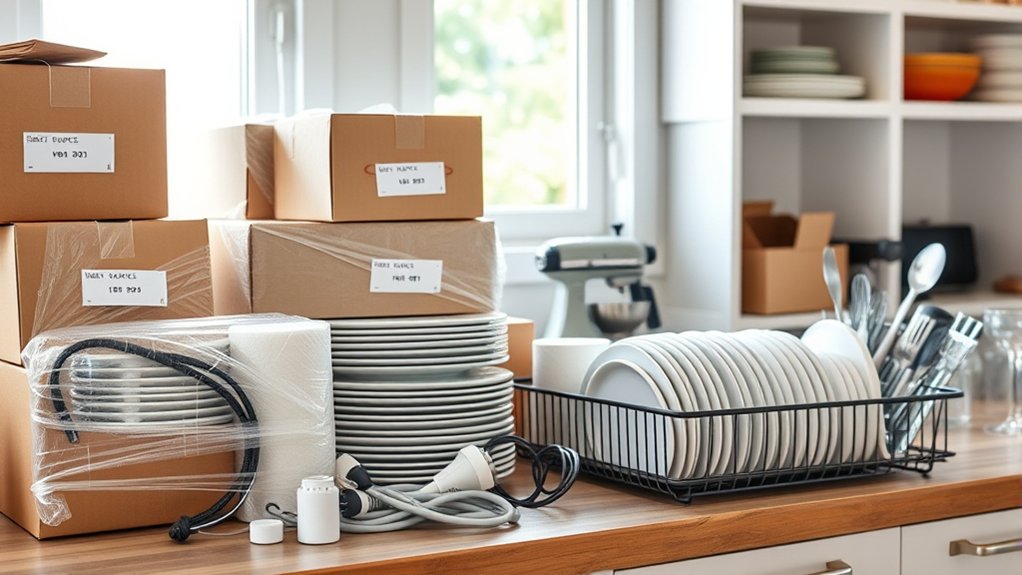
5 Essential Tips to Pack Your Kitchen for Moving
Packing your kitchen for a move can feel overwhelming. You’re not alone—many people struggle with how to keep everything organized and safe during the chaos. The good news is, with a few smart strategies, you can make this task much easier and less stressful.
To pack your kitchen efficiently, start by gathering sturdy boxes, bubble wrap, and tape, grouping items by function. Unplug and clean appliances in advance, backing up any electronic settings. Wrap fragile items carefully, cushioning edges and packing plates vertically to avoid damage.
Label boxes clearly with contents and destinations, using color codes for easy sorting. Don’t forget a kitchen essentials box with basics for your first day. These tips will help you stay organized and damage-free, with more helpful hints ahead.
Key Takeaways
- Use sturdy boxes and bubble wrap to protect fragile kitchen items like glassware and ceramics.
- Unplug and clean appliances. Don’t forget to back up any data and label the cords for easy setup later.
- Pack plates vertically and cushion the edges to prevent damage during transit.
- Label boxes clearly with their contents and room destination. Use large, visible markings so nothing gets lost.
- Prepare a separate essentials box with basic utensils, cleaning supplies, and a few dishes for immediate use.
Gather Essential Kitchen Packing Supplies
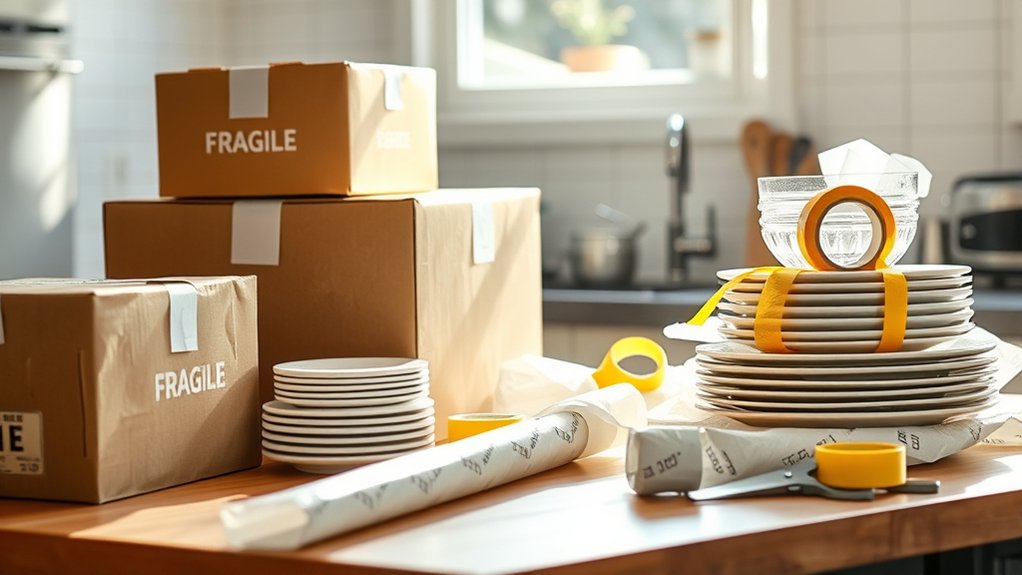
Before you begin packing your kitchen, gather all the essential supplies you’ll need to protect your items and stay organized. Start with sturdy boxes in various sizes to accommodate everything from delicate glassware to bulky pots. Don’t forget bubble wrap, packing paper, and dish towels to cushion fragile items.
Gather sturdy boxes, bubble wrap, and towels to protect fragile kitchen items before you start packing.
Painter’s tape or masking tape will help seal boxes securely without leaving sticky residue. Markers are essential for labeling, so you can easily identify contents later.
As you pack, think about your cooking techniques and how you use your kitchen daily. Group items by function, like baking tools together and spices in one box, to maintain kitchen organization. This approach helps you unpack efficiently and keeps your new kitchen ready for meal prep.
Also, consider using small containers or bags for loose parts, like lids or measuring spoons, to avoid losing them. Gathering these supplies upfront makes packing smoother and sets you up for a well-organized kitchen after your move.
Prepare Appliances and Electronics for Moving
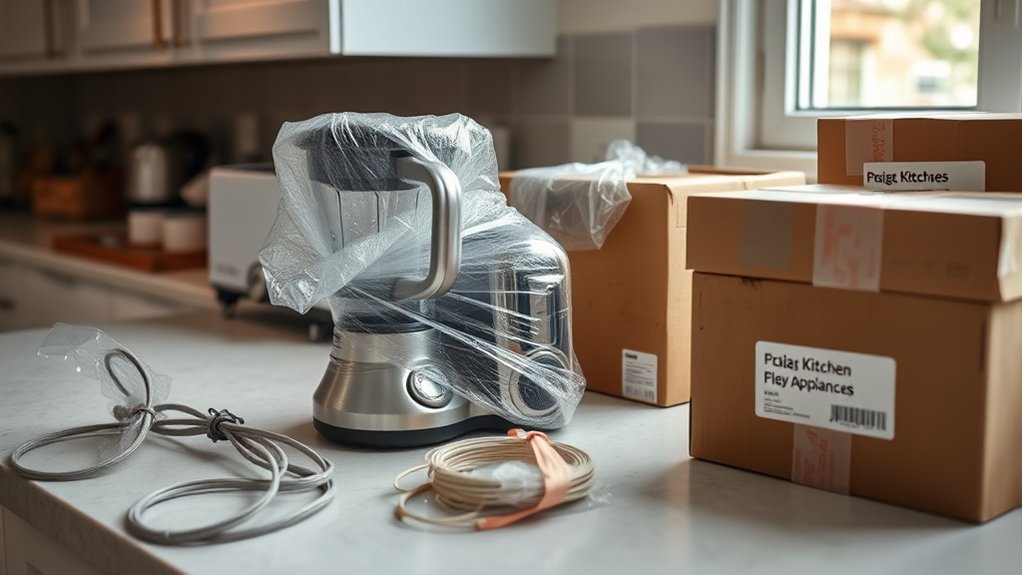
When you get ready to move your kitchen appliances and electronics, unplug them well in advance to let any residual energy dissipate and prevent damage. Give your appliances a quick check-up, focusing on essential maintenance like cleaning filters, defrosting refrigerators, and draining water from coffee makers or dishwashers. This helps avoid leaks and keeps everything in good shape during transit.
For electronics, don’t forget to back up important settings or data if applicable. Use this time for basic troubleshooting, making sure devices work properly before packing. Secure cords by wrapping them neatly and labeling each one to simplify setup at your new home.
When packing, use original boxes if you still have them, or sturdy containers with plenty of padding. Taking these steps helps you avoid damage, saves time during unpacking, and guarantees your kitchen’s appliances and electronics arrive ready for use.
Pack Fragile Kitchen Items Carefully
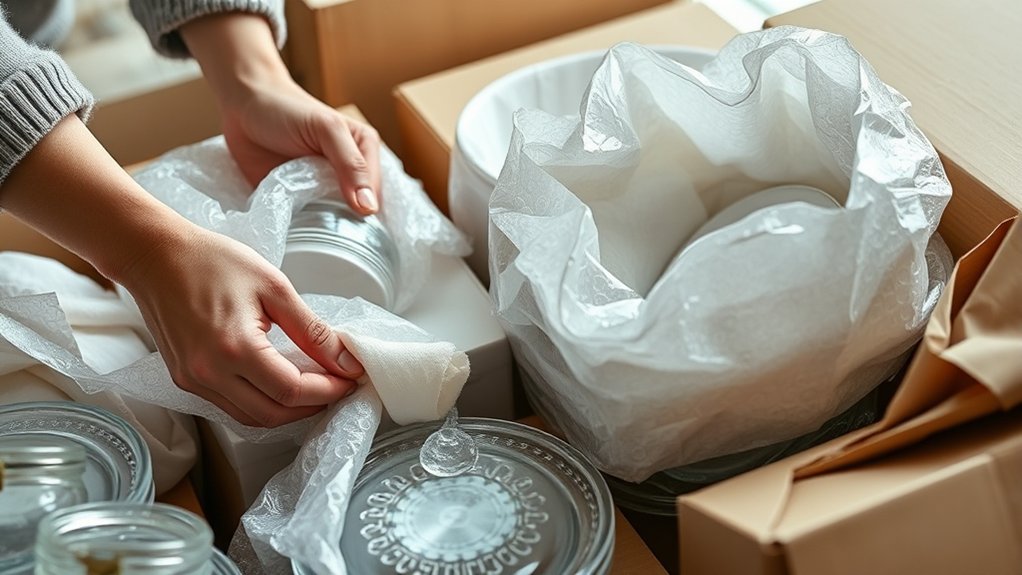
How do you protect delicate kitchen items during a move? Start by handling glassware securely. Wrap each glass individually in bubble wrap or packing paper, and place them upright in sturdy boxes with dividers if possible. Fill empty spaces with packing peanuts or crumpled paper to prevent shifting.
For delicate ceramics, use the same careful wrapping technique, focusing on cushioning edges and corners to avoid chips or cracks. Don’t stack heavy items on top of fragile ones, and consider using smaller boxes to keep weight manageable. Always use quality packing materials to add extra protection.
When packing plates, stand them vertically rather than laying them flat. This reduces pressure and risk of breakage. Taking these steps ensures your fragile kitchen items arrive intact, saving you from costly replacements and stress.
Label Boxes Clearly for Easy Unpacking
Protecting your fragile kitchen items is only part of the process; keeping your move organized is just as important. Label boxes clearly to make unpacking easier and faster. Use effective labeling techniques by writing the contents and the room destination on each box.
This way, you’ll know exactly where everything belongs once you arrive. Consider using color coding systems. Assign a different color to kitchen boxes or even to specific categories like cookware, utensils, and pantry items.
This visual cue helps you quickly identify boxes at a glance and prevents confusion. Make sure labels are large and legible, and place them on multiple sides of the box for visibility no matter how the boxes are stacked.
Create a Kitchen Essentials Box for Your First Day
Although unpacking can feel overwhelming, having a kitchen essentials box ready will make your first day in the new home much smoother. Pack this box with all the must-have items you’ll need immediately, so you don’t have to dig through multiple boxes.
Include essential cooking utensils like a spatula, knife, and can opener, allowing you to prepare simple meals right away. Don’t forget a few storage containers to keep leftovers fresh or pack snacks while you settle in.
Add basics like dish soap, a sponge, paper towels, and a few plates and cups. Having these essentials within reach saves time and stress, helping you feel settled faster.
Keep this box separate and clearly labeled so it’s the first thing you unpack. By preparing a kitchen essentials box, you’ll avoid the hassle of searching through your belongings and enjoy your first day in your new kitchen with confidence and ease.
Frequently Asked Questions
How Far in Advance Should I Start Packing My Kitchen?
You should start packing your kitchen about two to three weeks in advance. Begin by organizing pantry essentials and separating what you’ll use last.
Pack fragile items carefully with plenty of cushioning to prevent damage. This way, you have enough time to methodically wrap dishes and glassware, label boxes, and avoid last-minute stress.
Starting early helps keep your kitchen organized and guarantees everything arrives safely at your new home.
Can I Pack Perishables for a Long-Distance Move?
Can you really pack perishables for a long-distance move? Unfortunately, perishables rarely survive the journey well. You’ll want to focus on refrigerator organization to use up or donate fresh items before moving day.
Using food preservation techniques like freezing or vacuum sealing can help, but it’s best to avoid packing perishables unless your move is very short. Prioritize non-perishables to keep your food safe and stress-free during the move.
What’s the Best Way to Dispose of Unwanted Kitchen Items?
The best way to dispose of unwanted kitchen items is to start by hosting an estate sale if you have valuable pieces. This helps you earn some cash and clears out space quickly.
For items you don’t want to sell, donate them to local donation centers. They’ll appreciate usable kitchenware. Avoid trashing items that can be reused or recycled, and always check donation centers’ guidelines before dropping off your goods.
Should I Disassemble Kitchen Furniture Before Moving?
Absolutely, you should disassemble kitchen furniture before moving unless you enjoy playing human Tetris with oversized cabinets and wobbly tables. Grab your moving tools like screwdrivers and wrenches, and take apart what you can.
Furniture disassembly not only makes hauling easier but also prevents damage and saves space. Trust me, wrestling a fully assembled kitchen island through a narrow door isn’t the kind of workout you want on moving day.
How Do I Protect Wooden Cutting Boards During the Move?
To protect your wooden cutting boards during the move, start by thoroughly cleaning each board to remove any food residue. Dry them completely to prevent mold or warping. Wrap each board in a soft cloth or bubble wrap to cushion it.
When packing, place the boards upright between sturdier items to avoid pressure. For wooden board storage, keep them in a cool, dry spot after moving to maintain their condition and longevity.
Conclusion
Moving can be overwhelming, but packing your kitchen smartly makes a huge difference. Did you know that 30% of breakage during moves happens in the kitchen? That’s why gathering supplies, prepping appliances, packing fragile items carefully, and labeling boxes clearly are essential.
Don’t forget to create a kitchen essentials box for your first day. Follow these tips, and you’ll save time, avoid stress, and protect your favorite kitchen items throughout your move. Remember, packing your kitchen properly is key to a smooth moving experience.