How to Get Rid of Cockroaches in Your Kitchen Fast
Dealing with cockroaches in your kitchen can be incredibly frustrating and stressful. You’re not alone—many people struggle with these stubborn pests invading their homes. If you want to get rid of cockroaches in your kitchen fast, finding the right solutions is key to reclaiming your space and peace of mind.
To get rid of cockroaches in your kitchen fast, start by setting traps with sweet baits like sugar and baking soda or using sticky traps near hiding spots.
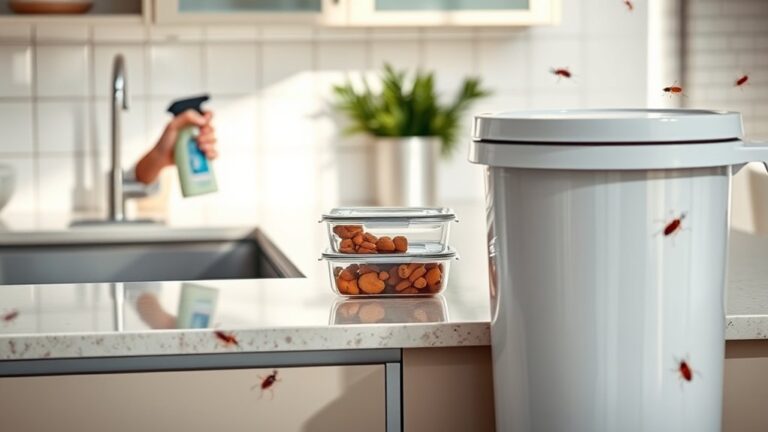
Clean thoroughly: wipe counters, sweep floors, and seal food in airtight containers to remove their food sources.
Seal cracks and gaps around pipes, doors, and appliances to block entry.
Use natural repellents like peppermint oil sprays for quick deterrence.
For lasting results and expert tips, keep exploring effective strategies.
Key Takeaways
- Clean kitchen surfaces, remove food crumbs, and store food in sealed containers to eliminate cockroach attractants quickly.
- Place sticky traps and DIY bait jars with sugar and baking soda in cockroach-prone areas for fast capture and poisoning.
- Seal cracks, gaps, and entry points around pipes, appliances, and baseboards to block cockroach access immediately.
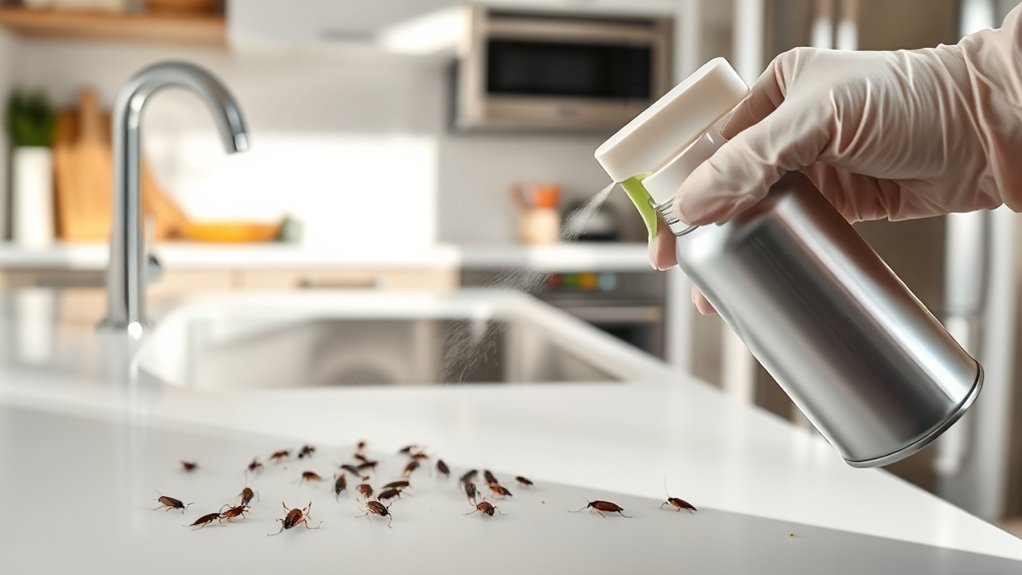
- Use gel baits or sprays to poison and kill cockroaches on contact for rapid population reduction.
- Maintain dryness by fixing leaks and removing standing water to reduce moisture that attracts cockroaches swiftly.
How to Identify Cockroach Infestations Quickly
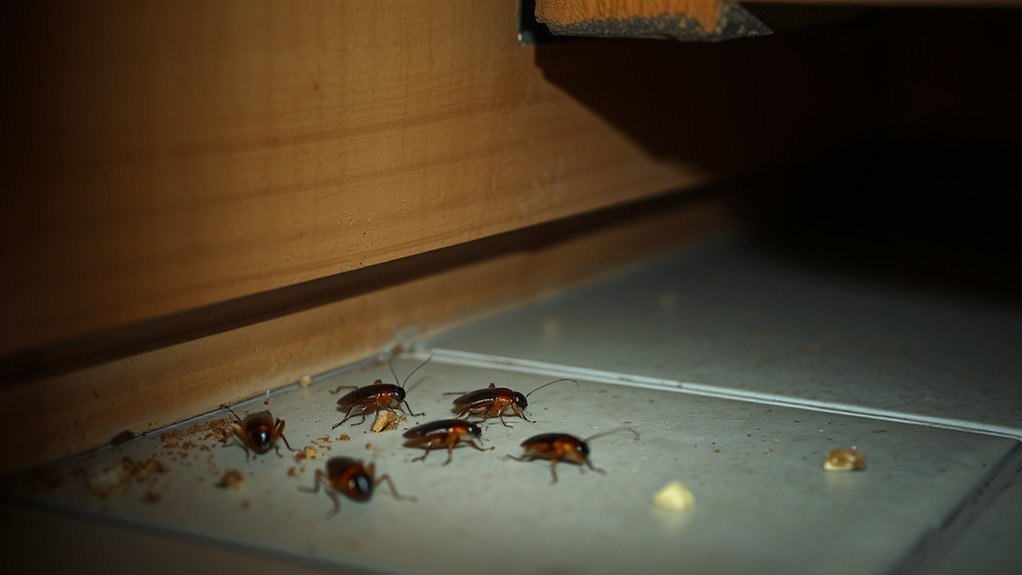
Although cockroaches are nocturnal and shy, you can spot signs of their presence early by checking dark, warm areas like under sinks, behind appliances, and inside cabinets. Understanding cockroach biology helps you identify infestation signs quickly: these insects prefer moist environments and hide during the day, coming out at night to feed.
Look for small, oval-shaped droppings that resemble coffee grounds or black pepper, as these indicate their activity. You might also notice shed skins or egg cases, which point to an established infestation.
A musty, oily odor can sometimes signal a large population. If you catch sight of cockroaches, especially young nymphs, during daylight, the infestation is likely severe. Knowing these signs lets you act fast before they multiply wildly.
DIY Cockroach Traps and Baits That Work Now
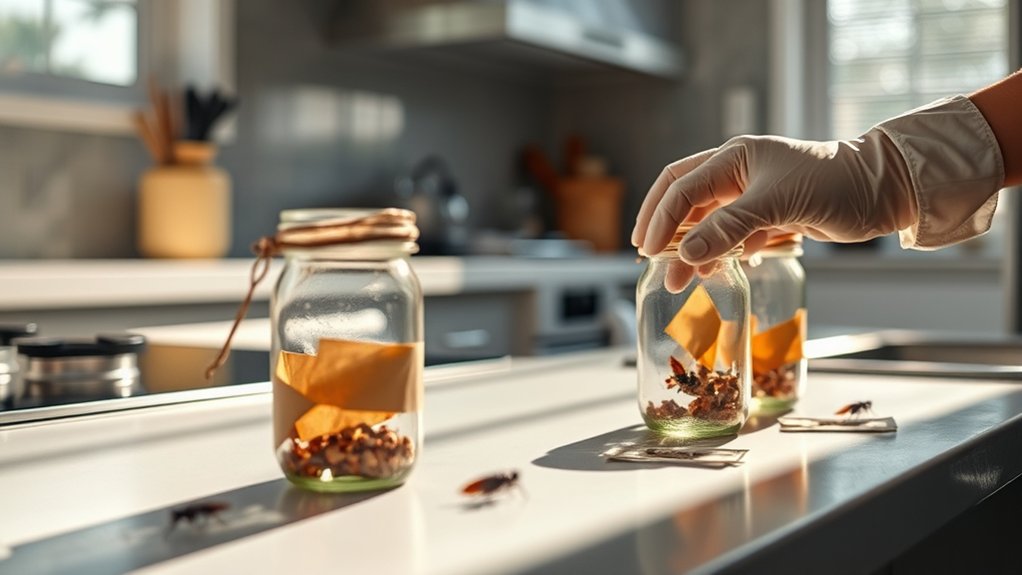
When you spot signs of cockroaches, setting up DIY traps and baits can quickly reduce their numbers without harsh chemicals. Understanding cockroach biology helps you create effective traps. Since cockroaches are nocturnal and seek food and moisture, you can bait traps with sweet or greasy substances like sugar mixed with baking soda. The baking soda reacts with their digestive system, killing them efficiently.
To make a simple trap, place petroleum jelly inside a jar rim and add bait at the bottom. Cockroaches climb in but can’t escape. You can also use sticky traps near suspected hiding spots. These methods fit well within broader pest prevention strategies by targeting cockroaches directly and reducing their population.
Remember to place traps along walls, under sinks, and near appliances where cockroaches travel. Combining these DIY traps with good sanitation and sealing entry points will help you control infestations fast and keep your kitchen cockroach-free.
What Attracts Cockroaches to Your Kitchen?
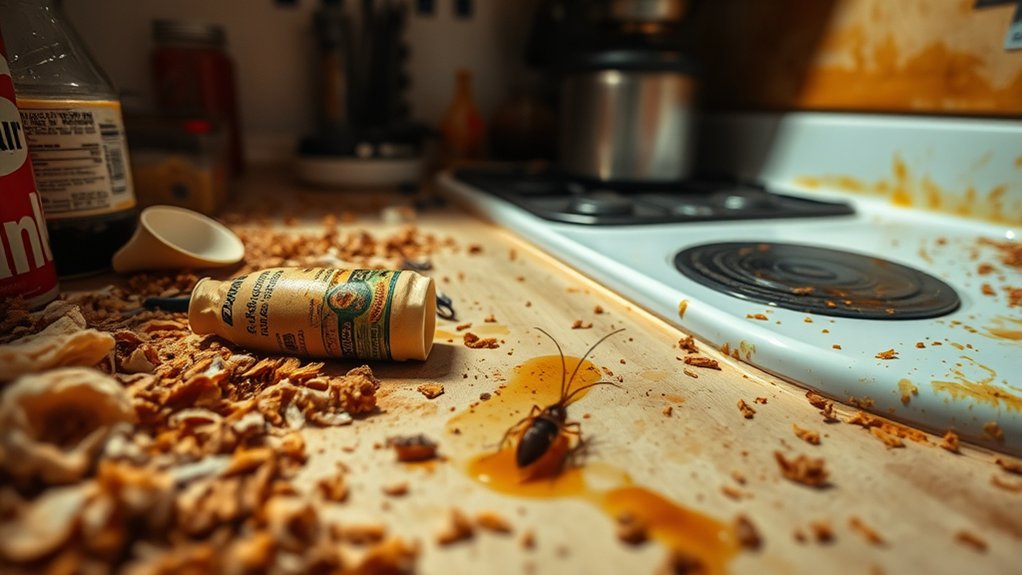
Setting up traps and baits helps reduce cockroach numbers quickly. But preventing them from coming back means understanding what draws them in. Cockroach behavior is driven by their search for food, water, and shelter.
Many pest control myths suggest they’re only attracted to garbage. But they actually seek out crumbs, grease, and even moisture in hidden spots. If you don’t address these attractants, they’ll keep returning.
Here’s a quick look at what lures cockroaches into your kitchen:
| Attractant | Description | Why It Matters |
|---|---|---|
| Food Residue | Crumbs, grease, and spills | Easy food source, encourages feeding |
| Moisture | Leaky pipes, standing water | Essential for survival |
| Warmth & Shelter | Dark, warm cracks or clutter | Safe hiding spots |
Understanding these helps you debunk pest control myths and tackle cockroach problems at the root.
Effective Kitchen Cleaning Tips to Deter Cockroaches
You’ll want to get rid of any food residue and crumbs because that’s what attracts cockroaches. Don’t forget to clean under appliances too—crumbs and spills love to hide there. And it’s a good idea to store your food in sealed containers so cockroaches can’t sneak in.
Eliminate Food Residue
Because cockroaches are attracted to even the smallest crumbs and spills, eliminating food residue is essential for keeping them away. You should wipe down countertops, sweep floors, and clean up spills immediately after cooking or eating.
Avoid leaving dirty dishes in the sink overnight, as leftover food can draw pests in quickly. Proper food storage plays a vital role in pest prevention. Store all food in airtight containers, and make sure pantry items like grains and cereals are sealed tightly.
Regularly check for expired or spoiled food and dispose of it promptly. By maintaining a clean kitchen and managing food storage carefully, you reduce the chances of cockroaches finding a food source, making your kitchen less inviting to these unwelcome guests.
Clean Under Appliances
Although it’s easy to overlook, cleaning under your kitchen appliances plays an essential role in keeping cockroaches at bay. Dirt, crumbs, and spills often accumulate in these hidden spots, creating an inviting environment for pests.
You should regularly pull out your fridge, stove, and dishwasher to vacuum and mop beneath them. Doing this not only improves appliance maintenance but also protects your kitchen decor from damage caused by dirt buildup.
When you keep these areas spotless, you remove cockroaches’ hiding places and food sources. Plus, maintaining clean floors under appliances helps your kitchen look fresh and well-kept.
Make it a habit, and you’ll see fewer roaches while preserving both your appliances’ efficiency and your kitchen’s overall appeal.
Store Food Properly
When you store food improperly, it attracts cockroaches looking for an easy meal. To improve kitchen organization and support pest exclusion, always seal food in airtight containers.
Avoid leaving snacks or pet food exposed overnight, and keep pantry shelves tidy and clutter-free. Here’s a simple guide to proper food storage:
| Food Type | Storage Method | Pest Exclusion Tip |
|---|---|---|
| Grains | Airtight plastic jars | Label and date containers |
| Snacks | Sealed bags or tins | Store off the floor |
| Fresh produce | Refrigerate or cover | Regularly discard spoiled |
| Pet food | Closed bins | Clean feeding area daily |
How to Seal Entry Points to Stop Cockroaches
To stop cockroaches from invading your kitchen, you need to seal their entry points effectively. Understanding cockroach behavior helps you identify where they enter. These pests look for tiny cracks and gaps near pipes, vents, and baseboards to access their habitat inside your home.
Start by inspecting your kitchen thoroughly, focusing on areas where water and food are available. Use caulk or weatherstripping to close gaps around windows, doors, and plumbing. Don’t forget to check the back of appliances and any damaged wall or floor joints.
By blocking these access points, you disrupt their movement and reduce their hiding spots. Remember, cockroaches are skilled at squeezing through small openings, so pay close attention to even the tiniest crevices.
Sealing entry points not only prevents new cockroaches from entering but also limits the pest habitat inside your kitchen. This makes your space less inviting for these unwelcome guests.
Which Chemical Treatments Work Fast on Cockroaches?
Sealing entry points helps keep cockroaches out, but once they’re inside, chemical treatments become your fastest solution. To guarantee chemical effectiveness, you want products that kill quickly and disrupt cockroach reproduction.
Common options include gel baits, sprays, and insect growth regulators (IGRs). Each targets cockroaches differently, so combining methods often boosts pest control results.
| Treatment Type | Speed of Action | Application Area |
|---|---|---|
| Gel Baits | Fast | Cracks, crevices |
| Insecticide Sprays | Immediate | Visible roach paths |
| Insect Growth Regulators (IGRs) | Slower but long-lasting | Nesting areas |
Gel baits lure cockroaches to poison their colony quickly. Sprays kill on contact, which is great for visible infestations. IGRs disrupt breeding, preventing future generations.
For best pest control, pick treatments based on your infestation severity and kitchen layout.
Natural Remedies That Help Get Rid of Cockroaches
You can totally use natural remedies to keep cockroaches away without relying on harsh chemicals. For example, essential oils like peppermint or eucalyptus work really well as repellents. Plus, mixing baking soda with sugar can actually help get rid of them.
Essential Oils For Repellent
Although cockroaches are resilient pests, essential oils offer a natural and effective way to keep them at bay. You can use essential oils like peppermint, eucalyptus, or tea tree oil as natural repellents by mixing a few drops with water in a spray bottle.
Spray this solution around kitchen corners, under sinks, and near entry points to deter cockroaches. These oils have strong scents that cockroaches dislike, making your kitchen less inviting to them.
Plus, essential oils are safe to use around food areas and won’t leave harmful residues. By incorporating essential oils into your routine, you’re using a natural repellent method that’s both eco-friendly and easy to apply, helping you keep cockroaches away quickly and effectively.
Baking Soda And Sugar
When you combine baking soda and sugar, you create a simple yet effective natural remedy to tackle cockroaches in your kitchen. The sugar mixture acts as bait, attracting cockroaches with its sweetness.
Once they consume it, the baking soda reacts with the acid in their stomachs, causing them to die. To use this method, mix equal parts baking soda and sugar, then sprinkle the sugar mixture in areas where cockroaches frequent, such as under sinks, behind appliances, and along baseboards.
You can also create DIY traps by placing the mixture on small plates or shallow containers to catch and kill them efficiently. This natural remedy is safe, inexpensive, and easy to maintain, making it a great alternative to chemical pesticides for keeping your kitchen cockroach-free.
When to Call Professional Pest Control (And How to Get the Best Results)
If cockroaches keep reappearing despite your efforts, it’s time to call professional pest control. Experts can accurately perform pest identification, pinpointing the exact species invading your kitchen. This helps them understand specific cockroach behavior, such as hiding spots, feeding patterns, and breeding cycles, which vary between species. Knowing this allows professionals to target treatments more effectively.
When choosing a service, look for licensed providers with good reviews and transparent methods. Ask about their approach to cockroach behavior and how they customize treatments for your situation. Be ready to give them access to all affected areas and follow their preparation instructions closely. This cooperation ensures the best results and speeds up elimination.
Calling in professionals isn’t just about extermination. It’s about smart, informed control that stops infestations fast and prevents severe damage or health risks.
How to Prevent Cockroaches From Returning After Treatment
To keep cockroaches from coming back, you’ve got to keep your kitchen surfaces spotless and dry. It’s all about removing what attracts them in the first place. Also, don’t forget to seal up any cracks or gaps where they might sneak in. Just staying on top of these little things will go a long way in protecting your home long after treatment.
Maintain Clean Kitchen Surfaces
Although treatment eliminates the current cockroach infestation, you’ll need to keep your kitchen surfaces spotless to stop them from coming back. Wipe down counters, tables, and sinks daily, removing crumbs and spills that attract pests.
Pay attention to your kitchen decor. Dust and clean decorative items regularly to prevent hidden food particles. Don’t forget appliance maintenance. Clean under and behind your refrigerator, stove, and dishwasher where crumbs and grease accumulate.
Regularly inspect and clean small appliances like toasters and microwaves too. Keeping these areas hygienic removes food sources and hiding spots, making your kitchen less inviting for cockroaches.
Consistent cleaning habits combined with proper appliance upkeep will help you maintain a cockroach-free kitchen long after treatment.
Seal Entry Points
Keeping your kitchen spotless is a great start, but cockroaches can still sneak back in through tiny cracks and gaps. To truly prevent these pests from returning, you need to seal all entry points.
Inspect areas around pipes, windows, doors, and any openings in your kitchen decor where cockroaches might enter. Use caulk or weatherstripping to close off these access points effectively.
Remember, understanding the pest lifecycle helps you block not just adult roaches but also their eggs and nymphs from infiltrating your space. By sealing entry points, you cut off their routes, making your kitchen less inviting.
This step, combined with regular cleaning, will keep your kitchen pest-free longer and protect your kitchen decor from damage caused by these unwanted guests.
Top Tips to Keep Your Kitchen Cockroach-Free Long Term
Even after you’ve handled an immediate cockroach problem, maintaining a clean and clutter-free kitchen will help prevent future infestations. Understanding cockroach behavior is key. They thrive in dark, moist environments with easy food access.
Keep counters wiped, floors swept, and sinks dry to remove their temptations. Store food in sealed containers and take out the trash regularly.
Reviewing your pest control history can reveal patterns, helping you address recurring issues. If you’ve had infestations before, consider ongoing treatments or professional inspections.
Regularly check for cracks or gaps and seal them promptly to block entry points. Also, avoid clutter where cockroaches can hide, like piles of newspapers or cardboard.
Ensure good ventilation to reduce humidity. By combining cleanliness with consistent monitoring and sealing, you’ll create an inhospitable environment that keeps cockroaches away long term. This will save you from repeated battles in your kitchen.
Frequently Asked Questions
Can Cockroaches Transmit Diseases to Humans?
Yes, cockroaches can transmit diseases to humans, so don’t dismiss this as just a cockroach myth. They carry bacteria and pathogens on their bodies, contaminating your food and surfaces.
To protect yourself, you need effective pest control methods that not only kill roaches but also prevent their return. Ignoring the problem could lead to health risks, so take action quickly to keep your kitchen safe and hygienic.
Are Cockroaches Harmful to Pets?
Yes, cockroaches can be harmful to your pets. They carry bacteria and allergens that might cause respiratory issues or infections in your four-legged companions.
For pet safety, you should use cockroach deterrents that are non-toxic and safe around animals. Keep your kitchen clean, store pet food properly, and seal entry points to prevent cockroach infestations.
Taking these steps protects both your pets and your home effectively.
How Fast Do Cockroaches Reproduce?
Cockroaches reproduce surprisingly fast. Visualize a single female laying about 30-40 eggs in an ootheca, which she carries for weeks.
The cockroach lifecycle from egg to adult can take just 1-2 months depending on conditions, so you could see multiple generations quickly. Their reproduction rate means you’ll have dozens of new roaches in a short time if unchecked.
Understanding this rapid cycle helps you act swiftly to control infestations before they explode.
Do Cockroaches Only Live in Dirty Kitchens?
No, cockroaches don’t only live in dirty kitchens. Cleanliness myths often make people think that way. Even spotless kitchens can attract roaches if there’s food, water, or hiding spots.
You’ve got to use effective pest control methods, like sealing cracks, fixing leaks, and setting traps, to keep them away. So, don’t rely just on cleaning. Combine it with targeted pest control to really protect your kitchen from cockroaches.
Can Cockroach Infestations Cause Allergies?
Cockroach infestations can act like unwelcome clouds, stirring up allergies with every scuttle. Their behavior releases allergens through droppings, shed skins, and saliva, which can trigger asthma and allergic reactions.
You’ll want to tackle this swiftly using effective pest control methods, like baits, traps, and thorough cleaning to break their cycle. Don’t let these creepy invaders turn your home into a breeding ground for allergies. Act fast and reclaim your space.
Conclusion
Getting rid of cockroaches fast means acting quickly and staying consistent. By identifying infestations early, using effective traps, keeping your kitchen spotless, and sealing entry points, you’ll nip the problem in the bud.
Natural remedies can help, but don’t hesitate to call pros if needed. Remember, keeping your kitchen cockroach-free is an ongoing effort. Putting in the work now will save you from a world of trouble down the line when getting rid of cockroaches in your kitchen fast.