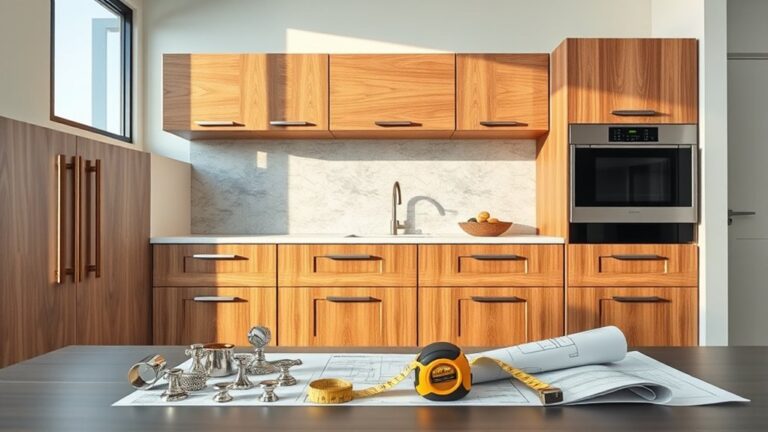
3 Simple Tips to Organize Your Kitchen Cabinets
If you’ve ever opened your kitchen cabinets only to be overwhelmed by clutter and chaos, you’re not alone. Many people struggle with keeping their kitchen organized, which can make cooking and meal prep more stressful than it needs to be. The good news is, with a few simple strategies, you can reclaim your space and enjoy a more functional kitchen.
Start by clearing out your kitchen cabinets completely, sorting items by type and tossing what’s expired or unused. Next, maximize space using smart storage like pull-out racks and clear labeled containers to keep things accessible and neat.
Finally, maintain order by returning items to their spots daily and quickly decluttering weekly. These simple steps will transform your kitchen into a functional, stress-free space. Keep going to uncover how to build lasting organization habits.
Key Takeaways
- Empty cabinets completely to sort items by type and discard expired or unused goods.
- Use clear containers and baskets to group small items and reduce clutter.
- Install pull-out racks or tiered shelves to maximize space and improve accessibility.
- Label shelves and containers clearly for quick identification and maintaining order.
- Develop daily habits of returning items to their spots and weekly quick clean-ups.
Clear Out and Categorize Your Kitchen Cabinets
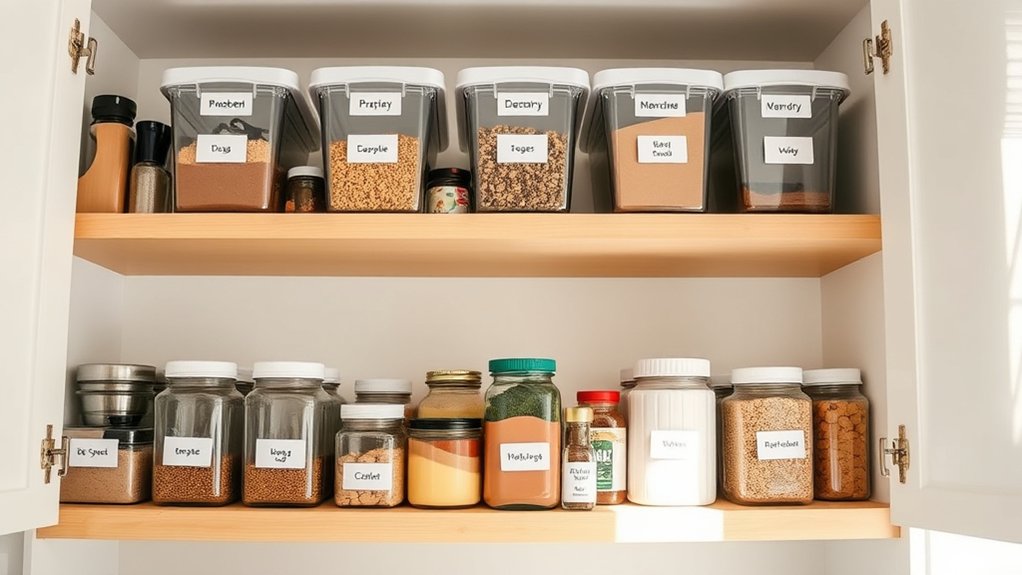
Before you begin organizing, clear out everything from your kitchen cabinets to see what you have. This step is essential for effective pantry organization because it helps you identify expired items, duplicates, and things you rarely use. Once emptied, group similar items together, like canned goods, baking supplies, and snacks. This way, you’ll know exactly how much space each category requires.
Next, focus on utensil sorting. Separate your cooking tools by type and how often you use them. Keep everyday utensils within easy reach and store specialty tools in less accessible spots. This method reduces clutter and speeds up meal prep.
As you categorize, consider tossing or donating items you no longer need. Clearing out and sorting your kitchen cabinets lays the groundwork for a more efficient, organized space. This approach not only simplifies finding what you need but also makes future pantry organization much easier.
Maximize Kitchen Cabinet Space With Smart Storage Solutions
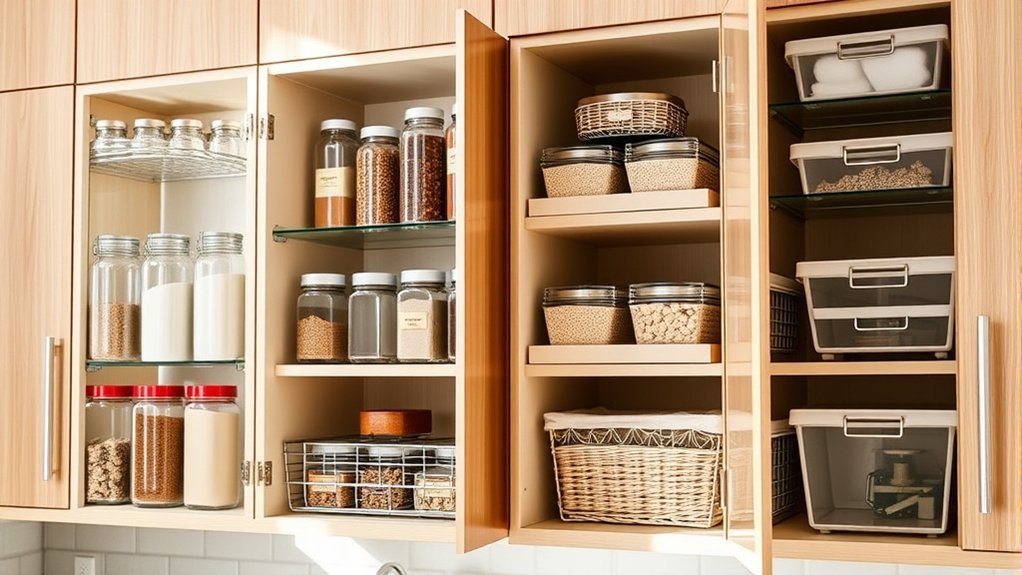
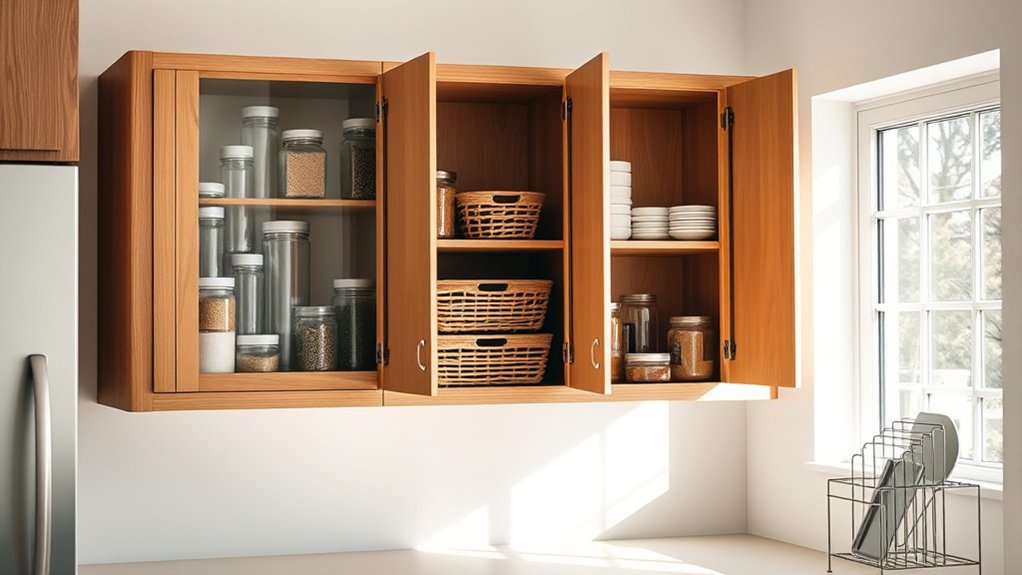
Once you’ve cleared and categorized your kitchen cabinets, it’s time to maximize the space using smart storage solutions. Start by installing innovative shelving, like pull-out racks or tiered shelves, to make every inch accessible. These solutions help you store more while keeping items visible and easy to reach.
Next, use clear containers or baskets to group smaller items, preventing clutter and saving space. Don’t forget labeling strategies. Label each container or shelf clearly so you can quickly find what you need and maintain order.
Labels also help everyone in your household know where things belong, making it easier to keep cabinets tidy. By combining innovative shelving with effective labeling strategies, you’ll transform your kitchen cabinets into highly functional storage areas.
This approach not only maximizes your space but also streamlines your cooking routine by keeping everything organized and within reach.
Simple Daily Habits to Keep Your Kitchen Cabinets Organized
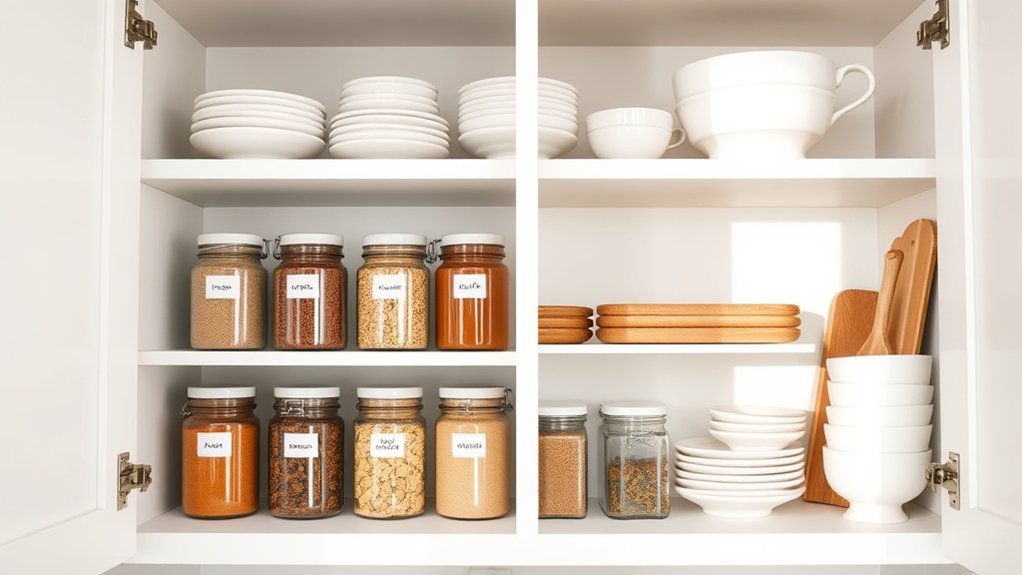
Although organizing your kitchen cabinets takes effort upfront, maintaining that order daily is much easier with simple habits. Start by aligning your cooking habits with your cabinet organization. Always return spices, utensils, and cookware to their designated spots after use. This small act prevents clutter from building up.
Incorporate quick cleaning routines, like wiping shelves and cabinet doors weekly, to keep everything looking fresh. It also helps avoid sticky residues that attract messes. Also, make it a habit to declutter monthly by removing expired items or duplicates.
When you unload groceries, immediately sort items into their proper cabinets to prevent random piling. These daily habits not only save time but also ensure your kitchen remains functional and pleasant. Staying consistent with these actions turns cabinet organization into a natural part of your cooking flow, reducing stress and making meal prep smoother every day.
Frequently Asked Questions
How Do I Choose the Best Materials for Kitchen Cabinet Shelves?
When choosing the best materials for kitchen cabinet shelves, consider durability and moisture resistance. Material options like plywood and MDF with laminate finishes work well for strength and easy cleaning.
Solid wood offers a classic look but needs proper sealing. Also, make sure your shelf support can handle the weight. Metal brackets or reinforced supports help maintain stability.
Prioritize materials that fit your kitchen’s humidity and usage to keep shelves sturdy and long-lasting.
What Are the Most Durable Finishes for Kitchen Cabinet Doors?
You’ll want finishes that can handle everyday life’s little challenges with grace. Durable options like polyurethane, lacquer, and acrylic stand up well to cabinet cleaning and resist scratches and stains.
These finishes make finish maintenance easier, so your kitchen doors keep looking fresh longer. They create a tough, protective layer that shields your cabinets from moisture and wear, letting you enjoy a beautiful, worry-free kitchen space without constant touch-ups or repairs.
How Can I Childproof My Kitchen Cabinets Effectively?
To childproof your kitchen cabinets effectively, install child safety cabinet locks on all lower cabinets where hazardous items are stored. You can choose from magnetic locks, adhesive locks, or sliding locks depending on your cabinet type.
Always guarantee these locks are secure and out of reach for kids. Regularly check them to maintain child safety, preventing little ones from accessing cleaning supplies, sharp tools, or other dangerous items inside your cabinets.
What Is the Ideal Height for Installing Kitchen Cabinets?
The ideal cabinet height usually ranges between 54 to 60 inches from the floor, ensuring it fits most users comfortably. When you focus on ergonomic design, you’ll place your cabinets so you don’t have to stretch or bend awkwardly.
Make sure the bottom cabinets align with your countertop height, typically 36 inches, while upper cabinets should be installed about 18 inches above the counter for easy access and a smooth workflow.
How Do I Fix Squeaky or Loose Kitchen Cabinet Hinges?
To fix squeaky or loose kitchen cabinet hinges, start by applying hinge lubrication like WD-40 or silicone spray to stop the noise. Tighten any loose screws with a screwdriver to secure the hinge firmly.
If the hinge is damaged or continues squeaking, consider a hinge replacement. Remove the old hinge carefully and install a new one that matches your cabinet style and size to guarantee smooth, quiet operation.
Conclusion
By clearing out and categorizing your kitchen cabinets, you’ll create a more functional space that feels less cluttered. Did you know that the average person wastes up to 20 minutes a day looking for things in a messy kitchen?
Using smart storage solutions and simple daily habits can save you time and reduce stress. With these easy steps, you’ll enjoy a more organized kitchen that makes cooking and cleaning a breeze!
Start applying these 3 simple tips to organize your kitchen cabinets and transform your space today!