7 Easy Steps to Unclog a Double Kitchen Sink
Dealing with a clogged double kitchen sink can be frustrating, and you’re definitely not alone. Many people struggle with slow drainage or stubborn blockages that disrupt daily routines. Whether you want to avoid costly repairs or simply get your sink flowing smoothly again, finding the right solution is key.
First, clear any visible debris from both sink basins and prep the area by removing items and placing a bucket underneath.
Next, check and clean the sink traps for blockages.
Use a plunger to dislodge any stubborn clogs, then apply baking soda and vinegar to naturally break down grime.
Flush the pipes with hot water to melt grease buildup.
If needed, try a drain snake or consider professional help.
Keep following for more helpful tips to keep your drains flowing smoothly.
Key Takeaways
- Clear debris from both sink basins and remove items to create an organized workspace for unclogging.
- Use a plunger by sealing one drain while plunging the other to effectively dislodge blockages.
- Pour baking soda followed by vinegar into the drains. Cover them and let sit for 15-20 minutes before flushing with hot water.
- Flush both drains with boiling water to melt grease and loosen buildup for smoother flow.
- Inspect and clean traps by removing them carefully. Check for damage, and then reassemble tightly to prevent leaks.
Clear Visible Debris and Food Scraps From Your Double Sink
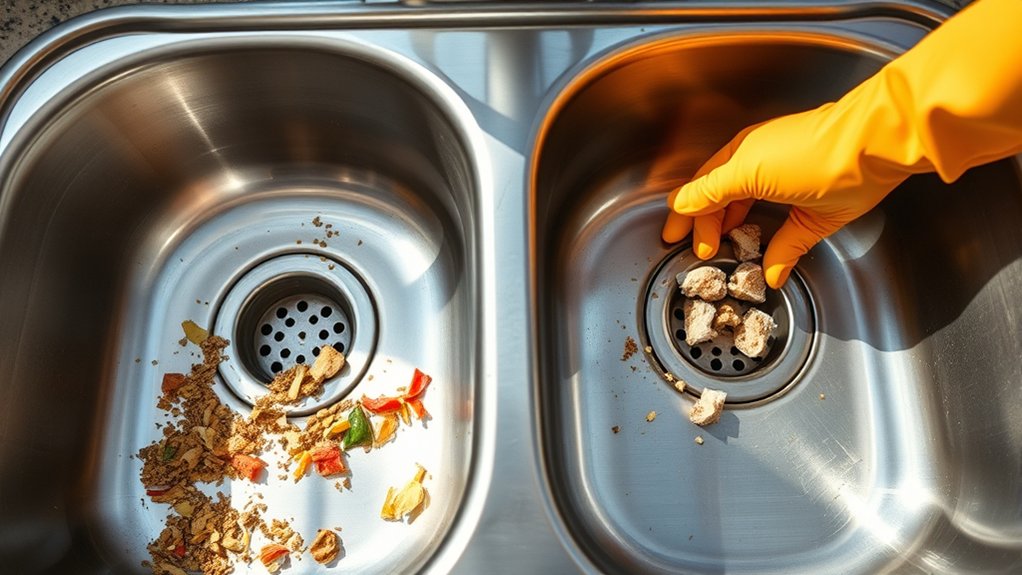
Before diving into more complex steps, start by removing any visible debris and food scraps from both basins of your double sink. You want to clear out all the food residue that can trap moisture and cause sink odors.
Use your hands or a paper towel to scoop out bits of leftover food and dispose of them in the trash or compost. Don’t forget to check the drain openings and around the edges where food particles often hide.
If you leave this debris behind, it can slow drainage and create unpleasant smells. Taking this simple step prevents buildup and keeps your sink fresher while you work on unclogging.
Plus, it reduces the chance that debris will get pushed further down and worsen the clog. Once you’ve cleared all visible food residue, you’re ready to move on with confidence to the next steps in unclogging your double kitchen sink.
Prepare Your Double Sink and Tools for Unclogging
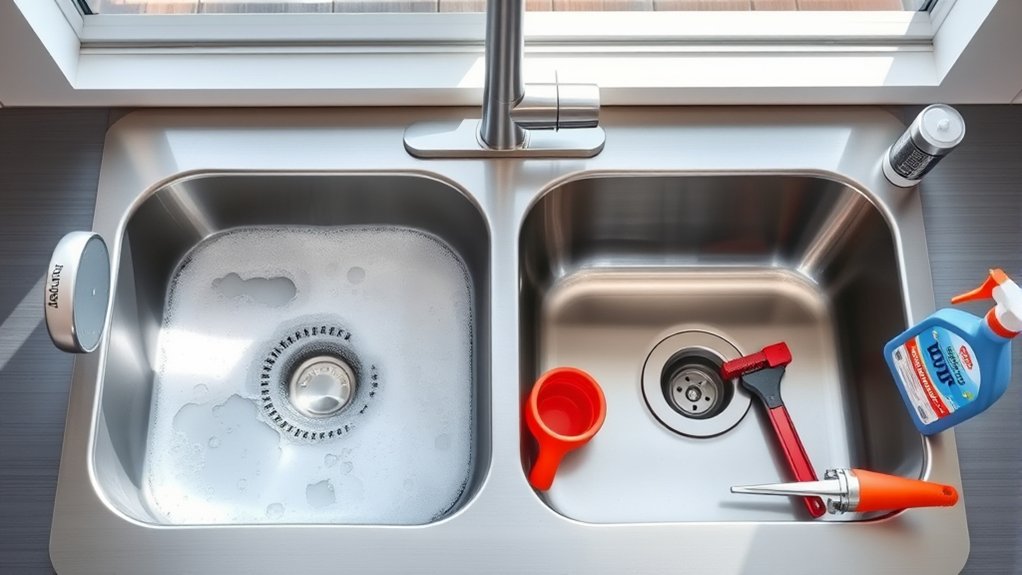
Once you’ve cleared out the visible debris, gather the necessary tools and prepare your double sink for unclogging to work efficiently and avoid making a bigger mess. Start by selecting essential tools like a plunger, bucket, adjustable wrench, and a flashlight. Proper tool selection guarantees you’re ready to tackle common blockages without unnecessary delays.
Next, clear the area under your double sink to access plumbing easily and place a bucket beneath the pipes to catch any water during the process. Remove any items from the sink basins and wipe them down to prevent slipping or contamination. This organized setup not only supports effective sink maintenance but also keeps your workspace safe and clean.
Finally, make sure to turn off the garbage disposal and close both drain stoppers if applicable. Preparing your double sink and tools thoroughly sets the stage for a smooth unclogging process, saving you time and preventing further plumbing issues.
Check and Clean the Sink Traps to Remove Blockages
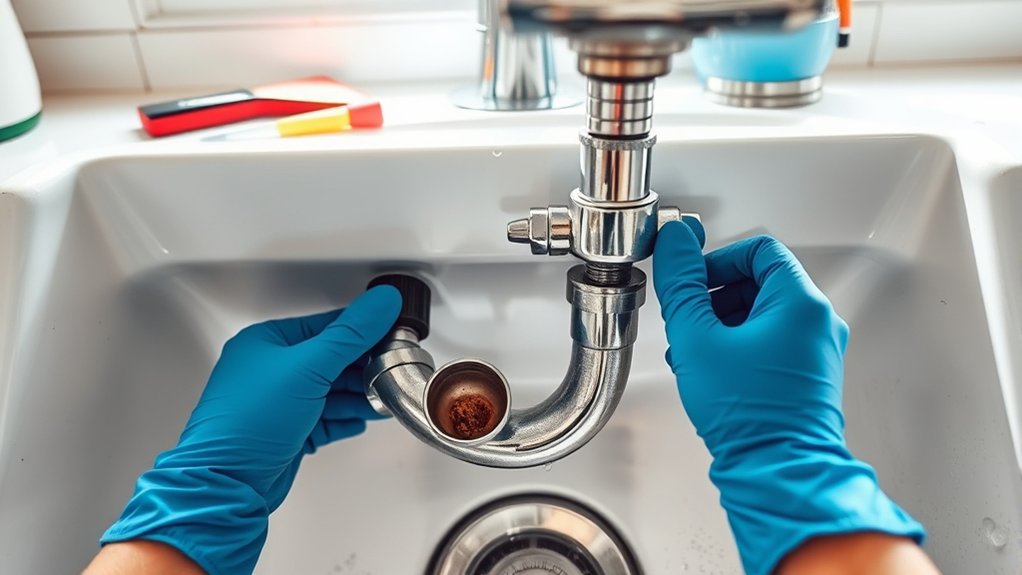
First, take a look under your double sink to figure out what type of traps you have—usually, they’re P-traps or S-traps. Next, carefully remove the traps so you can check for any debris or blockages that might be causing the clog. Once you’ve cleared out any gunk, give the traps a good clean before putting them back. This will help make sure the water drains smoothly.
Identify Sink Trap Types
How do you know which type of sink trap you’re dealing with? Understanding sink trap types helps you tackle clogs effectively by matching your approach to the plumbing configuration.
Here are the common types you might find under your double kitchen sink:
- P-Trap: The most common, shaped like the letter “P,” holding water to block sewer gases.
- S-Trap: Similar to a P-trap but dips down in an “S” shape, often needing venting fixes.
- Bottle Trap: Compact and cylindrical, ideal for tight spaces but less common in kitchens.
- Bell Trap: Less typical, found in older homes, it uses a bell-shaped section to trap debris.
Identifying your sink trap type is your first step before checking for blockages and planning the next move.
Remove And Inspect Traps
Why wait to clear the clog when you can tackle it directly by removing and inspecting the sink traps? This step is vital for effective trap maintenance and a thorough plumbing inspection.
First, place a bucket underneath to catch any water. Then, carefully unscrew the slip nuts holding the trap in place. Inspect the trap for buildup or damage. Catch potential issues early to avoid costly repairs.
| Step | Tip |
|---|---|
| Remove slip nuts | Use pliers if tight |
| Inspect trap | Look for cracks or debris |
| Check seals | Make certain washers are intact |
Regular trap maintenance keeps your double kitchen sink flowing smoothly and prevents future blockages.
Clear Debris And Blockages
Once you’ve removed the traps, you can clear out any debris or blockages that might be causing slow drainage. Start by rinsing the traps with warm water to loosen grime. Use a brush or old toothbrush to scrub away stubborn buildup.
For tougher clogs, try eco friendly solutions like a baking soda and vinegar mix to dissolve residue without harsh chemicals. After cleaning, reassemble the traps securely to prevent leaks. Regularly clearing your traps is key to preventative maintenance, helping you avoid costly plumbing issues.
- Rinse traps with warm water to remove loose debris
- Scrub traps using a brush to clear stuck buildup
- Apply baking soda and vinegar for eco friendly clog removal
- Reassemble traps tightly and check for leaks
Stay consistent with cleaning to maintain smooth drainage.
Use a Plunger to Dislodge Clogs in Your Double Sink
Grab a good-quality plunger and make sure both drains are sealed properly so you can build up enough pressure. You’ll want to cover one drain while plunging the other—that way, you can target the clog more effectively. Using the right technique really helps you dislodge blockages without causing leaks or any damage.
Proper Plunger Technique
Although plunging might seem straightforward, using the right technique is key to effectively dislodging clogs in your double kitchen sink. Proper technique ensures you create enough pressure to clear blockages without damaging your pipes.
Before plunging, check your plunger maintenance: make sure the rubber cup is clean and flexible to form a tight seal.
Follow these steps for the best results:
- Cover the overflow hole or the other sink drain with a wet cloth to maintain pressure.
- Submerge the plunger cup fully in water to avoid air gaps.
- Use quick, forceful plunges, keeping the seal intact.
- Repeat several times, then test the drain.
Mastering these steps maximizes your plunging success and keeps your sink clog-free.
Handling Double Sink Drains
When you’re dealing with a double kitchen sink, you’ll need to address both drains to effectively clear a clog. Start by sealing one drain with a wet cloth or stopper while you plunge the other. This directs the pressure precisely where it’s needed.
Then, repeat the process for the second drain. Using a plunger correctly is crucial for plumbing maintenance and keeping your kitchen appliance functioning smoothly.
| Step | Action | Tip |
|---|---|---|
| 1 | Seal one drain | Use a wet cloth or stopper |
| 2 | Plunge the open drain | Apply firm, consistent pressure |
| 3 | Switch and repeat | Clear both sides thoroughly |
This method ensures you dislodge clogs effectively in both drains, preventing future blockages.
Apply Baking Soda and Vinegar to Clean the Drain
Since baking soda and vinegar create a powerful fizzing reaction, you can use them to break down grime and loosen clogs in your double kitchen sink. This natural solution is effective and safe, helping you avoid harsh chemicals.
Follow these simple steps:
- Pour about 1/2 cup of baking soda directly into the drain.
- Slowly add 1/2 cup of vinegar into the drain to trigger the fizzing.
- Cover the drain with a plug or cloth to keep the reaction inside the pipes.
- Let it sit for 15-20 minutes to allow the mixture to break down buildup.
This process loosens grease and debris, making it easier to clear your double sink drains. Make sure not to flush the pipes yet. You’ll want to do that in the next step with hot water to fully remove the loosened grime.
Using baking soda and vinegar regularly helps maintain clear drains without damaging your plumbing.
Flush Your Double Sink Pipes With Hot Water to Remove Grease
After letting the baking soda and vinegar sit, it’s time to flush your double sink pipes with hot water. This step helps break down and wash away grease buildup that often clogs your drain.
Boil a kettle or pot of water and carefully pour it down both sides of the sink drain. The hot water melts the grease, allowing it to flow smoothly through your pipes.
Regular drain maintenance like this prevents future blockages and keeps your plumbing in good condition. While flushing, take a moment for a quick pipe inspection.
Look under the sink for any leaks, corrosion, or loose connections. Catching these issues early can save you from costly repairs later.
When to Use a Drain Snake and When to Call a Plumber
If simple methods like flushing with hot water don’t clear your clog, you might need to reach for a drain snake. This tool can effectively dislodge blockages deep in your double kitchen sink pipes, saving you time and money. But it’s important to know when to call a plumber to avoid making the problem worse or causing damage.
Use a drain snake if:
- The clog is stubborn but within reach.
- You’ve done regular drain maintenance.
- There’s no foul smell or signs of a bigger issue.
- You feel comfortable handling plumbing tools safely.
Call a plumber when:
- The clog persists after using a snake.
- You notice recurring blockages.
- You require professional plumbing inspections.
- There’s water backing up into other drains or signs of pipe damage.
Proper drain maintenance and timely plumbing inspections help prevent serious clogs and keep your sink running smoothly.
Frequently Asked Questions
Can Lemon Juice Be Used Instead of Vinegar to Unclog Sinks?
Yes, you can use lemon juice instead of vinegar to unclog sinks. Lemon cleaning offers natural citrus benefits like cutting through grease and breaking down buildup.
While lemon juice might be less acidic than vinegar, its fresh scent and antibacterial properties make it a great alternative. Just combine lemon juice with baking soda to create a fizzy reaction that helps clear the clog and leaves your sink smelling fresh and clean.
How Often Should I Clean My Double Kitchen Sink Drains?
Think of your double kitchen sink drains like a garden. You wouldn’t water it once a year and expect lush growth. You should stick to a regular cleaning schedule, ideally every month, to keep your drain maintenance on point.
This prevents buildup and clogs, just like consistent watering keeps a garden from wilting. By staying proactive, you’ll avoid nasty surprises and keep your kitchen running smoothly without emergency fixes.
Will Using Chemical Drain Cleaners Damage My Pipes?
Yes, using chemical drain cleaners can damage your pipes over time. These cleaners cause chemical reactions that generate heat and break down clogs, but this process can lead to pipe corrosion, especially if your pipes are old or made of certain materials.
To protect your plumbing, you might want to avoid frequent use of harsh chemicals and consider safer alternatives like natural cleaners or mechanical methods to clear blockages.
Can a Garbage Disposal Cause Double Sink Clogs?
Absolutely, a garbage disposal can cause clogs in your double sink. When scraps slip and settle, stubborn sludge and scraps stack up, slowing the flow.
If you frequently feed fibrous or fatty food waste into the garbage disposal, you’ll likely face frustrating blockages between the two sinks. To stop stubborn stoppages, you’ve got to sweep scraps sensibly and run plenty of water while grinding.
This prevents pileups and keeps your double sink draining smoothly.
How Do I Prevent Future Clogs in My Double Sink?
You can prevent future clogs in your double sink by practicing regular plumbing maintenance and focusing on drain prevention. Avoid pouring grease, coffee grounds, and food scraps down the drain.
Use a drain strainer to catch debris and flush your drains weekly with hot water mixed with vinegar or baking soda. Scheduling periodic professional inspections also helps catch issues early, keeping your plumbing clear and your sink running smoothly without blockages.
Conclusion
Now that you’ve tackled your double kitchen sink step by step, you’re ready to let water flow like a smooth river again. With simple tools and a bit of elbow grease, unclogging becomes less of a chore and more of a win.
Remember, when the usual tricks don’t cut it, don’t hesitate to call in a pro. Keep these tips handy, and your double kitchen sink will stay happy and clog-free!