How to Unclog Kitchen Sink Drain in 3 Easy Steps
Dealing with a clogged kitchen sink drain can be incredibly frustrating. You’re not alone—many people struggle with slow or blocked drains that disrupt daily routines. The good news is that fixing this common problem doesn’t have to be complicated or expensive.
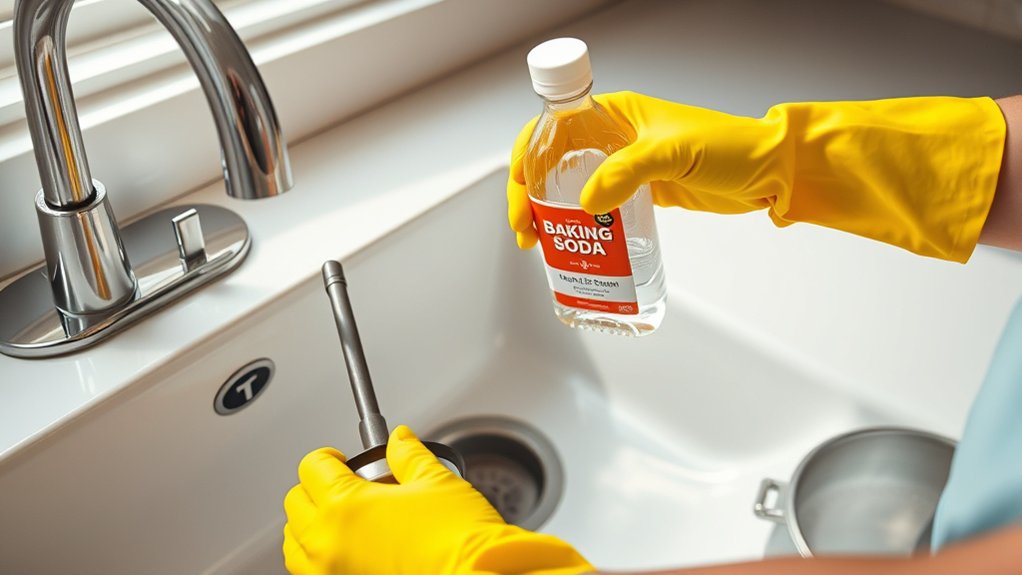
To unclog your kitchen sink drain in 3 easy steps, first check under the sink for any visible blockages or leaks. Next, pour half a cup of baking soda down the drain, then add half a cup of vinegar and let it fizz for about 15 minutes.
Finally, flush the drain with hot water to wash away loosened debris. Using simple tools and good habits can keep your sink flowing smoothly and save you time in the future.
Key Takeaways
- Inspect the drain pipe under the sink for visible blockages or leaks before starting.
- Pour half a cup of baking soda directly into the drain to begin the unclogging process.
- Add half a cup of vinegar to the baking soda and let the mixture fizz for 15 minutes.
- Flush the drain with hot water to wash away loosened debris and clear the clog.
- Use essential tools like a plunger or drain snake if natural methods don’t fully clear the blockage.
Unclog Your Kitchen Sink in 3 Easy Steps
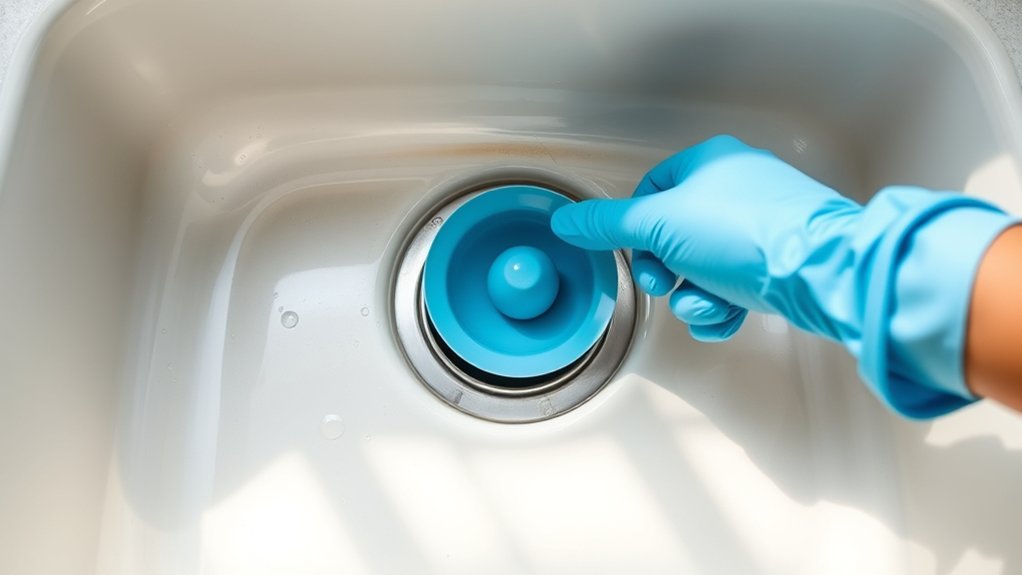
Before the clog worsens, you can quickly restore your kitchen sink’s flow by following three simple steps. First, start with a thorough drain pipe inspection. Look under your sink for any visible blockages or leaks that might be causing the slow drainage. If everything looks clear, move on to the next step.
Next, apply baking soda remedies. Pour half a cup of baking soda directly into the drain followed by half a cup of vinegar. Let the mixture fizz and sit for about 15 minutes to break down grime and grease. This natural solution often loosens minor clogs without harsh chemicals.
Finally, flush the drain with hot water to wash away the loosened debris. This simple process usually clears most kitchen sink clogs efficiently. By spotting issues early and using baking soda remedies, you can avoid costly plumbing calls and keep your kitchen drain running smoothly.
Tools You Need to Unclog Your Kitchen Sink
Although simple remedies can clear minor clogs, having the right tools on hand makes unclogging your kitchen sink much easier and faster. Proper plumbing maintenance relies on effective drain cleaning. Equipping yourself well is key to tackling stubborn blockages confidently.
Having the right tools makes unclogging your kitchen sink easier and ensures effective plumbing maintenance.
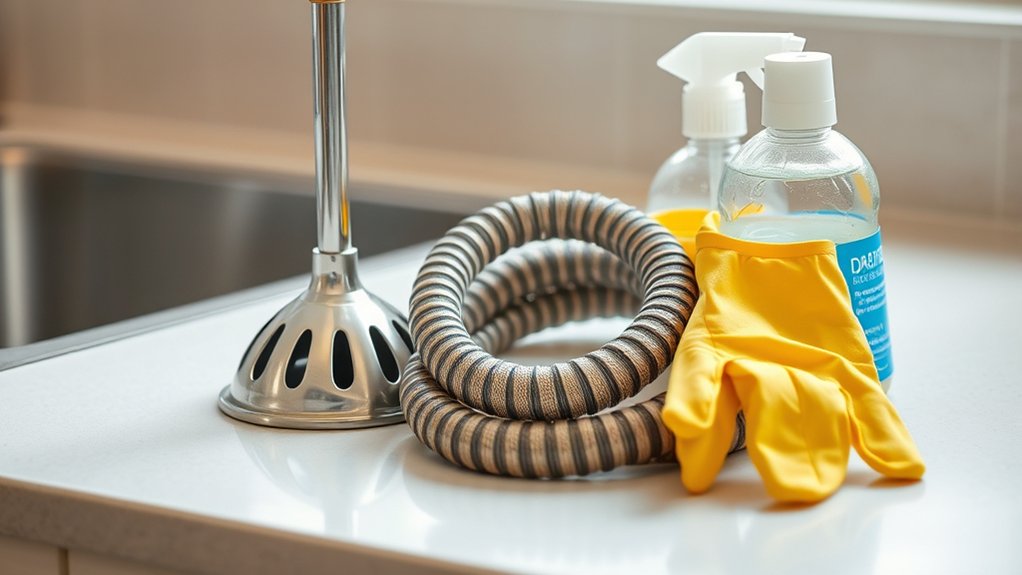
Here are five essential tools you should have ready:
- Plunger: Your first defense for loosening clogs quickly.
- Drain Snake (Auger): Perfect for reaching deep blockages beyond the trap.
- Pipe Wrench: Helps you safely disconnect pipes for manual cleaning.
- Bucket: Catches water and debris when you remove pipes.
- Rubber Gloves: Protect your hands from grime and harsh cleaning agents.
With these tools, you’ll handle kitchen sink clogs efficiently and maintain smooth drainage. Investing in proper plumbing maintenance tools saves time, prevents damage, and keeps your sink running smoothly.
Keep Your Sink Clear: Easy Habits to Try
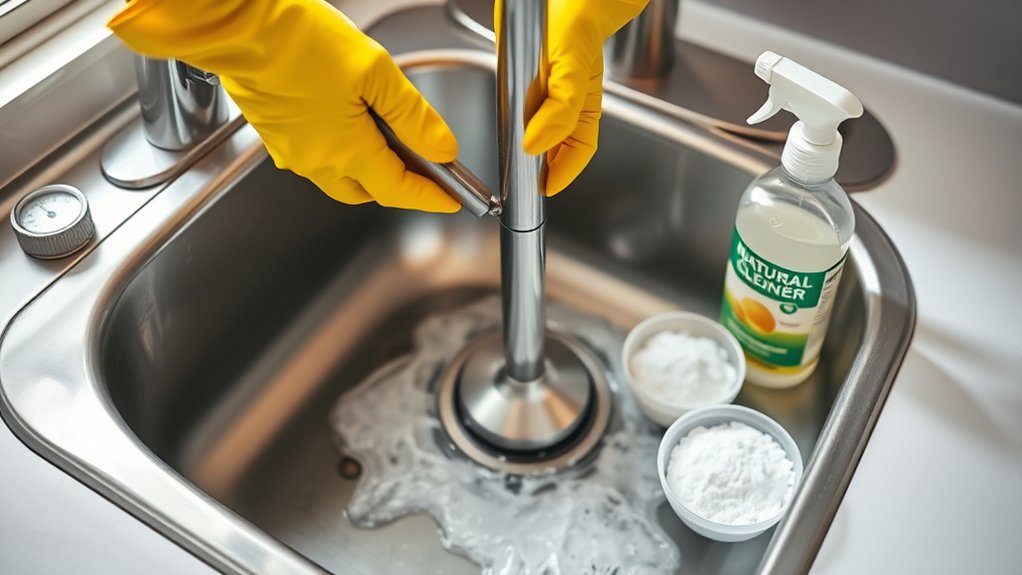
Since preventing clogs is easier than fixing them, adopting simple habits can keep your kitchen sink draining smoothly. Start by avoiding pouring grease, coffee grounds, or large food scraps down the drain, as these often cause blockages. Instead, dispose of waste in the trash or compost.
Regularly flush your drain with hot water to help dissolve minor buildups and maintain plumbing maintenance. Use a sink strainer to catch debris before it enters the pipes, reducing the risk of clogs.
Maintaining good kitchen hygiene also plays an essential role. Wipe down the sink and clean the drain opening frequently to prevent grime accumulation.
Avoid using harsh chemical cleaners that can damage your pipes; opt for natural alternatives like baking soda and vinegar. By adopting these easy habits, you’ll save time, avoid costly repairs, and guarantee your kitchen sink stays clear and functional for the long term.
Frequently Asked Questions
Can Chemical Drain Cleaners Damage My Kitchen Pipes?
Yes, chemical drain cleaners can damage your kitchen pipes. The strong chemical reactions they cause can lead to pipe corrosion, especially if your pipes are older or made of metal.
Over time, this corrosion weakens the pipes, increasing the risk of leaks or bursts. You might want to use gentler methods or mechanical tools instead to avoid costly repairs and keep your plumbing safe.
How Do I Know if a Clog Requires a Plumber?
Just like Sherlock Holmes never jumps to assumptions without clues, you shouldn’t rush to call a plumber without some DIY troubleshooting. If your sink still backs up after preventive maintenance, or the clog causes foul smells, slow drainage, or gurgling sounds, it’s time to seek professional help.
Persistent or recurring blockages often signal deeper issues beyond simple fixes, so trusting a plumber can save you from costly damage down the line.
Are Natural Remedies Effective for Stubborn Sink Clogs?
Yes, homemade remedies can be effective for stubborn sink clogs, especially if you act quickly. Using eco-friendly solutions like baking soda and vinegar helps break down grease and debris without harsh chemicals.
Pour baking soda down the drain, followed by vinegar, then flush with hot water after it fizzes. While these methods work well for minor clogs, tougher blockages might still need professional help.
You’ll save money and protect the environment this way.
What Causes Recurring Kitchen Sink Clogs?
Recurring kitchen sink clogs usually happen because grease, food particles, and debris build up over time. If you don’t stay on top of drain maintenance, these materials will accumulate and block your pipes.
You should also schedule regular pipe inspections to catch early signs of damage or stubborn buildup. Ignoring small issues leads to bigger clogs, so keeping your drain clean and checking your pipes often will help prevent frequent blockages.
Can Food Waste Disposals Prevent Sink Clogs?
You might think a food waste disposal always prevents clogs, but that’s not the case. While it helps break down scraps, it doesn’t guarantee smooth kitchen sink maintenance.
If you toss fibrous or starchy foods, it can actually cause blockages. So, using a disposal wisely means avoiding certain waste and running plenty of water. That way, you’ll keep your sink flowing freely without unexpected clogs slowing you down.
Conclusion
Now that you’ve tackled your kitchen sink like a pro, you’re ready to keep things flowing smoothly. No more battles with stubborn clogs.
Just like a skilled gardener tends to their plants, adopting simple habits will help your drain stay clear and healthy. Remember, a little care goes a long way, so don’t wait for another clog to strike.
Your kitchen sink drain will thank you, and so will your sanity!