How to Kill Ants in the Kitchen Step by Step
Dealing with ants invading your kitchen can be incredibly frustrating. You’re not alone—many people struggle to keep these tiny pests at bay despite regular cleaning and efforts to block their entry. If you’ve been searching for effective ways to tackle this problem, understanding how to kill ants in the kitchen is a crucial first step.
To kill ants in your kitchen, start by identifying their type and tracking their trails to find nests and entry points.
Clean up all food crumbs, spills, and moisture sources, then seal cracks or gaps to block their access.
Use homemade sprays like vinegar or sprinkle cinnamon and coffee grounds as natural repellents.
Consistently maintain a clean space to discourage new ants.
Follow these steps carefully, and you’ll soon understand how to keep your kitchen ant-free for good.
Key Takeaways
- Identify ant species and locate nests by following trails and checking common hiding spots like under sinks and behind appliances.
- Seal all entry points such as cracks, gaps, and door frames with caulk and weatherstripping to block ant access.
- Remove all food sources by cleaning crumbs, spills, and storing food in airtight containers.
- Use natural barriers like vinegar spray, cinnamon, or diatomaceous earth around entry points to repel and kill ants.
- Maintain a clean, dry kitchen environment with regular cleaning, trash removal, and moisture control to prevent re-infestation.
How to Identify Kitchen Ant Species to Target Them Effectively
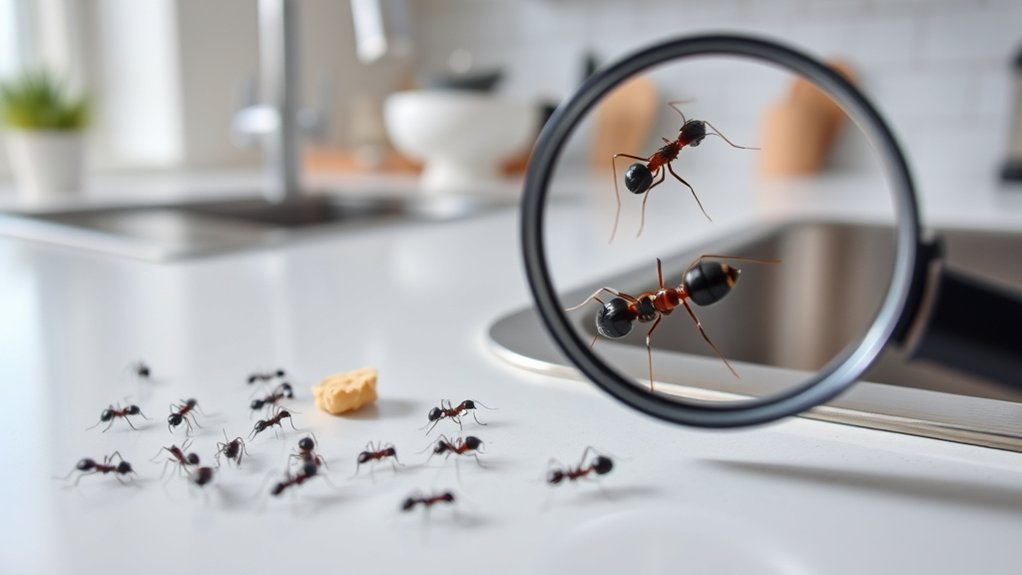
Before you can effectively eliminate ants in your kitchen, you need to identify the species you’re dealing with. Ant identification is essential because different species respond to different treatments.
Start by observing their size, color, and behavior. Are the ants tiny and black, or larger and reddish? Noticing these details helps with species differentiation. For example, carpenter ants are larger and prefer wood, while sugar ants are smaller and attracted to sweet foods.
Observe ant size, color, and behavior to identify species and choose the right treatment.
You can also look at their trails. Some species follow a straight path, others a more erratic pattern. If you’re unsure, use a magnifying glass or take a photo and compare it to online guides.
Knowing the exact species lets you choose the right bait or insecticide, making your efforts more efficient and reducing wasted time. Taking time for proper ant identification saves you frustration and guarantees you target the problem correctly from the start.
Where to Look for Ant Nests and Trails in Your Kitchen
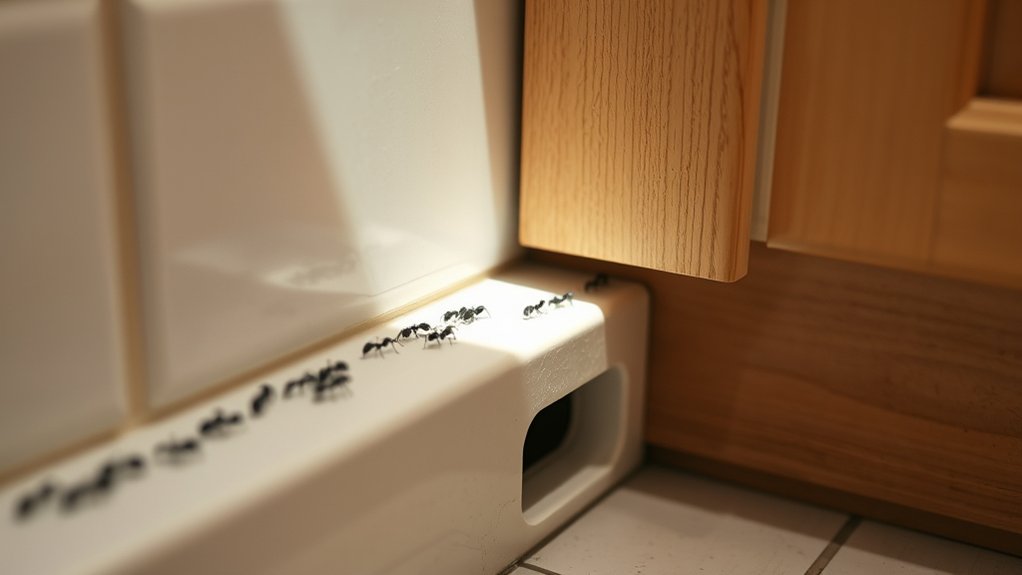
Once you’ve identified the ant species, the next step is to locate their nests and trails in your kitchen. Ant foraging typically follows scent trails from their nest to food sources, so start by observing where ants enter your kitchen.
Check common entry points like windows, doors, and cracks in walls. Follow their trails closely; they often lead to hidden nest locations. In kitchens, nests can be tucked behind appliances, inside wall voids, or beneath sinks where moisture is present.
Look for tiny piles of dirt or sawdust near baseboards, which may indicate nest activity. Ants may also nest inside cupboards or pantries, especially if there’s warmth and humidity.
Tracking their movement helps you pinpoint the nest location, making your next steps more targeted. By carefully inspecting these areas, you can effectively disrupt their foraging paths and tackle the infestation at its root.
How to Clean and Remove Food Sources That Attract Ants
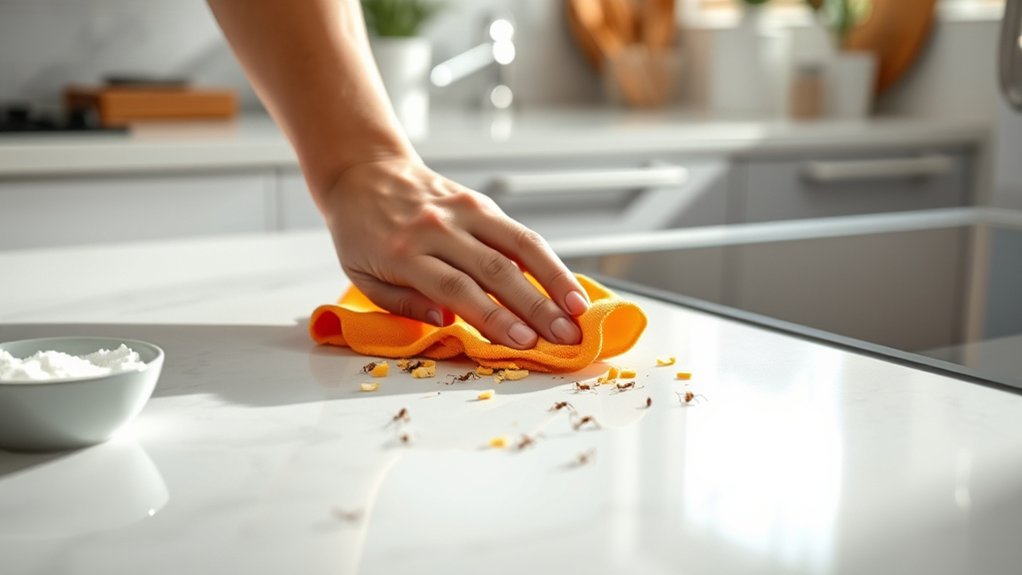
Since ants are attracted to food residues and crumbs, you need to thoroughly clean all surfaces in your kitchen to remove these tempting sources. Understanding ant behavior helps you target their food supply effectively. Ants follow scent trails left by scouts to locate food, so eliminating crumbs and spills disrupts their path and reduces attraction.
Ants follow scent trails to food, so cleaning crumbs and spills breaks their path and cuts attraction.
Focus on these key cleaning steps:
- Wipe down countertops, tables, and stovetops daily to remove food particles.
- Sweep and mop floors regularly, especially under appliances and cabinets.
- Store all food in airtight containers to ensure proper food preservation and block ant access.
- Empty trash bins frequently and use sealed liners to prevent odors that attract ants.
How to Use Homemade Solutions to Kill Ants in the Kitchen Safely
After thoroughly cleaning your kitchen to remove food sources, you can tackle the ants directly using homemade solutions that are both effective and safe. Understanding ant behavior helps you target their trails and ant habitat efficiently. Ants follow scent trails to food and their nests, so disrupting these paths is key.
Mix equal parts water and white vinegar in a spray bottle and apply it along baseboards, countertops, and entry points. Vinegar masks the scent trails ants rely on. For a natural repellent, sprinkle cinnamon or cayenne pepper near ant entry sites; these irritate ants and deter them from returning to their habitat.
You can also use a solution of dish soap and water to kill ants on contact by breaking down their exoskeletons. Spray directly on ants and wipe away. Repeat treatments every few days, focusing on areas ants frequent. These homemade solutions respect your kitchen’s safety while effectively managing ant problems.
How to Use Commercial Ant Baits and Sprays Effectively in the Kitchen
While homemade remedies work well for minor infestations, commercial ant baits and sprays offer a more powerful way to eliminate ants in your kitchen. To use these products effectively, focus on proper ant bait placement and spray application techniques.
Follow these steps for best results:
- Place ant baits near trails, entry points, and areas where you see ants, but out of reach of pets and children.
- Avoid spraying directly on the bait; sprays can repel ants and reduce bait effectiveness.
- Use sprays to target ant nests or high-traffic areas, applying a fine mist to cracks and crevices.
- Reapply sprays as directed and replace baits when empty to maintain continuous control.
How to Seal Entry Points to Keep Ants Out of Your Kitchen
Although commercial baits and sprays can eliminate existing ants, sealing entry points is essential to prevent new ones from invading your kitchen. Different ant species use tiny cracks, gaps around windows, doors, plumbing, and vents to enter your home.
To stop them, first inspect your kitchen carefully for these entry points. Use a flashlight and a thin tool to spot hidden openings. Once identified, seal them with caulk, weatherstripping, or expanding foam, depending on the size and location of the gaps.
Don’t forget to check for damaged window screens or loose door seals, as these also invite ants inside. By blocking entry points, you cut off access routes and reduce the chance of reinfestation.
This step complements your use of baits and sprays, creating an all-encompassing barrier against various ant species targeting your kitchen. Regularly recheck and maintain sealed areas to keep your kitchen ant-free.
Natural Barriers to Keep Ants Out of Your Kitchen
Sealing entry points helps keep ants from getting inside, but you can also use natural barriers to discourage them from approaching your kitchen altogether. Ant repellent plants and natural deterrent sprays create effective boundaries without harsh chemicals. Here are four natural barriers you can use:
Sealing entry points and using natural barriers can effectively keep ants away from your kitchen without harsh chemicals.
- Plant ant repellent herbs like mint, basil, or lavender near your kitchen windows and doorways. Their strong scents confuse ants and keep them at bay.
- Spray natural deterrent solutions made with vinegar, lemon juice, or essential oils around entry points and along ant trails.
- Spread cinnamon or coffee grounds along baseboards and counters; ants dislike crossing these textures and smells.
- Use diatomaceous earth in cracks and crevices. It’s a natural powder that dehydrates ants on contact without harming pets or humans.
When to Call a Professional for Kitchen Ants
If you’ve tried natural barriers and DIY methods but ants keep invading your kitchen, it might be time to call a professional. Persistent ant problems often signal that the colony’s deeper stages of the pest lifecycle are well-established inside or near your home.
Professionals understand ant behavior thoroughly. They can identify entry points you might miss and target the queen, which is vital for breaking the pest lifecycle.
When ants reappear despite your efforts, it’s because they’ve adapted or found hidden food sources. Experts use specialized treatments and tools designed to interrupt ant trails and eliminate entire colonies.
If you notice large infestations, multiple ant species, or ants returning after repeated attempts, don’t hesitate to seek professional help. Acting early prevents costly damage and ongoing frustration, ensuring your kitchen stays ant-free efficiently and safely.
How to Maintain a Pest-Free Kitchen After Getting Rid of Ants
To keep ants from coming back, it’s all about sticking to regular cleaning habits and storing your food properly. Make it a habit to wipe down surfaces daily—this really helps remove any crumbs or spills that might attract them. Also, sealing all your food in airtight containers makes a big difference.
Regular Cleaning Habits
Although you’ve successfully eliminated ants from your kitchen, maintaining a clean environment is key to keeping them from coming back. Ants are attracted to food residues and moisture, which form their ideal habitat.
Understanding ant behavior helps you prevent new infestations by removing these attractants. To maintain a pest-free kitchen, focus on:
- Wiping down countertops and tables daily to remove crumbs and spills.
- Sweeping and mopping floors regularly, especially under appliances.
- Cleaning sinks and drains to eliminate moisture sources.
- Taking out the trash frequently and using sealed bins.
Proper Food Storage
Keeping food properly stored plays a crucial role in preventing ants from returning to your kitchen. You want to focus on airtight containers and sealed packages to guarantee effective food preservation and pest prevention. Avoid leaving food exposed on counters or in open bags, as this invites ants.
Regularly check your pantry for spills or crumbs and clean them immediately to maintain a pest-free environment. Here’s a quick guide to proper food storage:
| Food Type | Storage Method | Pest Prevention Tip |
|---|---|---|
| Dry goods | Airtight containers | Use resealable bags |
| Fresh produce | Refrigeration | Store in sealed bins |
| Leftovers | Covered containers | Cool before storing |
Following these steps helps maintain food freshness and keeps ants away for good.
Common Mistakes That Let Kitchen Ants Return
If you leave food residue behind, ants will keep coming back no matter how many you kill. It’s like leaving an open invitation for them. And you can’t just skip sealing their entry points either—ants are pretty clever and will find new ways to sneak in. So, to really keep your kitchen ant-free, avoid these common mistakes.
Ignoring Food Residue
Why do ants keep coming back even after you clean? The answer often lies in ignoring food residue. Even tiny crumbs or sticky spills attract ants, making your cleaning efforts ineffective. To truly stop them, you need to focus on eliminating every trace of food.
Here’s what you should do:
- Thoroughly wipe down countertops and floors to remove invisible food residue.
- Clean under appliances and inside cabinets where crumbs hide.
- Store food in airtight containers to deny ants easy access.
- Use ant identification to target specific species, adjusting your cleaning and baiting methods accordingly.
Skipping Entry Point Sealing
Although you might clean thoroughly, ants will keep coming back unless you seal their entry points. Skipping entry point sealing is a common mistake that lets ants easily re-enter your kitchen.
You need to identify and close cracks, gaps, and holes around windows, doors, and pipes. Sealing entry points cuts off their access, making your ant control efforts more effective.
Along with sealing, focus on ant habitat removal by clearing clutter and moisture sources where ants thrive. Without sealing, ants find new ways inside, rendering your cleaning and baiting ineffective.
Don’t overlook this essential step. Seal entry points promptly to stop ants from returning and to support your overall ant habitat removal strategy. This way, you’ll keep your kitchen ant-free for good.
Frequently Asked Questions
Are Kitchen Ants Harmful to Humans or Pets?
Kitchen ants aren’t typically harmful to you or your pets, but you should watch out for ant allergy risks if anyone in your home is sensitive. Some people might experience skin irritation or allergic reactions from ant bites.
Also, pet ingestion hazards exist since some ants can bite or sting your pets, causing discomfort or allergic responses. It’s best to keep ants under control to avoid these potential health issues.
Can Ants Contaminate Food in Sealed Containers?
No, ants generally can’t cause food contamination if your food is stored in sealed containers. Those containers keep ants from reaching the food, preventing them from crawling inside and contaminating it.
However, if the seals aren’t tight or containers are cracked, ants can get in and contaminate your food. So, make sure you use airtight containers to keep your kitchen safe and your food fresh from any unwanted ant intrusion.
Do Ants Cause Damage to Kitchen Appliances or Cabinets?
Ant species can be sneaky architects, and some do cause damage to your kitchen appliances or cabinets. Carpenter ants, for example, chew into wood to build nests, which can weaken your cabinetry.
Their nesting habits mean they often target damp or rotting wood, so if you spot these ants, you should act fast. Not all ants cause harm, but those that do can turn your kitchen into a construction zone you don’t want.
How Long Does It Take to Completely Eliminate an Ant Infestation?
The time it takes to completely eliminate an ant infestation depends on the ant species and how long the infestation has been going on. Some species are tougher to eradicate, so you might need a few days to a few weeks.
If the infestation is recent, you can act quickly and see results within a week. However, long-standing infestations require persistent treatment and monitoring, sometimes stretching over several weeks to make certain you’ve wiped out the entire colony.
Are There Specific Times of the Year When Ant Problems Worsen?
Absolutely, you’ll notice ant problems explode like a tiny army invading your kitchen, especially in spring and summer. These seasonal behaviors happen because environmental factors like warmth and moisture trigger ants to forage aggressively.
When temperatures rise, ants become hyperactive, searching for food and water more intensely. So, you’ll want to stay extra vigilant during these times, as ant activity can spike dramatically, turning your home into their bustling headquarters.
Conclusion
Dealing with kitchen ants can feel like battling an endless tide, but with the right steps, you can reclaim your space. By identifying ants, cleaning thoroughly, using safe treatments, and setting natural barriers, you’ll stop them at the door.
Remember, consistency is key. Don’t let small mistakes invite them back. Keep your kitchen a fortress, and those tiny invaders won’t stand a chance.
Stay vigilant, and enjoy a pest-free, peaceful kitchen. Following these steps is the best way to kill ants in the kitchen for good.