How Do You Spell Kitchen Correctly
Struggling to spell “kitchen” correctly? You’re not alone. Many people find themselves second-guessing the tricky parts of this common word, especially when writing recipes, shopping lists, or home décor notes. Getting it right can boost your confidence and help you communicate clearly.
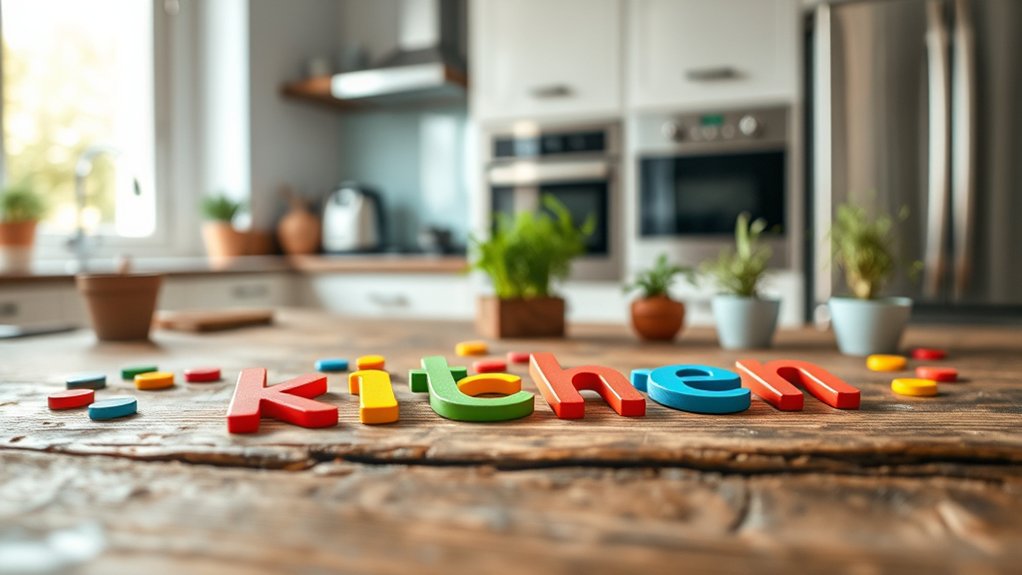
You spell “kitchen” as K-I-T-C-H-E-N, making sure to get the tricky “tch” cluster right. Using the correct spelling helps you communicate clearly when talking about cooking spaces, recipes, or home layouts.
Avoid common mistakes like mixing letters or doubling them incorrectly.
If you focus on the sounds and remember the key parts of the word, you’ll spell it confidently every time. Keep uncovering and you’ll find easy tips and fun ways to master it even faster.
Key Takeaways
- The correct spelling of “kitchen” is k-i-t-c-h-e-n, referring to the room for food preparation.
- Focus on the “tch” cluster in the middle to avoid common misspellings like “kitcen” or “kichten.”
- Use mnemonics like breaking the word into “kit” + “chen” to help remember the correct sequence.
- Verify spelling with trusted tools like Grammarly or dictionary apps to ensure accuracy.
- Practice spelling through writing, speaking, and interactive games to reinforce correct usage.
The Correct Spelling of “Kitchen”
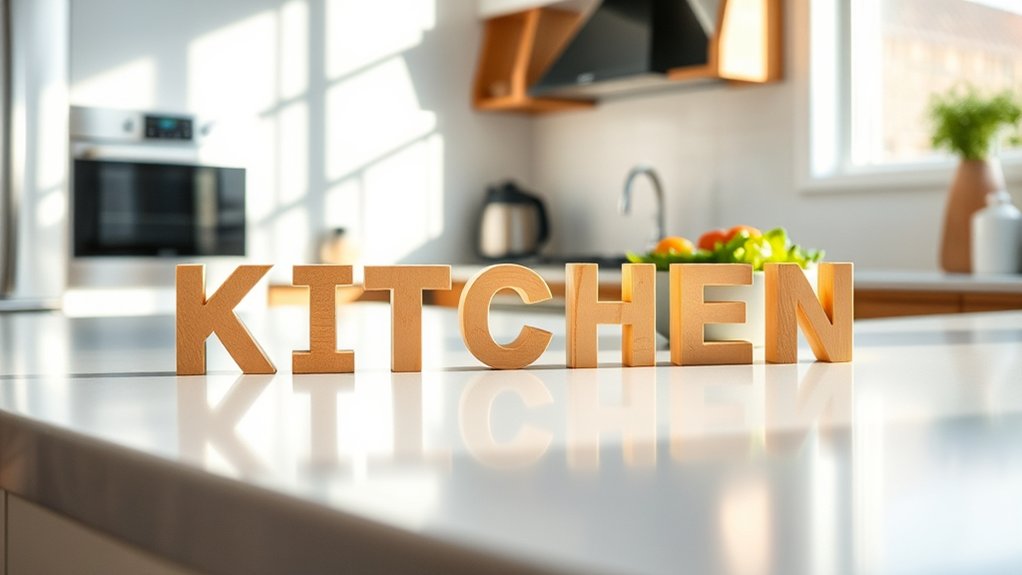
How do you spell the word for the room where you prepare food? It’s spelled “kitchen.” Knowing the correct spelling helps you communicate clearly, whether you’re discussing kitchen layout or sharing cooking techniques.
When you think about your kitchen layout, you imagine the space where you chop, mix, and cook. Using the right spelling ensures your instructions or descriptions are understood, especially when explaining how your kitchen layout supports efficient movement while cooking.
You’ll often talk about cooking techniques in the kitchen, so spelling “kitchen” accurately helps maintain professionalism and clarity. Whether you’re writing a recipe or redesigning your kitchen layout, the word “kitchen” is straightforward: k-i-t-c-h-e-n.
Keep this spelling in mind every time you refer to that essential room. Getting it right boosts your confidence in writing and talking about food preparation spaces and methods without confusion.
Why Do People Often Misspell “Kitchen”?

Although “kitchen” is a common word, people often misspell it because of its tricky combination of consonants and vowels. You might be surprised to learn that cultural influences and regional variations play a significant role in these mistakes.
Depending on where you’re from, the way you pronounce or hear “kitchen” can affect how you spell it.
Here’s a simple table to show how cultural and regional factors impact spelling:
| Factor | Effect on Spelling |
|---|---|
| Cultural Influences | Different dialects change sounds |
| Regional Variations | Accent alters vowel emphasis |
| Phonetic Confusion | Mishearing leads to wrong letters |
| Language Transfer | Non-native speakers adapt spelling |
Common Spelling Mistakes When Writing “Kitchen”

Why do so many people struggle to spell “kitchen” correctly? One common mistake is mixing up the order of the letters “t” and “c,” leading to misspellings like “kitcen” or “kichten.”
You might also find yourself mistakenly doubling letters, such as writing “kittchen.” These errors often occur because people focus more on the complex cooking techniques or the sleek kitchen design rather than the word itself.
Since “kitchen” is a frequently used word in recipes and home improvement discussions, your brain might autopilot through it, causing slips in spelling.
Another frequent issue is confusing “kitchen” with similar-sounding words like “kitchenette,” which can throw off the spelling.
Being mindful of where the “t” and “c” fall in the word and remembering that “kitchen” only has one “t” and one “c” can help you avoid these common errors.
Tips to Remember How to Spell “Kitchen”
If you want to spell “kitchen” correctly every time, focus on breaking the word down into its key parts: “kit” and “chen.” You can create a simple mental image or mnemonic that links these segments to the idea of a cooking space. For example, imagine a “kit” full of cooking tools inside the “chen” (a playful sound like “chin”) area where you prepare meals.
This kind of creative mnemonic helps your brain associate the word’s parts with its meaning, making it easier to recall. Spelling challenges often arise because people overlook the middle “tch” cluster, so paying close attention to this tricky part can boost your accuracy.
Repeating the word aloud while visualizing your mnemonic strengthens your memory. Try writing “kitchen” several times while saying the mnemonic to cement the spelling in your mind. These simple tips make spelling “kitchen” less intimidating and guarantee you get it right every time.
How to Use the Word “Kitchen” Correctly in Sentences and Labels
When you use the word “kitchen” in sentences or labels, make sure it clearly refers to the place where cooking and food preparation happen. You want your readers to immediately understand that you’re talking about the room dedicated to these activities.
For example, in a recipe book, you might write, “Master these cooking techniques in your kitchen to improve flavor.” In labels, be direct and specific, such as “Kitchen Tools” or “Kitchen Organization Supplies,” so users can quickly find what they need.
Avoid vague uses that could confuse readers, and keep your language simple and precise. When labeling storage areas or instructions, include the word “kitchen” to anchor the context. This helps maintain clarity, especially when discussing topics like kitchen organization or cooking techniques.
Using “kitchen” correctly ensures your sentences and labels stay relevant and easy to understand.
Why Spelling “Kitchen” Correctly Matters for Clear Communication
When you spell “kitchen” correctly, your message stays clear and easy to understand. It helps prevent confusion that can pop up from simple mistakes. Plus, getting it right shows professionalism and builds your credibility. So, paying attention to spelling really does make a difference!
Enhances Message Clarity
Although it might seem like a small detail, spelling “kitchen” correctly guarantees your message is clear and easily understood. When you use the right spelling, you avoid confusion caused by cultural variations and regional pronunciations that might influence how people interpret your words.
Clear spelling helps everyone grasp your meaning instantly, no matter where they’re from.
Here’s why correct spelling improves clarity:
- Prevents distractions caused by unfamiliar or incorrect word forms
- Ensures your audience focuses on your message, not on errors
- Supports consistent communication across different regions
- Bridges gaps created by diverse cultural language habits
Prevents Misunderstandings
Clear spelling not only improves understanding but also helps you avoid misunderstandings that can disrupt communication. When you spell “kitchen” correctly, you ensure your message is clear and prevent confusion.
Misplaced or incorrect letters can cause readers to pause and guess your meaning. This leads to unnecessary back-and-forth or errors in interpretation. Using effective proofreading techniques lets you catch mistakes before they reach your audience, making your writing more reliable.
Furthermore, applying contextual spelling tips helps you recognize when “kitchen” fits the sentence and confirms the correct form. By focusing on accurate spelling, you keep your communication smooth and avoid potential mix-ups that could derail your message or cause frustration.
This simple attention to detail makes a big difference in how others perceive your clarity.
Builds Professional Credibility
Since you want to establish yourself as a reliable communicator, spelling “kitchen” correctly plays a key role in building your professional credibility. In professional writing, grammar accuracy reflects your attention to detail and respect for your audience.
When you consistently spell words like “kitchen” correctly, you:
- Demonstrate expertise and knowledge in your field
- Improve your message’s clarity and effectiveness
- Earn trust from clients, colleagues, and supervisors
- Avoid distractions caused by spelling errors
These factors contribute to how seriously people take your communication. When you prioritize grammar accuracy, you show professionalism and care, which strengthens your reputation.
How “Kitchen” Differs From Similar Sounding Words
You might mix up “kitchen” with words that sound alike but mean different things and are spelled differently. It’s easy to get tripped up if you don’t pay attention. Knowing how the pronunciation and spelling differ can help you steer clear of mistakes. So, let’s take a look at some words people often confuse and clear things up together.
Commonly Confused Words
Although “kitchen” sounds straightforward, it often gets mixed up with similar-sounding words like “kitchenette” or “kitsch.” You might find yourself unsure which spelling fits your context, especially when these words carry different meanings. Understanding their historical origins helps clarify their spelling development.
Here are some commonly confused words:
- Kitchen: A room for cooking and food preparation.
- Kitchenette: A small, compact kitchen area, often in studio apartments.
- Kitsch: Art or objects considered tacky or in poor taste.
- Kitch: A rare misspelling or shorthand, not standard.
Knowing these differences ensures you spell “kitchen” correctly and avoid mixing it with unrelated terms.
Pronunciation Vs. Spelling
How do you distinguish the spelling of “kitchen” when it sounds so similar to words like “kitsch” or “kitchenette”? You focus on pronunciation nuances and spelling variations.
While “kitchen” ends with a clear “-chen” sound, “kitsch” drops the “-en” and has a sharper ending. “Kitchenette,” on the other hand, adds an extra syllable, making its ending “-nette” distinct.
These subtle differences help you hear and spell each word accurately. When you listen closely, the way each word flows guides your spelling choices.
Teaching Kids and ESL Learners to Spell “Kitchen”
When teaching kids and ESL learners to spell “kitchen,” engaging them with familiar objects and sounds makes the process smoother. You can connect the word to everyday experiences like cooking techniques and kitchen safety. This helps make spelling meaningful.
Focus on breaking down the word into smaller parts, emphasizing each sound and letter.
Try these tips to reinforce learning:
- Use pictures of kitchen tools and label them to build vocabulary.
- Practice spelling aloud while discussing simple cooking techniques.
- Create safety rules related to kitchen safety, emphasizing the word “kitchen.”
- Play word games that involve spelling and pronouncing “kitchen.”
Best Tools and Apps to Check the Spelling of “Kitchen”
Where can you quickly check the spelling of “kitchen” to guarantee accuracy? You can rely on trusted tools and apps like Grammarly, Merriam-Webster, and Oxford Dictionaries online. These resources not only confirm the correct spelling but often provide insights into the word’s historical origins, showing how “kitchen” evolved from Old English “cycene.” This background helps you appreciate the word beyond just its spelling.
Moreover, some apps highlight regional variations, such as differences in pronunciation or related vocabulary, which can be especially helpful if you’re learning English in a specific country. Spell-check features in word processors like Microsoft Word or Google Docs also catch misspellings instantly.
If you want a quick and reliable check, using these apps ensures you spell “kitchen” correctly every time. By combining instant feedback with educational context, these tools make spelling both accurate and informative. They’re perfect for learners and writers alike.
Fun Ways to Practice Spelling “Kitchen” With Writing and Games
Checking spelling tools and apps can help you get “kitchen” right, but practicing it through writing and games makes the learning stick. When you combine spelling practice with fun activities, you’ll remember the word better, especially when linked to topics you enjoy like cooking techniques or kitchen decor.
Try these engaging ways to practice spelling “kitchen”:
- Write a short story describing your favorite cooking techniques, making sure to spell “kitchen” correctly every time.
- Create flashcards with “kitchen” and related words, then quiz yourself or a friend.
- Play word puzzles or crossword games that include kitchen-related vocabulary.
- Design a kitchen decor poster, labeling items and the word “kitchen” prominently.
These activities make spelling interactive and connect it to real-life contexts. You’ll find that practicing “kitchen” this way not only improves your spelling but also boosts your familiarity with culinary and home design terms.
Frequently Asked Questions
What Is the Origin of the Word “Kitchen”?
You’ll find the word “kitchen” comes from the Old English “cycene,” which traces back to the Latin “coquina,” meaning a place for cooking techniques.
When you think about kitchen appliances, they all serve that original purpose to help prepare food efficiently. So, the origin reflects a space designed for cooking and food preparation, which is exactly what your modern kitchen is all about.
How Has the Word “Kitchen” Evolved Over Time?
You’d think the word “kitchen” has been stuck in time, but it’s actually evolved like a culinary chameleon! From ancient hearths to sleek, modern spaces, “kitchen” grew alongside changing cooking techniques and kitchen design trends.
As people mastered new recipes and gadgets, the word adapted, reflecting how kitchens transformed from smoky pits to stylish hubs. So, every time you cook, you’re part of a long, evolving story behind that simple word!
Are There Regional Variations in Spelling “Kitchen”?
You won’t find significant regional spelling differences for “kitchen” because it’s a standard English word spelled the same way everywhere. However, you might notice dialectal pronunciation variations that influence how it sounds in different areas.
These differences don’t change the spelling but can affect how people say it. So, while the spelling stays consistent, your ears might pick up on unique local twists when someone says “kitchen” around you.
What Are Some Idioms or Phrases Using “Kitchen”?
You’ll often hear idioms like “If you can’t stand the heat, get out of the kitchen,” reminding you to handle pressure well. Another phrase, “too many cooks spoil the broth,” warns about overcrowding in decision-making.
When you’re thinking about kitchen safety tips or kitchen decor ideas, these sayings highlight how important it is to keep your space organized and safe. That way, you can enjoy cooking without stress or accidents.
How Do Different Languages Translate the Word “Kitchen”?
Imagine you’re a medieval knight exploring modern kitchen design trends. You’d find “kitchen” translates differently worldwide. In French, it’s “cuisine,” highlighting cooking techniques as an art.
Spanish speakers say “cocina,” focusing on the heart of the home. In Japanese, “daidokoro” reflects traditional kitchen spaces, while in German, “Küche” incorporates efficiency.
Knowing these helps you appreciate global culinary styles and how kitchen design trends adapt to local cooking techniques.
Conclusion
Now that you know how to spell “kitchen” correctly, don’t let it slip away like steam from a boiling pot. With a little practice and the tips shared, you’ll spell it confidently every time.
Remember, even if you stumble, tools and fun activities can help you master it quickly. Keep practicing, and soon spelling “kitchen” will feel as natural as cooking your favorite meal. You’ve got this!