How to Unclog a Kitchen Sink Drain in 5 Easy Steps
Dealing with a clogged kitchen sink drain is frustrating, and if you’ve ever faced slow drainage or standing water, you’re not alone. Many people struggle with this common household nuisance and wish there was a simple fix that doesn’t require calling a plumber.
Luckily, unclogging your kitchen sink drain can be straightforward with the right approach and tools.
To unclog your kitchen sink drain in five easy steps, start by gathering basic tools like a plunger, drain snake, bucket, and cleaning cloths.
Identify common clog causes such as grease, food scraps, and soap buildup.
Use a plunger or auger to clear minor blockages quickly, and if needed, remove and clean the P-trap.
Finally, prevent future clogs by avoiding grease down the drain and using strainers.
Keep going to uncover helpful tips for lasting results.
Key Takeaways
- Use a plunger to dislodge minor clogs by creating suction over the drain.
- Pour a mixture of baking soda and vinegar down the drain to break down organic buildup.
- Employ a drain snake or auger to remove stubborn blockages deep in the pipes.
- Remove and clean the P-trap by loosening slip nuts and clearing debris inside.
- Prevent future clogs by avoiding grease and large food scraps down the drain and using a drain strainer.
Gather Tools and Supplies for Your Kitchen Sink
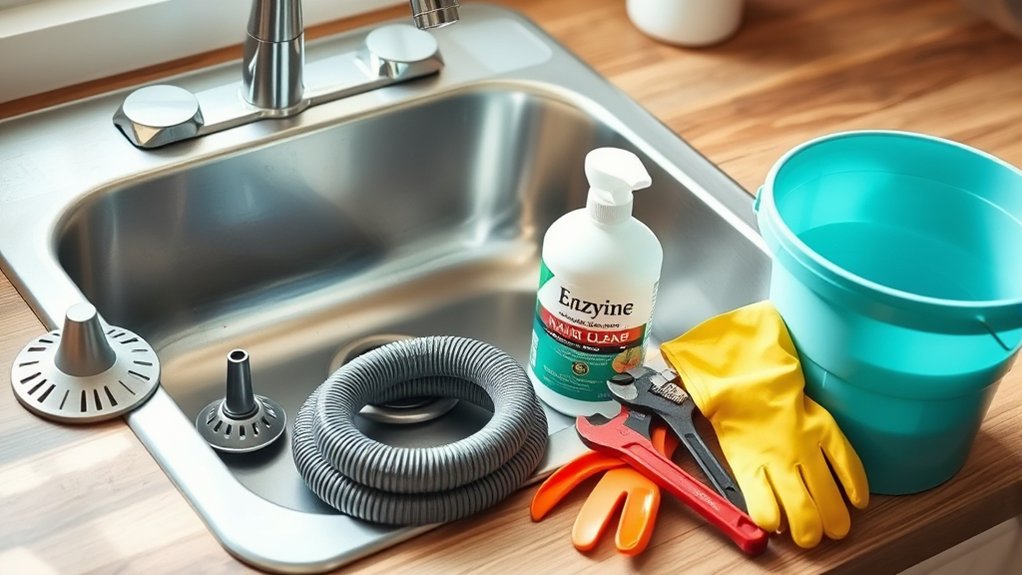
Before you begin unclogging your kitchen sink, make sure you have all the necessary tools and supplies on hand. First, gather essential cleaning supplies like a bucket, sponge, and cleaning cloths to handle any spills or messes.
Ensure you have essential cleaning supplies ready before starting to unclog your kitchen sink.
You’ll also want a plunger specifically designed for sinks, a pipe wrench, and a drain snake or auger for tougher clogs. Having a bottle of baking soda and vinegar can help with natural cleaning solutions.
Don’t forget safety equipment; gloves are vital to protect your hands from harsh chemicals and sharp debris. Safety goggles are also recommended to shield your eyes from splashes.
It’s smart to lay down old towels or newspapers around the sink area to keep your workspace clean. By gathering these tools, cleaning supplies, and safety equipment beforehand, you’ll be well-prepared to tackle your kitchen sink clog efficiently and safely.
Identify Common Causes of Kitchen Sink Clogs
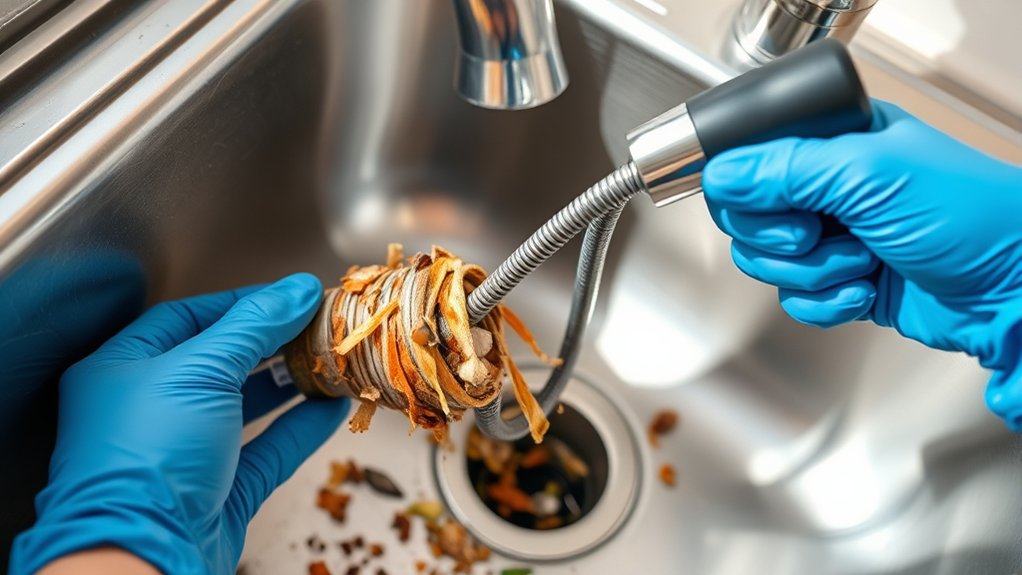
Several common causes can lead to a clogged kitchen sink, and knowing what they are helps you address the problem more effectively. When you perform regular plumbing inspection and drain maintenance, you can prevent many of these issues from developing into stubborn blockages.
Here are four frequent culprits behind kitchen sink clogs:
- Grease buildup: Fat and oil solidify inside pipes, restricting water flow.
- Food scraps: Small particles accumulate over time, especially if you skip using a strainer.
- Soap scum: Residue from dish soap combines with minerals and debris, forming a sticky clog.
- Foreign objects: Items like small utensils or packaging materials accidentally dropped down the drain can block pipes.
Understanding these causes lets you take targeted steps during your plumbing inspection and maintain clear drains. Staying proactive with drain maintenance minimizes clog risks and keeps your kitchen sink running smoothly.
How to Clear Your Kitchen Sink Drain Quickly

Knowing what causes kitchen sink clogs helps you tackle them faster when they happen. To clear your kitchen sink drain quickly, start with simple plumbing techniques like using a plunger or a drain snake. These tools can dislodge minor blockages and restore flow without hassle.
For better drain maintenance, avoid pouring grease or food scraps down the sink to prevent future clogs.
Here’s a quick guide to effective methods:
| Method | Tools Needed | Best For |
|---|---|---|
| Plunger | Plunger | Minor blockages |
| Drain Snake | Hand auger/snake | Stubborn, deeper clogs |
| Baking Soda & Vinegar | Household items | Organic buildup and odors |
Start with the plunger, then try the drain snake if needed. For routine drain maintenance, flush your sink with hot water and baking soda weekly. These plumbing techniques keep your kitchen sink draining smoothly and save time on repairs.
Remove and Clean the P-Trap to Fix Blockages
If your sink remains clogged after using a plunger or drain snake, you’ll want to remove and clean the P-trap. This curved pipe holds water to block sewer gases but can trap debris causing blockages. Performing a thorough P trap inspection and drain cleaning can often restore proper flow quickly.
When plungers fail, cleaning the P-trap often clears debris and restores sink flow quickly.
Here’s how to tackle it:
Place a bucket under the P-trap to catch any spills. Loosen the slip nuts at both ends of the trap using pliers or by hand. Remove the trap and inspect it for buildup or debris.
Clean the trap thoroughly with a brush and flush it with water before reinstalling. Once cleaned, reassemble the P-trap and run water to check if the clog clears.
This simple step tackles common blockages effectively and complements other drain cleaning efforts.
Easy Tips to Prevent Future Kitchen Sink Clogs
While unclogging your kitchen sink is important, preventing future clogs saves you time and hassle. To keep your drains flowing smoothly, avoid putting grease, coffee grounds, or large food scraps down the sink. These often cause blockages, especially if your garbage disposal isn’t running efficiently. Run cold water before, during, and after using the disposal to flush debris through the pipes.
Also, check your dishwasher connection regularly. Make sure it’s properly installed and free of leaks, as a faulty connection can lead to clogs or water backup. Clean the dishwasher filter and run it with hot water and vinegar occasionally to prevent buildup.
Finally, use a drain strainer to catch hair and food particles before they enter the drain. Taking these simple steps helps you avoid frequent clogs, reduces the need for harsh chemicals, and keeps your kitchen sink working well longer.
Frequently Asked Questions
Can Chemical Drain Cleaners Damage My Kitchen Pipes?
Yes, chemical drain cleaners can damage your kitchen pipes if you’re not careful. They often contain harsh substances that can cause pipe corrosion over time, especially with frequent use.
To protect your plumbing, prioritize chemical safety by following instructions closely and avoiding excessive use. If you notice any leaks or corrosion, stop using these cleaners and consider safer alternatives or professional help to prevent long-term damage to your pipes.
How Do I Know if I Need a Professional Plumber?
If you’ve tried DIY methods like plunging or using basic plumbing tools and the clog persists, it’s time to call a professional plumber. Imagine endlessly battling a stubborn blockage that just won’t budge. That’s frustrating and can actually make the problem worse.
When water drains slowly, you hear gurgling sounds, or multiple drains back up, don’t hesitate. Professionals have the right expertise and equipment to fix issues safely and prevent costly damage.
Are Garbage Disposals Linked to Frequent Sink Clogs?
Yes, garbage disposals can be linked to frequent sink clogs if you don’t keep up with proper garbage maintenance. Food scraps and grease can build up, especially as your disposal ages and its lifespan decreases.
If you’re noticing clogs often, it might be time to clean or service the disposal, or consider replacing it. Regular maintenance helps prevent blockages and extends your disposal lifespan, keeping your sink running smoothly.
Can Tree Roots Cause Kitchen Sink Drain Blockages?
Yes, tree roots can cause kitchen sink drain blockages by infiltrating underground pipes searching for moisture. When roots penetrate cracks or joints in these pipes, they grow inside, creating stubborn clogs that slow or stop drainage.
If you notice slow drains or gurgling sounds, tree roots might be the culprit. You’ll need to inspect your underground pipes and possibly hire a professional to remove roots and repair any damage to prevent recurring blockages.
What Are Eco-Friendly Alternatives to Unclog Drains?
You can use biodegradable solutions like baking soda and vinegar to clear your drain without harming the environment. Natural enzyme treatments are another great option; they break down organic matter gently and effectively.
These eco-friendly alternatives avoid harsh chemicals, keeping your plumbing safe and reducing pollution. Just pour the enzyme treatment into the drain, let it sit overnight, and flush with hot water. You’ll keep things flowing naturally and responsibly.
Conclusion
Unclogging your kitchen sink doesn’t have to be a hassle. With these simple steps, you can tackle it yourself quickly. You might worry that it’s too complicated or messy, but once you gather the right tools and follow the process, it’s surprisingly straightforward.
Plus, taking time to prevent future clogs will save you from frequent headaches. So, roll up your sleeves because you’ve got this! Unclogging a kitchen sink drain is easier than you think.