10 Factors Affecting How Much a Typical Kitchen Remodel Costs
If you’re thinking about a kitchen remodel, you’re not alone. Many people find themselves overwhelmed by the costs and decisions involved. It’s tough to know where to start or how to budget without running into unexpected expenses.
When planning your kitchen remodel, expect costs to vary based on your kitchen’s size and layout, material choices, and cabinet styles. Appliances, labor, and the complexity of your design also play big roles.
Don’t forget permits, inspections, and possible plumbing or electrical updates that add expenses.
Timing matters too, since seasonal demand affects prices and availability.
By understanding all these factors, you’ll be better prepared to manage your budget and avoid surprises throughout your project.
Key Takeaways
- Kitchen size and layout impact costs through material needs, appliance placement, and potential structural modifications.
- Material quality and design complexity significantly influence expenses, from countertops to cabinetry and flooring choices.
- Cabinet styles, hardware, and appliance selections affect both initial costs and long-term value.
- Labor costs, including skilled workmanship, permits, and inspections, contribute substantially to the overall budget.
- Project timing and seasonal demand can alter labor rates, material prices, and contractor availability.
How Kitchen Size Shapes Your Remodel Cost
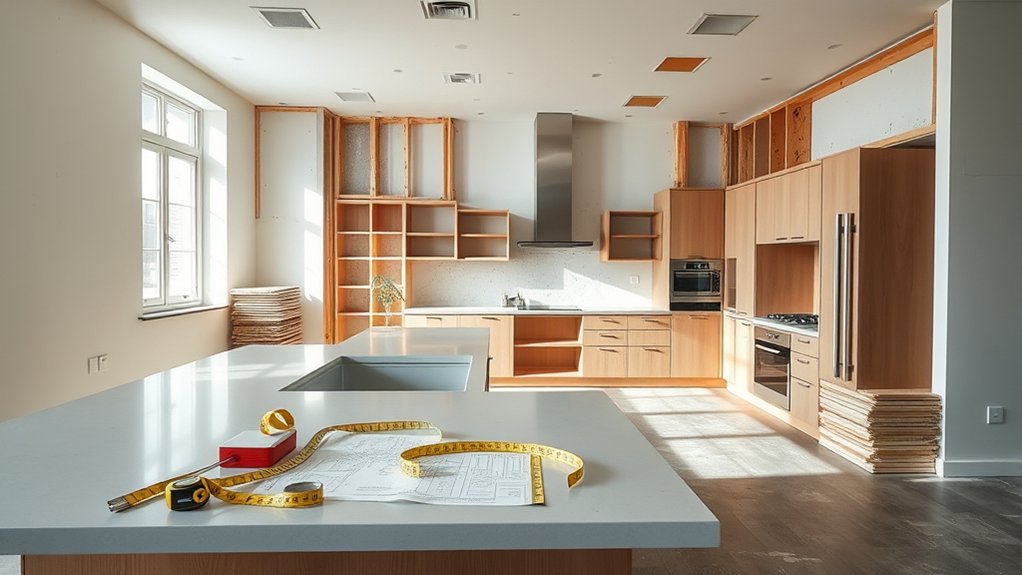
How much space your kitchen occupies directly impacts your remodel cost. When you have a larger kitchen, you’ll naturally need more materials and labor, which ramps up expenses. For example, if you decide to add or expand a kitchen pantry, the extra cabinetry and shelving will increase your budget.
Even the countertop materials you choose for a bigger area can add up quickly since you’ll need more surface coverage. Conversely, a smaller kitchen means less square footage to cover, which usually lowers costs. However, keep in mind that tight spaces might require custom solutions, affecting your budget differently.
You should also consider how the kitchen’s layout and size influence appliance placement and plumbing needs, as these can alter costs too. By understanding how your kitchen’s size shapes your remodel cost, you can better plan your project and avoid unexpected expenses.
How Material Choices Affect Kitchen Remodel Budgets

Because the materials you select play a major role in your kitchen remodel budget, choosing wisely can help you control costs. For example, countertop materials vary widely in price, from affordable laminate to high-end quartz or granite. Picking a durable yet budget-friendly option can save you money without sacrificing style.
Likewise, flooring options impact your costs considerably. Hardwood floors add warmth and value but come at a premium, while vinyl or tile often cost less and offer durability.
When planning, balance your budget with your style preferences. Research the lifespan and maintenance costs of different materials to avoid unexpected expenses later.
How Cabinet Styles Influence Kitchen Remodel Costs

When you choose cabinet styles for your kitchen remodel, you directly impact your overall costs. Different styles range widely in price, with simple shaker cabinets generally costing less than custom or ornate designs. The cabinet finishes you select also play a big role. Painted or stained finishes can add to your budget, especially if you opt for high-end materials or multiple layers for durability.
Don’t overlook cabinet hardware either. While it might seem minor, hardware choices like handles and knobs can vary from budget-friendly to luxurious, influencing your total spend. If you want to save, consider standard finishes and simple hardware options that still look great but won’t break the bank. Custom cabinets with unique finishes and premium hardware drive costs up but can substantially improve your kitchen’s style and value. Balancing style preferences with your budget ensures you get the look you want without overspending.
How Appliances Add to Your Kitchen Remodel Expenses
When you’re planning your kitchen remodel, it’s easy to overlook how much appliances can affect your budget. The type you pick, their energy efficiency, and installation costs all add up faster than you might expect. Plus, don’t forget to consider maintenance fees—they’re important to keep everything running smoothly over time.
Appliance Types And Costs
Although appliances might seem like just another part of your kitchen, they can considerably impact your remodel budget. Choosing between basic, mid-range, or high-end models affects costs, appliance maintenance, and warranties.
Higher-end appliances often come with extended warranties, which reduce future expenses, but they also raise your initial investment. Remember, cheaper options might cost more in repairs over time because of limited warranties.
| Appliance Type | Average Cost | Warranty & Maintenance |
|---|---|---|
| Basic | $500 – $1,000 | Limited warranty; higher maintenance |
| Mid-Range | $1,000 – $3,000 | Standard warranty; moderate maintenance |
| High-End | $3,000+ | Extended warranty; lower maintenance |
Balancing appliance costs with warranties and maintenance needs helps you control your overall remodel expenses.
Energy Efficiency Impact
Because energy-efficient appliances often come with a higher upfront price, they can increase your kitchen remodel costs, but they also help you save money over time through reduced utility bills. When choosing energy efficient appliances, you’re investing in long-term savings and environmental benefits.
Incorporating smart lighting into your remodel not only *boosts* convenience but also cuts energy use, further lowering your utility expenses. Smart lighting systems allow you to control brightness and timing, ensuring lights are used only when needed.
Keep in mind that opting for energy efficient appliances and smart lighting might stretch your initial budget, but these choices *improve* your kitchen’s overall efficiency and value. Ultimately, these upgrades balance higher upfront costs with significant savings and sustainability down the road.
Installation And Maintenance Fees
How much do installation and maintenance fees really add to your kitchen remodel expenses? When you factor in appliances, these costs can quickly rise. Installing built-in ovens, dishwashers, or refrigerators often requires professional help, especially if plumbing or electrical work is involved.
You’ll also want to take into account the upkeep of these appliances to avoid future repair expenses. Beyond appliances, the choice of countertop options and backsplash designs can influence installation fees. For instance, heavy stone countertops or intricate tile backsplashes demand skilled labor, increasing costs.
While you might focus on upfront prices, don’t overlook how installation complexity and ongoing maintenance affect your budget. Planning carefully ensures you won’t face unexpected fees that inflate your kitchen remodel expenses.
How Labor Costs Impact Your Kitchen Remodel Budget
When you’re planning your kitchen remodel, it’s important to remember that skilled labor can be one of the biggest expenses. The cost really depends on how long the project takes and the level of expertise needed.
Knowing these factors upfront can help you set a realistic budget and avoid any surprises down the road. So, keep this in mind as you map out your plans!
Skilled Labor Expense
Wondering why skilled labor costs can take such a big chunk out of your kitchen remodel budget? It all comes down to the value of skilled craftsmanship and the specialized techniques professionals bring to your project. Hiring experts guarantees quality results, but it comes at a price.
Here are three reasons skilled labor impacts costs:
- Expertise and Precision: Professionals use specialized techniques that prevent costly mistakes and ensure durability.
- Custom Solutions: Skilled workers tailor designs to your space, requiring advanced skills and attention to detail.
- Efficiency with Quality: Experienced labor balances speed and accuracy, delivering superior work that lasts longer.
When planning your budget, keep in mind that investing in skilled labor means fewer repairs and a kitchen that stands the test of time.
Labor Time Variability
Why does the time it takes to complete labor vary so much in kitchen remodels? Several factors influence labor time, directly impacting your budget.
For example, installing custom cabinetry takes longer than standard options because of precise measurements and adjustments. Likewise, the choice of backsplash materials affects installation complexity. Intricate tile patterns or natural stone demand more time than simple designs.
Unexpected challenges like outdated wiring or plumbing issues can also extend labor hours. When planning your remodel, consider how these elements affect labor duration.
The longer the job, the higher the labor costs. So, selecting simpler cabinetry or backsplash options can save you money. Being aware of labor time variability helps you set realistic expectations and manage your kitchen remodel budget more effectively.
How Structural Changes Raise Kitchen Remodel Costs
Because structural changes involve altering your kitchen’s foundation, walls, or support beams, they can profoundly increase your remodel costs. When you decide to modify your kitchen layout or add custom storage solutions, these changes often require moving or removing walls. That means extra labor and materials.
Here are three ways structural changes raise your expenses:
- Demolition and Reinforcement: Removing walls or beams means you need to demolish carefully and reinforce the structure to maintain safety and stability.
- Permits and Inspections: Structural modifications usually require permits and inspections, adding both time and fees.
- Material Costs: New support beams, headers, or framing materials add to your budget, especially if you want high-quality or custom options.
If you want a more open kitchen layout or built-in storage solutions, be prepared for these added costs. Understanding this upfront helps you plan your budget and avoid surprises during your remodel.
How Plumbing and Electrical Updates Add Expenses
Updating your kitchen’s plumbing and electrical systems can considerably increase your remodel costs, especially if you’re relocating fixtures or upgrading to modern appliances. Plumbing upgrades often involve moving water lines or drains, which requires opening walls or floors. This labor and material expense adds up quickly.
You’ll also need to verify your plumbing meets current codes, which might mean replacing old pipes or adding shut-off valves.
Electrical rewiring is another significant cost factor. Modern kitchens demand more outlets, higher-capacity circuits, and dedicated lines for appliances like dishwashers or microwaves.
If your existing wiring is outdated, electricians must upgrade the system to handle increased loads safely. This work can involve installing new breakers, rewiring walls, and adding GFCI outlets, all of which add to your final bill.
How Kitchen Design Complexity Affects Remodel Costs
When you choose a more intricate kitchen design, your remodel costs tend to rise due to the added labor and materials required. Complex layouts demand more planning and skilled craftsmanship, pushing your budget higher.
For example, custom cabinet styles often require specialized woodworking, increasing both material and labor costs. Equally, unique countertop materials like quartz or exotic stone add to your expenses because of their price and installation challenges.
Here are three ways design complexity impacts your remodel cost:
- Custom Cabinet Styles: More detailed designs or non-standard sizes mean higher production and installation fees.
- Unique Countertop Materials: Rare or imported stones cost more upfront and need expert fitting.
- Intricate Layouts: Multiple angles, islands, or built-ins require extra time and precision during construction.
How Permits and Inspections Increase Remodel Expenses
Although permits and inspections are essential for ensuring safety and code compliance, they can add unexpected costs to your kitchen remodel. Managing the permit process often involves fees that vary by location and the scope of your project.
Permits and inspections ensure safety but can introduce unexpected costs based on your project’s location and scope.
You’ll need to submit detailed plans and wait for approval before starting work, which might delay your timeline and increase labor costs.
Inspection requirements add another layer of expense. Throughout the remodel, city inspectors will check electrical, plumbing, and structural work to ensure everything meets local codes.
If any part fails inspection, you’ll have to fix it before proceeding, which can lead to additional costs and time.
While these steps might seem frustrating, they protect your investment and prevent costly future issues. Understanding the permit process and inspection requirements upfront can help you budget more accurately and avoid surprises during your kitchen remodel.
How Project Timing Influences Kitchen Remodel Prices
When you’re planning your kitchen remodel, the timing can really make a difference in the price. You see, seasonal demand often pushes costs up, so doing your project during a busy time might cost more. Also, contractor availability changes throughout the year, which can impact how soon they can start and how much they charge. On top of that, material prices don’t stay the same—they can go up or down depending on when you schedule your remodel. So, keeping an eye on timing can help you save some money.
Seasonal Demand Impact
How does the time of year affect your kitchen remodel costs? Seasonal demand plays a big role in pricing, as suppliers and contractors respond to fluctuations throughout the year. When demand spikes, prices tend to rise, and supply chain delays can worsen.
To plan wisely, consider these factors:
- Peak Seasons Spring and summer see high demand, pushing up material and labor costs.
- Off-Peak Savings Fall and winter often offer lower prices due to reduced demand, easing supply chain pressures.
- Holiday Impact Around major holidays, supply chains slow, causing delays and potential price hikes.
Contractor Availability Fluctuations
Since contractors often juggle multiple projects, their availability can vary considerably throughout the year. This directly impacts your kitchen remodel costs. When contractor availability is tight, you might face scheduling delays that push your project’s timeline out, increasing labor costs or forcing you to pay premium rates to secure a spot.
Booking during slower periods can help you avoid these delays and possibly negotiate better prices. On the other hand, if you rush to start during a busy season, limited contractor availability may lead to compromises in quality or extended wait times.
To keep your remodel on budget and on time, plan ahead, communicate clearly with your contractor, and stay flexible with your project’s timing. This way, you can navigate fluctuations in contractor availability effectively.
Material Cost Variations
Material costs can swing dramatically depending on when you schedule your kitchen remodel. Timing affects prices because suppliers adjust costs based on demand, availability, and market trends. When you plan your project, consider these factors:
- Seasonal price shifts Materials might cost less during off-peak times when demand is low, but could be pricier in busy seasons.
- Material durability choices Higher durability materials often carry premium prices, which fluctuate with market conditions.
- Supplier negotiations Ordering at the right time can give you an advantage to negotiate better rates or discounts.
Frequently Asked Questions
How Can I Finance My Kitchen Remodel?
You can finance your kitchen remodel through several financing options like personal loans, home equity lines of credit, or credit cards with promotional rates. Start by creating a solid budget plan to understand how much you need and what you can afford monthly.
Some contractors also offer payment plans. By carefully comparing your options and sticking to your budget plan, you’ll manage costs effectively and avoid overspending during your remodel.
What Are the Latest Kitchen Remodeling Trends?
You’ll love the latest kitchen remodeling trends that focus on modern design and sustainable materials. Think sleek, minimalist cabinets paired with energy-efficient appliances.
You can incorporate recycled wood or bamboo countertops to boost eco-friendliness. Matte finishes and smart storage solutions are also popular, helping you keep a clean, contemporary look.
How Long Does a Typical Kitchen Remodel Take?
Think of a kitchen remodel like baking a cake; you can’t rush perfection. Typically, it takes about 6 to 12 weeks from start to finish.
Your timeline planning plays a huge role here, especially when coordinating contractors and deliveries. Material selection also impacts how long the project lasts. Custom or rare materials might extend the timeline.
Staying on top of these details keeps your remodel smooth and on schedule.
Can I Live in My Home During the Remodel?
Yes, you can live in your home during the remodel, but it depends on the project’s scope. If the renovation requires extensive work or home renovation permits limit access, you might need temporary living arrangements to stay comfortable and safe.
Make sure to discuss this with your contractor early on so you can plan accordingly. Living in your home during a remodel is possible, but preparation is key to minimizing disruption.
How Do I Choose the Right Contractor for My Kitchen Remodel?
When choosing the right contractor for your kitchen remodel, focus on contractor selection by checking their remodeling expertise. Look for someone with strong references, relevant experience, and proper licensing.
Don’t hesitate to ask for past project photos and detailed estimates. Trust your instincts during interviews and communication. Clear, honest dialogue helps avoid surprises.
Picking the right contractor guarantees your remodel runs smoothly and meets your expectations.
Conclusion
When planning your kitchen remodel, you’ll want to weigh each factor carefully. Size, materials, appliances, and labor all play a role in the final cost. Have you ever imagined how your dream kitchen’s look and feel might change with just a few design choices?
Remember, thoughtful decisions now can save you headaches and money later. So, are you ready to create a space that’s both beautiful and budget-friendly? Understanding the factors affecting how much a typical kitchen remodel costs will help you make the best choices.