10 Easy Steps to Clean Kitchen Sink Drain Smell
Dealing with a smelly kitchen sink drain can be frustrating, and you’re definitely not alone. Many people struggle with persistent odors that just won’t go away no matter how often they clean. If you want a simple, effective solution to keep your kitchen smelling fresh, you’re in the right place.
To tackle your kitchen sink drain smell, first gather gloves, brushes, and natural cleaners like baking soda and vinegar. Check for trapped food or grime, then remove debris and flush with hot water.
Use baking soda and vinegar to fizz away odors, followed by boiling water to clear buildup. Don’t forget to clean the sink stopper and keep up with monthly maintenance to prevent odors.
Keep going for simple tips to keep your sink fresh and odor-free longer.
Key Takeaways
- Remove visible debris like food scraps and grease from the drain using gloves and a mesh strainer. This helps prevent future buildup.
- Flush the drain with boiling water regularly to dissolve grease and soap scum. It also reduces bacteria that cause odors.
- Use a baking soda and vinegar mixture in the drain, let it fizz for 15 minutes, then flush with hot water. This neutralizes smells effectively.
- Thoroughly clean and deodorize the sink stopper monthly by scrubbing and soaking it in a vinegar solution.
- Leave the drain uncovered after cleaning to allow air circulation. Perform monthly maintenance to keep odors from coming back.
Get Your Tools and Ingredients Ready
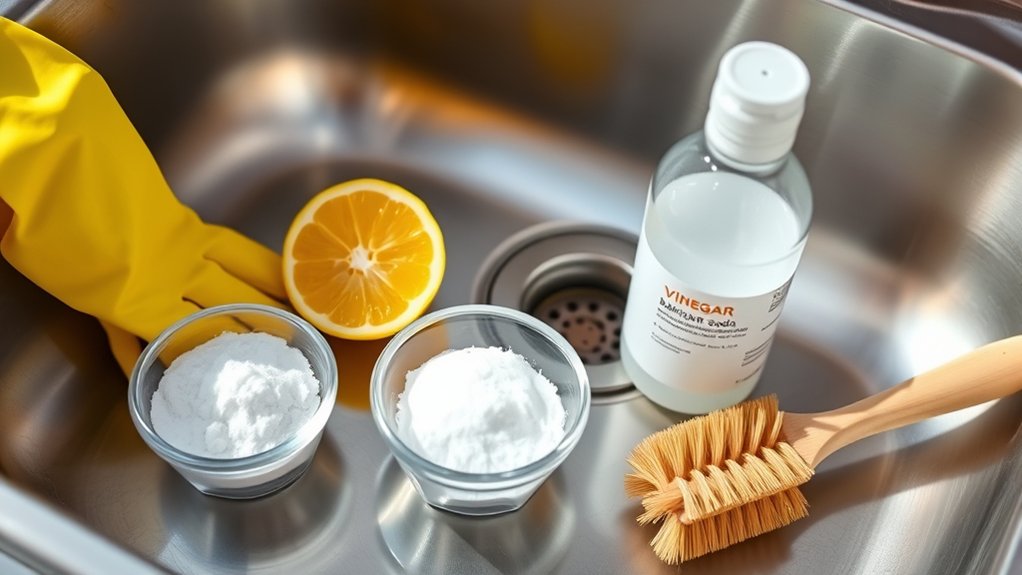
Before you begin, gather all the tools and ingredients you’ll need to tackle the sink drain smell. Having everything on hand will make the process smoother and more efficient. Start with basic cleaning supplies like rubber gloves, a scrub brush or old toothbrush, and a bucket to catch any debris or water.
You’ll also want to grab a plunger to help dislodge any blockages causing odors. For scent elimination, stock up on natural deodorizers such as baking soda and white vinegar. These ingredients work well together to break down grime and neutralize unpleasant smells without harsh chemicals.
Furthermore, lemon juice or essential oils can provide a fresh scent boost once the drain is clean. Finally, keep a flashlight nearby to inspect hard-to-see areas under the sink. With your cleaning supplies and scent elimination ingredients ready, you’ll be set to restore freshness to your kitchen sink drain quickly and effectively.
Find Out What’s Causing Your Kitchen Sink Smell
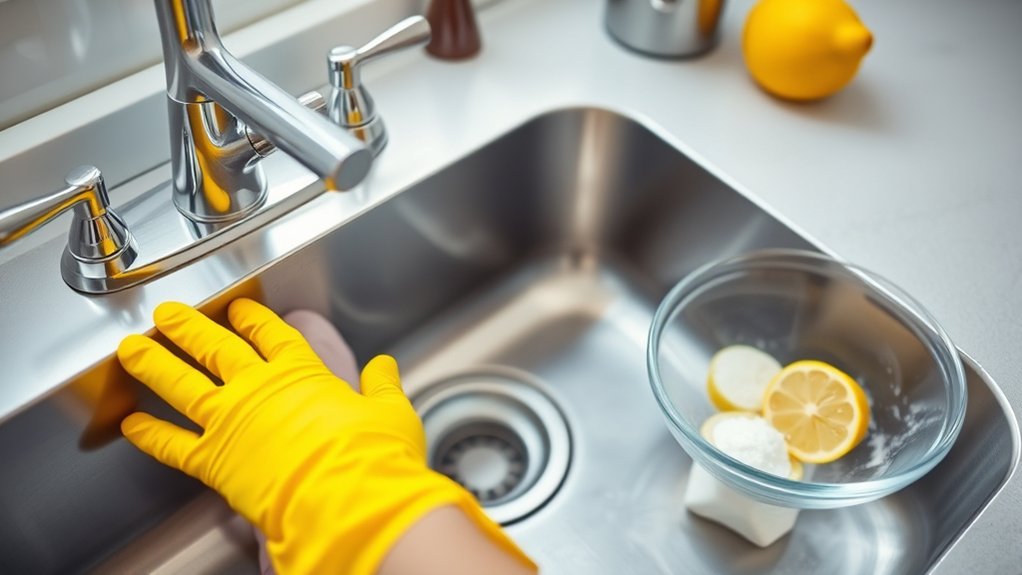
Since a persistent odor often signals an underlying issue, you need to identify what’s causing your kitchen sink smell to effectively eliminate it. Typically, the unpleasant smell stems from odor causing bacteria thriving in moist, food-trapped areas or from plumbing blockages that hold stagnant water.
To pinpoint the source, inspect these common problem areas:
- Trapped food particles: Bits of food caught in the drain or garbage disposal can rot, feeding odor causing bacteria.
- Clogged P-trap: Plumbing blockages in the curved pipe beneath the sink often contain standing water that breeds bacteria and emits foul smells.
- Dry or broken drain seals: If water can’t trap odors properly, smells can escape from the pipes.
Clear Out Visible Debris From the Drain
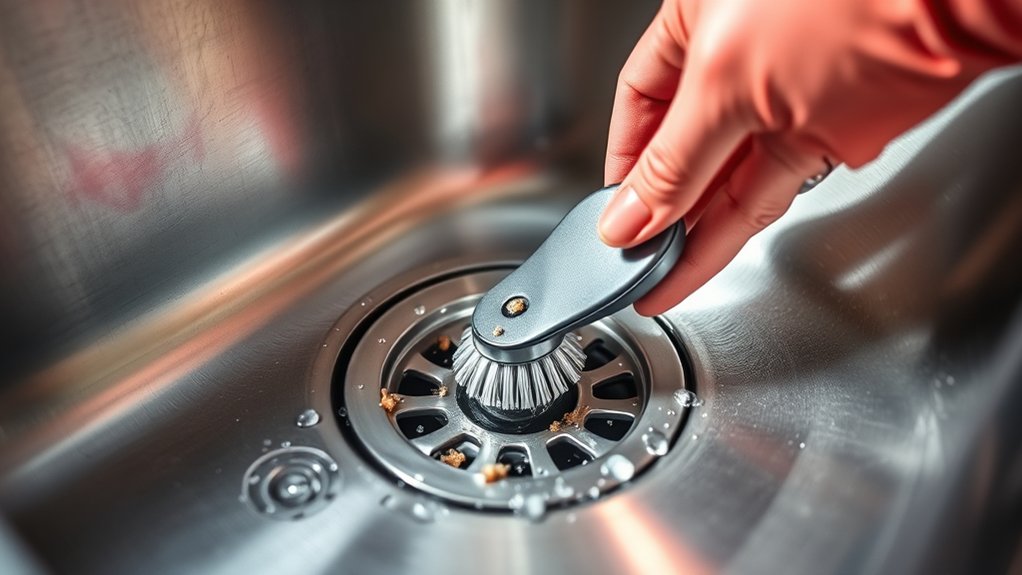
You’ll want to start by looking for common debris like food scraps and grease buildup in the drain. Go ahead and put on some gloves to protect your hands while you remove these particles. Just be sure to dispose of the debris properly so you don’t end up with clogging or odors coming back.
Identify Common Drain Debris
Several types of debris commonly clog kitchen sink drains and cause unpleasant odors. To keep your drain maintenance effective and guarantee debris prevention, it’s important to identify what usually gets stuck in your drain. You’ll often find:
- Food scraps like vegetable peels, coffee grounds, and small bones
- Grease and oil buildup that solidifies inside pipes
- Soap scum mixed with hair or fibers
Knowing these common culprits helps you stay vigilant and clear out visible debris regularly. This simple step prevents blockages and reduces smells, making your kitchen more hygienic. By spotting and removing these items early, you maintain a cleaner drain and avoid costly plumbing issues down the line.
Use Gloves For Safety
After spotting the common debris that causes drain odors, it’s time to tackle the mess safely. First, put on protective gear, specifically a sturdy pair of gloves. Gloves shield your hands from bacteria, sharp objects, and harsh cleaning agents lurking in the drain.
Taking this safety precaution prevents cuts and skin irritation, keeping you comfortable throughout the cleaning process. When you clear out visible debris, use your gloved hands or a tool to avoid direct contact. This simple step minimizes exposure to germs and potential allergens.
Always remember, gloves are your first line of defense when handling drain messes. Prioritizing safety guarantees the cleaning task is effective without risking your health or hygiene.
Proper Disposal Methods
Start by removing any visible debris from the drain to prevent buildup that causes odors. Clearing out scraps and gunk regularly is a key part of plumbing maintenance and helps avoid costly drain replacement later on.
Use a flashlight to spot bits stuck inside and grab them with your fingers or a pair of tweezers. Proper disposal methods include:
- Tossing food scraps into the compost or trash, not the drain
- Avoiding grease or oil down the sink, as they solidify and trap debris
- Using a mesh strainer to catch particles before they enter the drain
Flush the Drain With Hot Water to Loosen Residue
You’ll want to flush your drain with hot water because it helps break down grease and loosen stuck-on residue. Hot water melts away buildup that cold water just can’t, making it easier to wash away odors.
Benefits of Hot Water
Hot water plays an essential role in keeping your kitchen sink drain fresh by effectively loosening and washing away stubborn residue. Using hot water benefits your cleaning routine by breaking down grease and food particles that cling to your pipes.
When you incorporate hot water into your drain cleaning techniques, you improve the overall effectiveness and reduce foul odors.
Here are some key benefits of using hot water for drain cleaning:
- It melts away greasy buildup that cold water can’t dissolve.
- It helps flush out trapped debris, preventing clogs.
- It reduces the chance of bacterial growth that causes bad smells.
How Hot Water Works
Understanding how hot water works helps you make the most of its benefits when cleaning your kitchen sink drain. When you flush the drain with hot water, it dissolves grease, soap scum, and food residue that stick to the pipes, making it easier to clear away buildup.
This process improves water filtration through your drain system by preventing clogs that trap odors. Regularly using hot water as part of your drain maintenance routine keeps your pipes clean and reduces unpleasant smells.
It’s a simple yet effective way to loosen residue without harsh chemicals. Just pour a steady stream of hot water down the drain after washing dishes or using other cleaning methods to keep your sink smelling fresh and functioning smoothly.
Break Down Odors With Baking Soda and Vinegar
Although kitchen sink odors can be stubborn, breaking them down with baking soda and vinegar is a simple and effective method. You’ve probably noticed how these two household staples can tackle fridge odors and laundry smells, so why not use them for your sink drain?
Start by pouring half a cup of baking soda down the drain. Then, slowly add a cup of white vinegar. You’ll see it fizz—that’s the reaction breaking down odor-causing buildup. Let it sit for 15 minutes to work its magic. Afterward, flush the drain with hot water to wash away loosened grime and lingering smells.
Here’s what you can expect during the process:
- A fizzy reaction that lifts stubborn residue
- A fresh, neutral scent replacing foul odors
- An easy, chemical-free way to maintain your drain
This easy combo helps you keep kitchen smells at bay without harsh cleaners or extra effort.
Scrub the Drain for a Deep Clean
Once the baking soda and vinegar have done their job, you’ll want to scrub the drain to remove any remaining grime and buildup. Grab an old toothbrush or a small scrub brush and focus on the drain’s interior surfaces.
Scrubbing helps eliminate drain bacteria that cling to the walls, which can cause persistent odors. Pay close attention to the areas around the drain stopper and any crevices where buildup tends to accumulate.
By physically removing this debris, you’re improving odor control and preventing future smells from developing. Don’t forget to scrub the rubber gasket or seal if your drain has one, as bacteria often hide there.
Taking the time to scrub thoroughly guarantees that your drain stays cleaner longer and cuts down on the need for harsh chemical cleaners. This step is essential for maintaining a fresh-smelling kitchen sink and keeping your drain functioning smoothly.
Rinse the Drain With Boiling Water to Remove Build-Up
You’ll want to rinse your drain with boiling water to break down grease and grime effectively. Just make sure the water is hot enough to dissolve the build-up, but not so hot that it could damage your pipes. Doing this once or twice a week is a simple way to keep your drain fresh and clear.
Benefits of Boiling Water
Boiling water effectively breaks down grease and soap scum that build up in your kitchen sink drain. When you pour boiling water down the drain, it helps maintain kitchen hygiene by flushing away residues that cause unpleasant odors. This simple step supports plumbing maintenance by preventing clogs and buildup that can damage your pipes over time.
Here’s why boiling water is beneficial:
- Dissolves fats and oils that solidify in the drain
- Loosens soap scum and food particles stuck to pipes
- Reduces bacteria growth that causes bad smells
Regularly using boiling water keeps your sink drain cleaner and fresher, making it an easy, eco-friendly addition to your kitchen cleaning routine. It’s a quick way to protect your plumbing while improving overall kitchen hygiene.
Proper Water Temperature
Although it might seem simple, using the proper water temperature is essential when rinsing your kitchen sink drain to remove build-up effectively. Boiling water is your best choice because it dissolves grease and loosens grime that cold or lukewarm water can’t tackle.
When you pour boiling water down the drain, it melts away residues that cause odors and blockages, making drain maintenance easier and more efficient. Be careful not to use excessively hot water on PVC pipes, as it might damage them; check your plumbing material first.
Rinsing with the right water temperature not only clears build-up but also prevents future clogs and unpleasant smells. Remember, consistent use of boiling water during drain maintenance keeps your kitchen sink fresh and functioning smoothly.
Frequency of Rinsing
Rinsing your kitchen sink drain with boiling water once or twice a week can prevent build-up from turning into stubborn clogs and odors. Regular boiling water rinses are a simple yet effective method for drain maintenance that keeps your sink hygiene in check.
This routine helps dissolve grease, soap scum, and food particles before they accumulate.
To maintain ideal sink hygiene, focus on:
- Pouring boiling water slowly to ensure it reaches deep into the drain.
- Scheduling rinses after heavy cooking or dishwashing sessions.
- Combining rinsing with other cleaning habits like scraping plates and using strainers.
Clean and Deodorize Your Kitchen Sink Stopper
Since kitchen sink stoppers often trap food particles and grease, they can become a hidden source of unpleasant odors. To maintain good kitchen hygiene and effective drain maintenance, it’s important to clean and deodorize your stopper regularly.
Start by removing the stopper from the sink. Most pop out with a gentle pull or by loosening the pivot rod underneath. Rinse it thoroughly under hot water to dislodge trapped debris.
Next, scrub the stopper using a brush and a mixture of baking soda and vinegar, which naturally breaks down grime and neutralizes odors. After scrubbing, rinse with hot water again.
For stubborn smells, soak the stopper in a vinegar solution for 15 minutes before rinsing. Finally, wipe the stopper dry and replace it securely.
Keep Your Sink Fresh With Monthly Treatments
Regularly cleaning your sink stopper helps reduce odors, but keeping your entire drain fresh requires consistent care beyond that. To maintain a pleasant-smelling kitchen sink, monthly treatments are essential. These treatments not only tackle buildup but also encourage good air circulation within your drain, which prevents musty smells.
Here’s how you can keep up with proper drain maintenance each month:
- Pour a mixture of baking soda and vinegar down the drain, let it fizz for 10 minutes, then flush with hot water to clear debris.
- Use a brush or pipe cleaner to scrub accessible parts of the drain and stopper, removing trapped grime.
- Leave the drain uncovered for a few hours after cleaning to promote air circulation and drying.
Prevent Kitchen Sink Smells With These Simple Habits
Although monthly treatments help keep your drain clean, adopting simple daily habits can prevent odors from developing in the first place. You should avoid putting grease or large food scraps down the garbage disposal, as these cause buildup and smells.
Run cold water for 15 seconds before and after using the disposal to flush debris. Regularly check your plumbing for leaks or blockages with a plumbing inspection to catch issues early. Also, keep your sink and drain clean by wiping down surfaces and clearing out strainers.
| Habit | Why It Helps | How to Do It |
|---|---|---|
| Avoid grease in disposal | Prevents buildup | Pour grease in a container |
| Run cold water | Flushes debris | Let water run before/after use |
| Regular plumbing inspection | Detects leaks/blockages | Schedule yearly checkups |
| Clean sink surfaces | Stops bacteria growth | Wipe daily with mild cleaner |
| Use sink strainers | Catches food scraps | Empty strainers regularly |
Frequently Asked Questions
Can Kitchen Sink Smells Cause Health Problems?
Yes, kitchen sink smells can cause health problems if you don’t address them. The odor usually comes from bacteria buildup or mold, which can trigger allergies or respiratory issues.
You should focus on odor prevention by using regular cleaning techniques, like flushing the drain with baking soda and vinegar or using disinfectants. Staying proactive with these habits keeps your kitchen healthier and your air fresher.
Are Professional Drain Cleaners Safe for Kitchen Sinks?
Yes, professional drain cleaners are generally safe for kitchen sinks when used as directed. They rely on chemical reactions to break down clogs and buildup, making drain maintenance easier for you.
However, you should avoid overusing them, as harsh chemicals can damage pipes or finishes over time. Always follow the instructions carefully and consider alternatives like enzymatic cleaners for regular upkeep to protect your sink’s longevity and keep your drains fresh.
How Often Should I Replace My Kitchen Sink Drain?
You don’t want to wait until your kitchen sink turns into a mini swamp to think about replacement timing. Ideally, you should consider replacing your drain every 10 to 15 years, depending on wear and tear.
Regular drain maintenance can extend this, but ignoring it means you’re inviting leaks or clogs. Keep an eye out for persistent odors or slow drainage. They’re your cues to act before things get worse.
Can Certain Foods Increase Sink Drain Odors?
Yes, certain foods can increase sink drain odors. When food residues like grease, coffee grounds, or fibrous vegetables get stuck in your garbage disposal, they start to decompose and cause bad smells.
You should avoid putting these down your drain regularly or rinse the disposal well after use. Keeping your garbage disposal clean helps prevent buildup and keeps odors from developing in your kitchen sink drain.
Does Hard Water Affect Kitchen Sink Smell Buildup?
Yes, hard water can affect your kitchen sink smell buildup. The high mineral deposits from water hardness often cling to your drain pipes and sink surfaces. These deposits create a rough environment where bacteria and grime easily accumulate, leading to unpleasant odors.
To keep your sink smelling fresh, you’ll want to regularly clean and remove these mineral deposits before they cause stubborn smells that are harder to eliminate.
Conclusion
By following these simple steps, you’ll keep your kitchen sink smelling fresh and clean. Imagine Sarah, who struggled with a stubborn drain odor for months. After just one thorough cleaning using baking soda and vinegar, her kitchen felt inviting again.
Make it a habit to treat your sink monthly, and you’ll avoid unpleasant smells for good. With a little effort, your kitchen can stay fresh and welcoming every day.
Keeping your kitchen sink drain smell-free is easy when you follow these tips regularly.