How to Pack Kitchen Items in 3 Easy Steps
Packing up your kitchen can feel overwhelming, especially when you want to keep everything safe and organized. You’re not alone—many people struggle with how to pack kitchen items without breaking fragile pieces or losing track of essentials.
Luckily, with a few simple steps, you can make the whole process smoother and less stressful.
To pack your kitchen efficiently, start by sorting items into fragile (plates, glasses) and sturdy groups (pots, pans), setting aside daily essentials for easy access.
Next, wrap fragile pieces individually with bubble wrap or foam, avoid stacking them, and secure heavy appliances tightly.
Finally, label boxes clearly with bold markers or color codes, noting contents and room destination.
Follow these simple steps to protect your kitchen items and keep unpacking smooth, with helpful tips waiting just ahead.
Key Takeaways
- Sort kitchen items by fragility and use, separating fragile from sturdy and daily essentials for easy access.
- Wrap fragile items individually with bubble wrap or packing paper for maximum protection.
- Use sturdy boxes with padding and dividers to prevent movement and damage during transit.
- Label boxes clearly with contents, fragility, and designated room to streamline unpacking.
- Pack heavy appliances securely, removing detachable parts and wrapping cords separately for safety.
Sort Kitchen Items by Fragility and Use Before Packing

Before you begin packing, sort your kitchen items by how fragile they are and how often you use them. This step helps you decide which items need extra care and which can be packed more casually. Gather your kitchen storage containers, and group things like plates, glasses, and ceramic bowls separately from sturdier items like pots and pans. Also, set aside the essentials you use daily so you can unpack them first.
Next, think about the packing materials you’ll need for each group. Fragile items require bubble wrap, packing paper, or foam sheets to prevent damage. Bulkier, less delicate items can be packed with newspaper or simple padding to fill gaps.
Sorting your kitchen items this way streamlines packing, protects your belongings, and makes unpacking easier. You’ll appreciate the organization when your kitchen storage is ready to unpack in your new home without broken dishes or missing essentials.
Safely Pack Fragile and Heavy Kitchen Items
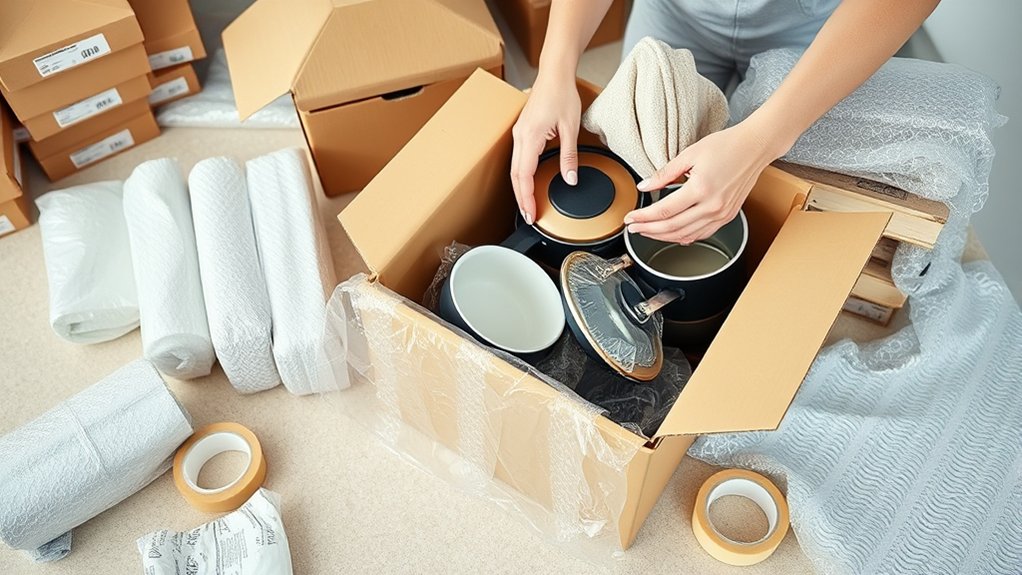
When packing fragile and heavy kitchen items, take extra care to prevent damage and make handling easier. Start by wrapping delicate ceramics individually with bubble wrap or packing paper to cushion them effectively. Avoid stacking these items directly on top of each other to minimize the risk of cracks or chips.
Use sturdy boxes with dividers or compartments for added protection when handling delicate ceramics. For heavy appliances, focus on securing them tightly inside their boxes to prevent shifting during transport. Remove any detachable parts and wrap cords separately.
Use foam inserts or crumpled packing paper around the appliance to fill empty spaces and absorb shocks. Lift heavy items carefully, using proper technique or asking for help to avoid injury. By handling delicate ceramics gently and securing heavy appliances properly, you’ll guarantee your kitchen essentials arrive safely and intact, making unpacking hassle-free.
Label and Organize Your Boxes for Easy Unpacking
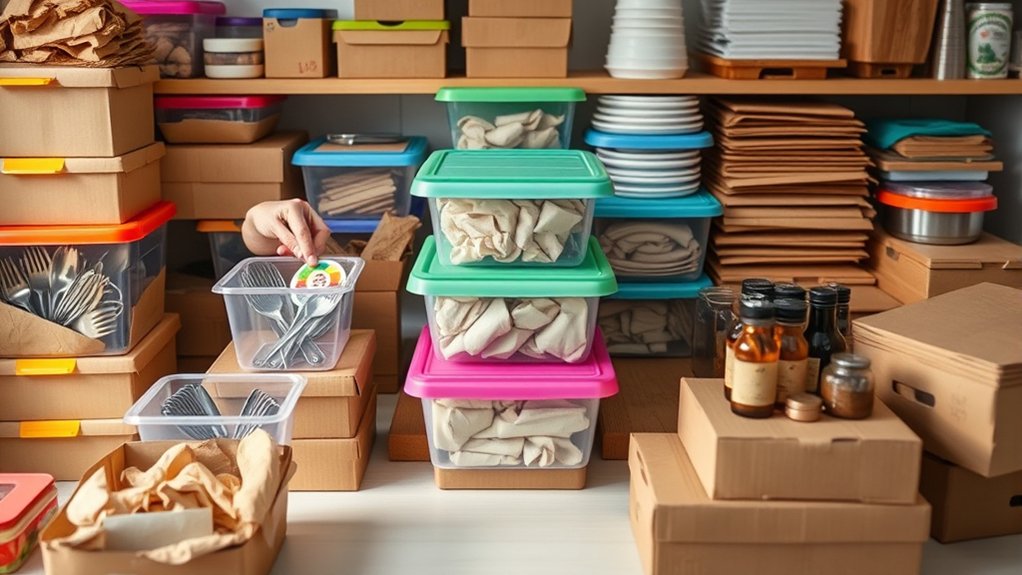
Although packing your kitchen items carefully is essential, labeling and organizing your boxes is just as important to make unpacking smoother. Start by creating a clear labeling system that identifies the contents and the room each box belongs to. Use bold markers or color-coded stickers to make labels stand out.
For example, assign a specific color to storage containers or fragile items so you can quickly spot them. Write detailed notes on the labels, such as “glass storage containers” or “heavy pots,” to help you prioritize unpacking.
Keep similar items together in the same box to avoid confusion later. Group storage containers with their matching lids to prevent mismatches. By organizing your boxes this way and sticking to your labeling system, you’ll save time and reduce stress when unpacking.
This simple step guarantees you’ll find what you need quickly and get your kitchen functional in no time.
Frequently Asked Questions
How Far in Advance Should I Start Packing Kitchen Items?
You should start packing kitchen items about two weeks before your move to stay on track with your packing timeline. Begin with non-essential items like rarely used gadgets and extra dishware.
This gives you plenty of time for storage organization, ensuring fragile items are wrapped and labeled properly. As moving day approaches, pack daily-use essentials last to avoid disruption.
Starting early helps reduce stress and keeps everything orderly.
What Packing Materials Are Best for Kitchen Utensils?
You’ll want to use packing paper or biodegradable bubble wrap for packing fragile items like glass utensils to avoid breakage. Choose eco-friendly materials like recycled cardboard boxes and compostable packing peanuts to keep things green.
Wrap each item individually, then place them snugly to prevent movement. Avoid plastic wrap when possible, and consider reusable cloth or towels for extra cushioning. This way, you protect your kitchen utensils while staying eco-conscious.
Can I Pack Food Items With Kitchenware?
You can pack food items with your kitchenware, but think of it like weaving a delicate tapestry. Each thread must stay safe and separate. To guarantee food safety, seal perishables tightly in airtight containers or bags to prevent spills and contamination.
Use packing tips like placing non-perishable, dry foods away from fragile dishes. Keeping things organized and secure helps your food and kitchenware arrive fresh and intact, ready for your next culinary adventure.
How Do I Protect Sharp Knives During Moving?
To protect sharp knives during moving, prioritize knife safety by wrapping each blade individually in bubble wrap or thick kitchen towels. Secure the wrapping with tape to prevent slipping.
Place the knives in a sturdy box labeled “fragile” and make certain blades face downward or are sheathed. This packing approach keeps blades from damaging other items or causing injury, so you can move safely without dulling or harming your knives.
Should I Disassemble Kitchen Appliances Before Packing?
Think of your kitchen appliances as puzzles. Disassembling them before packing lets you keep each piece safe and sound.
Yes, you should do appliance disassembly when possible to avoid damage during the move. Don’t forget to wrap and pack appliance cords separately. Coil them neatly and secure with twist ties.
This way, you prevent tangles and protect delicate parts. It makes unpacking a breeze and ensures your appliances work like new in your new home.
Conclusion
Now that you’ve sorted, packed, and labeled your kitchen items, you might think the hardest part is over. But here’s the twist: how you handle the unpacking can make or break your whole moving experience.
Don’t underestimate the power of your organized boxes; they’re your secret weapon. When the time comes, you’ll be glad you took these steps seriously.
Ready to see the magic unfold? Your perfectly packed kitchen awaits, making your move smoother and stress-free!