How to Snake a Kitchen Drain in 5 Easy Steps
Dealing with a clogged kitchen drain can be incredibly frustrating. You’re not alone—many people struggle with slow or blocked sinks that disrupt their daily routine. Whether it’s leftover food or grease buildup, finding a reliable way to fix the problem quickly is a must.
To snake your kitchen drain, first gather tools like a drain snake, gloves, and a bucket. Clear the area under your sink and place the bucket to catch water.
Feed the snake slowly into the drain, rotating it to break up clogs without forcing it. Pull the snake out carefully, dispose of debris, then run hot water to check flow.
Keep grease and food scraps out to prevent future clogs. Keep following for tips to maintain a clog-free drain.
Key Takeaways
- Gather necessary tools like a drain snake, gloves, bucket, flashlight, and wrenches before starting.
- Clear the area under the sink, place a bucket to catch water, and access the drain pipe easily.
- Slowly feed the snake into the drain, rotate clockwise, and use gentle back-and-forth motions to break up clogs.
- Retract the snake carefully, dispose of debris, run hot water, and test for smooth drainage flow.
- Prevent future clogs by avoiding grease, using strainers, flushing with baking soda and vinegar, and running cold water during disposal.
Gather Tools for Snaking Your Kitchen Drain
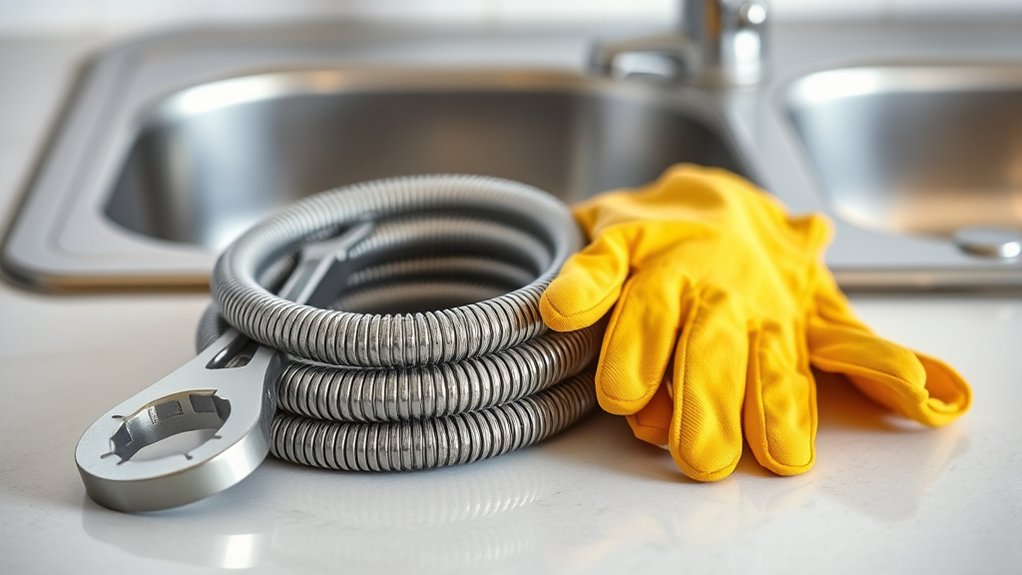
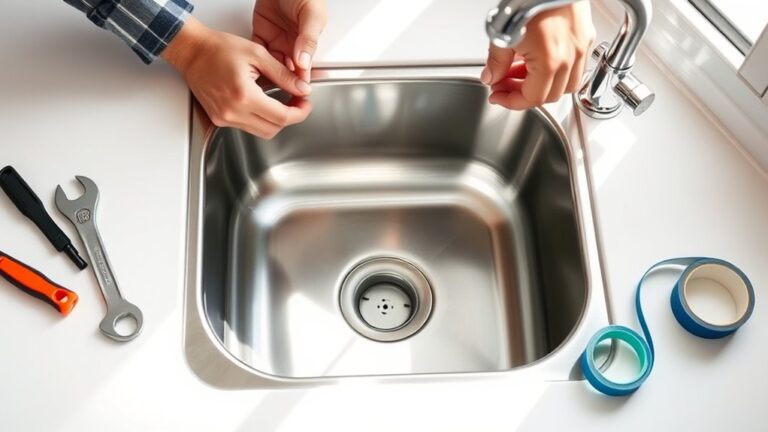
Before you start snaking your kitchen drain, you’ll need to gather the right tools to make the job easier and more effective. Start with a drain snake or auger, which is specifically designed to reach deep clogs. You’ll also want gloves to protect your hands and a bucket to catch any water or debris.
Though chemical cleaners might seem like a quick fix, they can sometimes damage your pipes. So keep them on hand only for minor pipe maintenance after snaking.
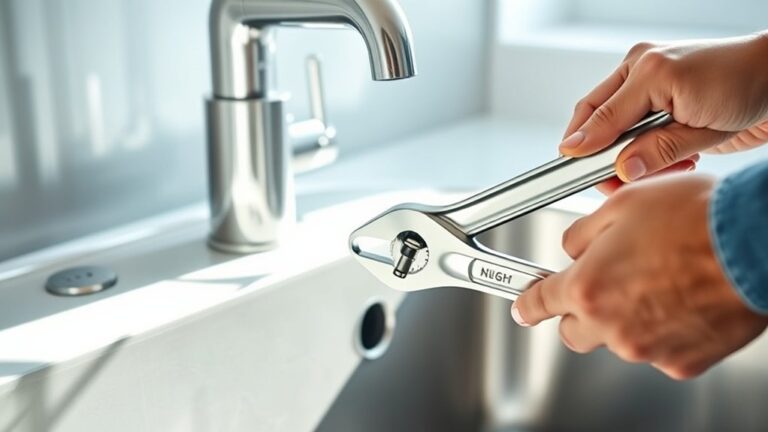
Have a flashlight ready to inspect tight spaces, and consider rubber stoppers to seal the drain if needed. A wrench or pliers can help if you need to remove the drain cover or trap.
Having these tools prepared before you begin guarantees you won’t interrupt your work searching for supplies. Proper pipe maintenance starts with the right equipment, so don’t skip this essential step to effectively clear your kitchen drain.
Clear and Access Your Kitchen Sink Drain
Once you’ve gathered your tools, clear the area under your kitchen sink to give yourself easy access to the drain pipe and trap. Remove any stored items or cleaning products that might be in the way. This step guarantees you can work safely and efficiently without unnecessary obstructions.
Next, place a bucket or bowl beneath the pipe to catch any water or debris when you disconnect it. Before you start snaking, consider trying some cleaning alternatives or DIY remedies like pouring a mixture of baking soda and vinegar down the drain to loosen minor clogs. These methods can sometimes clear blockages without needing a snake.
However, if the clog persists, having clear access under the sink is essential for using your drain snake effectively. By preparing this area properly, you avoid messes and make the entire process smoother and quicker.
How to Use a Drain Snake to Clear the Clog
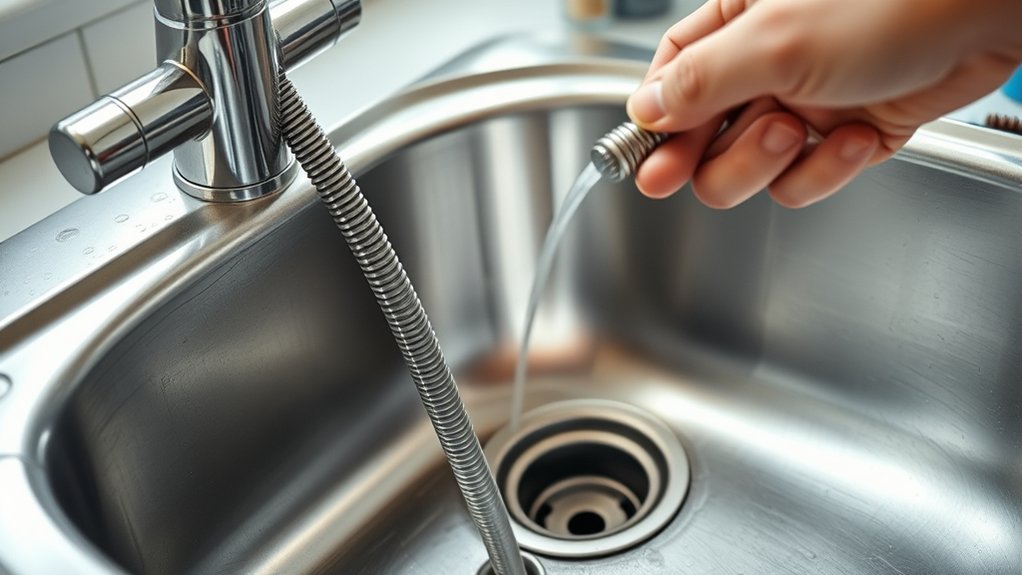
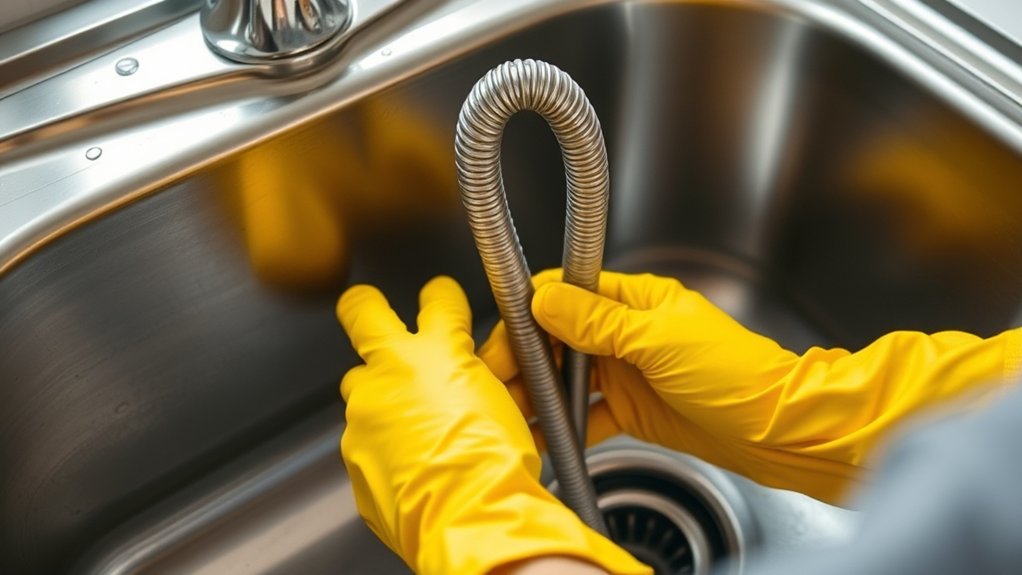
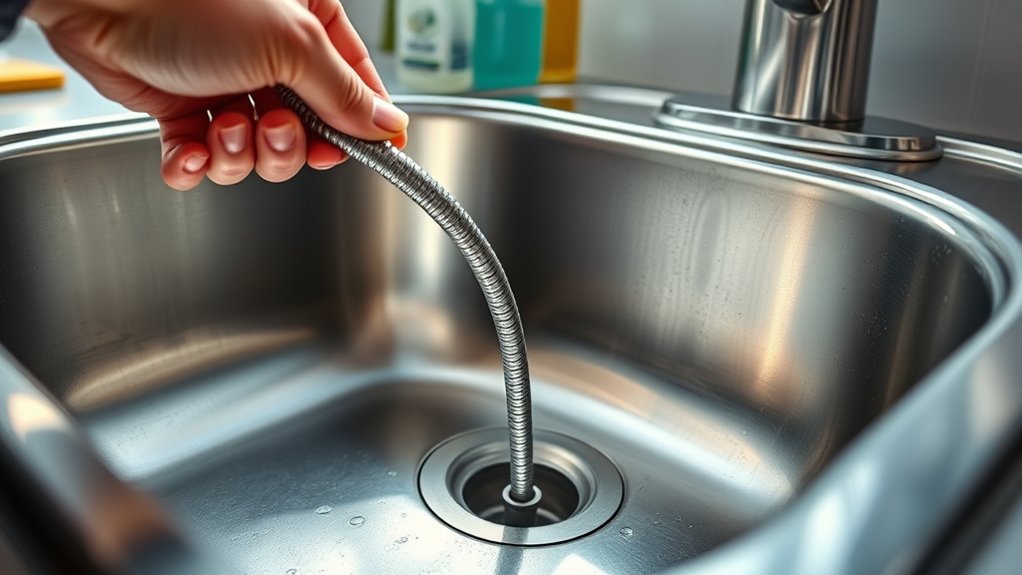
Although using a drain snake might seem intimidating at first, it’s a straightforward process that you can handle with a bit of patience and care. Start by feeding the snake’s tip into the drain opening slowly. As you push it further, rotate the handle clockwise to help the snake maneuver through bends and reach the clog.
When you feel resistance, you’ve likely reached the blockage. Use gentle back-and-forth motions to break up or hook the debris causing the clog.
Drain cleaning methods vary, but using a drain snake is one of the most effective common plumbing tools for stubborn clogs. Avoid forcing the snake too hard, as this can damage your pipes.
Once you’ve worked the snake through the clog, retract it carefully, bringing out any debris caught on the coil. This hands-on approach will help you clear your kitchen drain efficiently without needing harsh chemicals or professional help.
Remove the Snake and Check Drain Flow
After breaking up the clog with the snake, gently pull it out of the drain while keeping an eye on any debris that comes up with it. Dispose of the debris properly to avoid reintroducing it into your plumbing. Once the snake is out, run hot water down the drain to flush away any remaining particles and test if the water flows smoothly.
If you notice slow drainage, repeat snaking or consider another method to clear stubborn blockages.
Checking the drain flow immediately after snaking is essential for effective drain maintenance. Properly clearing the clog reduces the chance of recurring blockages and keeps your kitchen drain functioning efficiently.
Staying vigilant during this step helps you confirm the success of your efforts and ensures that your drain is clear, saving you time and preventing potential damage. This careful approach supports long-term clog prevention and maintains your plumbing system’s health.
Prevent Future Kitchen Drain Clogs
To keep your kitchen drain running smoothly, you need to adopt simple habits that prevent clogs from forming in the first place. Understanding common clog causes like grease buildup, food scraps, and soap residue helps you avoid them effectively. Don’t pour grease or oil down the drain; instead, collect it in a container for disposal. Use a drain strainer to catch food particles before they enter the pipes.
Regular drain maintenance is essential. Flush your drain weekly with hot water and a mixture of baking soda and vinegar to break down minor blockages and keep pipes clear. Avoid harsh chemical cleaners, as they can damage your plumbing. Also, run cold water while using the garbage disposal to help solidify grease and push debris through the pipes. By following these straightforward steps, you’ll considerably reduce the risk of future kitchen drain clogs and keep your plumbing in good shape.
Frequently Asked Questions
Can a Kitchen Drain Snake Be Used on Bathroom Sinks?
Yes, you can use a kitchen drain snake on bathroom sinks for drain cleaning and plumbing maintenance. Since bathroom drains are usually smaller, you’ll want to choose a snake that’s flexible and narrow enough to navigate tight pipes.
Using the right tool helps you clear clogs effectively without damaging your plumbing. Just be gentle and avoid forcing the snake too hard to prevent any pipe damage during maintenance.
How Often Should I Snake My Kitchen Drain?
You should snake your kitchen drain every 6 to 12 months as part of regular drain maintenance. This helps prevent clogs and keeps your plumbing flowing smoothly.
If you notice slow drainage or unpleasant odors, don’t wait. Grab your plumbing tools and snake the drain sooner. Regular attention saves you from costly repairs and keeps your kitchen running efficiently, so make it a routine task you won’t regret.
Are Chemical Drain Cleaners Safe to Use With a Snake?
You shouldn’t mix chemical drain cleaners with a snake because chemical reactions can happen suddenly, causing harm. When you use a snake right after pouring chemicals, you risk splashback, which could burn your skin.
Plus, chemicals often cause drain corrosion, weakening pipes and making snaking less effective or even damaging the tool. It’s safer to avoid chemical cleaners before snaking, giving your drain time to clear or flushing it well first.
What Types of Snakes Are Best for Different Pipe Sizes?
For smaller pipe diameters, like 1.5 inches, a 1/4-inch snake works best because of its flexibility and snake compatibility with tight spaces.
For medium pipes around 2 inches, a 3/8-inch snake is ideal. It strikes a good balance between stiffness and maneuverability.
Larger pipes, 3 inches or more, require a 1/2-inch or bigger snake to handle debris effectively. Always match your snake’s size to the pipe diameter for the best results.
When Should I Call a Professional Plumber Instead?
You might think DIY plumbing saves money, but you should call a professional plumber when blockages persist despite your efforts or if you face recurring clogs. Also, don’t hesitate to seek help during emergency repairs, like leaks causing water damage.
Professionals have the right tools and expertise to prevent bigger problems. Trust them to protect your home and give you peace of mind when your kitchen drain won’t clear easily.
Conclusion
Now that you know how to snake your kitchen drain in just five easy steps, you can tackle clogs quickly and confidently. Did you know that nearly 50% of household drain issues are caused by food buildup?
By acting fast and using a drain snake, you’ll save time and avoid costly plumber visits. Plus, keeping your drain clear helps maintain a healthy, efficient kitchen sink.
Stay proactive and enjoy hassle-free drainage by making snaking your kitchen drain a regular part of your maintenance routine!