How Deep Should Kitchen Countertops Be?
Choosing the perfect kitchen countertop depth can feel overwhelming, especially when you want to maximize your workspace without overcrowding your kitchen. You’re not alone—many people struggle with finding that ideal balance for both function and style.
Whether you’re remodeling or designing a new kitchen, understanding the right countertop depth is key to making your cooking space comfortable and efficient.
You should aim for kitchen countertops about 24 to 25 inches deep to balance workspace, appliance fit, and cooking comfort. This depth gives you enough room for food prep and small appliances without crowding your kitchen.
If you have a smaller space, consider shallower depths around 22 inches, while larger kitchens can handle deeper countertops up to 36 inches.
Picking the right depth also helps with sink and appliance placement. Keep exploring to find the best fit for your kitchen’s style and function.
Key Takeaways
- Standard kitchen countertops are typically 24 to 25 inches deep to balance workspace, appliance fit, and ergonomic comfort.
- Small kitchens benefit from shallower countertops around 22 to 24 inches to save space without sacrificing durability.
- Larger kitchens can have deeper countertops, ranging from 30 to 36 inches, to provide extra prep space and storage.
- Countertop depth affects appliance and sink placement, so you need proper clearance for usability and workflow efficiency.
- Material choice and thickness influence suitable depth. Heavier materials like granite usually favor standard depths for support and durability.
What Is the Standard Depth for Kitchen Countertops?
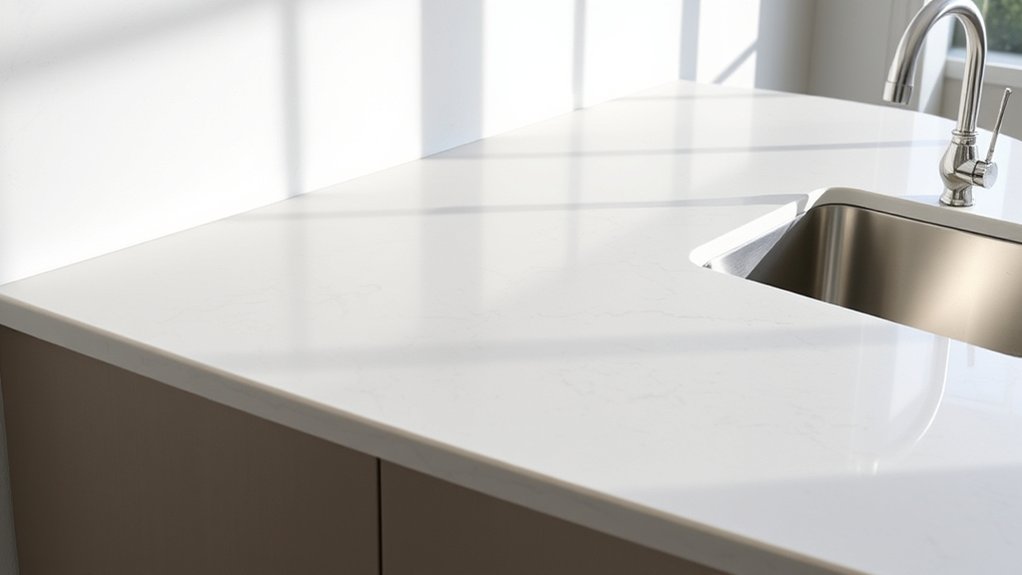
Although kitchen countertop depths can vary, the standard depth you’ll usually find is 25 inches from the wall to the front edge. This size strikes a balance between practical workspace and fitting most kitchen layouts.
The standard kitchen countertop depth is 25 inches, balancing workspace efficiency and layout compatibility.
When you stick to this standard, you guarantee your countertops blend seamlessly with cabinets and appliances, enhancing overall countertop aesthetics. Choosing a countertop material with reliable durability is just as important.
Durable materials like quartz or granite not only withstand daily wear but also maintain their sleek appearance over time, contributing to a polished look. If you opt for unconventional depths, you might compromise material durability or disrupt the visual harmony of your kitchen.
Sticking to the standard depth simplifies installation and replacement, guaranteeing your kitchen remains functional and stylish. So, when planning your countertops, consider this 25-inch depth as the foundation for both lasting durability and attractive design.
How Deep Should Kitchen Countertops Be for Cooking Comfort?
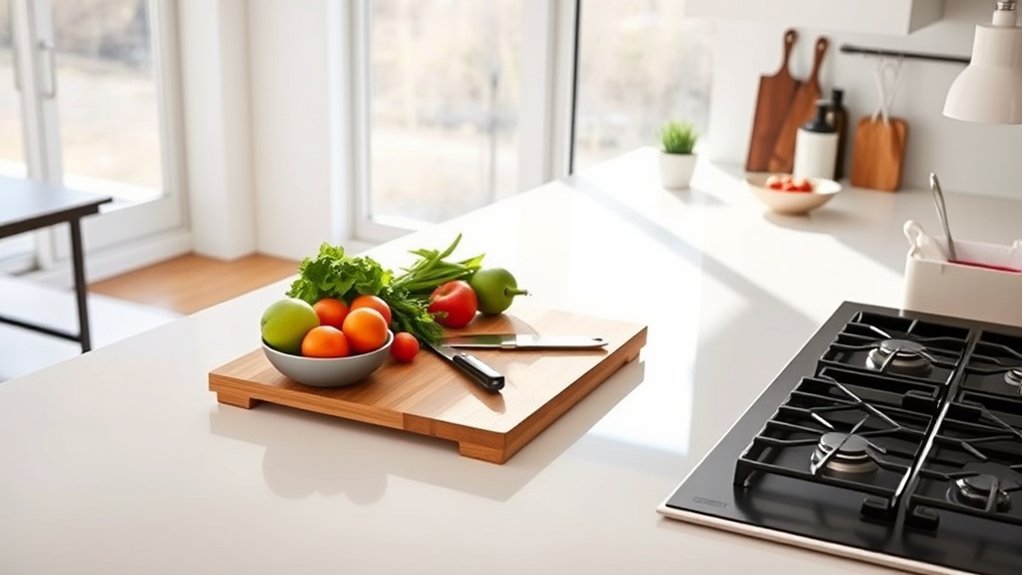
When you’re cooking, having the right countertop depth can make all the difference in comfort and efficiency. Ideally, your countertop should be deep enough to provide ample space for food prep without forcing you to stretch or crowd your tools.
A depth of 24 to 25 inches typically suits most kitchens, striking a balance between countertop aesthetics and practical use. This size offers enough room for cutting boards, mixing bowls, and small appliances while keeping everything within easy reach.
Choosing the right material also affects your cooking comfort. Material durability matters because a sturdy surface withstands chopping, hot pots, and spills, reducing wear and tear.
Durable materials like quartz or granite maintain their appearance and function over time, enhancing both your workspace’s look and usability. Overall, a well-chosen countertop depth tailored to your needs helps you cook comfortably while complementing your kitchen’s style.
How Does Countertop Depth Affect Your Workspace Efficiency?

Your countertop’s depth really affects how you set up your workspace and how easily you can grab your tools. If it’s too deep, reaching for things at the back can end up slowing you down and getting frustrating. So, finding the right balance is key—it helps you work more smoothly and keeps everything within easy reach.
Workspace Layout Optimization
Since countertop depth directly influences how much room you have to prepare meals, it plays a crucial role in optimizing your workspace layout. When planning your kitchen, consider these four key points:
- Maximize prep space by choosing a depth that fits your cooking style without overcrowding the kitchen.
- Balance material durability and cost considerations; deeper countertops require more material, impacting both.
- Allocate space for appliances and tools to keep essentials within easy reach, enhancing workflow.
- Maintain clear zones for cutting, mixing, and plating to prevent clutter and improve efficiency.
Accessibility and Reachability
How far you can comfortably reach across your kitchen countertop directly impacts your efficiency and ease while cooking. If your countertop is too deep, you might struggle to access items near the back, reducing workspace efficiency.
An ergonomic height combined with appropriate depth ensures you don’t overextend, preventing strain. Material compatibility also plays a role; some materials feel cooler or warmer to the touch, affecting your comfort when reaching.
| Countertop Depth | Accessibility Impact |
|---|---|
| 24 inches | Easy reach, ideal ergonomic height |
| 30 inches | Moderate reach, may need stretching |
| 36+ inches | Difficult reach, less efficient workspace |
Choosing the right depth keeps your workspace efficient and comfortable, enhancing your cooking experience.
Which Countertop Depth Works Best for Small and Large Kitchens?
When you’re picking out the right countertop depth, it’s important to think about the size of your kitchen. For smaller kitchens, shallower counters are usually the way to go—they help save space and keep everything functional without feeling cramped. On the other hand, if you have a larger kitchen, deeper countertops can be a real game-changer. They give you extra room to work on meal prep and store your kitchen essentials comfortably. So, it really comes down to matching your countertop depth with the size of your kitchen to make the most of your space.
Optimal Depth For Small
Although small kitchens often limit your options, choosing the right countertop depth can maximize both space and functionality. To optimize your small kitchen, consider these key points:
- Opt for standard depths between 22 to 24 inches to save space without sacrificing usability.
- Prioritize countertop aesthetics by selecting materials and designs that visually open up the area.
- Choose materials with strong durability that resist scratches and stains, ensuring longevity in tight spaces.
- Keep walkways clear by avoiding overly deep counters that crowd movement and reduce efficiency.
Ideal Depth For Large
Since large kitchens offer more space to work with, you can consider deeper countertops to increase your prep area and storage options. A depth of 30 to 36 inches works well, balancing countertop aesthetics with material durability.
Deeper surfaces let you fit larger appliances and more tools without cluttering your workspace. However, be mindful of accessibility and flow in your kitchen.
| Countertop Depth | Benefit |
|---|---|
| 30 inches | Standard, good material durability |
| 33 inches | Extra prep space, balanced aesthetics |
| 36 inches | Maximum storage, ideal for large kitchens |
| >36 inches | Custom, can affect ergonomics |
Choosing the right depth augments your kitchen’s function and style without sacrificing durability or comfort.
How Countertop Depth Affects Appliance and Sink Placement
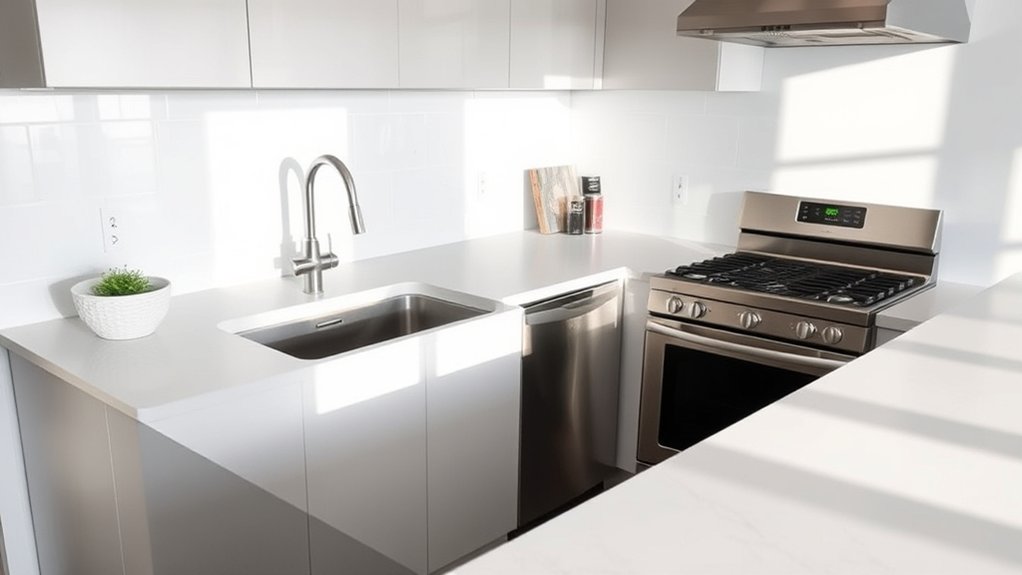
If you want your kitchen to function smoothly, you’ll need to take into account how countertop depth influences where you place appliances and sinks. Proper appliance placement depends heavily on having enough countertop space to accommodate their size and allow for easy use.
Countertop depth is key to placing appliances and sinks for smooth kitchen functionality.
Sink accessibility also plays a critical role. A deeper countertop might push the sink farther from the edge, making it harder to reach.
Consider these factors when determining countertop depth:
- Make sure appliances like microwaves or mixers fit comfortably without crowding.
- Position the sink so it’s easy to access without straining or reaching too far.
- Allow enough countertop space on either side of appliances for prep work and resting hot items.
- Keep clearance in mind for appliance doors and sink faucets to open fully without obstruction.
Balancing countertop depth with appliance placement and sink accessibility will help you create a kitchen that’s both practical and comfortable.
How to Customize Countertop Depth for Different Kitchen Zones
You can adjust countertop depth to fit the specific needs of each kitchen zone. For example, having a deeper prep area gives you more workspace for chopping and mixing. It really makes those tasks easier and more comfortable.
On the other hand, the cooking zone might benefit from a shallower depth. This way, pots and pans stay within easy reach, making cooking more efficient and less of a stretch. So, customizing the depth based on what you use each area for can really improve your kitchen flow.
Prep Area Depth
When customizing your kitchen countertop depth, focusing on the prep area can make a big difference in your workflow. You want enough space to comfortably chop, mix, and assemble without feeling cramped. Consider these points:
- Opt for a deeper countertop (around 30-36 inches) to give yourself ample room for prep tools and ingredients.
- Balance countertop aesthetics with functionality by choosing materials that are durable and easy to clean, like quartz or granite.
- Tailor the depth based on your cooking style. If you often prepare large meals, go deeper to avoid clutter.
- Guarantee the material selection complements your kitchen’s overall design while withstanding daily wear in the busy prep zone.
This approach optimizes both your workspace and the look of your kitchen.
Cooking Zone Dimensions
How deep should your cooking zone countertop be to improve efficiency and safety? Ideally, it should be around 24 to 26 inches deep. This depth gives you enough space to comfortably use pots, pans, and kitchen tools without feeling cramped.
When customizing your cooking zone, consider the countertop material; heat-resistant options like granite or quartz work best near your stove. Also, think about decorative edging. Rounded or beveled edges can prevent accidental scratches or injuries while you cook.
This small detail enhances both safety and style. By tailoring your countertop depth and materials to your cooking needs, you create a functional and attractive workspace that supports smooth meal preparation every time. Don’t overlook these dimensions; they make a big difference in your kitchen’s usability.
How Countertop Materials and Thickness Influence Depth Choices
Because different materials vary in weight and durability, your choice directly impacts the ideal countertop depth. Countertop materials like granite, quartz, or laminate each have unique thickness considerations that influence how deep you should go. Heavier materials may require sturdier cabinetry and could limit how far the countertop extends.
Countertop material weight and thickness directly influence ideal depth and cabinetry support requirements.
Here’s what to keep in mind:
- Material weight: Heavier options like granite usually work best with standard depths around 25 inches to maintain stability.
- Thickness considerations: Thicker slabs add durability but can bulk up the edge, affecting depth perception.
- Durability: Softer materials might need shallower depths to reduce wear and tear on edges.
- Aesthetic balance: Your material’s thickness should complement your kitchen size. Thicker materials may look overwhelming on deeper counters.
How to Measure Your Kitchen Space for the Right Countertop Depth
To choose the perfect countertop depth, you’ll need to accurately measure your kitchen space first. Start by measuring the length and width of the existing countertop area or the space where you plan to install new countertops. Use a tape measure to get precise dimensions from the wall to the edge of the countertop, keeping in mind any overhangs.
Also, consider the location of appliances, cabinets, and walkways to confirm your chosen depth won’t crowd the kitchen.
Next, factor in your kitchen decor and the type of countertop materials you prefer, as some materials may require specific thicknesses or support. Measuring carefully helps you avoid costly mistakes and guarantees your countertop fits well with the overall kitchen layout.
Double-check your numbers before ordering, and keep in mind that even small adjustments can impact both functionality and appearance. Accurate measurements lay the foundation for a countertop that complements your space perfectly.
Tips for Balancing Functionality and Style When Choosing Countertop Depth
When selecting the right countertop depth, you’ll want to strike a balance between practicality and aesthetics. Finding that sweet spot ensures your kitchen feels inviting and functions smoothly. Here are four tips to help you balance style and function effectively:
- Consider your workflow: Choose a depth that gives you enough prep space without crowding your kitchen. This also helps enhance material durability through proper usage.
- Incorporate decorative accents: Use backsplashes or edge profiles to add style without sacrificing usable space.
- Think about appliance fit: Make sure your deeper or shallower countertops accommodate sinks and cooktops comfortably.
- Select durable materials: Pick surfaces that handle wear well, so your countertop stays beautiful and functional over time.
How to Choose the Perfect Countertop Depth for Your Kitchen Layout
Balancing style and function is just the start; the next step is tailoring your countertop depth to fit your kitchen layout perfectly. First, measure your available space carefully to guarantee the countertop doesn’t overcrowd walkways or cabinetry. Standard depths usually range between 24 to 30 inches, but your kitchen’s size and shape might call for adjustments.
Consider how you use your kitchen. Do you need extra prep space, or is a compact design more practical?
Material selection plays a critical role in countertop durability and maintenance. Thicker, more durable materials like granite or quartz can support deeper countertops without warping or damage, while thinner materials might limit your options. Also, think about appliances and sinks. Assure your countertop depth accommodates them comfortably without compromising workflow.
Frequently Asked Questions
Can Countertop Depth Impact Kitchen Resale Value?
Yes, countertop depth can impact your kitchen’s resale value. When you choose the right depth, you ensure countertop aesthetics, making your kitchen look more balanced and appealing to buyers.
Plus, proper depth guarantees better material compatibility with appliances and cabinetry, which adds to the overall quality feel. If your countertops are too shallow or too deep, it might turn off potential buyers, lowering your home’s resale potential.
Are Deeper Countertops More Expensive to Install?
Wondering if deeper countertops cost more to install? Yes, they usually do because they require more materials and labor, which directly impact cost implications.
You’ll also find that material choices like granite or quartz can substantially raise expenses as these heavier, thicker slabs need extra support.
How Does Countertop Depth Affect Cleaning and Maintenance?
You’ll find that countertop depth directly impacts cleaning and maintenance ease. If your countertop is too deep, reaching the back can be tricky, making it harder to clean regularly.
Balancing depth with countertop height guarantees ergonomic comfort, so you don’t strain while working or cleaning. When depth and height fit your needs, you’ll maintain a tidy kitchen effortlessly, keeping surfaces spotless without unnecessary bending or stretching.
Do Countertop Depths Vary by Country or Region?
Yes, countertop depths do vary by country or region due to cultural preferences and regional standards. You’ll find that in some places, deeper countertops are common to accommodate larger appliances or specific cooking styles.
In others, shallower depths save space in compact kitchens. When designing your kitchen, consider these regional influences because they affect not just functionality but also the overall look and feel of your space.
Can Countertop Depth Influence Kitchen Lighting Placement?
Yes, countertop depth can definitely influence your kitchen lighting placement. Imagine a 25-inch deep countertop casting shadows that stretch further under your cabinets.
Lighting fixtures need to be positioned carefully to avoid harsh shadow patterns that make prep work harder. If your countertop is deeper, you might have to install under-cabinet lights closer to the edge or add extra fixtures to brighten those darker spots and keep your workspace well-lit and inviting.
Conclusion
Choosing the right countertop depth might seem tricky, but it’s all about balancing comfort and functionality. You might worry a deeper countertop will crowd your kitchen, but with smart planning, it actually boosts your workspace without overwhelming the room.
By considering your cooking habits, kitchen size, and appliance placement, you’ll find the perfect depth that fits your style and needs. Don’t hesitate; your ideal kitchen countertop depth is within reach!