3 Key Factors That Determine How Much New Kitchen Cabinets Cost
Thinking about upgrading your kitchen but worried about the cost of new cabinets? You’re not alone. Many people struggle to figure out what drives the price up and how to get the best value without breaking the bank.
The cost of new kitchen cabinets mainly depends on three key factors: your kitchen’s size and layout, the materials you choose, and how complex the installation is. Larger or open kitchens need more cabinets, which adds to the price.
Premium materials like solid wood raise costs, while simpler layouts and standard fittings keep installation expenses low. Knowing how these elements affect your budget helps you make smart decisions.
Keep exploring to understand how to balance style, function, and cost effectively.
Key Takeaways
- Kitchen size and layout determine the number of cabinets needed, directly impacting overall costs.
- Cabinet materials and finishes, such as solid wood or laminate, significantly influence price variations.
- Installation complexity, including obstacles and custom designs, affects labor time and expenses.
- Customization and added features like pull-out shelves increase both design and installation costs.
- Thoughtful planning balances aesthetics, functionality, and budget to control final cabinet expenses.
How Kitchen Size and Layout Determine Kitchen Cabinet Costs
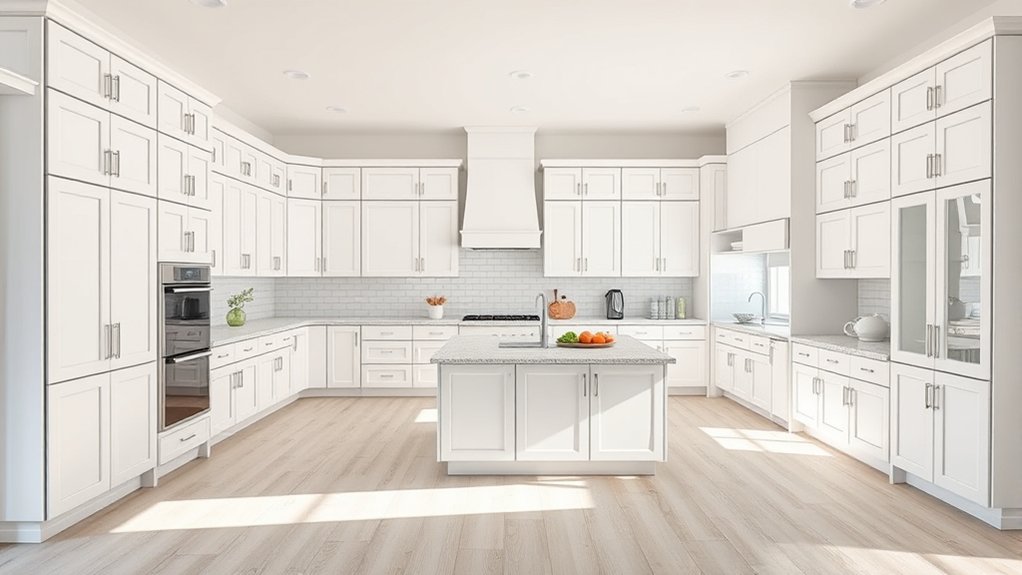
Because your kitchen’s size and layout directly affect how many cabinets you need, they play a major role in determining your overall cabinet costs. When you have a larger kitchen or an open layout, you’ll naturally require more cabinets, which increases expenses.
On the other hand, a compact kitchen means fewer cabinets but might challenge your storage needs. That’s where custom design becomes essential. You can tailor your cabinets to maximize every inch, ensuring you get the most efficient storage options without wasting space.
Custom designs also let you incorporate features like pull-out shelves, corner units, or specialized compartments, enhancing functionality without necessarily adding bulk. By carefully planning your kitchen layout and choosing the right cabinet configurations, you’ll balance aesthetics and practicality.
Ultimately, your kitchen’s size and shape set the foundation for how many cabinets you’ll need and what kind of storage solutions make sense, directly influencing your budget.
How Your Choice of Kitchen Cabinet Materials Affects Costs

While your kitchen’s size sets the stage, the materials you choose for your cabinets play a crucial role in determining the final cost. Solid wood cabinets, for example, tend to be pricier due to their durability and classic appeal. MDF or particleboard options offer a more budget-friendly alternative without sacrificing style.
Your cabinet finish also impacts the price. Painted or stained finishes often require additional labor and materials, increasing costs. Laminate finishes usually come at a lower price point.
Don’t overlook how your hardware selection affects expenses. High-end knobs and pulls crafted from premium metals can add a noticeable amount to your budget, while basic hardware keeps costs down.
Ultimately, balancing material quality, cabinet finish, and hardware selection lets you tailor your kitchen cabinets to your style and budget. By making thoughtful choices, you can control costs without compromising on the look and feel of your new kitchen.
How Installation Complexity Adds to Kitchen Cabinet Expenses
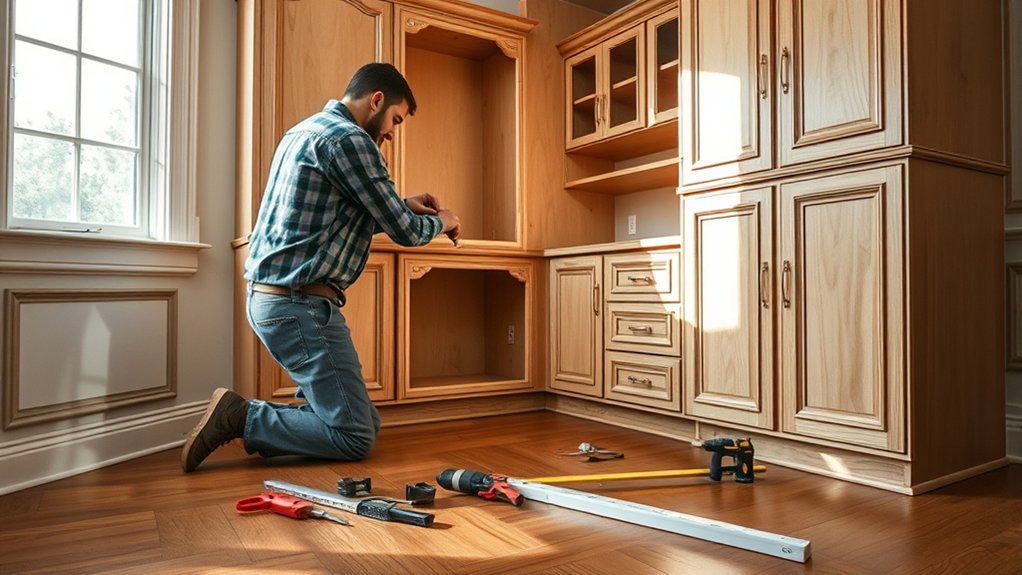
When you decide to install new kitchen cabinets, the complexity of the job directly impacts your overall costs. If your kitchen layout is straightforward, installation tends to be quicker and less expensive.
However, if you have irregular walls, plumbing, or electrical obstacles, expect the installation timeline to stretch, increasing labor fees. Complex designs featuring intricate cabinet hardware or custom fittings also demand more time and expertise, pushing up costs.
Moreover, if your project requires removing old cabinets or making structural modifications, installers will charge more. You can reduce expenses by preparing your space and choosing standard cabinet sizes and hardware.
Keep in mind that experienced installers may charge higher rates but often complete the job faster and with better results, potentially saving you money in the long run. Understanding how these factors affect the installation timeline helps you budget realistically and avoid surprises during your kitchen upgrade.
Frequently Asked Questions
How Long Do New Kitchen Cabinets Typically Last?
New kitchen cabinets typically last 20 to 50 years, depending on durability considerations and material longevity. If you choose high-quality hardwood or plywood, your cabinets’ll stand up to daily wear much longer than particleboard options.
You’ll want to maintain them properly, too, since moisture and heavy use can shorten their lifespan. By paying attention to materials and care, you’ll enjoy beautiful, functional cabinets for decades to come.
Are Custom Cabinets Worth the Extra Cost?
Imagine you’re choosing between stock and custom cabinets for your kitchen remodel. Custom cabinets are often worth the extra cost if you want unique designs and perfect fits, especially when budget considerations allow for high-quality materials.
For example, a family upgraded to custom maple cabinets, enjoying durability and style that mass-produced options couldn’t match. Comparing materials, custom wood often outlasts cheaper alternatives, making it a smart long-term investment.
Can I Finance My Kitchen Cabinet Purchase?
Yes, you can finance your kitchen cabinet purchase. Many suppliers offer financing options and flexible payment plans to help spread out the cost over time.
You can choose a plan that fits your budget, often with low or zero interest for a promotional period. It’s a smart way to upgrade your kitchen without a huge upfront payment.
Just be sure to compare terms and choose the best deal for your needs.
How Do Cabinet Styles Affect Home Resale Value?
Cabinet styles directly affect your home’s resale impact because buyers often look for modern, appealing designs. Choosing high-quality cabinet material like solid wood or plywood can improve your home’s value.
Classic styles tend to have broader appeal, while trendy designs might limit buyers. By selecting timeless cabinet materials and styles, you’ll improve your kitchen’s attractiveness and increase your chances of a higher resale price.
What Maintenance Is Required for Kitchen Cabinets?
You’ll want to focus on regular cabinet cleaning to keep your kitchen cabinets looking fresh and prevent buildup of grease and grime. Use a mild detergent and soft cloth to avoid damaging the finish.
Don’t forget hardware maintenance. Tighten loose screws and lubricate hinges to guarantee smooth operation. By staying on top of these simple tasks, you’ll extend your cabinets’ lifespan and keep your kitchen functioning beautifully.
Conclusion
You might picture a small kitchen with simple, affordable cabinets, yet a sprawling layout with high-end materials can quickly skyrocket costs. On the other hand, choosing basic materials in a complex space still adds up because installation isn’t easy.
Understanding how size, materials, and installation complexity interact helps you make smart choices. By balancing these factors, you can create a kitchen that fits your budget without sacrificing style or function.
Keep these key factors in mind to better estimate how much new kitchen cabinets cost and get the best value for your investment.