How to Clean Greasy Kitchen Cabinets in 5 Easy Steps
Dealing with greasy kitchen cabinets can be really frustrating. You’re not alone if you’ve noticed sticky residue building up despite your best efforts. Many people struggle to find effective ways to clean their cabinets without damaging the finish or spending hours scrubbing.
To clean greasy kitchen cabinets in five easy steps, first gather supplies like a gentle cleaner, microfiber cloths, and gloves. Start by wiping off loose dirt and dust, especially in corners.
Next, make a natural degreaser with vinegar, lemon juice, and water to break down grease safely.
Wipe cabinets thoroughly, focusing near hinges, then dry and polish with a soft cloth to preserve the finish.
Follow these steps, and you’ll have spotless cabinets in no time. Explore how to master each part for best results.
Key Takeaways
- Gather cleaning supplies like gentle cleaner, microfiber cloths, gloves, and brushes for effective cabinet cleaning.
- Remove loose dirt and dust from cabinet surfaces using a microfiber cloth or soft brush.
- Prepare a natural degreaser with white vinegar, warm water, lemon juice, and baking soda paste for tough grease.
- Wipe down cabinets thoroughly with the natural degreaser, focusing on hinges and greasy spots.
- Dry cabinets completely and apply furniture polish to protect and maintain a clean, shiny finish.
Gather Supplies and Prepare Your Kitchen
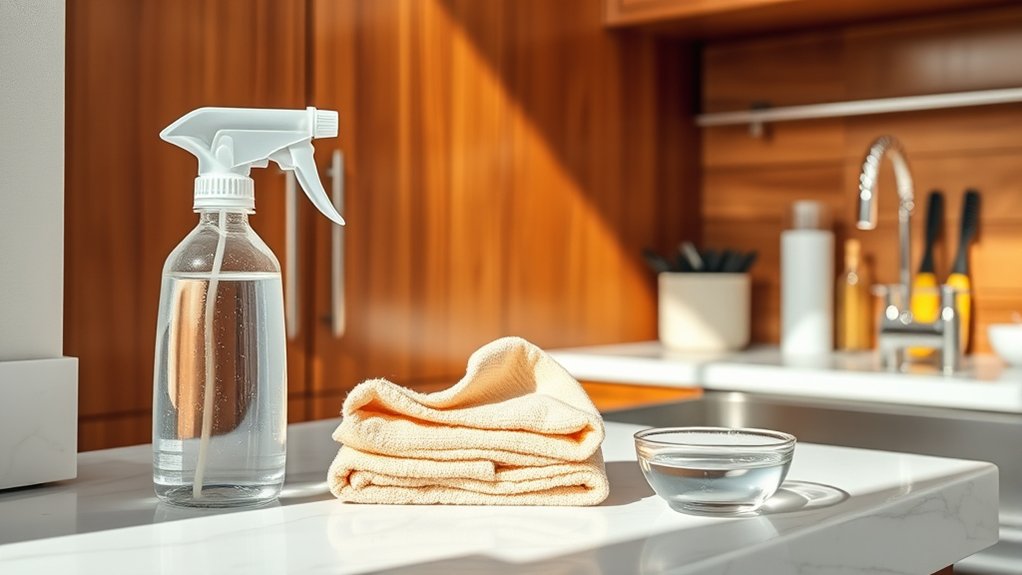
Before you plunge into cleaning your greasy kitchen cabinets, gather all the necessary supplies to make the process smooth and efficient. You’ll want a gentle cleaner, microfiber cloths, a soft-bristle brush, a bucket, and gloves to protect your hands. Don’t forget a toothbrush or small detailing brush to reach tricky spots like cabinet hinges and cabinet handles, where grease tends to accumulate.
Clear the area around your cabinets to have easy access and avoid accidents. If you have removable cabinet handles, consider unscrewing them for a thorough clean. This also gives you a chance to check cabinet hinges for any buildup or damage.
Preparing well means you won’t have to stop mid-task to hunt for tools or supplies. With everything at hand, you’ll tackle the grease efficiently and restore your cabinets’ shine with less hassle.
Remove Loose Dirt and Dust From Cabinets
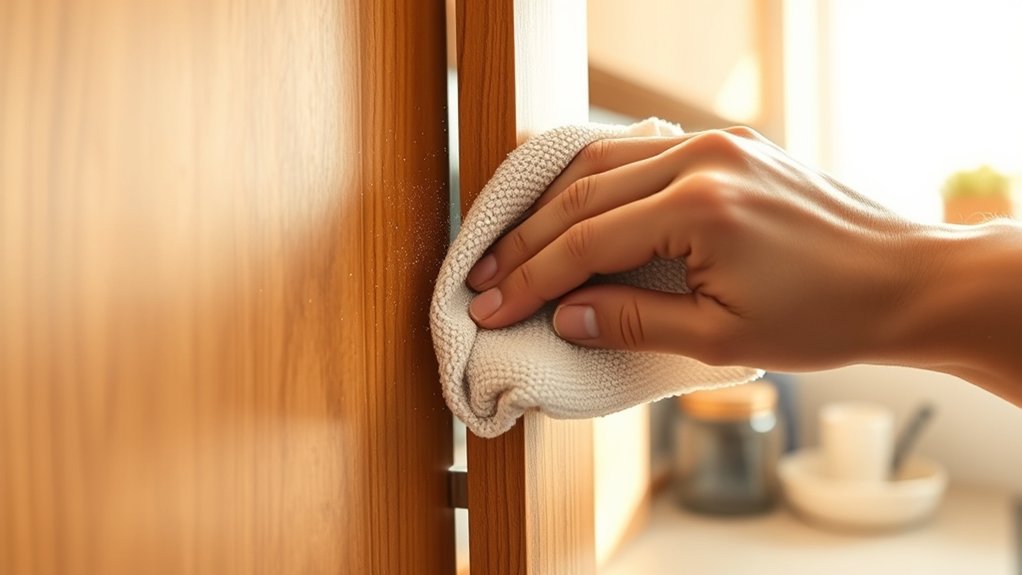
How do you guarantee your cabinets are ready for a deep clean? Start by removing loose dirt and dust from all surfaces. Use a microfiber cloth or a soft brush to gently wipe down your cabinets, paying close attention to corners and edges where dust tends to accumulate.
This step is vital because dirt and dust can mix with grease, making it harder to clean later. Depending on your cabinet materials, whether wood, laminate, or metal, you might want to adjust your approach to avoid scratches or damage.
Incorporate this dusting into your regular cleaning frequency to maintain a fresh look and prevent buildup. For example, wiping cabinets weekly helps reduce grime accumulation and simplifies deep cleaning sessions.
Make a Natural Degreaser for Greasy Cabinets
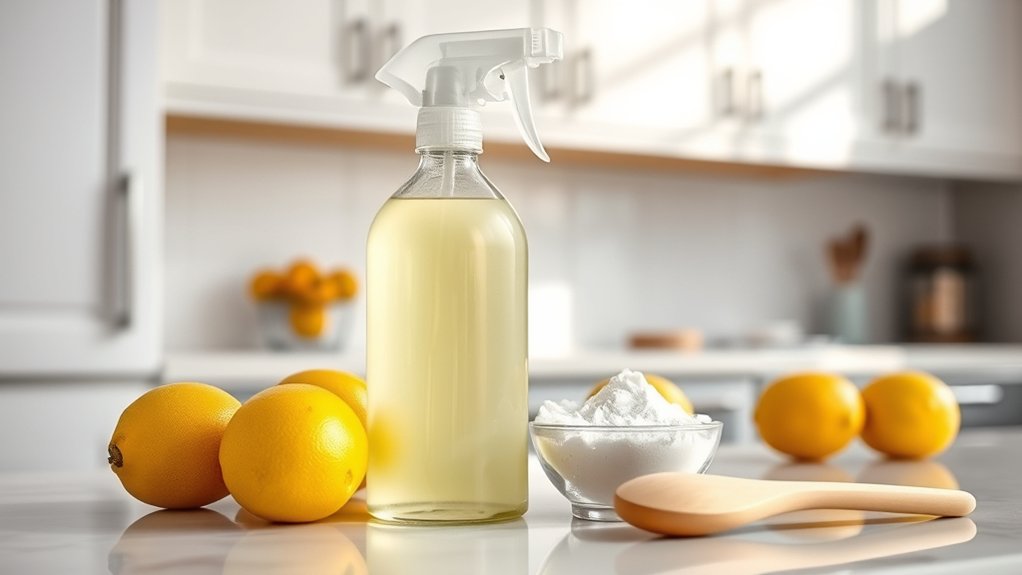
Since commercial cleaners can contain harsh chemicals, you can make a natural degreaser at home using simple ingredients like vinegar, baking soda, and lemon juice. These natural ingredients work together to cut through grease effectively without damaging your cabinets or the environment.
Natural ingredients like vinegar, baking soda, and lemon juice offer an effective, eco-friendly way to tackle grease safely.
For a powerful homemade solution, mix one cup of white vinegar with one cup of warm water and add a tablespoon of lemon juice. The acidity helps break down oily residues, while lemon juice adds a fresh scent.
If you prefer something thicker, combine baking soda with water to form a paste. This paste gently scrubs away stubborn grease without scratching surfaces.
Use these homemade solutions in spray bottles or apply with a soft cloth for controlled cleaning.
Wipe Down Cabinets to Remove Grease and Grime
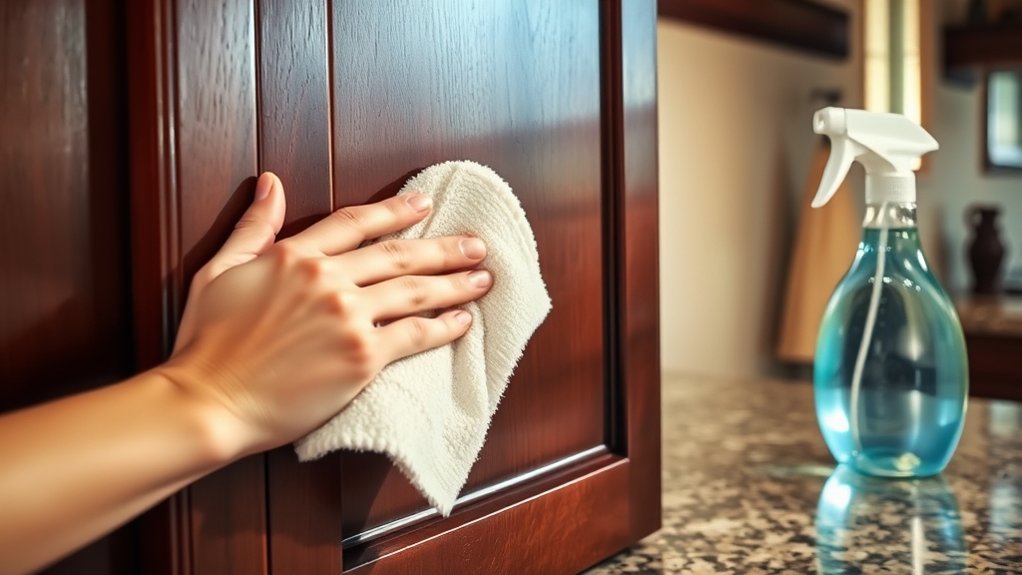
Although grease can be stubborn, you can effectively remove it by wiping down your cabinets with the right technique. Start by dipping a soft cloth into your natural degreaser, then gently scrub the surfaces.
Don’t forget those often-overlooked areas near cabinet hinges. Good cabinet hinge maintenance prevents grime buildup and keeps doors working smoothly. After cleaning, organize your shelves to reduce clutter, making future cleanups easier.
Use shelf organization tips like grouping items by use or size.
Here’s how wiping down cabinets benefits your kitchen:
| Before Cleaning | After Cleaning |
|---|---|
| Greasy, sticky surfaces | Clean, fresh-smelling |
| Stiff cabinet hinges | Smooth, well-maintained |
| Cluttered shelves | Neat, organized shelves |
Dry and Polish Cabinets for a Lasting Shine
Once you’ve thoroughly wiped down your cabinets, you’ll want to dry them completely to prevent moisture damage and streaks. Grab a soft, dry cloth and gently go over every surface, ensuring no water remains. This step is vital for cabinet maintenance because lingering moisture can lead to warping or mold growth over time.
Next, apply a small amount of furniture polish or a specialized cabinet cleaner designed for shine preservation. Use a clean microfiber cloth and buff the cabinets in circular motions, which helps improve their natural luster and protects the finish. Regular polishing not only keeps your cabinets looking fresh but also creates a barrier against future grease buildup.
Frequently Asked Questions
How Often Should I Clean Greasy Kitchen Cabinets?
You should clean greasy kitchen cabinets at least once a week to keep buildup under control. Following cleaning tips, like using mild detergents and microfiber cloths, helps protect surfaces.
Incorporate this into your regular maintenance routines to avoid stubborn grease stains. If you cook frequently or use oily ingredients, consider cleaning twice a week.
Staying consistent makes deep cleaning easier and keeps your cabinets looking fresh and well-maintained over time.
Can I Use Commercial Degreasers on All Cabinet Materials?
You might think commercial degreasers work on all cabinets, but chemical compatibility matters a lot. While they’re powerful, some harsh chemicals can damage wood or delicate finishes.
Instead, test a small spot first or opt for eco-friendly solutions, which are gentler and safer for various materials. Using green cleaners not only protects your cabinets but also reduces harmful residue, keeping your kitchen fresh without risking damage.
What Causes Grease Buildup on Kitchen Cabinets?
Grease buildup on your kitchen cabinets happens because cooking releases oils and particles that stick to cabinet materials over time. The type of cabinet materials you have can affect how easily grease clings and how you clean it.
Using the right cleaning tools, like soft cloths or gentle scrubbers, helps prevent damage while removing grease effectively. Regular cleaning stops buildup from becoming stubborn and harder to remove later.
Are There Any Safety Precautions When Cleaning Cabinets?
Yes, you should wear protective gear like gloves and goggles to avoid skin irritation and protect your eyes from cleaning chemicals. Make sure to work in a well-ventilated area by opening windows or turning on fans to reduce fumes.
Avoid mixing cleaning products, especially bleach and ammonia, as they create harmful gases. Taking these ventilation tips and safety steps seriously helps you clean effectively while keeping yourself safe.
How Can I Prevent Grease From Accumulating Again?
You can prevent grease from accumulating again by improving your kitchen ventilation. Use an exhaust fan or open windows while cooking to reduce airborne grease.
Also, adjust your cooking habits by covering pans and wiping spills immediately. Regularly cleaning surfaces before grease builds up helps too.
These steps keep your cabinets cleaner longer and reduce the buildup, making maintenance much easier for you in the future.
Conclusion
Now that you’ve tackled greasy kitchen cabinets with these simple steps, isn’t it amazing how fresh and bright your kitchen looks? By gathering your supplies, removing dirt, using a natural degreaser, wiping thoroughly, and polishing for shine, you’ve made your cabinets sparkle without harsh chemicals.
Keeping up with this routine will save you time and effort in the future. Ready to enjoy your spotless, grease-free kitchen every day? Cleaning greasy kitchen cabinets doesn’t have to be a chore when you know the right steps!