How Many Gallons Is a Kitchen Trash Can?
Finding the right kitchen trash can size can be surprisingly tricky. You’re not alone if you’ve ever struggled with bins that are either too small, leading to constant emptying, or too bulky, taking up precious space. Many people want a trash can that fits their daily needs without cluttering their kitchen.
A typical kitchen trash can holds between 10 and 13 gallons, which balances daily waste capacity with space efficiency, fitting under cabinets or in tight corners.
If you have a small household, a 5-7 gallon bin might work, while larger families often need 20 gallons or more to avoid frequent emptying.
Choosing the right size keeps your kitchen organized and mess-free. Keep exploring to find the perfect fit for your space and needs.
Key Takeaways
- Kitchen trash cans typically range from 10 to 13 gallons, balancing capacity and space for average household waste.
- Small kitchens or minimal waste needs suit 5-7 gallon cans, while larger families require 20-30+ gallons.
- Compost bins are smaller, usually 1-5 gallons, while recycling bins range around 10-15 gallons.
- Household size guides trash can choice: 1-2 members use 8-10 gallons, 3-4 members 13-16 gallons, and 5+ members need 20+ gallons.
- Proper sizing prevents overflow, improves hygiene, and supports efficient waste separation and disposal.
What Is the Typical Gallon Size of a Kitchen Trash Can?
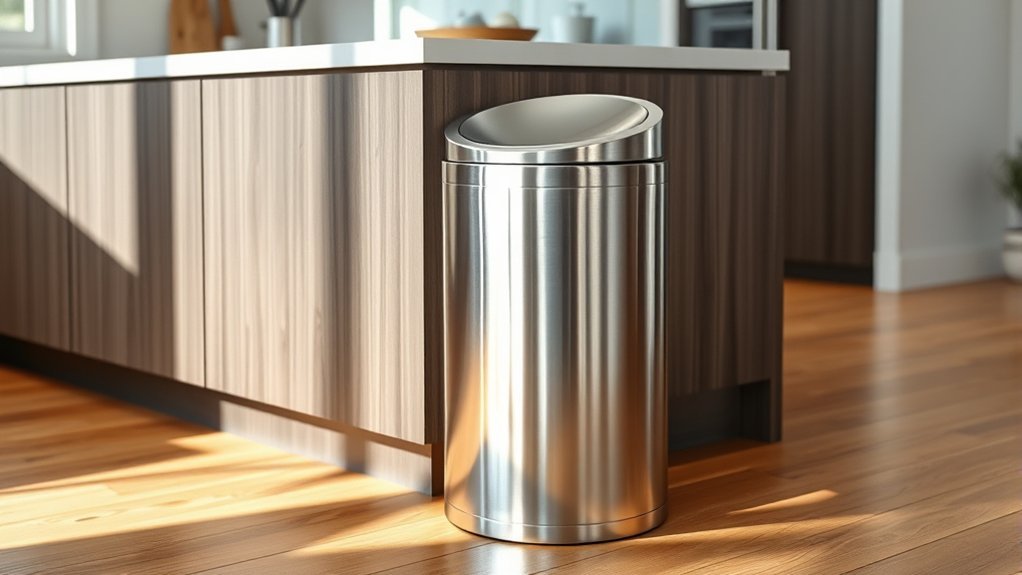
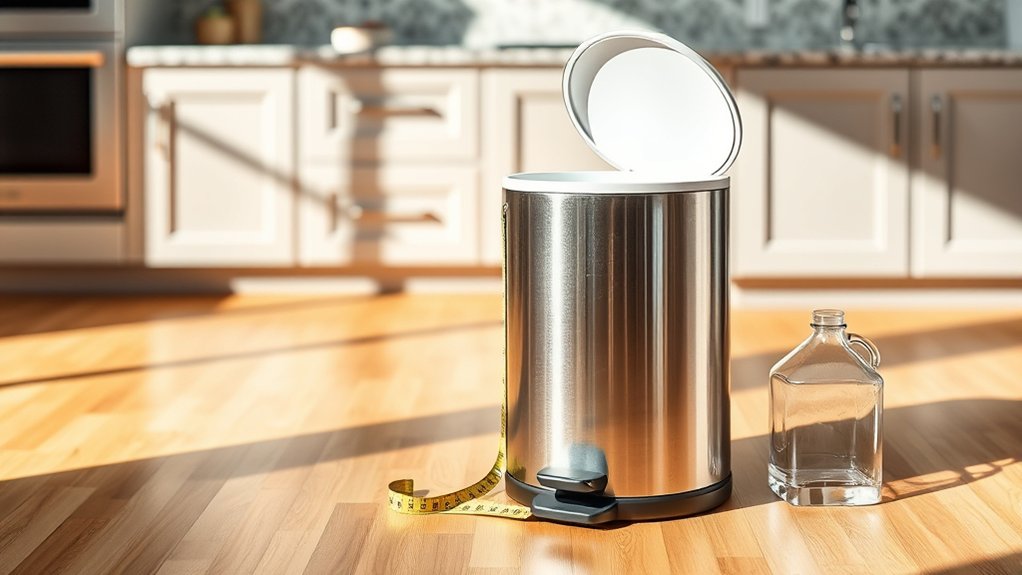
How big is a typical kitchen trash can? Most standard kitchen trash cans range between 10 to 13 gallons. This size fits well under your sink or in a corner without taking up too much space, while still holding enough waste before needing to be emptied.
When you consider recycling options, having separate bins around this size can help you sort paper, plastic, and glass efficiently. You might also want to include composting bins in your kitchen setup, which are usually smaller, around 1 to 5 gallons, to collect food scraps and organic waste.
Why Trash Can Gallon Size Matters for Your Kitchen
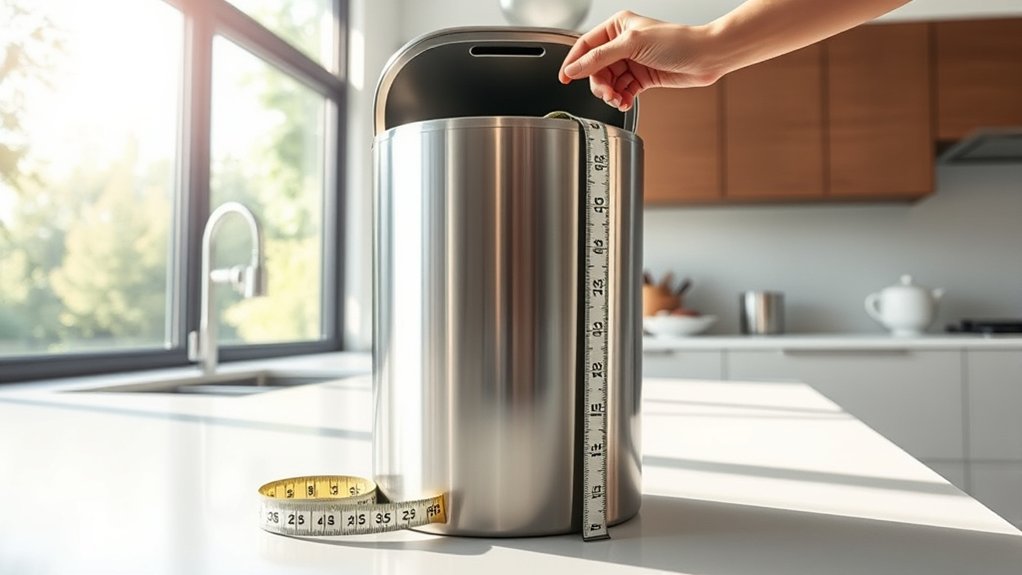
Choosing the right gallon size for your kitchen trash can directly impacts how easy it is to manage waste daily. If your trash can is too small, you’ll find yourself emptying it constantly, which can disrupt your routine.
On the other hand, a can that’s too large might take up unnecessary space and make sorting recycling options and composting methods more cumbersome.
A properly sized trash can streamlines waste disposal and encourages you to maintain organized recycling and compost bins, improving overall kitchen hygiene.
| Gallon Size | Ideal Use |
|---|---|
| 5-7 gallons | Small kitchens, minimal waste |
| 8-13 gallons | Average households, balanced use |
| 14-20 gallons | Larger families, more waste |
| 20+ gallons | High volume, extensive recycling |
Choosing the right size helps you optimize space while supporting your recycling options and composting methods efficiently.
How to Choose the Right Kitchen Trash Can Size
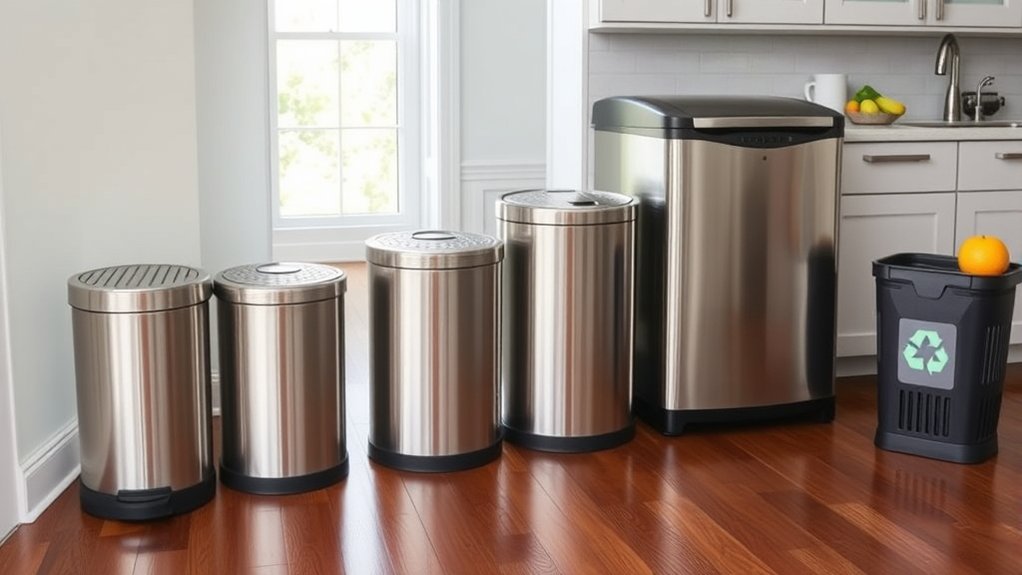
When you select a kitchen trash can, consider your household’s daily waste output and available space to find the best fit. If you generate a lot of waste, a larger can around 13 gallons or more will reduce how often you need to empty it. For smaller kitchens or minimal waste, a compact 5-7 gallon bin might work better.
Keep recycling guidelines in mind. You might need separate bins for recyclables, so plan space accordingly. If you compost, setting aside a small, dedicated container for composting helps keep organic waste separate and reduces overall trash volume.
Also, think about the can’s shape and lid style to fit your kitchen layout and daily habits. Choosing the right size ensures your trash system stays efficient, hygienic, and convenient without overcrowding your space or requiring constant emptying.
How Household Size Affects Your Kitchen Trash Can Size
The size of your household plays a big role in how much trash you produce every day. So, if you have a larger family, chances are you’ll need a bigger kitchen trash can to handle all that extra waste.
Knowing this makes it easier to pick a trash can that suits your daily needs. That way, you won’t have to deal with overflowing bins all the time.
Family Size Impact
Although your kitchen trash can size might seem like a minor detail, it plays a crucial role in managing waste efficiently, especially as your family grows. The number of people in your household directly impacts how much trash you produce daily. This means you’ll need a larger trash can to avoid constant emptying.
When choosing, consider kitchen decor and trash can materials to guarantee the bin fits your space and style.
| Family Size | Trash Can Size (Gallons) |
|---|---|
| 1-2 members | 8-10 |
| 3-4 members | 13-16 |
| 5-6 members | 20-24 |
| 7+ members | 30+ |
Matching the right size keeps your kitchen tidy and waste management smooth.
Waste Volume Trends
Household size directly influences how much waste you generate daily, making it essential to choose a kitchen trash can that matches your needs. Larger households typically produce more waste, so you’ll want a bigger trash can, often 13 gallons or more.
However, your recycling habits can substantially reduce the volume of trash, allowing a smaller bin to suffice. Paying attention to trash can placement also impacts convenience and disposal frequency. If your trash can is in a hard-to-reach spot, overflow might happen faster.
Conversely, placing it near food prep areas encourages regular use. By considering your household size alongside recycling habits and strategic trash can placement, you can select a kitchen trash can size that keeps your space tidy without constant emptying.
Common Kitchen Trash Can Sizes and What They’re Best For
When choosing a kitchen trash can, you’ll find sizes typically range from 8 to 16 gallons, each suited for different needs. An 8-gallon can works well if you have strict recycling policies or composting options that reduce your general waste. It’s compact, fits small kitchens, and encourages frequent emptying.
If your household produces moderate waste, a 10- to 12-gallon can balances capacity and space efficiency. This size suits average families and adapts well to various recycling habits.
For larger families or those without extensive recycling or composting systems, a 13- to 16-gallon can handles increased waste without constant trips outside. You’ll find taller, slim cans fit narrow spaces, while wider models hold more volume.
Choosing the right size depends on your household’s waste habits, recycling rules, and whether you compost. Picking a trash can that complements these factors helps maintain a cleaner, more organized kitchen.
Pros and Cons of Small vs. Large Kitchen Trash Cans
Because your kitchen’s trash needs vary, choosing between a small and large trash can impacts convenience and cleanliness. A small trash can fits well in tight spaces and supports minimal waste. It’s ideal if you have strong recycling habits and produce less garbage. It also complements sleek kitchen aesthetics by blending discreetly into your space. However, you’ll need to empty it more often, which can be inconvenient during busy times.
On the other hand, a large trash can reduces the frequency of emptying, perfect for households generating more waste or limited by infrequent trash pickups. It accommodates mixed recycling and trash better but can dominate your kitchen aesthetics and consume valuable floor space. You might find it harder to keep clean, too. Ultimately, consider how your recycling habits and kitchen layout align with these pros and cons to select the trash can size that best fits your lifestyle.
Measuring Your Kitchen Space for a Trash Can
Start by measuring the floor space where you want to put your trash can to make sure it fits comfortably. Also, don’t forget to check the clearance around any cabinets or appliances nearby. You want to avoid any obstructions that might get in the way. Taking these steps will really help you pick a trash can size that works perfectly in your kitchen.
Measure Available Floor Space
Where will your trash can fit best in your kitchen? Measuring available floor space guarantees your trash can complements your kitchen decor without overcrowding. Start by selecting an area that balances accessibility and visibility.
Use a tape measure to note length and width, considering material durability if you plan to place the trash can near heat or moisture sources.
Here’s a simple guide to visualize floor space options:
| Location | Space Needed (inches) |
|---|---|
| Corner area | 12 x 12 |
| Between cabinets | 15 x 10 |
| Near island | 18 x 15 |
These measurements help you pick a trash can size that fits well, matches your kitchen decor, and lasts long, maintaining the room’s aesthetic and function.
Consider Cabinet Clearance
Although you’ve measured your available floor space, you’ll also need to take into account cabinet clearance to verify your trash can fits comfortably without obstructing doors or drawers.
First, check how much space there is between your cabinets and the floor or adjacent fixtures. Then, compare this with the trash can dimensions you’re considering.
Remember, if the trash can is too wide or tall, it might block cabinet doors or drawers, which can be frustrating during daily use. Also, account for any handles or knobs protruding from the cabinets that could reduce clearance.
Best Kitchen Trash Can Sizes for Different Types of Waste
When choosing the best kitchen trash can size, you’ll want to take into account the type of waste you generate most often. If you focus on eco friendly disposal, smaller bins around 5 to 8 gallons work well for compostable scraps. This makes it easy to separate organic waste.
For recycling options like paper, plastic, and glass, consider multiple smaller bins or a divided can between 10 to 15 gallons. This setup encourages better sorting and reduces contamination.
On the other hand, if your household produces a lot of general waste, a larger trash can, typically 13 to 20 gallons, will save you frequent trips to take out the trash. Remember, choosing the right size also supports your eco friendly disposal habits by preventing overflow and encouraging proper recycling.
How to Match Trash Bags to Your Kitchen Trash Can
First, you’ll want to measure your trash can’s capacity to figure out the right bag size. Choosing a bag that fits snugly helps prevent spills and makes taking out the trash much easier. Plus, think about the material of the bag to ensure it can handle your usual waste without ripping.
Measuring Trash Can Capacity
Matching trash bags to your kitchen trash can starts with knowing its exact capacity in gallons. To measure your trash can accurately, follow these steps:
- Empty the trash can completely.
- Use a tape measure to record the height, width, and depth of the interior.
- Multiply these dimensions to calculate the volume in cubic inches.
- Convert cubic inches to gallons by dividing by 231 (since 1 gallon = 231 cubic inches).
Understanding your trash can’s size helps you pick bags that fit well, reducing waste and spills. This also supports your recycling habits by making it easier to separate recyclables and trash.
Choosing eco-friendly materials for your bags complements these habits, ensuring your kitchen stays clean and environmentally conscious without overusing plastic.
Choosing Bag Size
Because trash bags come in various sizes and thicknesses, selecting the right one guarantees a snug fit and prevents leaks or tears. First, check your kitchen trash can’s gallon capacity to pick bags that match perfectly.
Don’t forget recycling considerations. If you separate recyclables, use bags designed specifically for that purpose to avoid contamination and simplify sorting. You’ll also want to consider aesthetic options. Clear or colored bags can complement your kitchen’s style while letting you see contents for easy recycling or disposal.
Avoid bags that are too big, which can bunch up and tear, or too small, which can slip and cause messes. Choosing the right bag size not only keeps your kitchen tidy but also supports effective waste management.
Considering Bag Material
After choosing the right bag size, consider the material to guarantee durability and compatibility with your kitchen trash can. The material affects how well the bag handles weight, moisture, and your waste type. Here’s what to keep in mind:
- Plastic (HDPE/LDPE): Durable and water-resistant, great for general waste.
- Biodegradable: Ideal if you’re focused on composting options; breaks down faster.
- Recyclable bags: Perfect for recycling sorting, ensuring your waste stays clean and manageable.
- Compostable liners: Use these if your kitchen trash can supports organic waste collection, reducing landfill impact.
Choosing the right material helps prevent leaks, tears, and messes while supporting your recycling and composting efforts effectively.
How Size and Design Affect Trash Can Cleanliness and Odor Control
When you pick the right size and design for your kitchen trash can, you can considerably reduce odors and make cleaning easier. Choosing a trash can that’s neither too small nor too large prevents overflow, which often causes unpleasant smells. A well-sized can ensures that waste is contained properly, minimizing exposure to air and slowing odor buildup.
Moreover, focusing on aesthetic design helps you find a trash can that fits seamlessly into your kitchen, encouraging regular use and maintenance.
Material durability also plays a vital role in cleanliness. Durable materials like stainless steel or high-quality plastic resist stains and absorb fewer odors, making your trash can easier to clean. Smooth surfaces prevent residue buildup, while tight-fitting lids control smells effectively.
Frequently Asked Questions
What Materials Are Kitchen Trash Cans Typically Made From?
Kitchen trash cans are typically made from durable materials like stainless steel and plastic. You’ll often find stainless steel used because it’s sturdy, easy to clean, and looks modern.
Plastic bins are lightweight and come in various colors, making them popular for recycling bins too. If you want something that resists rust and fingerprints, stainless steel’s your best bet.
Recycling bins often share these materials to keep things organized and eco-friendly in your kitchen.
How Do I Clean and Maintain a Kitchen Trash Can?
Imagine you forgot to clean your recycling bins for weeks. Smelly and sticky, right? To maintain your kitchen trash can, empty it regularly and wash it using warm, soapy water.
Don’t forget to clean compost containers separately to prevent odors. Wiping down the lid and sides with disinfectant keeps germs away. Using liners helps, too.
Regular cleaning prevents buildup, keeping your kitchen fresh and your bins ready for recycling and composting.
Are There Eco-Friendly Kitchen Trash Can Options?
Yes, you can definitely find eco-friendly kitchen trash can options! Look for recycling bins made from recycled materials to help reduce waste.
Compost containers are another great choice, letting you separate food scraps for composting, which cuts down landfill trash. Choosing these bins encourages you to sort your waste responsibly.
You’ll not only keep your kitchen tidy but also support a greener lifestyle by making recycling and composting part of your routine.
What Features Improve Kitchen Trash Can Odor Control?
You know what they say: “An ounce of prevention is worth a pound of cure.” To improve kitchen trash can odor control, you should look for built-in odor absorbers like activated charcoal filters that neutralize smells.
Ventilation systems also help by allowing air to circulate, reducing moisture buildup that causes odors. Combining these features keeps your kitchen smelling fresh and stops unpleasant smells before they start.
How Long Do Kitchen Trash Cans Usually Last?
Kitchen trash cans usually last around 5 to 10 years, depending on how often you use them and the material quality. If you switch between a recycling bin and a compost container, you might notice wear faster due to different waste types.
Taking care of your trash can by cleaning it regularly and avoiding harsh chemicals will help extend its life. You’ll get the best value by choosing durable options suited for your kitchen habits.
Conclusion
Choosing the right kitchen trash can size isn’t just about fitting your waste. It’s about keeping your space feeling fresh and inviting.
By picking the perfect gallon capacity, you’re making sure your kitchen stays a welcoming place, free from unexpected surprises.
So, consider your household’s rhythm and the types of waste you handle. You’ll find a trash can that quietly supports your daily flow without drawing unwanted attention. When it comes to a kitchen trash can, the right gallon size makes all the difference.