5 Key Factors That Affect How Much a Kitchen Renovation Does Cost
Thinking about a kitchen renovation but worried about how much it might cost? You’re not alone. Many people struggle to estimate expenses and end up overwhelmed by unexpected fees. Understanding the key factors that influence kitchen renovation costs can take the guesswork out and help you plan a budget that works.
When planning your kitchen renovation, five key factors will shape your budget. The size of your kitchen influences material and labor costs, because the bigger the space, the higher the expenses.
Your material choices balance quality and price, while design complexity can substantially increase both labor and materials.
Labor and contractor fees vary by type and scope, and unexpected issues like permits or repairs can add surprise costs.
Understanding these factors will help you manage your renovation wisely.
Key Takeaways
- Kitchen size impacts costs through material needs, appliance quantity, lighting, and labor hours required. Bigger kitchens usually mean more materials and time, which adds up.
- Material choices affect budget and quality, with options ranging from high-end wood and stone to affordable laminates. Picking the right materials can make a big difference in your final spend.
- Complex designs with custom features increase labor, materials, and planning expenses. The more detailed your design, the more you’ll likely pay for expert work.
- Labor and contractor fees vary by hourly, flat rate, or percentage, influencing overall renovation cost. It’s smart to understand how your contractor charges before you start.
- Hidden expenses like permits, structural repairs, and appliance upgrades can unexpectedly raise renovation costs. Always leave some wiggle room in your budget for surprises.
How Kitchen Size Affects Renovation Costs
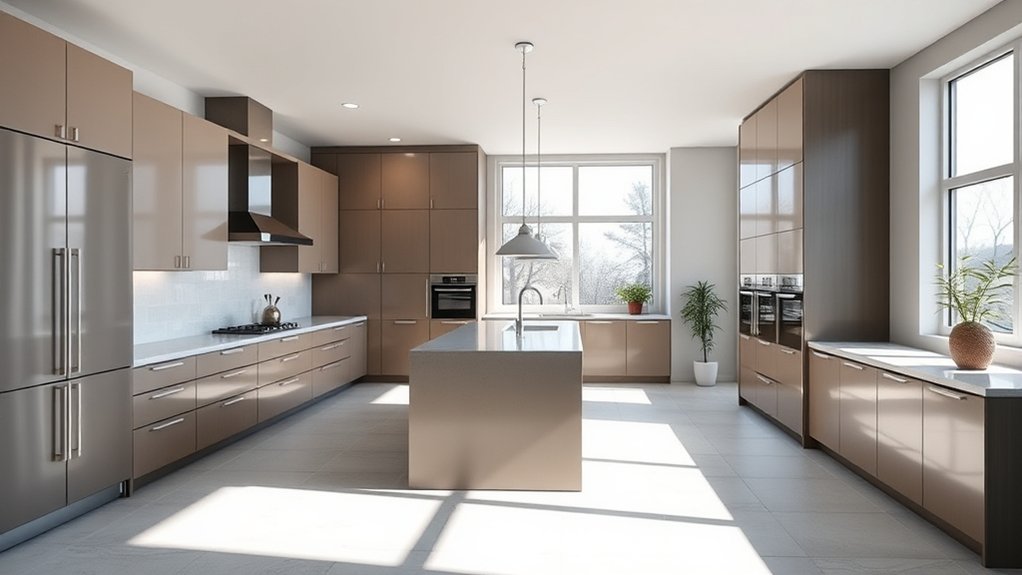
When you renovate your kitchen, its size plays a major role in determining the overall cost. A larger kitchen means more space to cover, so you’ll likely spend more on appliance upgrades, cabinetry, and flooring. Bigger spaces require extra lighting fixtures to guarantee even illumination, which adds to your expenses.
Conversely, a smaller kitchen limits the amount of materials and appliances you need, keeping costs lower. You’ll also find that labor costs can increase with size since contractors spend more time working on larger areas.
However, don’t assume a small kitchen will always be cheap; high-end appliance upgrades or custom lighting fixtures can quickly push your budget up. Ultimately, understanding how your kitchen’s square footage affects the scale of your renovation helps you plan realistically and control costs more effectively.
Keep size in mind when setting your budget, and you’ll avoid surprises as the work progresses.
Material Choices for Kitchen Renovations: Balancing Quality and Cost
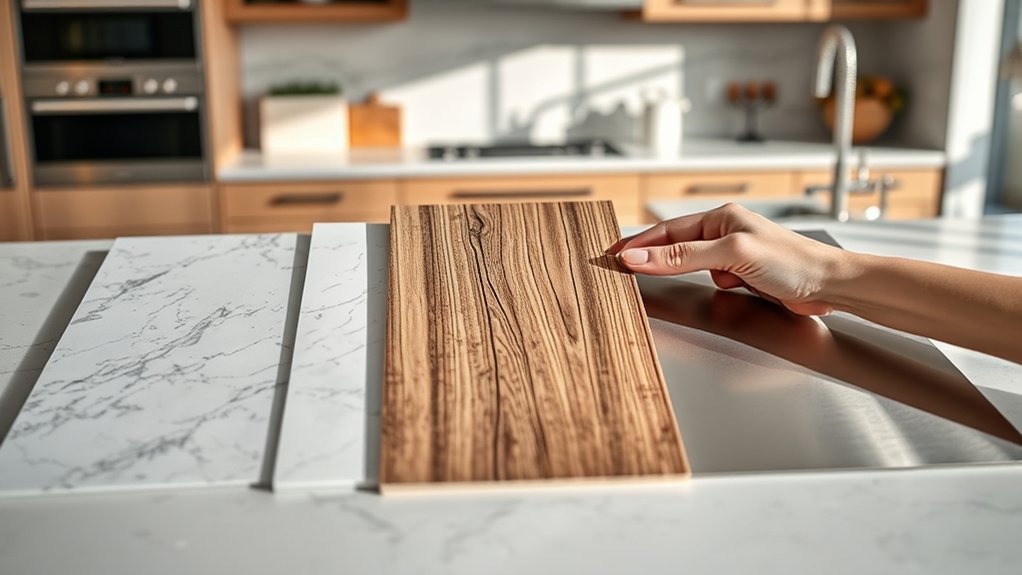
Although choosing materials for your kitchen renovation can feel overwhelming, striking the right balance between quality and cost is essential to getting the best value. Start by exploring cabinet styles that fit your budget without sacrificing durability.
For example, solid wood cabinets offer longevity but come with a higher price tag, while laminate or MDF options provide a more affordable alternative with decent quality.
Next, consider your countertop materials carefully. Granite and quartz boast durability and elegance but can be pricey, whereas laminate or butcher block might fit tighter budgets while still looking great.
How Design Complexity Drives Up Renovation Costs

Choosing the right materials sets the foundation, but the complexity of your kitchen’s design can quickly increase renovation costs. When you opt for intricate layouts, custom cabinetry, or unique architectural features, you’re adding layers of work that demand more time and expertise.
Following current design trends often means integrating specialty elements like hidden storage, multi-level islands, or mixed materials, which can raise expenses. Complex designs also require precise planning to guarantee everything fits and functions well, leading to longer design phases and potential adjustments during construction.
While the aesthetic impact of a sophisticated kitchen is undeniable, it comes with a price. You’ll pay more for custom finishes, specialized hardware, and advanced lighting solutions that improve the overall look.
Ultimately, the more detailed and tailored your kitchen is, the higher your renovation cost will be. Balancing style with simplicity can help you manage your budget without sacrificing visual appeal.
What Labor and Contractor Fees Really Cost You
Understanding labor and contractor fees is essential because they often make up a significant portion of your kitchen renovation budget. When evaluating pricing strategies, you’ll find that contractors may charge by the hour, offer a flat rate, or use a percentage of the total project cost.
Your contractor selection will heavily influence these fees, so it’s vital to get multiple quotes and verify credentials.
Here’s a quick comparison of common labor fee structures:
| Pricing Strategy | Typical Range | Best For |
|---|---|---|
| Hourly Rate | $50 – $150 per hour | Small, flexible tasks |
| Flat Rate | $2,000 – $10,000+ | Well-defined projects |
| Percentage | 10% – 30% of budget | Large, complex renovations |
| Combination | Varies | Mixed-scope renovations |
| Fixed Bid | Negotiated upfront | Clear scope, minimal changes |
Choosing wisely on contractor selection and understanding pricing strategies will help you avoid surprises and stay on budget.
Hidden Expenses That Can Surprise You During Renovations
When you plan a kitchen renovation, unexpected costs can quickly add up and throw your budget off track. Hidden expenses often catch homeowners off guard. So being prepared helps you manage your finances better. Here are three common surprises to watch for:
1. Unexpected permit costs
Depending on your location and the extent of work, permits might cost more or require additional fees. This can delay your project and increase expenses.
2. Appliance upgrade expenses
You might decide to upgrade appliances mid-renovation, which adds to your budget. New appliances often require modifications to cabinetry or electrical work, raising costs further.
3. Structural or plumbing issues uncovered
Renovations can reveal hidden damage or outdated plumbing that needs urgent repairs. This can push your budget beyond initial estimates.
Frequently Asked Questions
How Long Does a Typical Kitchen Renovation Take?
A typical kitchen renovation takes about 6 to 12 weeks, but your timeline estimation can vary based on the project’s complexity. You’ll want to start with budget planning to balance your expectations and available funds, which helps keep the project on track.
Delays can happen, so build some flexibility into your schedule. Staying organized and communicating clearly with contractors guarantees your renovation finishes as close to your planned timeline as possible.
Can I Live in My Home During the Renovation?
Yes, you can live in your home during the renovation, but it depends on the renovation timeline. Studies show 60% of homeowners choose temporary living arrangements to avoid daily disruptions.
If your renovation is extensive, temporary living might be the best way to stay comfortable and stress-free. However, for shorter projects or partial updates, you can usually manage by setting up a temporary kitchen space and planning around the construction schedule.
What Permits Are Required for a Kitchen Renovation?
You’ll need permits that guarantee your kitchen renovation meets building codes and zoning regulations. Typically, this includes a building permit for structural changes, electrical permits for wiring updates, and plumbing permits if you’re moving pipes.
Check with your local building department, as requirements vary by location. Getting these permits helps keep your project legal and safe, so don’t skip this step before starting your renovation.
How Do I Choose the Right Contractor for My Project?
Choosing the right contractor feels like picking a captain for your ship. You want someone steady, trustworthy, and skilled. Start by researching thoroughly and checking reviews to avoid shaky waters.
During your project planning, interview multiple contractors to compare their approach and transparency. Don’t rush; a great contractor listens, communicates well, and respects your vision.
What Are the Latest Kitchen Design Trends?
You’ll love the latest kitchen design trends that focus on functionality and style. Open concept layouts remain popular, making your space feel airy and connected.
Incorporating modern appliances not only boosts efficiency but also adds a sleek, contemporary look. Don’t shy away from mixing natural materials with bold colors to create a personalized vibe.
Smart storage solutions and minimalist designs help keep your kitchen clutter-free and inviting.
Conclusion
When planning your kitchen renovation, remember these five factors can skyrocket your costs faster than a rocket launch. From the size of your kitchen to the materials you pick, every choice matters.
Don’t forget design complexity and labor fees; they can sneak up on you like ninjas in the night. And those hidden expenses? They’re the ultimate surprise party no one wants.
Stay informed and plan wisely, and you’ll keep your renovation budget on track. Understanding these key factors that affect how much a kitchen renovation does cost is the best way to avoid surprises.