How to Plan a Kitchen Remodel in 3 Simple Steps
Planning a kitchen remodel can feel overwhelming, and you’re not alone if you find yourself unsure where to start. Many people struggle to balance budgets, timelines, and design choices while trying to create a functional and beautiful space. But with the right approach, you can turn that stress into excitement and make the process much smoother.
To plan your kitchen remodel in three simple steps, first set a clear budget and timeline, breaking costs into labor, materials, and unexpected expenses while building in buffer time.
Next, choose a layout that maximizes efficiency and pick durable materials and energy-efficient appliances that fit your style and needs.
Finally, manage workflow carefully by coordinating contractors and scheduling tasks to avoid delays. Keep these basics in mind, and you’ll be ready to investigate how to make your remodel run smoothly.
Key Takeaways
- Set a clear budget and timeline, including buffers for unexpected costs and delays. This helps you avoid surprises and keeps the project on track.
- Choose an efficient kitchen layout that optimizes workflow between the sink, stove, and fridge. It makes cooking smoother and more enjoyable.
- Select durable, stylish materials and energy-efficient appliances that match your design and needs.
- Coordinate with contractors to schedule tasks logically. Prioritize plumbing and electrical work first to lay the groundwork.
- Monitor progress with a detailed schedule and maintain clear communication to stay on track throughout the remodel.
Set Your Kitchen Remodel Budget and Timeline

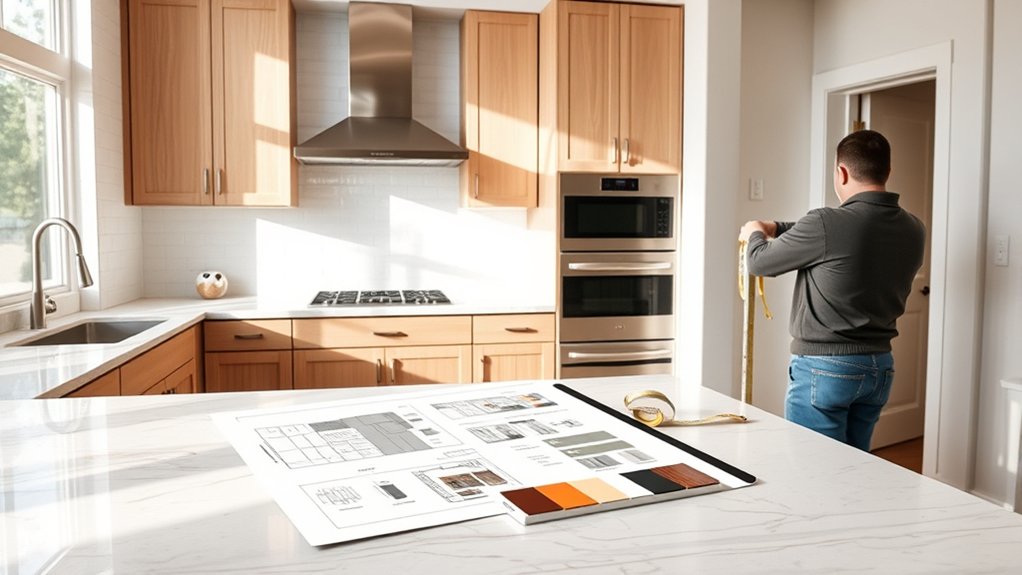
Before you begin selecting materials or designs, set a clear budget and timeline for your kitchen remodel. Establishing your budget allocation helps you prioritize expenses, ensuring you don’t overspend on non-essentials.
Break down your budget into categories like labor, materials, appliances, and unexpected costs. This way, you’ll have a realistic financial plan that guides every decision.
Effective timeline management is just as crucial. Outline key milestones, such as demolition, installation, and final inspections, to keep your project on track.
Account for potential delays by building buffer time into your schedule. Staying organized with a timeline reduces stress and helps you coordinate with contractors and suppliers efficiently.
Choose the Best Kitchen Layout, Materials, and Appliances
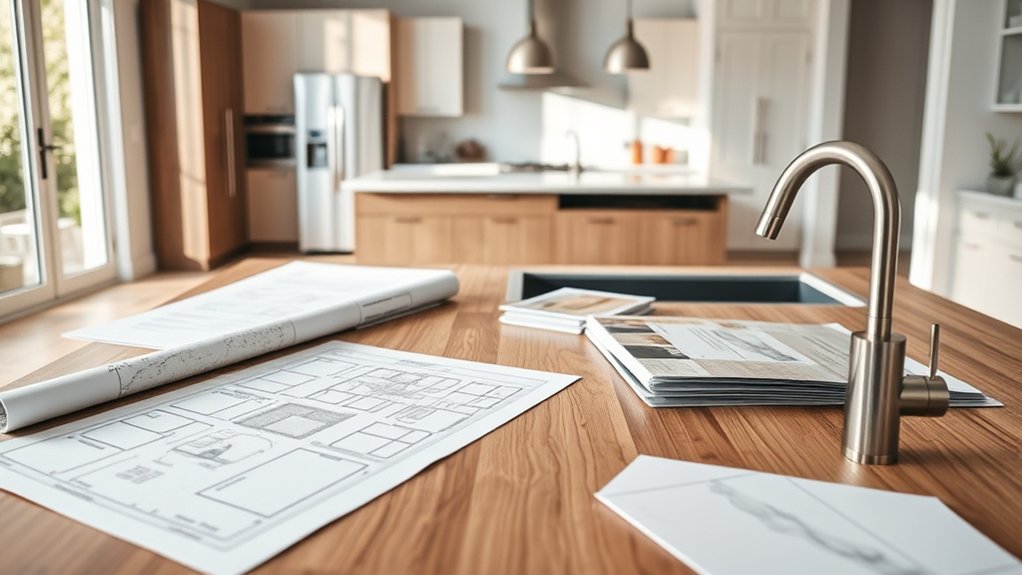
When you plan your kitchen layout, materials, and appliances carefully, you establish the foundation for a functional and stylish space that suits your daily needs. Start by choosing a layout that maximizes workflow. Consider popular options like the U-shape, L-shape, or galley kitchen. Think about how you move between the sink, stove, and fridge to keep cooking efficient.
Next, select cabinet styles that complement your taste and storage needs. Whether you prefer sleek modern flat panels or classic shaker cabinets, pick durable materials that hold up to daily use. Don’t overlook backsplash options. Tile, glass, or metal backsplashes can protect your walls while adding personality.
Finally, choose appliances that fit your cooking habits and budget. Energy-efficient models save money long-term and often perform better. By carefully selecting these elements, you guarantee your kitchen remodel is both practical and visually appealing.
Keep Your Kitchen Remodel on Track: Workflow and Scheduling

Though a great design sets the stage, keeping your kitchen remodel on track depends on managing workflow and scheduling effectively. Start by creating a detailed timeline that outlines each phase, from demolition to finishing touches like lighting design.
Coordinate with contractors to ensure tasks don’t overlap, preventing delays. Prioritize essential elements such as plumbing and electrical work before installing storage solutions and cabinetry. This approach helps avoid costly rework and keeps progress steady.
Communicate regularly with your team to address any issues promptly and adjust your schedule if needed. Keep in mind that ordering materials early, especially custom items like lighting fixtures or specialized storage solutions, prevents hold-ups.
Frequently Asked Questions
How Do I Handle Permits for a Kitchen Remodel?
You’ll need to start the permit process by contacting your local building department to understand specific requirements. Gather detailed plans and submit them for regulatory approval before beginning any work.
Don’t skip this step since permits guarantee your remodel meets safety codes and avoids fines. Stay proactive by following up regularly and keeping copies of all approvals. This way, you’ll handle permits smoothly and keep your kitchen remodel on track.
What Are the Best Ways to Dispose of Old Kitchen Materials?
The best ways to dispose of old kitchen materials involve using recycling centers and donation programs. You can drop off materials like metal, wood, and appliances at local recycling centers to reduce waste.
For cabinets, fixtures, or gently used items, consider donation programs. They often accept these to help others or resell them. This approach saves landfill space and supports community resources while keeping your remodel eco-friendly and responsible.
Can I Live in My Home During the Remodel?
Yes, you can live in your home during the remodel, but you’ll need to plan your living arrangements carefully. Set up a temporary kitchen in a less affected area to stay comfortable.
Managing noise is essential, so communicate with your contractor about work hours to minimize disruption. Using noise-cancelling headphones or scheduling noisy tasks when you’re out can help keep things manageable while the remodel is underway.
How Do I Select a Reliable Contractor?
You should start by checking the contractor credentials to make sure they’re licensed, insured, and have good reviews. Ask for references and see their previous work.
Get detailed budget estimates from multiple contractors to compare prices and avoid surprises. Don’t hesitate to ask questions about their timeline and materials.
Trust your instincts. Choose someone who communicates clearly and respects your budget to make your remodel smooth and stress-free.
What Eco-Friendly Options Are Available for Kitchen Remodeling?
You can choose sustainable materials like bamboo or reclaimed wood for cabinets and countertops to make your kitchen eco-friendly. Installing energy-efficient appliances helps reduce electricity use and lower bills.
Look for LED lighting and low-flow faucets to save water and energy. Eco-friendly paints with low VOCs also improve indoor air quality. These choices not only benefit the environment but also boost your kitchen’s long-term value and performance.
Conclusion
Your kitchen remodel is like painting a masterpiece. Each step shapes your vision into reality. By setting a clear budget and timeline, choosing the perfect layout and materials, and staying on top of your schedule, you’ll turn chaos into harmony.
Keep your goals in sight and your plan steady. Soon, you’ll be cooking in a space that feels just right. Remember, every great kitchen remodel starts with a simple, thoughtful plan.