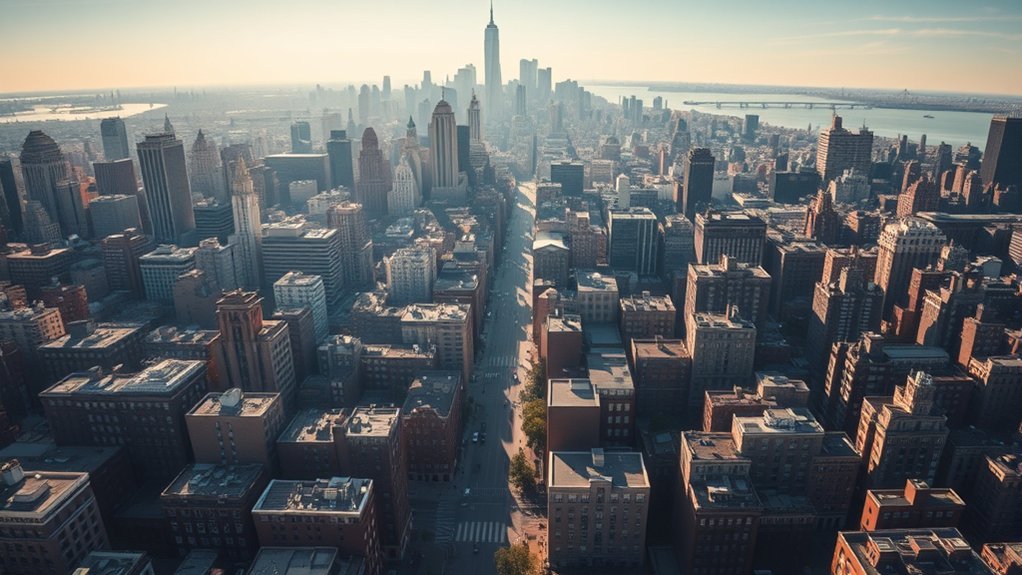
Where Is Hell’s Kitchen Located Exactly?
Finding the perfect spot in New York City can feel overwhelming, especially when you want a neighborhood with character, convenience, and culture. If you’ve ever struggled to pinpoint an area that offers all that without the hassle, you’re not alone. Many people search for that ideal balance of location and vibe.
You’ll find Hell’s Kitchen on Manhattan’s West Side, stretching roughly from 34th to 59th Streets, between Eighth Avenue and the Hudson River. It includes Ninth, Tenth, and Eleventh Avenues, placing you just minutes from the waterfront.
Hell’s Kitchen sits close to Midtown Manhattan and Times Square, with easy subway access via multiple lines. Its unique location shaped a vibrant history and lively culture.
Delve deeper to uncover what truly makes this neighborhood stand out.
Key Takeaways
- Hell’s Kitchen is on Manhattan’s West Side, between 34th and 59th Streets. It’s bounded by Eighth Avenue and the Hudson River.
- It includes Ninth, Tenth, and Eleventh Avenues, stretching from West 34th Street north to West 59th Street.
- The neighborhood lies just west of Midtown Manhattan, near Times Square and Central Park South.
- Hell’s Kitchen borders Clinton to the south, Chelsea to the southwest, Midtown West to the east, and Hudson Yards to the northwest.
- Its western edge is the Hudson River waterfront, within a short walking distance from key streets like 10th Avenue and 50th Street.
Where Exactly Is Hell’s Kitchen Located in Manhattan?

Although Hell’s Kitchen might sound like a mysterious place, you can find it on Manhattan’s West Side, roughly between 34th Street and 59th Street, and bordered by Eighth Avenue and the Hudson River.
When you delve into this neighborhood, you’ll notice it’s not just about vibrant street life; it’s also rich in art galleries that showcase local talent and contemporary works. These galleries give you a glimpse into the creative spirit thriving here.
As you walk around, you’ll also spot several historic landmarks that tell the story of Hell’s Kitchen’s past, from old theaters to preserved buildings that survived decades of change. This blend of cultural history and modern creativity makes Hell’s Kitchen unique.
What Are the Exact Boundaries of Hell’s Kitchen?
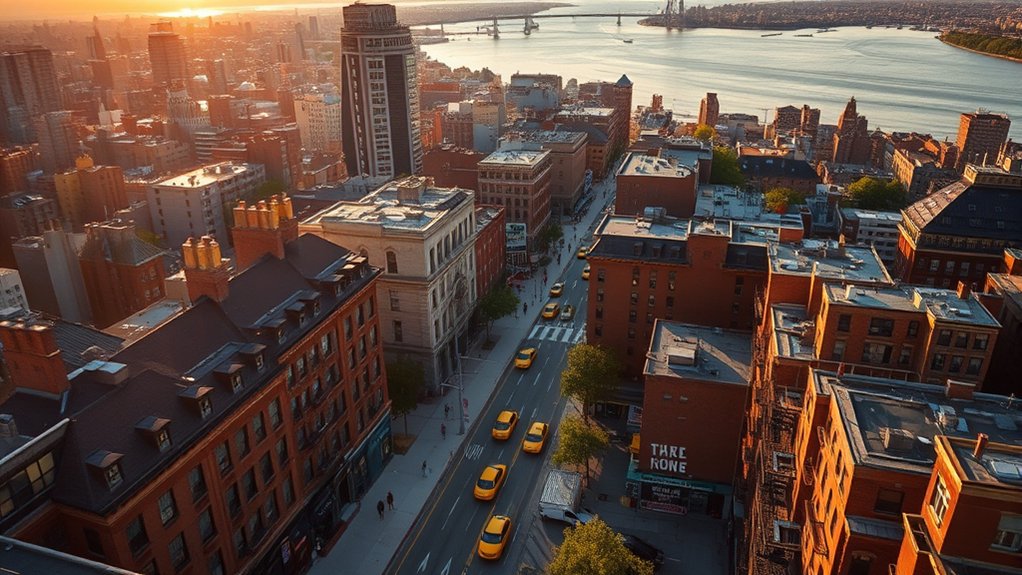
You’ll find Hell’s Kitchen stretching from 34th Street up to 59th Street on the north. On the east side, landmarks like Eighth Avenue help mark its edge. And then, the Hudson River defines its western limit.
Northern Boundary Streets
Where exactly does Hell’s Kitchen end on its northern side? The neighborhood’s boundary hits West 59th Street, marking a clear stop before the hustle of Central Park South.
As you stroll along this northern edge, you’ll notice vibrant street art popping up, reflecting the area’s creative pulse. This boundary isn’t just a line on a map; it’s where the eclectic energy of Hell’s Kitchen meets the upscale vibe of Midtown.
You’ll find local cuisine spots scattered near this street, blending authentic flavors with urban charm. The mix of murals and eateries here perfectly captures Hell’s Kitchen’s unique character, making the northern boundary streets more than just a border—they’re a lively introduction to everything this neighborhood offers.
Eastern Border Landmarks
When you investigate Hell’s Kitchen from the east, the landmarks along 8th Avenue clearly define its edge. This busy avenue acts as a natural boundary, separating Hell’s Kitchen from the bustling Theater District.
As you stroll down 8th Avenue, you’ll notice a mix of vibrant local cuisine spots that bring authentic flavors to the neighborhood. These eateries give you a taste of Hell’s Kitchen’s unique character.
Just beyond, the nightlife hotspots begin to emerge, drawing crowds with their lively atmosphere and diverse entertainment options. These eastern landmarks mark where Hell’s Kitchen’s energy shifts, giving you a clear sense of its limits.
Knowing these boundary markers helps you navigate and appreciate the neighborhood’s distinct vibe from the east side.
Southern And Western Limits
Although Hell’s Kitchen’s eastern edge is well-defined by 8th Avenue, its southern and western boundaries can be a bit more fluid. To the south, you’ll often find the neighborhood blending into the Garment District around 34th Street, though some locals stretch Hell’s Kitchen’s border down to 30th Street.
On the west, the Hudson River naturally marks the edge, with the neighborhood extending from 9th Avenue to the waterfront. When you uncover these limits, you’ll find a mix of local cuisine spots and nightlife hotspots that define Hell’s Kitchen’s unique vibe.
Whether you’re grabbing a bite at a cozy restaurant or hitting a lively bar, these southern and western edges showcase the neighborhood’s dynamic culture right where it meets the city’s bustling core.
Which Streets and Avenues Make Up Hell’s Kitchen?
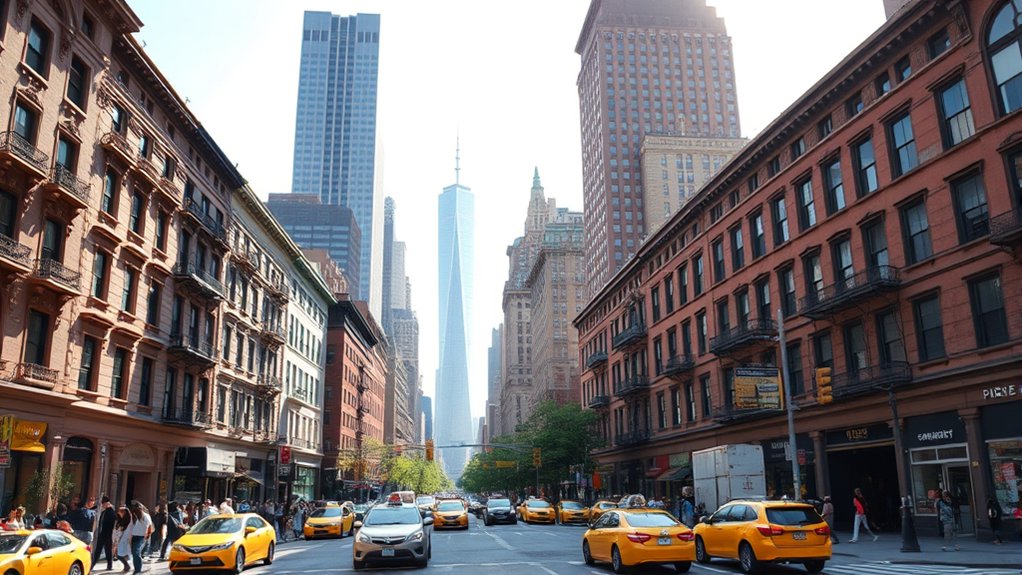
If you’re steering through Hell’s Kitchen, you’ll find it’s roughly bounded by 34th Street to the south, 59th Street to the north, Eighth Avenue to the east, and the Hudson River to the west. This vibrant neighborhood’s historical development shines through its grid of streets and avenues, reflecting its rich cultural diversity.
Here’s what makes up Hell’s Kitchen:
Discover the defining streets and vibrant avenues that shape the heart of Hell’s Kitchen.
- 34th to 59th Streets – These north-south streets mark the neighborhood’s vertical limits.
- Eighth Avenue – Serving as the eastern boundary, it separates Hell’s Kitchen from Midtown Manhattan.
- Ninth, Tenth, and Eleventh Avenues – These avenues run through the heart of the neighborhood, each with its own unique character.
- Hudson River Waterfront – The western edge offers scenic views and industrial roots tied to Hell’s Kitchen’s past.
Navigating these streets and avenues, you’ll experience a dynamic blend of old and new, shaped by decades of cultural shifts.
How Far Is Hell’s Kitchen From the Hudson River?
How close is Hell’s Kitchen to the Hudson River? You’ll find this vibrant neighborhood just a stone’s throw away from the river’s edge. Historically, the proximity to the Hudson has shaped Hell’s Kitchen’s development, influencing everything from its industrial past to its cultural diversity today.
Walking west from the neighborhood’s main avenues, you’ll reach the waterfront within minutes, offering stunning views and a revitalizing contrast to the urban buzz.
Here’s a quick snapshot of the distances from key Hell’s Kitchen streets to the Hudson River:
| Location | Distance to Hudson River |
|---|---|
| 8th Avenue & 42nd St | 0.3 miles |
| 9th Avenue & 46th St | 0.2 miles |
| 10th Avenue & 50th St | 0.1 miles |
| 9th Avenue & 54th St | 0.15 miles |
| 8th Avenue & 55th St | 0.35 miles |
This close distance highlights how the river has continually influenced the neighborhood’s cultural and historical landscape.
Which Subway Lines Run Through Hell’s Kitchen in Manhattan?
If you’re navigating through Hell’s Kitchen, it’s really helpful to know which subway lines run through the neighborhood. There are a few lines that make getting around super easy, connecting you to key nearby stations. So, let’s check out the main subway options that keep Hell’s Kitchen well-connected.
Subway Lines Overview
Although Hell’s Kitchen is known for its vibrant street life, getting around the neighborhood is easy thanks to several subway lines that run through it. The area benefits from well-developed subway infrastructure, enhancing transit accessibility for residents and visitors alike.
If you’re oriented within Hell’s Kitchen, here are the main lines you’ll encounter:
- The 1, 2, and 3 lines running along 7th Avenue.
- The A, C, and E lines serving 8th Avenue.
- The N, Q, R, and W lines near the southern edge, close to Times Square.
- The 7 line providing east-west access at the neighborhood’s northern boundary.
These lines ensure you can quickly reach key Manhattan destinations and beyond without hassle.
Key Station Connections
Since Hell’s Kitchen is served by multiple subway lines, you’ll find several key stations where these lines intersect. This makes transfers and access to different parts of Manhattan straightforward.
The 50th Street station connects the C and E lines, offering easy access to the neighborhood’s vibrant nightlife scene. Meanwhile, the 42nd Street-Port Authority Bus Terminal station serves the A, C, and E lines, acting as a major hub that links Hell’s Kitchen to Midtown and beyond.
If you’re craving local cuisine, the nearby Times Square-42nd Street station connects you to the 1, 2, 3, 7, N, Q, R, and W lines, making it a breeze to discover Hell’s Kitchen’s dining hotspots. These stations guarantee you can navigate the area with ease and delve into everything it offers.
What Neighborhoods Border Hell’s Kitchen?
When you investigate the edges of Hell’s Kitchen, you’ll find it situated among several distinct neighborhoods, each offering unique charm and character. Exploring these borders gives you access to historic architecture and vibrant local cuisine, enriching your experience in the area.
Discover Hell’s Kitchen’s unique charm through its neighboring vibrant neighborhoods and rich local culture.
Here are the neighborhoods that border Hell’s Kitchen:
- Clinton Often used interchangeably with Hell’s Kitchen, Clinton features elegant brownstones and a variety of eateries.
- Chelsea South of Hell’s Kitchen, Chelsea is known for art galleries, historic architecture, and trendy restaurants.
- Midtown West Eastward, Midtown West blends commercial skyscrapers with dining spots that highlight diverse local cuisine.
- Hudson Yards To the northwest, this newly developed area contrasts with Hell’s Kitchen’s older, historic vibe but offers exciting culinary options.
How Close Is Hell’s Kitchen to Midtown Manhattan and Times Square?
You’ll find Hell’s Kitchen just a stone’s throw from Midtown Manhattan’s major landmarks. It’s close enough that you can easily walk to the bright lights of Times Square in just a few minutes. Because of this prime location, it’s super convenient to enjoy the best of both neighborhoods.
Proximity To Midtown Landmarks
Although Hell’s Kitchen is often considered its own neighborhood, it sits just a short walk from Midtown Manhattan and Times Square. You’ll find it offers a unique blend of a residential atmosphere alongside bustling city life.
When exploring proximity to Midtown landmarks, consider these points:
- Hell’s Kitchen borders the west side of Midtown, making iconic spots easily reachable.
- The neighborhood’s local cuisine scene is vibrant, giving you a break from typical Midtown dining.
- You can quickly access theaters and offices in Midtown while enjoying quieter streets at home.
- Public transit links connect Hell’s Kitchen with major Midtown hubs, blending convenience with charm.
This proximity lets you enjoy both lively landmarks and a comfortable neighborhood vibe.
Walking Distance To Times Square
Just a few blocks separate Hell’s Kitchen from the bright lights of Times Square, making it an easy and quick walk. When you step out of Hell’s Kitchen, you’re just minutes away from Midtown Manhattan’s iconic hub.
This close proximity means you can enjoy vibrant nightlife hotspots in Hell’s Kitchen and still catch a Broadway show or discover Times Square’s energy without hassle. After soaking up the sights, you can return to Hell’s Kitchen to savor some of the city’s best local cuisine, from cozy diners to trendy restaurants.
Whether you’re craving a late-night bite or a lively bar scene, Hell’s Kitchen’s location offers the perfect balance of accessibility and authentic New York experiences, just a stroll away from Times Square.
How Has Hell’s Kitchen’s Location Shaped Its History?
Because Hell’s Kitchen sits on Manhattan’s west side near the Hudson River and Times Square, its location has deeply influenced its character and history. You can see its historical development shaped by strategic access to the waterfront, making it a hub for dockworkers and immigrants.
This location invited diverse cultural influences, blending Irish, Italian, and other immigrant communities into a unique neighborhood identity. Here’s how the location shaped Hell’s Kitchen’s history:
- Proximity to the Hudson River created a bustling port area, attracting laborers and fostering working-class roots.
- Nearness to Times Square made it a natural extension for entertainment and nightlife, impacting local businesses.
- Its position as a transport junction facilitated immigration, enriching the cultural tapestry.
- Location near midtown Manhattan led to urban renewal efforts, transforming the neighborhood’s reputation and infrastructure.
You’ll find that Hell’s Kitchen’s location isn’t just geographic. It’s central to its evolving story.
Why Is Hell’s Kitchen Popular With Theater Lovers?
Hell’s Kitchen’s close proximity to Times Square and midtown Manhattan has made it a natural magnet for theater lovers. When you visit, you’ll find yourself just steps away from the heart of the theater district, where Broadway shows and off-Broadway productions dominate the scene. This makes catching a performance incredibly convenient, whether you’re heading to a matinee or a late-night show.
Beyond the theaters, Hell’s Kitchen’s vibrant nightlife scene offers plenty of post-show options. You can grab a drink, enjoy live music, or dine at one of the many trendy restaurants nearby. This lively atmosphere keeps the energy high and provides the perfect spot to discuss the play you just saw. If you love theater, Hell’s Kitchen isn’t just a place to watch shows; it’s a hub where you can fully immerse yourself in the arts, nightlife, and culture surrounding the theater district.
What Makes Hell’s Kitchen Unique Among NYC Neighborhoods?
While many NYC neighborhoods boast distinct personalities, Hell’s Kitchen stands out for its unique blend of gritty history and modern charm. When you discover this area, you’ll notice several features that set it apart:
- Rich cultural influences from immigrant communities have shaped its vibrant, diverse atmosphere.
- The local cuisine reflects this diversity, offering everything from authentic ethnic eateries to trendy fusion restaurants.
- Its proximity to Broadway theaters draws artists and performers, creating a creative, dynamic vibe.
- Despite rapid gentrification, Hell’s Kitchen maintains an authentic, unpolished edge that preserves its working-class roots.
You’ll find Hell’s Kitchen welcomes both its past and present, making it a compelling neighborhood to experience. Whether you’re sampling local cuisine or strolling its bustling streets, the cultural influences and unique ambiance make Hell’s Kitchen unlike any other NYC neighborhood.
Frequently Asked Questions
What Types of Restaurants Are Popular in Hell’s Kitchen?
You’ll find a variety of restaurants popular in Hell’s Kitchen, with local cuisine taking center stage. From trendy dining hotspots offering creative twists on classic dishes to cozy spots serving authentic international flavors, the neighborhood caters to diverse tastes.
You can enjoy everything from Italian and Asian fusion to classic American fare. Hell’s Kitchen’s vibrant food scene means you’ll never run out of exciting places to try and savor great meals.
Are There Any Famous Residents From Hell’s Kitchen?
You might be surprised to hear Hell’s Kitchen isn’t just a hotspot for celebrity sightings but also home to some famous residents. You’ll find actors, artists, and musicians who’ve made this neighborhood their base, blending right in with historic landmarks.
What Are the Best Hotels to Stay in Hell’s Kitchen?
You’ll want to stay at the Ink48 Hotel or the Moxy NYC Times Square for a great Hell’s Kitchen experience. Both put you close to historical landmarks and vibrant nightlife hotspots.
Ink48 offers chic rooftop views, while Moxy keeps things lively and fun. These hotels let you immerse yourself in the neighborhood’s energy, making it easy to discover nearby theaters, restaurants, and bars without missing a beat.
Is Hell’s Kitchen Considered Safe for Tourists?
Yes, Hell’s Kitchen is generally safe for tourists, especially around popular tourist hotspots. You just need to stay aware of your surroundings, particularly at night.
Nightlife safety is important since the area gets lively after dark with bars and restaurants bustling. Stick to well-lit streets, avoid isolated spots, and keep your belongings secure. If you use common sense and stay cautious, you’ll enjoy Hell’s Kitchen without any major safety concerns.
What Annual Events or Festivals Take Place in Hell’s Kitchen?
You’ll find that Hell’s Kitchen hosts vibrant annual events like the Hell’s Kitchen Film Festival and various street fairs celebrating local culture. When you visit, don’t miss the nightlife hotspots that come alive during these festivals, offering a mix of music and entertainment.
You can also join art gallery tours that showcase the neighborhood’s creative spirit, making your experience rich and exciting while exploring this dynamic area.
Conclusion
You might think Hell’s Kitchen is just another gritty neighborhood, but its exact location between Midtown and the Hudson River makes it vibrant and accessible. You’ll find it packed with theaters, great food, and unique culture. It’s perfect for exploring NYC’s energy without the usual crowds.
Don’t let its tough reputation fool you. Hell’s Kitchen is a dynamic spot where history and modern life meet. It’s waiting for you to uncover its charm firsthand in Hell’s Kitchen.