How Do You Build a Commercial Kitchen in 3 Simple Steps?
Building a commercial kitchen can feel overwhelming, especially when you want everything to run smoothly and meet health regulations. You’re not alone—many people struggle with designing a space that’s both efficient and compliant. But with the right approach, you can create a kitchen that boosts productivity and stands up to the daily demands of a busy food service operation.
To build a commercial kitchen in three simple steps, start by designing an efficient layout that maps key zones like prep, cooking, and cleaning to guarantee smooth workflow and easy access to storage.
Next, choose durable, easy-to-maintain equipment made from materials like stainless steel that handle heavy use and save space.
Finally, rigorously follow health and safety standards, including proper storage, sanitation, and staff training. Keep these in mind, and you’ll create a kitchen that runs safely and smoothly while boosting productivity.
Key Takeaways
- Plan the kitchen layout by mapping zones for prep, cooking, plating, and cleaning. This helps ensure efficient workflow and reduces unnecessary movement.
- Optimize storage placement for dry goods, refrigerated items, and utensils. Keeping workspaces organized and accessible makes a big difference.
- Install proper ventilation and exhaust systems to remove heat, smoke, and odors while maintaining air quality and staff comfort.
- Select durable, easy-to-maintain equipment made of heat- and moisture-resistant materials. These can handle the heavy use typical in commercial kitchens.
- Follow health and safety standards by maintaining proper storage temperatures, performing regular cleaning, and conducting staff hygiene training.
Design an Efficient Commercial Kitchen Layout for Smooth Workflow

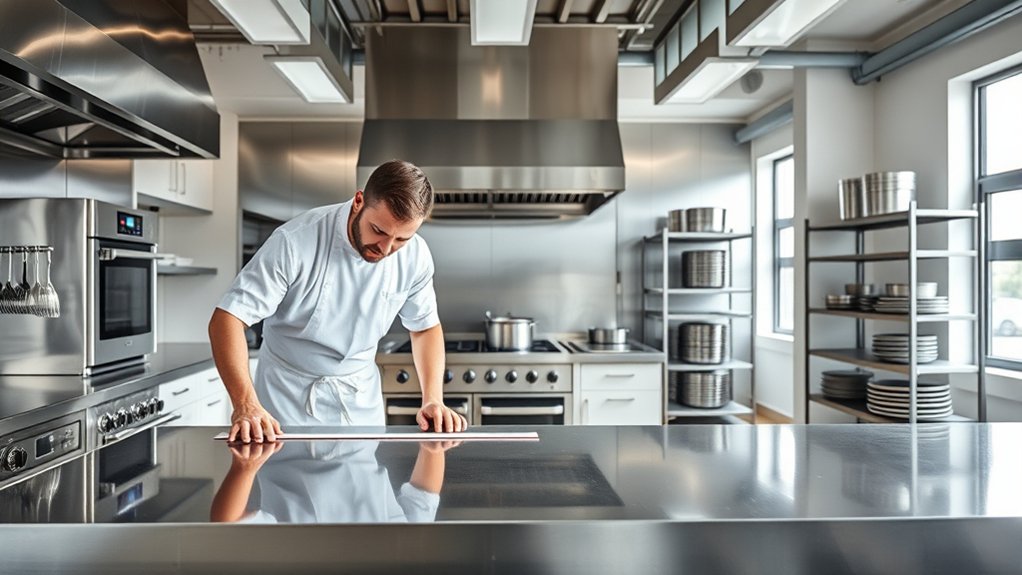
When you design an efficient commercial kitchen layout, you set the foundation for a smooth workflow that boosts productivity and minimizes errors. Start by mapping out key zones like prep, cooking, plating, and cleaning to guarantee a logical flow that reduces unnecessary movement.
Storage optimization plays a vital role here. Place dry goods, refrigerated items, and utensils strategically to keep everything within easy reach without cluttering workspaces. Efficient storage means you spend less time searching and more time cooking.
Don’t overlook ventilation solutions because they’re indispensable for maintaining air quality and comfort. Proper ventilation removes heat, smoke, and odors, creating a safer, more pleasant environment for your staff.
Position vents and exhaust systems to maximize airflow without interfering with kitchen operations. By thoughtfully integrating storage optimization and ventilation solutions into your layout, you create a workspace that’s not only functional but also comfortable. This helps your team perform at their best every day.
Choose the Right Equipment and Materials for Your Commercial Kitchen

Selecting the right equipment and materials shapes the efficiency and durability of your commercial kitchen. You want appliances that not only perform well but also stand up to daily wear and tear.
Prioritize material durability to minimize frequent replacements and costly repairs. Choosing stainless steel surfaces, for example, offers corrosion resistance and easy cleaning, reducing your appliance maintenance efforts.
Consider these key points when selecting your kitchen equipment and materials:
- Reliability that supports your busiest hours without breaking down
- Easy appliance maintenance to keep your workflow uninterrupted
- Materials that resist heat, moisture, and heavy use over time
- Equipment designed to maximize space and improve productivity
Comply With Health and Safety Standards for Your Commercial Kitchen
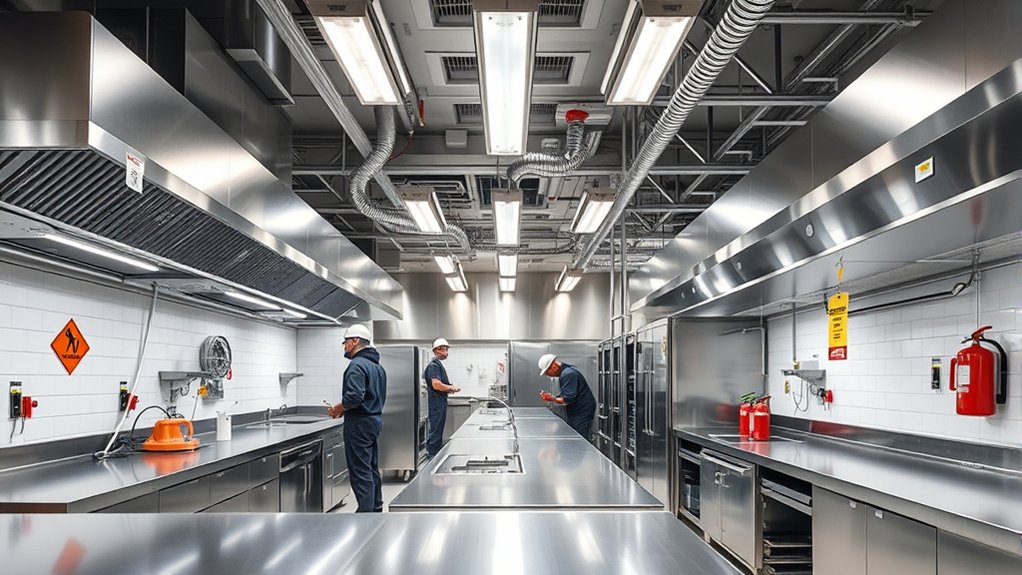
Choosing the right equipment and materials sets the foundation. But ensuring your commercial kitchen meets health and safety standards keeps it running smoothly and legally.
You’ll need to focus on food safety and sanitation procedures to prevent contamination and maintain cleanliness. Regular inspections and staff training are essential to keep everything compliant.
Here’s a quick checklist to guide you:
| Area | Requirement | Action Needed |
|---|---|---|
| Food Safety | Proper storage temperatures | Install thermometers |
| Sanitation Procedures | Cleaning schedules | Develop daily cleaning logs |
| Staff Training | Hygiene practices | Conduct regular training |
Frequently Asked Questions
How Long Does It Typically Take to Build a Commercial Kitchen?
It typically takes you about 3 to 6 months to build a commercial kitchen. Your timeline depends heavily on kitchen design complexity and equipment selection.
If you choose standard layouts and readily available equipment, you’ll move faster. Custom designs or specialty equipment can add weeks.
Don’t forget permitting and inspections, which might slow you down. Planning carefully and coordinating with contractors guarantees you stay on track and avoid costly delays.
What Is the Average Cost to Set up a Commercial Kitchen?
You can expect the average cost to set up a commercial kitchen to range between $50,000 and $150,000, depending on your kitchen design and equipment sourcing choices. If you opt for high-end appliances and custom layouts, costs will climb.
However, smart equipment sourcing and efficient kitchen design can help you stay within budget without sacrificing quality or functionality. Planning carefully upfront saves you money and hassle later on.
Can I Build a Commercial Kitchen in a Small Space?
You can definitely build a commercial kitchen in a small space, like fitting a puzzle piece just right. By focusing on small space optimization and compact kitchen design, you’ll maximize every inch without feeling cramped.
Choose multi-functional equipment and smart storage solutions to keep things efficient. With careful planning, your small kitchen will run smoothly, making the most of limited space while meeting all your commercial cooking needs.
Do I Need a Professional Contractor for Kitchen Installation?
Yes, you’ll want a professional contractor for your kitchen installation. They understand design considerations that guarantee your space is efficient and meets health codes.
Plus, contractors are familiar with licensing requirements, helping you avoid costly mistakes or delays. While you might manage some tasks, having an expert ensures everything’s up to standard, safe, and functional.
This saves you time and stress during your commercial kitchen build.
How Do I Maintain and Clean Commercial Kitchen Equipment?
You should establish regular cleaning schedules to keep your commercial kitchen equipment in top shape. Focus on daily wipe-downs, weekly deep cleans, and monthly inspections to catch wear and tear early.
Equipment maintenance means lubricating moving parts, checking filters, and calibrating settings to prevent breakdowns. Stick to manufacturer guidelines and train your staff to follow these routines consistently.
This way, you’ll extend your equipment’s lifespan and maintain a safe, efficient kitchen.
Conclusion
Building a commercial kitchen doesn’t have to be complicated. By designing an efficient layout, choosing the right equipment, and following health and safety standards, you’ll set yourself up for success.
Did you know that kitchens with optimized workflows can boost productivity by up to 25%? That’s a game-changer for your business.
Keep these steps in mind, and you’ll create a kitchen that’s not just functional but also a smart investment. Building a commercial kitchen the right way ensures your space works hard for you every day.