How Wide Should a Kitchen Sink Be?
Choosing the perfect kitchen sink width can feel overwhelming—you’re not alone! Many people struggle to find a sink that fits their space, suits their cooking style, and complements their kitchen layout. With so many options out there, it’s tough to know where to start.
You should pick a kitchen sink width between 22 and 33 inches to fit your space and cooking habits. Smaller sinks (22-24 inches) suit compact kitchens, while medium ones (25-33 inches) balance function and countertop space.
If you cook often or use large pots, a wider sink helps with prep and cleanup.
Make sure your sink matches your kitchen layout and accessories for smooth workflow. Keep exploring to find the ideal size, material, and style for your needs.
Key Takeaways
- Kitchen sinks typically range from 22 to 33 inches wide. The size you choose depends on your kitchen size and your needs.
- Small kitchens fit sinks 22-24 inches wide. Medium kitchens usually go for 25-33 inches, while large kitchens can have sinks 36 inches or wider.
- Larger sinks are great if you cook and wash dishes often. They can comfortably hold pots, pans, and multiple basins.
- Be sure to measure your available countertop space carefully. Leave room for accessories and make sure the sink fits without overcrowding.
- The sink width should balance functionality, ergonomics, and kitchen aesthetics. It should complement your cabinetry and workflow.
Standard Widths for Kitchen Sinks
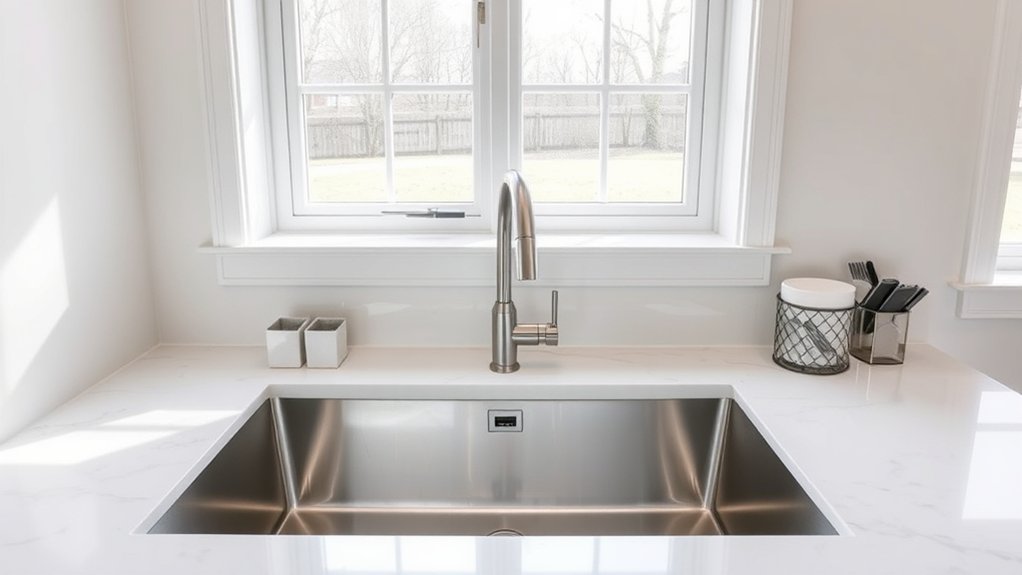
When choosing a kitchen sink, you’ll find that standard widths typically range between 22 and 33 inches. This range offers a good balance between practicality and design aesthetics, letting you pick a sink that complements your countertop and overall kitchen style.
A wider sink can serve as a focal point, enhancing your kitchen’s look, while a smaller one keeps things sleek and minimal. You’ll want to carefully consider maintenance as well; larger sinks might require more effort to keep clean, especially if they have multiple basins or intricate designs.
On the other hand, smaller sinks are often easier to maintain but might limit your workspace. By understanding these standard sizes, you can better match your sink to your kitchen’s layout and your daily needs.
This way, you guarantee your choice fits both your space and lifestyle without compromising on style or upkeep.
Popular Sink Widths for Small, Medium & Large Kitchens
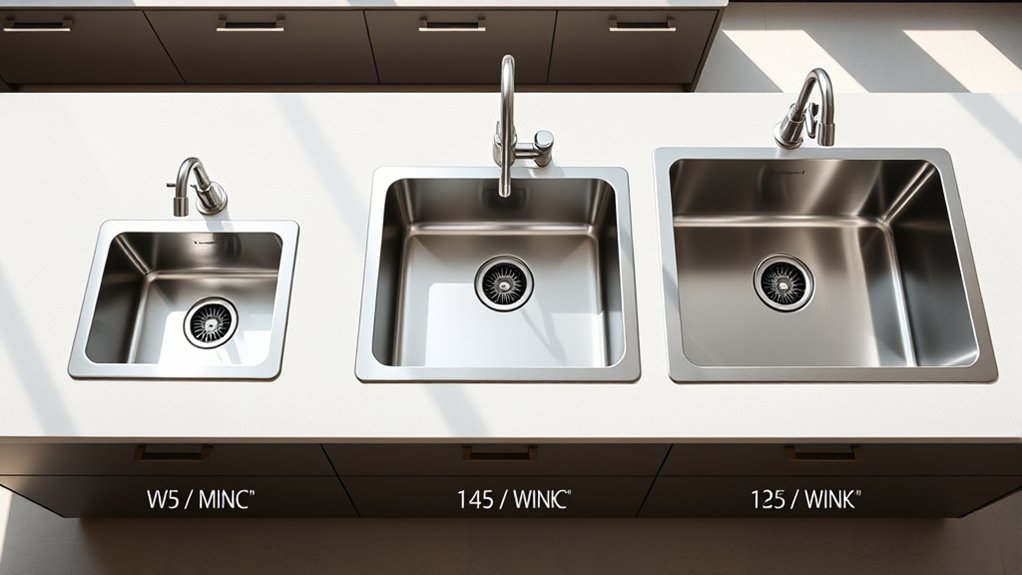
Although kitchen sizes vary widely, selecting the right sink width guarantees you maximize your space without sacrificing functionality. For small kitchens, sinks between 22 to 24 inches work best, keeping your workspace open while providing enough room for daily tasks.
Medium kitchens often benefit from 25 to 33-inch sinks, striking a balance between capacity and countertop space. Large kitchens can accommodate sinks 36 inches or wider, perfect if you handle big pots or entertain frequently.
When choosing your sink, consider color options that complement your kitchen’s style and cabinetry. Darker tones can make a bold statement, while neutral colors blend seamlessly.
Don’t overlook installation height either. Adjusting it to your comfort can reduce strain during extended use, no matter your sink width. By matching sink size to your kitchen’s dimensions and your personal needs, you guarantee an efficient, stylish setup that fits perfectly in your space.
How Your Cooking Habits Affect Kitchen Sink Size
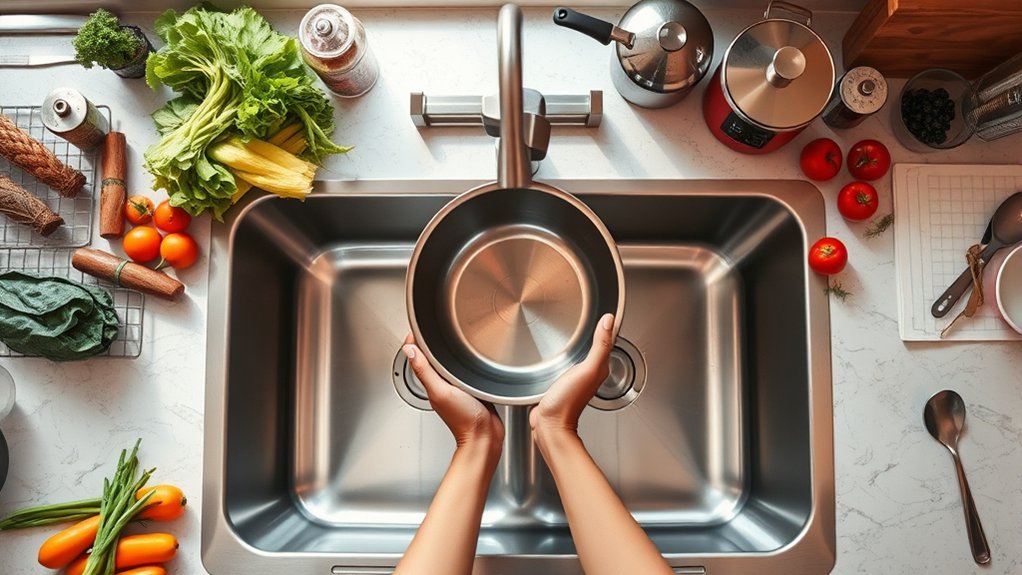
Your cooking habits really influence the size of sink you should get. If you find yourself cooking a lot, washing dishes by hand, or working with big pots and pans, then a wider sink is definitely the way to go.
Knowing how you usually prepare meals makes it easier to choose a sink that fits your daily routine just right. So, think about what you do most in the kitchen before making your pick!
Meal Preparation Frequency
Since you prepare meals frequently, you’ll need a larger kitchen sink to handle the increased volume of dishes, pots, and utensils. A wider sink allows you to work more efficiently, letting you rinse, soak, and wash multiple items at once without crowding.
This setup directly boosts your cooking efficiency by reducing downtime while cleaning. Additionally, a spacious sink improves kitchen ergonomics. It minimizes awkward movements and the need to juggle items, which helps prevent strain during long meal prep sessions.
If you cook often, investing in a sink that accommodates your pace and volume makes your kitchen workflow smoother. Ultimately, the right sink size supports your active cooking habits and keeps cleaning manageable, so your kitchen stays functional and comfortable.
Dishwashing Style Preferences
Meal preparation frequency often influences not just the size of your sink but also how you prefer to handle dishwashing. If you wash dishes immediately after cooking, you might favor a wider sink with separate basins to rinse and scrub efficiently.
On the other hand, if you prefer soaking dishes or using a dishwasher, a more compact sink with modern design elements can fit seamlessly into your kitchen. Choosing sinks made from eco friendly materials supports sustainability while complementing your style.
Your dishwashing style also dictates whether you need accessories like cutting boards or drying racks that fit your sink’s dimensions. By aligning your sink size with how you wash dishes, you create a functional space that suits your daily habits and elevates your kitchen’s overall look.
Cookware Size Considerations
Cooking with large pots, pans, or baking sheets means you’ll need a sink spacious enough to accommodate them comfortably. When choosing your sink size, consider your cookware dimensions and how often you use bulky items.
A wider sink lets you wash and soak oversized pieces without hassle. Also, think about faucet compatibility. Your faucet should reach all areas of the sink to make cleaning easier.
Don’t forget color options. Selecting a color that complements your kitchen decor can improve the overall look while meeting functional needs. If you frequently cook with large or oddly shaped cookware, prioritize a deep, wide sink with a faucet designed to swivel or extend. This guarantees your kitchen setup supports your cooking habits effectively and stylishly.
Choosing Single, Double, or Triple Basin Sinks
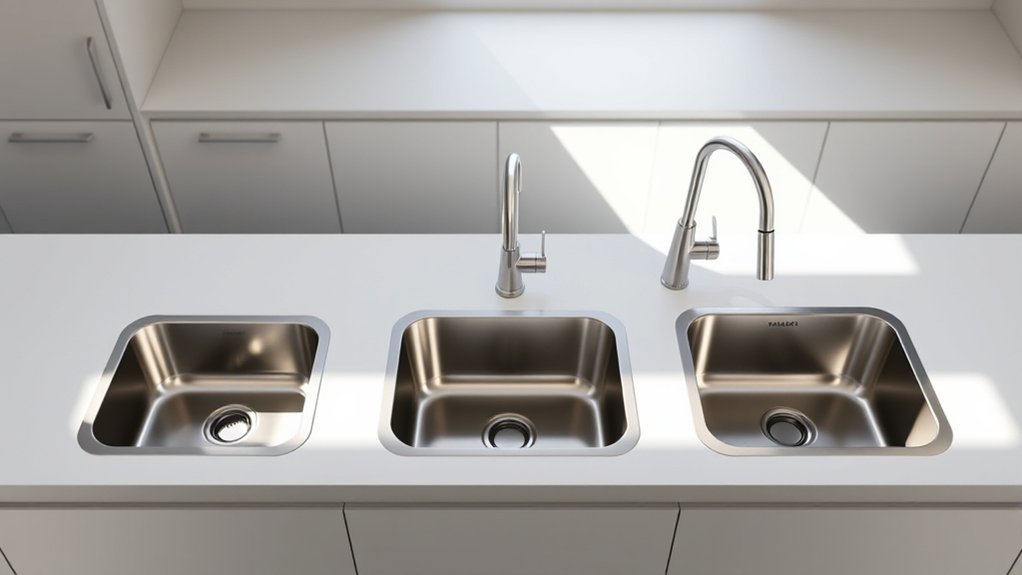
When you’re deciding between single, double, or triple basin sinks, it really helps to think about how you use your kitchen. A single basin gives you lots of uninterrupted space, which is great for washing those big pots and pans. On the other hand, having multiple basins lets you multitask — like rinsing dishes in one side while soaking others in another. So, knowing your routine makes it easier to pick the sink that suits your needs best.
Benefits of Single Basins
Although double and triple basins offer versatility, a single basin sink provides unmatched space and simplicity that many homeowners appreciate. When considering kitchen sink aesthetics, a single basin creates a sleek, seamless look that suits modern designs.
Plus, it makes cleaning easier. You won’t have tight corners or dividers to scrub. Here are four key benefits to keep in mind:
- Maximizes usable space for washing large pots and pans.
- Simplifies sink cleaning tips by reducing nooks where grime hides.
- Improves kitchen sink aesthetics with clean, uninterrupted lines.
- Offers easier installation and fewer potential leak points.
If you want a functional yet stylish sink that’s easy to maintain, a single basin is a smart choice.
Advantages of Multiple Basins
Single basin sinks offer simplicity and space, but multiple basins bring flexibility that can make your kitchen work smoother. With double or triple basins, you can wash, rinse, and soak simultaneously, saving time and effort.
Multiple basins also help separate tasks, reducing cross-contamination. When choosing, consider sink material and faucet compatibility to guarantee durability and ease of use.
| Basin Count | Advantage |
|---|---|
| Single | Maximizes workspace |
| Double | Allows multitasking |
| Triple | Separates tasks fully |
| All | Matches varied faucets |
Multiple basins give you versatility, making your kitchen routines more efficient while fitting different sink materials and faucets seamlessly.
How Sink Depth Affects Width and Functionality
Since sink depth influences how much space you have to work with, it directly impacts the ideal width for your kitchen sink. When choosing your sink, consider how depth affects its overall functionality and width requirements.
Sink depth shapes your workspace and directly determines the best width for optimal kitchen sink use.
A deeper sink allows you to wash larger pots without splashing, but it may require a wider basin for comfort. Here’s what to keep in mind:
- Balance depth and width: A very deep sink often needs extra width to maintain usability and prevent awkward angles.
- Ergonomics matter: Deeper sinks can strain your back if too wide or narrow, so aim for a comfortable combination.
- Functionality in tasks: Deeper sinks hold more water, making soaking easier, but width ensures enough room for multitasking.
- Cabinet size limits: Depth affects how wide your sink can be based on under-counter space and plumbing.
How to Measure Your Available Kitchen Counter Space
Understanding how sink depth and width interact sets the stage for measuring your available kitchen counter space accurately. First, clear the countertop area where you plan to install the sink. Use a tape measure to record the total length and width of this space, paying close attention to any obstructions like faucets, electrical outlets, or cabinets.
Remember, your countertop durability depends on proper sink placement, so avoid cutting too close to edges or seams. Next, consider water efficiency by leaving enough space around the sink for accessories like a faucet sprayer or soap dispenser.
Measure the space needed for these items to ensure they don’t overcrowd your countertop. Finally, double-check your measurements to confirm the sink will fit comfortably without compromising countertop strength. Taking these steps helps you choose a sink size that balances functionality, water efficiency, and countertop durability, ensuring a practical and lasting kitchen setup.
Matching Your Sink Size to Your Kitchen Layout
When choosing a sink size, you’ll want to take into account how it fits within your kitchen’s overall layout. Your sink isn’t just functional; it also influences your kitchen decor and the flow of your workspace. To match your sink size perfectly, consider these four key points:
Your sink size shapes both kitchen function and style, fitting seamlessly into your workspace and decor.
- Work Triangle Efficiency: Guarantee the sink placement complements your stove and refrigerator for smooth movement.
- Countertop Style: Choose a sink size that highlights your countertop without overwhelming it.
- Sink Accessories Compatibility: Pick a sink wide enough to accommodate accessories like cutting boards or drying racks without cluttering.
- Visual Balance: Select a sink that harmonizes with your cabinetry and other fixtures to maintain cohesive kitchen decor.
Balancing Sink Size With Counter and Cabinet Space
Although a larger sink can boost functionality, you’ll need to balance its size with the available counter and cabinet space to avoid overcrowding. When your sink dominates the countertop, it limits prep areas and reduces storage options below. Measure your counters carefully to find a sink width that fits comfortably without overwhelming other elements.
Color coordination plays an essential role here, too. Choose a sink color that complements your countertops and cabinetry to create a cohesive look. If your cabinets are dark, a lighter sink can provide contrast without clashing.
Likewise, consider faucet styles that match both your sink and kitchen décor. Sleek, modern faucets pair well with minimalist sinks, while traditional styles suit farmhouse designs.
Best Materials for Different Kitchen Sink Sizes
Choosing the right material for your kitchen sink depends largely on its size and how you plan to use it. Smaller sinks benefit from durable, low-maintenance materials. Wider sinks need robust, eco friendly materials that can withstand heavy use. Here are four popular options to ponder:
- Stainless Steel: A cost effective option, ideal for medium to large sinks due to its durability and easy cleaning.
- Composite Granite: Great for wider sinks, offering strength and resistance to scratches, plus it’s eco friendly.
- Cast Iron with Enamel Coating: Perfect for smaller sinks, providing a classic look and excellent durability.
- Fireclay: Suitable for various sizes, fireclay sinks are eco friendly and resistant to stains and chips, though they tend to be pricier.
Installation Tips for Wider Kitchen Sinks That Save Space
To maximize your kitchen’s functionality, installing a wider sink requires careful planning to save space without sacrificing usability. Start by measuring your countertop and cabinets to ensure the sink fits without crowding other work areas.
Opt for an undermount installation; it enhances design aesthetics by creating seamless edges and frees up counter space. Consider sinks with integrated accessories like cutting boards or drying racks, which boost water efficiency by minimizing water use during prep and cleanup.
Choose a sink depth that balances capacity with accessibility, avoiding overly deep models that consume cabinet space. Position the faucet strategically to allow easy reach across the wider basin without splashing.
Lastly, ensure proper plumbing alignment to prevent leaks and maintain efficient drainage. By focusing on these tips, you’ll enjoy a wider sink that complements your kitchen’s style and functionality while conserving valuable space and water.
Frequently Asked Questions
How Does Sink Width Impact Water Usage Efficiency?
Your sink width directly impacts water usage efficiency because wider sinks usually have greater sink capacity, meaning you might use more water to fill them.
If you want to control water flow and avoid wasting water, choose a sink that fits your daily needs without being too large. A smaller sink limits water flow, helping you use just what you need, while a larger sink might encourage excess water use.
Can Wider Sinks Accommodate Garbage Disposals Better?
Yes, wider sinks can accommodate garbage disposals better because they offer more space for sink installation and easier access to plumbing compatibility. When you choose a wider sink, you’ll find it simpler to fit the disposal unit without crowding under the sink cabinet.
This extra room helps guarantee the plumbing connections fit properly and makes maintenance more convenient, reducing potential issues during installation and daily use.
What Are Common Maintenance Issues With Wide Kitchen Sinks?
With wide kitchen sinks, you’ll often face faucet compatibility issues, as some faucets might not reach all areas comfortably. You also need to guarantee countertop compatibility; wider sinks require proper support and cutout sizes.
Maintenance can be tricky because debris tends to accumulate in corners, and cleaning those spots takes more effort. Regularly checking seals and caulking helps prevent leaks, especially since wider sinks put extra stress on surrounding surfaces.
Do Wider Sinks Affect Kitchen Resale Value?
Think of your kitchen sink as the heart of your home’s style. Its size can symbolize openness or coziness.
Wider sinks can boost resale value if they match your decorative styles and material choices, showing you’ve invested in both function and flair. But if the sink feels oversized or clashes with the kitchen’s vibe, it might turn buyers away.
Are There Ergonomic Concerns With Very Wide Sinks?
Yes, very wide sinks can create ergonomic concerns because they may reduce your counter space, making it harder to prep food comfortably. You might find yourself stretching or reaching awkwardly, which can lead to strain.
While wide sinks add aesthetic appeal, you should balance style with practicality. Ensuring the sink size fits your kitchen layout helps maintain both comfort and functionality, so you enjoy cooking without unnecessary hassle or discomfort.
Conclusion
Choosing the right kitchen sink width is like finding the perfect dance partner. It moves with your cooking rhythm and fits your kitchen’s stage. Imagine a sink that balances space and function, where every splash and scrub feels effortless.
Whether you’re washing family feasts or a quick snack, the right size keeps your kitchen flowing smoothly. So, pick a sink that hugs your countertop just right, making your kitchen a place you love to create. Remember, the ideal kitchen sink width makes all the difference in your cooking space.