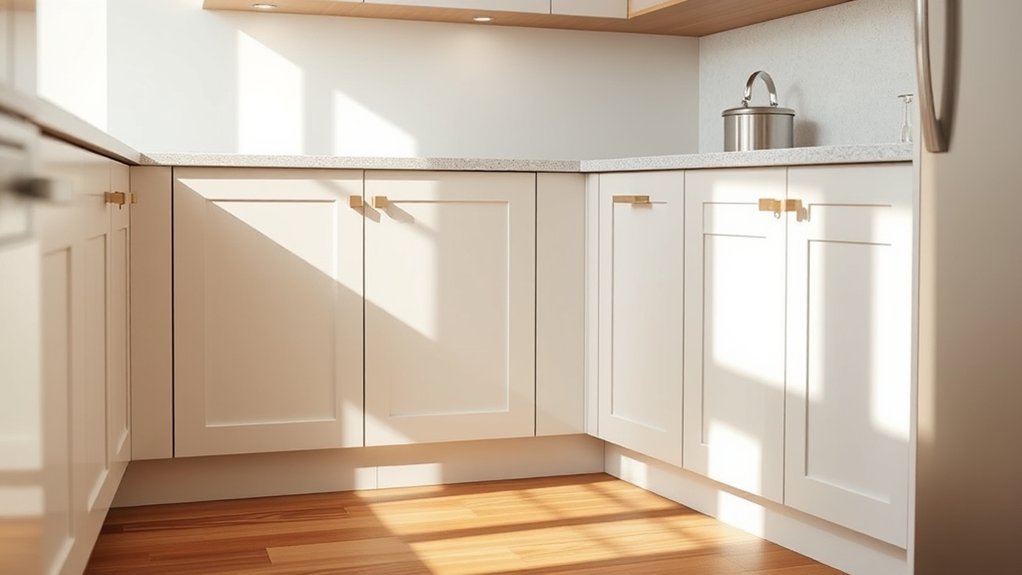
How Deep Should Kitchen Base Cabinets Be?
Struggling to find the perfect kitchen base cabinets that offer enough storage without overwhelming your space? You’re not alone. Many homeowners wrestle with choosing the right depth to maximize functionality and style. Getting this right can transform your kitchen, making it more comfortable and efficient to work in every day.
You should choose kitchen base cabinets about 24 inches deep to balance storage, countertop space, and easy access. If your kitchen is small or appliances aren’t standard size, customizing the depth between 18 to 21 inches can optimize space and comfort.
Proper measurement guarantees cabinets fit appliances and work well with your countertop. Considering depth carefully helps improve workflow and ergonomics while enhancing style. Keep exploring to find the best fit for your kitchen’s size and needs.
Key Takeaways
- Standard kitchen base cabinets are typically 24 inches deep. This size balances storage capacity and keeps the countertop aligned nicely.
- When going for custom cabinet depths, think about appliance sizes, ventilation, and how the countertop will overhang. This helps everything fit seamlessly.
- Shallower cabinets, around 18 to 21 inches deep, work great in small kitchens. They maximize space and make things easier to reach.
- Deeper cabinets do offer more storage, but if they’re too deep, they can make it harder to reach items and feel less comfortable ergonomically.
- The depth of your cabinets also affects how well the countertop is supported, the finishing styles you can use, and the overall look and feel of your kitchen.
What Is the Standard Depth for Kitchen Base Cabinets
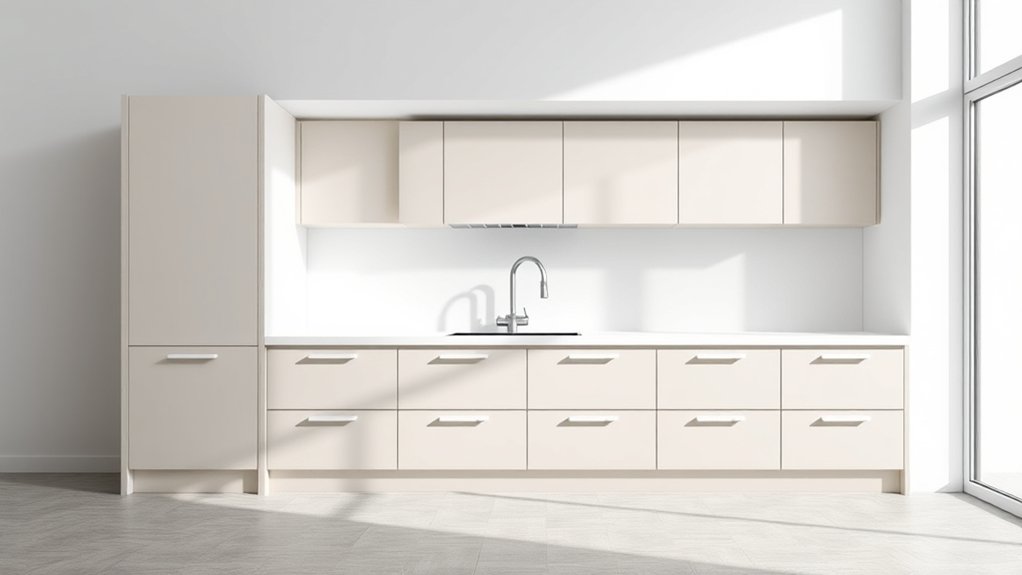
When you’re planning your kitchen layout, knowing the standard depth for base cabinets helps guarantee everything fits perfectly. Typically, base cabinets measure 24 inches deep from front to back. This depth provides ample storage space while allowing enough countertop overhang for practical use.
You’ll find that sticking to this standard depth ensures your appliances and countertops align seamlessly, creating a balanced look.
Choosing cabinet finishes and decorative accents that complement the cabinet depth can enhance your kitchen’s overall style. For example, sleek finishes pair well with modern designs, while ornate decorative accents suit traditional cabinets.
How to Measure Your Kitchen for Cabinet Depth
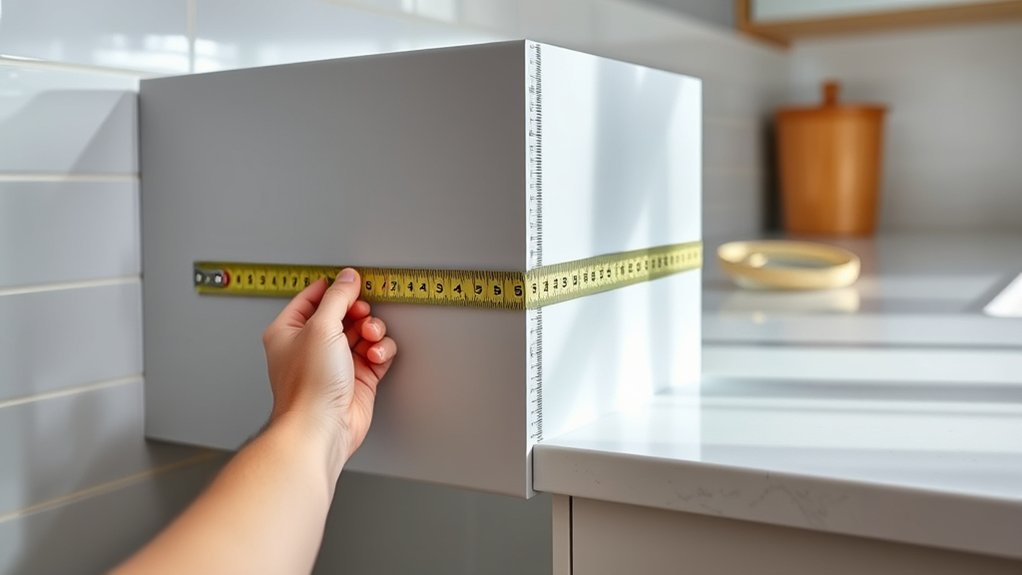
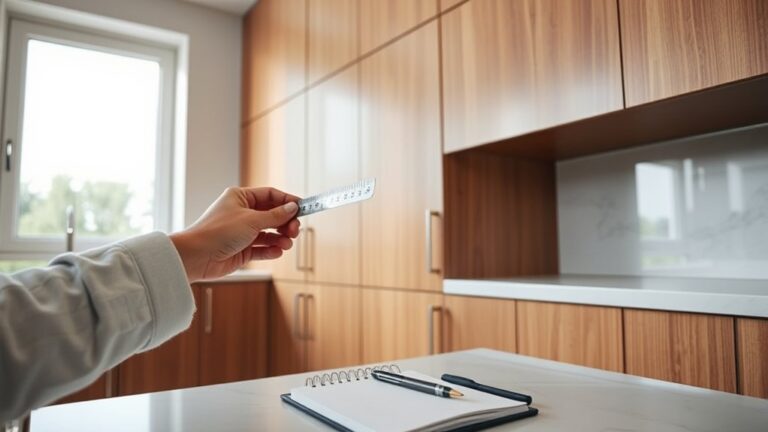
To get the right cabinet depth, start by measuring the wall-to-wall space in your kitchen. Make sure you measure carefully so you don’t miss anything important.
Don’t forget to factor in clearances for appliances, too. You want to make sure everything fits smoothly without any tight spots.
Also, keep in mind the countertop overhang. This can affect how your cabinets fit, so accounting for it now will save you from any surprises once your cabinets are installed.
Measuring Wall-to-Wall Space
How do you accurately measure the wall-to-wall space in your kitchen to determine the right cabinet depth? Start by using a tape measure to record the distance between the two walls where your base cabinets will go.
Measure at several points, like the top, middle, and bottom, to account for any irregularities. This guarantees your cabinets fit perfectly without gaps or overcrowding.
As you measure, keep in mind your kitchen’s color schemes and lighting options. Lighter colors and well-placed lighting can make deeper cabinets feel less cramped. Meanwhile, darker tones may benefit from shallower units to keep the space open.
Accurate wall-to-wall measurements combined with thoughtful design choices will help you select cabinet depths that optimize both style and function in your kitchen.
Considering Appliance Clearances
Measuring wall-to-wall space sets the foundation, but you also need to factor in appliance clearances to guarantee your cabinets fit seamlessly around your kitchen equipment. Appliances like dishwashers, refrigerators, and ovens require specific spacing to operate safely and efficiently.
When planning your cabinet depth, consider these points: Allow clearance for appliance doors to open fully without obstruction. Account for ventilation gaps, especially behind refrigerators and ovens.
Factor in decorative finishes that might add extra width or depth to cabinetry. Also, respect historical styles if your kitchen has period elements, ensuring appliance spaces don’t disrupt the aesthetic.
Taking these clearances into account helps you maintain functionality while preserving the look of your kitchen. It ensures your cabinets complement both modern appliances and traditional design elements.
Accounting for Countertop Overhang
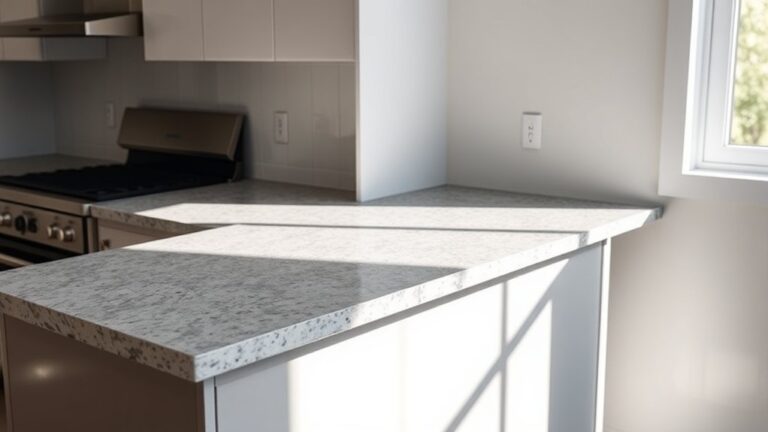
Why does the countertop overhang matter when determining your kitchen cabinet depth? It affects both functionality and style. You need to factor in the overhang to guarantee your cabinets align perfectly with the countertop, especially if you want to showcase decorative accents or specific cabinet finishes.
Here’s a quick guide to help you measure:
| Overhang Size | Typical Cabinet Depth | Notes |
|---|---|---|
| 1 inch | 24 inches | Standard depth, minimalist look |
| 1.5 inches | 24-25 inches | Allows space for decorative accents |
| 2 inches | 25-26 inches | Accommodates thicker cabinet finishes |
Adjust your cabinet depth to complement the countertop overhang and achieve a balanced, polished kitchen design.
How Deep Should Kitchen Base Cabinets Be in Small Kitchens?
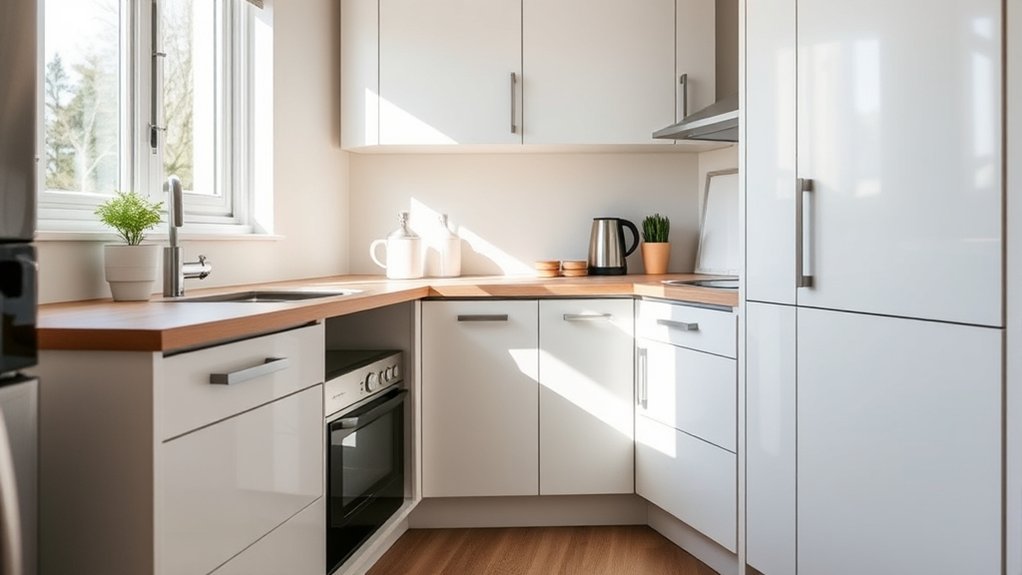
When designing a small kitchen, choosing the right depth for your base cabinets can considerably impact both functionality and space efficiency. You want cabinets deep enough to store essentials but shallow enough to keep pathways clear.
Typically, base cabinets in small kitchens range from 18 to 21 inches deep, compared to the standard 24 inches. This adjustment helps maximize floor space without sacrificing storage.
Consider these factors to fine-tune your choice:
- Opt for durable materials that withstand daily use without warping or damage.
- Select decorative finishes that complement your kitchen style while being easy to clean.
- Think about how much countertop overhang you’ll allow for usability without crowding.
- Confirm cabinet depth allows comfortable access and doesn’t obstruct appliances or walkways.
Choosing Cabinet Depth Based on Appliance Size
When you’re choosing cabinet depth, it’s a good idea to think about the size of your appliances to make sure everything fits just right. Most standard appliances come with set dimensions, so you’ll want to keep those in mind.
But here’s the thing—custom cabinet depths can give you a bit more flexibility if you want something that’s not quite standard. By matching your cabinets to your appliances, you’ll keep your kitchen both functional and sleek. It just makes the whole space work better!
Standard Appliance Dimensions
Choosing the right cabinet depth starts with understanding standard appliance dimensions. When you match your base cabinets to typical appliance sizes, you verify a seamless fit and maintain a balanced kitchen aesthetic.
This approach also allows you to incorporate decorative accents and color coordination that complement your appliances. Here are common appliance depths to evaluate:
- Refrigerators: 30 to 36 inches deep, requiring deeper cabinets for a flush look
- Dishwashers: Usually 24 inches deep, fitting standard cabinet depths
- Ovens and ranges: Around 25 to 28 inches deep, influencing adjacent cabinet sizing
- Microwaves: Can vary, often built into cabinets or mounted above
Custom Cabinet Depths
If your appliances don’t fit standard cabinet depths, you’ll want to customize your base cabinets to match their dimensions. Custom cabinet depths guarantee your appliances fit seamlessly, preventing awkward gaps or overhangs.
When choosing cabinet depth, measure your appliances carefully and consider how much extra space you need for ventilation or doors. You can also add decorative accents to your custom cabinets, like crown molding or unique hardware, to elevate your kitchen’s style.
Don’t forget to consider different material options, like wood, laminate, or metal, to complement both your kitchen design and appliance finish. Custom depths give you flexibility, so your kitchen looks cohesive and functions well without sacrificing style or practicality.
Tailoring cabinet depth to appliance size is key to a polished, efficient kitchen.
Should You Choose Custom Cabinet Depths?
Although standard kitchen base cabinets come in typical depths, opting for custom cabinet depths can better suit your cooking space and storage needs. Custom depths allow you to maximize every inch without overcrowding your kitchen, giving you a tailored fit that standard sizes can’t match.
When choosing custom cabinets, you can also select decorative finishes that align with your style and elevate your kitchen’s overall look. Plus, you get to pick materials with durability suited for your lifestyle, ensuring your cabinets last longer under daily wear.
Consider these factors before deciding on custom depths:
- Optimize storage for specific items or appliances
- Elevate kitchen aesthetics with unique decorative finishes
- Improve material durability by selecting high-quality options
- Balance functionality with available kitchen space
Choosing custom depths means you get cabinets that fit perfectly, both in form and function, improving your kitchen’s practicality and style.
How Cabinet Depth Influences Kitchen Workflow Efficiency
When your kitchen base cabinets have the right depth, you’ll find moving between tasks much smoother and faster. Proper depth ensures you can easily reach utensils and ingredients without awkward stretching or bending, speeding up meal prep. It also helps you organize your kitchen efficiently, so everything has its place and stays accessible.
Material choices play a key role too. Durable, easy-to-clean surfaces prevent downtime caused by maintenance, letting you focus on cooking. Furthermore, cabinets with balanced depth provide enough storage without overwhelming your workspace, maintaining a clean, functional kitchen flow.
Don’t overlook decorative accents either. They can be integrated without compromising depth, adding style while keeping your workflow uninterrupted. Thoughtful cabinet depth streamlines your daily routine, letting you move naturally from chopping to cooking.
How Cabinet Depth Affects Kitchen Ergonomics and Comfort
You’ll want to pick a cabinet depth that keeps your kitchen comfortable to work in—no straining to reach for things. It really makes a difference in how much usable countertop space you get, too. Plus, the right depth helps you move around more efficiently. When you balance accessibility with space efficiency, your kitchen ends up both functional and comfortable.
Optimal Reach And Accessibility
Since kitchen base cabinet depth directly impacts how comfortably you can reach items, it plays a crucial role in your overall kitchen ergonomics. Choosing the right depth guarantees you avoid strain and can access everything easily. When cabinets are too deep, you might struggle to reach items at the back, disrupting your workflow.
On the other hand, shallower cabinets improve accessibility but may limit storage space. To optimize reach and accessibility, keep these points in mind:
- Select cabinet depths that fit your height and arm reach.
- Use pull-out shelves or organizers to access deep spaces effortlessly.
- Incorporate decorative accents and color coordination to visually separate zones and improve usability.
- Guarantee frequently used items stay within easy reach to reduce bending and stretching.
Balancing depth with accessibility boosts comfort and efficiency in your kitchen.
Impact On Work Surface
How does the depth of your kitchen base cabinets influence the comfort and efficiency of your work surface? A deeper cabinet means a wider countertop, giving you more space to prep but potentially straining your reach.
Shallower cabinets keep items closer but limit your workspace. You’ll also want to contemplate decorative finishes that complement your kitchen’s style without compromising material durability. This ensures your work surface stands up to daily use.
| Cabinet Depth | Work Surface Space | Ergonomic Impact |
|---|---|---|
| 18 inches | Limited | Easy reach, less space |
| 21 inches | Moderate | Balanced comfort |
| 24 inches | Spacious | May cause overreach |
| 27 inches | Very spacious | Potential discomfort |
| 30 inches | Extra spacious | Strain risk |
Space Efficiency Considerations
What impact does cabinet depth have on your kitchen’s overall space efficiency and comfort? Choosing the right depth balances storage capacity with ease of movement. Deeper cabinets offer more room but can make reaching items difficult, affecting ergonomics. Shallower cabinets improve accessibility but might limit storage.
You’ll want to contemplate how decorative accents and cabinet finishes influence the room’s feel, ensuring your kitchen remains both functional and inviting.
- Deeper cabinets can create awkward reach zones, reducing comfort.
- Shallower depths enhance visibility and quick access to essentials.
- Decorative accents on cabinet fronts can visually lighten deeper units.
- Cabinet finishes affect perception of space. Glossy finishes reflect light, making areas feel larger.
Balancing Storage Capacity With Kitchen Space Constraints
Although maximizing storage is important, you can’t disregard the limited space in your kitchen when choosing base cabinet depths. Striking a balance between storage capacity and kitchen space constraints ensures your kitchen stays functional and aesthetically pleasing.
Keep in mind that decorative accents and material durability also influence your cabinet choices, making the right depth essential for both style and longevity.
Here’s a quick guide to help you decide:
| Cabinet Depth (inches) | Best For |
|---|---|
| 12 | Small kitchens, tight spaces |
| 15 | Moderate storage, slim design |
| 18 | Standard, balanced storage |
| 24 | Large kitchens, max storage |
Choose shallower cabinets if your kitchen is compact, allowing more room to move. For larger kitchens, deeper cabinets provide excellent storage without sacrificing design.
How Countertop Depth Affects Kitchen Base Cabinet Depth
Since your countertop sits directly on top of the base cabinets, its depth plays a crucial role in determining the cabinet size you should choose. When selecting countertop depth, you need to consider how it aligns with your base cabinets to achieve both functionality and aesthetic harmony.
Different countertop materials, like granite or laminate, can influence the ideal cabinet depth due to their thickness and overhang requirements. Furthermore, cabinet finishing affects how flush or recessed the countertop appears.
Keep in mind these factors to optimize your kitchen’s look and usability:
- Thickness and durability of the countertop material
- Standard overhang allowances for different materials
- Cabinet finishing style and molding details
- Desired workspace and clearance between cabinets and appliances
Common Mistakes to Avoid When Choosing Cabinet Depth
Choosing the right countertop depth helps set the stage for selecting your base cabinet size, but it’s just one piece of the puzzle. One common mistake is ignoring how decorative fronts impact your cabinet’s overall depth.
If you pick ornate or bulky fronts without considering their thickness, your cabinets might extend too far into the kitchen space, causing inconvenience.
Another pitfall is overlooking material choices. Different materials have varying thicknesses and durability, affecting both cabinet depth and longevity.
For example, solid wood is thicker and heavier than MDF, which can influence how deep your cabinets can be without compromising support.
You should also avoid assuming standard depths fit every kitchen layout. Measure your space carefully and think about how the cabinet depth will affect workflow and accessibility.
Taking these factors into account prevents costly adjustments later, ensuring your kitchen looks great and functions well without sacrificing style or practicality.
Frequently Asked Questions
What Materials Are Best for Durable Kitchen Base Cabinets?
For durable kitchen base cabinets, you’ll want to focus on cabinet material types like plywood and solid wood because they handle wear and moisture well. MDF is budget-friendly but less durable.
Consider durability factors such as resistance to warping, scratches, and moisture. Combining plywood with a hardwood veneer gives you strength and a beautiful finish.
You’ll also want quality hardware and finishes to extend your cabinets’ lifespan and keep them looking great over time.
How Do Cabinet Depths Impact Kitchen Lighting Options?
Cabinet depths directly affect your kitchen lighting options by influencing how light spreads and where fixtures can be placed. Deeper cabinets might block natural light or create shadows, which limits your choices.
You’ll want to think about cabinet ventilation too, making sure vents don’t interfere with lighting installations. Prioritizing ergonomic design means positioning lights where they reduce glare and shadows, making your workspace comfortable and well-lit.
Balancing depth with ventilation helps you optimize both lighting and usability.
What Are the Cost Differences Between Standard and Custom Cabinet Depths?
You’ll find that custom cabinet depths usually cost more than standard ones due to tailored cabinet installation and materials. While standard depths offer budget-friendly options, custom depths give you better storage optimization that fits your space perfectly.
Keep in mind, custom cabinets require extra labor and design time, which adds to the price. If you want a unique kitchen layout, investing in custom depths can be worth the cost for maximizing your storage.
Can Cabinet Depth Affect Kitchen Resale Value?
Yes, cabinet depth can surprisingly impact your kitchen’s resale value. When you choose the right cabinet depth, you’re not just improving cabinet depth ergonomics but also boosting kitchen storage efficiency.
Buyers notice when storage feels cramped or awkward. By optimizing depth, you make daily use more comfortable and the space more functional, which can increase appeal and value.
Don’t underestimate how these details can sway a sale!
How Do Cabinet Depths Influence Kitchen Cleaning and Maintenance?
Cabinet depths directly impact your cabinet cleaning and maintenance accessibility. Shallower cabinets make it easier to reach all corners, reducing dust and grime buildup.
Deeper cabinets can hide dirt in hard-to-reach spots, making cleaning more challenging. When cabinets are too deep, you might struggle to access plumbing or hardware during maintenance, slowing repairs.
Conclusion
Choosing the correct cabinet depth creates a comfortable, convenient kitchen. By balancing base cabinet breadth with your space, appliances, and ergonomics, you build better storage without bulkiness. Don’t default to depth decisions; deliberate and design thoughtfully.
Remember, countertop considerations and custom choices can craft a kitchen that feels functional and fabulous. Avoid common cabinet conundrums by measuring meticulously and matching measurements mindfully.
Smart selections simplify your space, making meal moments more manageable and marvelous. Knowing how deep kitchen base cabinets should be helps you create a kitchen that works perfectly for your needs.