7 Tips to Organize Kitchen Drawers
If you’ve ever opened a kitchen drawer only to be greeted by a jumbled mess, you’re not alone. Many people struggle to keep their kitchen drawers organized, which can make cooking and meal prep more frustrating than it needs to be. The good news? With a few smart strategies, you can transform those chaotic drawers into tidy, efficient storage spaces.
To organize your kitchen drawers, start by sorting items based on how often you use them, keeping daily tools within easy reach. Declutter regularly to prevent buildup and group similar items together for quick access. Use drawer dividers and vertical storage to maximize space and keep everything neat.
Specialty organizers help tame utensils and gadgets while maintaining smooth drawer operation. These simple steps make your cooking more efficient, and exploring further reveals even smarter ways to streamline your kitchen.
Key Takeaways
- Sort kitchen drawer items by how often you use them. Keep daily essentials easy to reach and store rarely used tools separately.
- Use drawer dividers or specialty organizers to separate utensils, gadgets, and baking tools. This makes everything easier to find and grab.
- Regularly declutter your drawers by removing broken, duplicate, or unused items. This helps prevent clutter from building up over time.
- Maximize space with vertical storage solutions like racks and dividers. Keeping items upright makes them more visible and accessible.
- Group similar items together and label them using color coding or tags. This boosts organization and helps you quickly identify what you need.
Why Organizing Kitchen Drawers Makes Cooking Easier
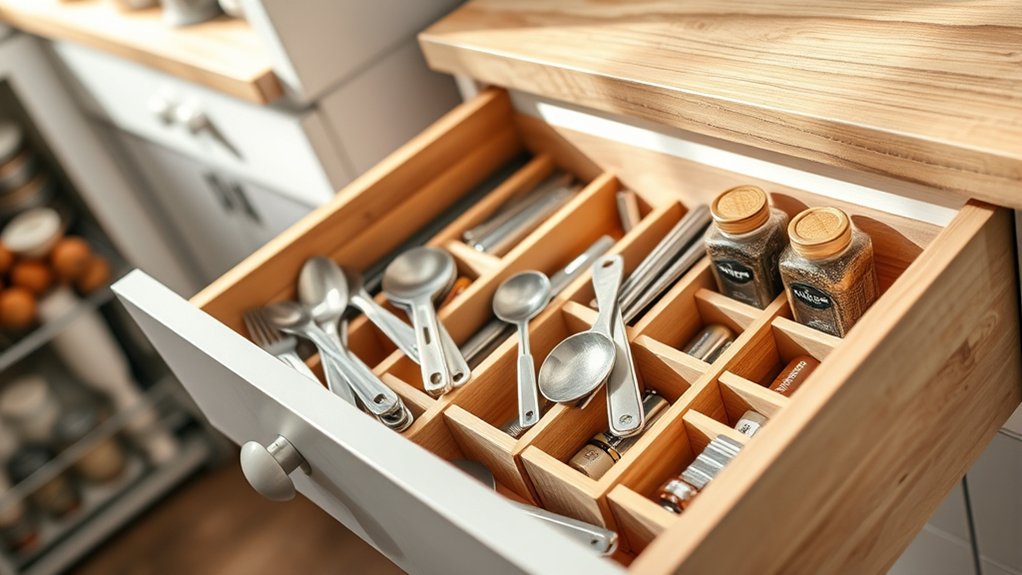
How often do you find yourself digging through cluttered drawers while cooking? It’s frustrating and wastes time you’d rather spend enjoying your meal. Organizing kitchen drawers changes that.
Digging through cluttered kitchen drawers wastes time and frustration—organizing them makes cooking simpler and more enjoyable.
When your utensils, gadgets, and measuring tools have designated spots, you can grab what you need instantly. This makes meal prep smoother and more enjoyable.
Beyond convenience, organized drawers contribute to better kitchen cleaning. When everything’s in place, wiping down surfaces and drawers becomes quicker and more thorough.
Plus, clear ingredient storage helps you see what you have at a glance, reducing the chances of buying duplicates or letting items expire. You’ll save money and reduce waste.
Sort Kitchen Drawers by How Often You Use Items

Start by grouping your kitchen tools based on how often you use them. You’ll want to keep the items you use every day within easy reach. Then, place the things you need weekly somewhere nearby but not necessarily front and center. As for those tools you rarely use, tuck them away in less accessible drawers. This way, you’ll save time and keep your kitchen running smoothly without any hassle.
Daily Use Items
When you organize your kitchen drawers by how often you use items, you make daily tasks smoother and more efficient. Place your daily use items like utensils, measuring spoons, and frequently used gadgets in the most accessible drawers. This way, you won’t waste time digging through clutter when cooking or cleaning.
Keep these drawers neat by regularly practicing kitchen cleaning, wiping spills, and decluttering. You can also use pantry labeling techniques inside drawers to quickly identify contents, making your routine faster and reducing frustration. Avoid mixing daily essentials with rarely used tools to maintain order.
Weekly Use Essentials
Although you might not use them daily, weekly essentials like specialty utensils, baking tools, and serving dishes still deserve a dedicated spot in your kitchen drawers. Sorting these items by frequency helps you streamline meal prep and keeps recipe storage efficient.
Keep weekly use essentials accessible but separate from daily tools to avoid clutter.
| Weekly Use Essentials | Examples |
|---|---|
| Specialty Utensils | Pastry brushes, zesters |
| Baking Tools | Measuring cups, rolling pins |
| Serving Dishes | Platters, gravy boats |
Rarely Used Tools
Once you’ve set aside spaces for daily and weekly tools, it’s time to tackle those items you rarely use. These rarely used tools, like specialized peelers or vintage juicers, deserve their own spot so they don’t clutter your everyday essentials.
Store seasonal kitchen gadgets, such as pumpkin carving sets or holiday cookie cutters, in labeled containers or drawer organizers. This way, you’ll find them easily when needed but keep them out of the way the rest of the year.
Consider placing these items in higher drawers or lower cabinets to maximize accessibility for frequently used tools. By sorting your kitchen drawers based on how often you use items, you’ll maintain order and efficiency. It makes cooking more enjoyable without wasting time searching for those occasional-use gadgets.
Declutter Drawers Regularly to Maintain Order
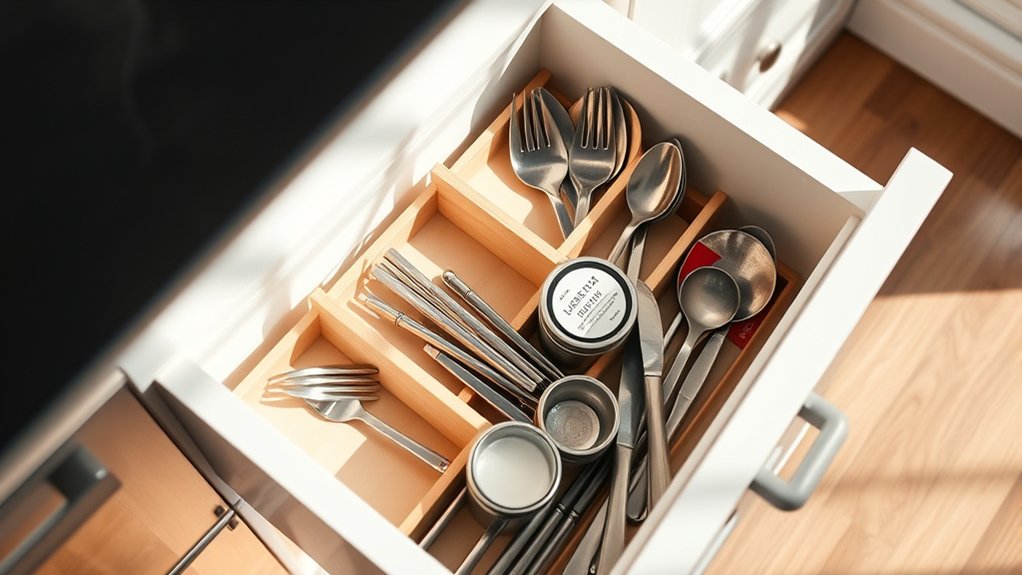
To keep your kitchen drawers functional and inviting, you need to declutter them regularly. Set aside time during your seasonal cleaning to go through each drawer, removing items that are broken, duplicates, or no longer used. This simple step prevents overcrowding and makes sure you only keep what’s necessary.
Incorporate decluttering into your maintenance routines by checking drawers every few weeks. This helps you catch clutter before it builds up and keeps your space neat without much effort. When you commit to regular decluttering, you maintain order effortlessly.
Avoid letting random items accumulate by sticking to this habit, and you’ll find it easier to locate what you need quickly. Decluttering also frees up space for new tools or essentials you might acquire.
Group Similar Items Together for Easy Access
Keeping your drawers free of clutter makes it easier to arrange items in a way that saves time and effort. To keep things simple, group similar items together, like utensils, baking tools, or measuring cups, so you can find what you need quickly.
Using color coding can help you visually distinguish categories at a glance. For example, assign a specific color to all baking tools and another to cooking utensils. This strategy cuts down on search time and keeps your kitchen workflow smooth.
Don’t forget to add labeling to your groups, whether it’s a small tag or a clear sticker on the drawer’s edge. Labels reinforce where things belong, helping you maintain the system even during busy days.
Grouping items by function and enhancing the system with color coding and labeling makes your kitchen drawers not only organized but also efficient and user-friendly. You’ll appreciate the ease every time you reach for what you need.
Use Drawer Dividers for Kitchen Drawer Organization
Although grouping items helps, using drawer dividers takes your kitchen organization to the next level by creating distinct compartments within each drawer. Drawer dividers prevent clutter and keep utensils, gadgets, and other kitchen tools in their proper places. This makes everything easier to find.
When choosing dividers, consider the material options: wood, plastic, bamboo, or metal. Each offers different looks and durability. Also, think about cost; simple plastic dividers are budget-friendly, while wooden or bamboo varieties tend to be pricier but more stylish and long-lasting.
Here’s what drawer dividers can do for you:
- Separate cutlery and cooking utensils neatly
- Keep small gadgets from shifting around
- Organize spices or condiment packets
- Store baking tools in individual sections
- Customize compartments to fit your drawer size
Maximize Kitchen Drawer Space With Vertical Storage
You can save a ton of space by using vertical storage in your kitchen drawers. Vertical organizers, like dividers and racks, keep everything accessible and neatly arranged.
I’m going to share some easy tips to help you install these organizers so you get the most out of your space. It’s a simple way to make your kitchen feel more organized and efficient!
Benefits of Vertical Storage
How can you make the most of every inch in your kitchen drawers? Vertical storage is a game-changer. By using vertical stacking and shelf dividers, you can transform cluttered drawers into neat, accessible spaces.
This method helps you see and reach items quickly without digging through piles.
Here’s why vertical storage works so well:
- Maximizes drawer capacity by using height, not just width
- Keeps items upright, reducing mess and damage
- Makes it easier to organize utensils, lids, and cutting boards
- Allows quick access to frequently used tools
- Enhances visibility, so you never forget what’s inside
With vertical storage, your drawers stay tidy, efficient, and ready for action every time you cook or clean.
Types of Vertical Organizers
Vertical storage transforms kitchen drawers, but choosing the right organizers makes all the difference in maximizing space and accessibility. When exploring types of vertical organizers, focus on creative vertical storage solutions that fit your needs.
From adjustable dividers to tiered racks, each type offers unique benefits.
| Organizer Type | Best For |
|---|---|
| Adjustable Dividers | Custom spacing for utensils |
| Tiered Racks | Layered storage for lids |
| Vertical File Holders | Cutting boards, trays |
| Sliding Bins | Easy access to small items |
| Wire Baskets | Ventilated storage for produce |
Tips for Installation
Although installing kitchen drawer organizers might seem straightforward, careful planning guarantees you maximize every inch of space effectively. Focus on precise installation techniques to make sure your vertical storage fits perfectly and functions smoothly. Proper drawer alignment is key to avoid sticking or uneven wear.
Follow these tips for a seamless installation:
- Measure drawer dimensions accurately before choosing organizers
- Use a level to maintain perfect alignment
- Secure organizers with screws or adhesive strips as recommended
- Test drawer movement frequently during installation
- Adjust placement if you notice any misalignment or resistance
Use Specialty Organizers to Tame Utensils and Gadgets
When you struggle to find the right tool in a cluttered drawer, specialty organizers can make all the difference. These organizers are designed to separate utensil gadgets, making your kitchen more efficient. You’ll save time and reduce frustration by keeping everything in its place.
Here’s a quick look at popular specialty organizers to tame your utensils and gadgets:
| Organizer Type | Best For | Material |
|---|---|---|
| Adjustable Trays | Spoons, forks, knives | Bamboo |
| Utensil Holders | Whisks, spatulas | Stainless Steel |
| Drawer Dividers | Gadgets like peelers | Plastic |
| Stackable Bins | Small kitchen tools | Acrylic |
| Magnetic Strips | Metal utensils | Magnetic Steel |
Pick the right specialty organizers based on your drawer size and utensil gadgets. You’ll enjoy a clutter-free space and quick access every time.
Frequently Asked Questions
How Do I Clean My Kitchen Drawers Before Organizing?
To clean your kitchen drawers before organizing, start by emptying them completely. Use drawer cleaning supplies like a mild detergent, warm water, and a sponge or microfiber cloth.
Apply effective cleaning techniques by wiping down all surfaces, including corners and edges, to remove crumbs and grease. Dry the drawers thoroughly with a clean towel to prevent moisture buildup.
This guarantees a fresh, clean space ready for your organized items.
What Materials Are Best for Drawer Dividers?
Wondering which materials will truly make your drawer dividers stand out? You’ll want something that balances material durability with aesthetic options. Bamboo and hardwood are fantastic. They last long and add warmth to your kitchen.
Plastic dividers offer flexibility and easy cleaning, while metal ones bring a sleek, modern vibe. Choose what fits your style and daily use, ensuring your drawers stay organized and visually pleasing without wearing out quickly.
Can Drawer Liners Prevent Utensils From Sliding?
Yes, drawer liners can definitely prevent utensil slipping by adding extra grip to your drawers. When you use liners with a non-slip texture, they improve drawer stability, keeping your utensils in place even when you open and close drawers quickly.
This means less noise and frustration from utensils sliding around. You’ll find that liners not only protect the drawer surface but also boost organization by stopping items from shifting unexpectedly.
How Often Should I Replace Kitchen Drawer Organizers?
You should assess your drawer divider maintenance every six months to a year. If you notice cracks, warping, or loss of grip, it’s time for an organizer replacement.
Keeping an organizer replacement schedule helps you avoid clutter and guarantees your kitchen stays efficient. Regularly cleaning and checking your dividers prevents buildup and wear, so they keep utensils secure and your drawers tidy without slipping or damage.
Are There Eco-Friendly Options for Drawer Organization Products?
Yes, you can choose eco-friendly storage options, buy organizers made from sustainable materials, and support brands committed to reducing waste. Look for bamboo, recycled wood, or biodegradable plastics to keep your kitchen green.
You’ll not only organize your drawers but also reduce your carbon footprint. By opting for these eco-friendly products, you’re making a smart choice that benefits both your home and the planet.
Conclusion
Now that you’ve got these tips, imagine reaching for exactly what you need without a second thought. No more digging or frustration—just smooth, effortless cooking moments.
But here’s the secret: the real magic happens when you commit to keeping your drawers tidy. Start today, and you’ll wonder how you ever managed without it.
Ready to transform your kitchen drawer chaos into calm? Your culinary peace awaits. Don’t wait to grab it—organizing kitchen drawers makes all the difference!