10 Factors That Affect How Much to Replace Kitchen Countertops
Replacing kitchen countertops can feel overwhelming, especially when costs seem to vary so much. If you’re unsure where to start or worried about hidden expenses, you’re not alone. Many people struggle with understanding what really drives the price up or down.
When replacing kitchen countertops, you’ll find costs vary based on your material choice, kitchen size, and layout complexity. Custom shapes, thickness, and edge styles add to fabrication and labor expenses.
Labor skill level and regional pricing also influence the final price, as does whether you install yourself or hire professionals.
Timing your replacement to avoid damage escalation can save money too. If you want to understand all the details that affect countertop costs, there’s more to investigate.
Key Takeaways
- Material choice, including type, thickness, and edge style, significantly impacts countertop replacement costs.
- Kitchen size and layout complexity increase material needs and labor expenses.
- Labor costs vary based on installer skill, project difficulty, and whether installation is DIY or professional.
- Brand reputation, quality, and customization options influence overall pricing and long-term value.
- Regional factors like labor rates, material availability, and timing affect final replacement costs.
Material Choices That Affect Kitchen Countertop Costs
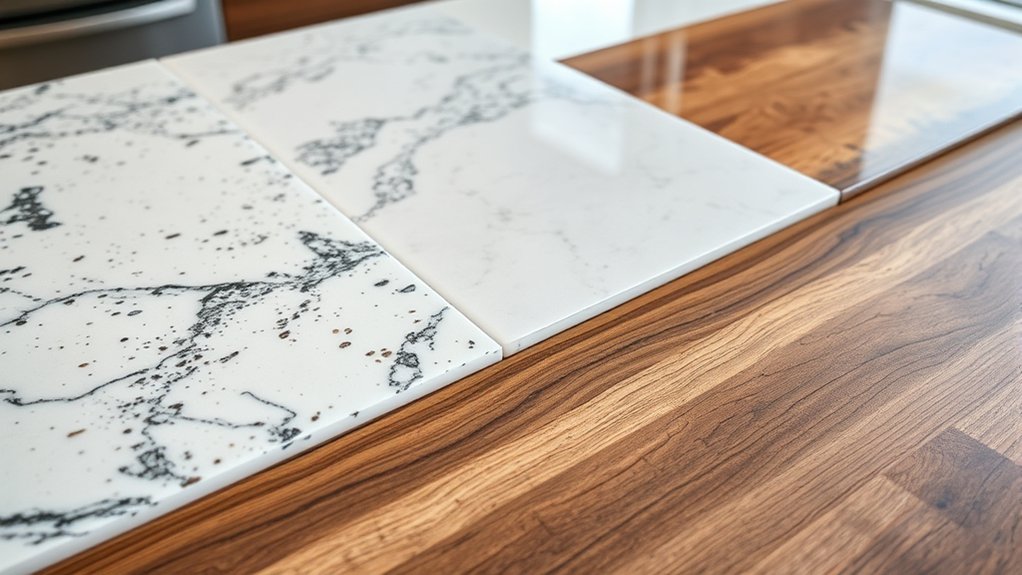
When you choose a kitchen countertop material, you directly influence the overall cost of your replacement project. Different materials come with varying price points, so your choice affects both upfront expenses and long-term value.
You’ll want to balance material durability with aesthetic appeal to get the best fit for your kitchen and budget. For example, granite and quartz offer excellent durability and timeless beauty but tend to cost more.
On the other hand, laminate or tile options are more budget-friendly, though they may not last as long or provide the same visual impact. Keep in mind that higher durability can mean fewer repairs or replacements down the road, saving you money over time.
At the same time, selecting a material that complements your kitchen’s style improves your space’s overall look and feel. Weighing these factors thoughtfully helps you make a smart, cost-effective decision.
How Kitchen Size and Layout Influence Countertop Pricing
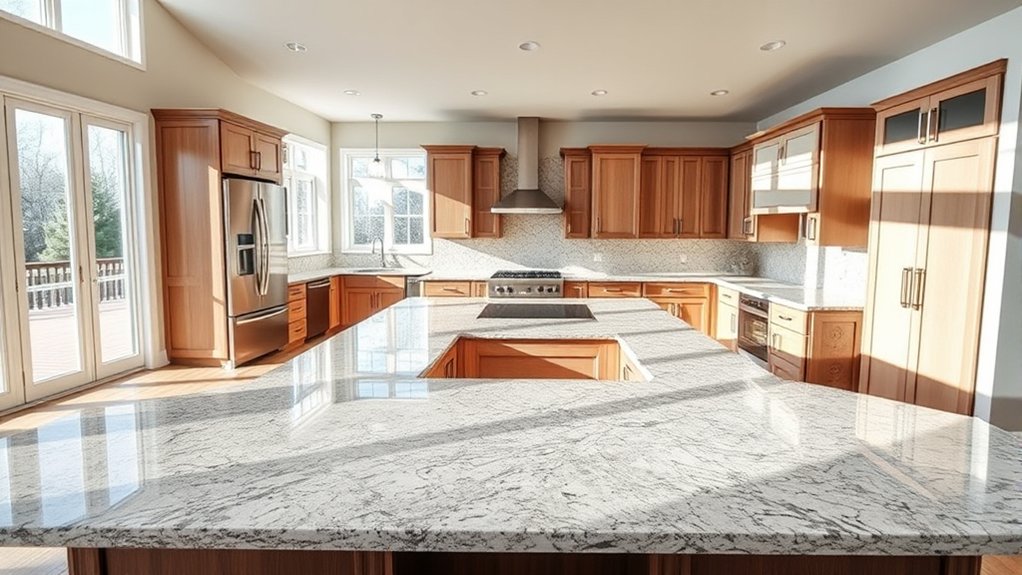
Since your kitchen’s size and layout determine how much countertop material you need, they play a major role in the overall cost. A larger kitchen or a complex layout with islands and peninsulas requires more material, increasing costs.
Furthermore, efficient kitchen ergonomics, or how you arrange your workspace, can affect countertop shape and size. This influences both pricing and usability. Remember, certain layouts may need custom cuts, which can raise expenses.
Also, your choice impacts countertop maintenance. Intricate corners or seams can make upkeep harder.
| Kitchen Size | Countertop Quantity Needed |
|---|---|
| Small | Minimal material |
| Medium | Moderate material |
| Large | Extensive material |
| Extra Large/Complex | Custom pieces, more waste |
Understanding your kitchen’s size and layout helps you budget better and optimize kitchen ergonomics while considering maintenance needs. This ensures your new countertops fit both your style and daily use.
Labor and Installation Costs for Kitchen Countertops

When you’re replacing your kitchen countertops, it’s good to remember that skilled labor costs can vary depending on the installer’s expertise. Also, how long the job takes really depends on how complex your countertop design and layout are. Knowing these details can help you plan your budget a lot better.
Skilled Labor Expenses
Although the cost of materials plays a big role in your kitchen countertop replacement, skilled labor expenses can substantially impact your overall budget. The type of countertop material you choose affects the level of expertise required for installation.
For instance, granite or quartz demands precise handling and specialized installation tools, which only experienced professionals possess. When you hire skilled labor, you assure the work meets quality standards, preventing costly mistakes or damage.
Keep in mind, experts charge based on their experience and the complexity of the job. Don’t underestimate the value of professional installation; it can save you time and frustration.
Ultimately, investing in skilled labor guarantees your new countertops look great and last longer, making it a vital factor in your renovation planning.
Installation Time Estimates
Skilled labor costs often depend on how long the installation takes, so understanding time estimates can help you budget more accurately. The time needed varies with several factors related to your choice of countertop:
- Material type: Denser materials like granite require more careful handling than laminate.
- Countertop durability: Stronger materials may need extra time for precise cutting and fitting.
- Material aesthetics: Intricate patterns or unique edges require more detailed work.
- Site preparation: Removing old countertops and adjusting cabinets affects the timeline.
Typically, installation takes between a few hours to a couple of days. By knowing these factors, you can better anticipate labor costs and avoid surprises. Keep in mind, dedicating time upfront ensures your kitchen looks great and your new countertop lasts longer.
Complexity of Countertop Design
Because the complexity of your countertop design directly impacts labor and installation costs, you’ll want to take into account how details like shape, edge profiles, and cutouts affect the process. Intricate countertop patterns require more precise measurements and careful handling, increasing the time installers spend on the job.
Design intricacy, such as curved edges or multiple levels, adds to the difficulty, necessitating specialized tools and skills. Each additional cutout for sinks or appliances also raises labor costs, as installers must ensure perfect fits to avoid costly mistakes.
Countertop Thickness and Edge Styles Impact on Price
When you choose a thicker countertop or a more intricate edge style, you’ll notice an increase in the overall cost of your kitchen renovation. Both thickness variations and edge profiles play key roles in determining price. Thicker slabs require more material and labor, while elaborate edge styles demand skilled craftsmanship.
Here’s how these factors impact your budget:
- Material Use: Thicker countertops use more stone or composite, raising material costs.
- Fabrication Time: Complex edge profiles take longer to shape, increasing labor expenses.
- Installation Challenges: Heavier, thicker slabs can add to installation difficulty and cost.
- Aesthetic Value: Unique edge profiles add visual appeal but come with a premium price tag.
Customization and Its Effect on Countertop Costs
Although customization allows you to create a countertop that perfectly fits your style and needs, it often raises the overall cost. When you opt for design flexibility, you’re choosing unique shapes, intricate patterns, or special finishes that require more time and skill to fabricate.
These custom elements can substantially increase labor expenses and material waste. Furthermore, selecting materials with higher durability, such as quartz or granite, adds to the price but ensures your countertop lasts longer and resists damage better.
Customization also means you may need specialized installation techniques, which can further impact costs. While it’s tempting to go all out on personalized features, balancing your desired design flexibility with practical material durability helps control expenses without sacrificing quality.
Ultimately, your willingness to invest in customization directly influences the final price, so weigh your options carefully to find the right mix of style and cost for your kitchen.
Extra Repair and Prep Costs for Kitchen Countertops
If your existing countertop has damage or uneven surfaces, you’ll likely face extra repair and preparation costs before installing a new one. These costs vary but are essential to guarantee your new countertop sits properly and lasts long. This helps enhance countertop durability and material sustainability.
Here are common extra prep expenses you should consider:
- Removing old adhesive Residue from previous installations can interfere with new materials.
- Fixing structural damage Cracks or water damage in the base require repair to support the new countertop.
- Leveling uneven surfaces Uneven cabinetry or sub-surfaces need smoothing for proper installation.
- Addressing plumbing or electrical adjustments Moving outlets or pipes can be necessary for your new design.
How Your Location Affects Kitchen Countertop Prices
Because regional factors influence labor rates, material availability, and local demand, your location plays an essential role in determining kitchen countertop prices. If you live in an area with a high cost of living, you’ll likely face higher labor costs, which directly affect the overall price. On the other hand, places with abundant local suppliers might offer more competitive pricing due to easier access to materials and reduced shipping expenses.
Regional pricing can also vary based on the popularity of certain countertop materials in your area. For example, some regions favor granite, while others lean toward quartz or laminate, impacting supply and demand dynamics. Furthermore, local suppliers may offer unique deals or discounts that you can’t find elsewhere, which could save you money.
Understanding how your location influences these factors helps you set realistic expectations and budget accordingly when replacing your kitchen countertops. Always check multiple local suppliers and compare regional pricing to get the best deal.
How Brand and Quality Influence Kitchen Countertop Costs
When you choose kitchen countertops, the brand and quality you select directly impact the overall cost. Opting for a well-known brand with a strong reputation often means paying more upfront. But you’ll likely benefit from better material durability and longer-lasting beauty. Here’s how brand and quality influence your expenses:
- Brand reputation: Trusted brands charge premium prices due to reliability and customer satisfaction.
- Material durability: Higher-quality materials resist scratches, stains, and heat, reducing replacement frequency.
- Design and finish options: Premium brands offer exclusive designs and finishes that can increase cost.
- Warranty and support: Top-tier brands often include extended warranties, adding value but raising the price.
DIY vs. Professional Installation Costs for Kitchen Countertops
When you’re thinking about replacing your kitchen countertop, it’s a good idea to compare the costs of doing it yourself versus hiring a professional. Doing it yourself can definitely save you some money, but keep in mind, you’ll need the right skills and tools to make sure the job turns out well. On the other hand, bringing in a pro will add to your budget, but you’ll get their expertise and a polished, professional finish that’s hard to beat. So, it really comes down to what you’re comfortable with and how much you want to spend.
Cost Comparison Breakdown
How much should you expect to spend replacing your kitchen countertops? The cost varies widely depending on whether you choose DIY or professional installation. Here’s a quick breakdown:
- Material Costs: Durable materials like granite or quartz cost more but offer better countertop durability and material aesthetics.
- Tools and Supplies: DIY requires you to buy or rent tools, adding to upfront expenses.
- Labor: Professionals charge for their expertise, which boosts overall costs but guarantees a flawless finish.
- Time Investment: DIY saves labor fees but demands significant time and effort, which might affect your schedule.
Weighing these factors helps you decide if spending more upfront for professional installation is worth it for the durability and aesthetics you want in your kitchen.
Skill Requirements Impact
Although taking on a kitchen countertop replacement yourself can save money, it demands a certain level of skill and experience to achieve professional-quality results. Skill development is vital if you want a seamless finish, precise measurements, and proper material handling.
On the other hand, professionals often hold certifications that guarantee their expertise and reduce costly mistakes. Consider these factors when deciding between DIY and hiring experts:
| Aspect | DIY Installation |
|---|---|
| Skill Development | Requires learning new skills |
| Certification Requirements | None required |
| Cost Implications | Lower upfront, higher risk |
Choosing professional installation may cost more upfront but guarantees certified quality and efficiency. Your choice impacts both budget and final outcome.
When to Replace Countertops to Save Money
If you want to save money on kitchen countertop replacement, timing plays a crucial role. Choosing the right moment helps you avoid unnecessary expenses and get the best value. Consider these key factors:
- Watch for environmental factors like humidity or extreme temperatures that can damage materials over time. This can be a clear sign it’s time to replace.
- Align with seasonal sales. Many suppliers offer discounts during off-peak seasons or holidays, which can help you save considerably.
- Address wear and tear before it worsens. Minor damage can quickly escalate, increasing repair or replacement costs.
- Match aesthetic considerations with your renovation schedule to avoid multiple replacements and make the most of your investment.
Frequently Asked Questions
How Do Countertop Colors Affect Kitchen Aesthetics?
Countertop colors play a huge role in your kitchen’s aesthetics by setting the mood and style. When you choose colors that complement your cabinets and walls, you create color coordination that ties everything together. This color harmony boosts visual harmony, making your space feel balanced and inviting.
Bright colors can energize, while neutrals offer a calm backdrop. So, pick countertop colors that improve your kitchen’s vibe and reflect your personal style.
What Are the Best Countertop Materials for Pet Owners?
You might think granite is best for pet owners, but does it handle pet hair and scratches well? Actually, quartz tops the list because it’s highly scratch-resistant and easy to clean pet hair off.
Laminate’s also a solid pick if you want budget-friendly durability. Avoid softer stones like marble since they scratch easily.
How Long Do Different Countertop Materials Typically Last?
Countertop durability varies by material, so you should pick one that fits your lifestyle. Granite and quartz typically offer a material lifespan of 25 to 50 years thanks to their toughness.
Laminate usually lasts 10 to 20 years but may wear faster with heavy use. Solid surface countertops can last 15 to 30 years if you maintain them well.
Knowing each material’s lifespan helps you make a smart, lasting choice.
Can Countertops Increase Home Resale Value?
Yes, countertops can increase your home’s resale value, especially if you choose popular, durable materials. When you plan countertop installation, focus on quality and style that appeal to buyers.
Keep in mind that cost estimation helps you balance investment and return. Spending too much might not yield proportional value.
A well-done countertop upgrade can make your kitchen more attractive and boost your home’s market appeal, making it a smart move overall.
Are There Eco-Friendly Countertop Options Available?
You might think eco-friendly countertops look dull or limited, but you’d be surprised! You can choose sustainable materials like bamboo, recycled glass, or reclaimed wood that bring warmth and style to your kitchen.
Plus, eco-friendly finishes reduce toxins and protect the environment. By picking these options, you’re not just upgrading your space, you’re making a positive impact. It’s a smart, beautiful choice you’ll feel proud of every day.
Conclusion
When it comes to replacing your kitchen countertops, remember: just like choosing the right ingredient can make or break a recipe, each factor from material to installation shapes your final cost. By weighing your options carefully, you’ll avoid a costly kitchen flop and create a space that’s both beautiful and budget-friendly.
So, take control, plan wisely, and turn your countertop upgrade into a masterpiece worth savoring. With the right approach, you can make your kitchen countertops replacement a smart and satisfying investment.