How to Clean Kitchen in 3 Simple Steps
Keeping your kitchen clean can feel like an endless battle, right? You’re not alone—many people struggle with finding the time and the right approach to tackle kitchen messes efficiently. Whether it’s grease on the counters or clutter piling up, it can quickly become overwhelming.
Start by clearing clutter and gathering your cleaning supplies, so you have an open workspace and everything at hand.
Next, thoroughly clean all kitchen surfaces and appliances, wiping down counters, fridge, stove, and microwave to remove grease and spills.
Finish by sweeping and mopping the floor, then organize countertops and drawers to keep clutter at bay.
Following these simple steps sets a clean, fresh kitchen, and there’s more to uncover for maintaining it effortlessly.
Key Takeaways
- Clear countertops and gather all cleaning supplies for an efficient workflow.
- Wipe down all kitchen surfaces and appliances with appropriate cleaners to remove dirt and grease.
- Sweep and mop the floor thoroughly, focusing on corners and under appliances.
- Organize utensils and items to minimize clutter and improve kitchen appearance.
- Regularly sanitize handles, control panels, and high-touch areas to maintain hygiene.
Clear Clutter and Gather Kitchen Cleaning Supplies
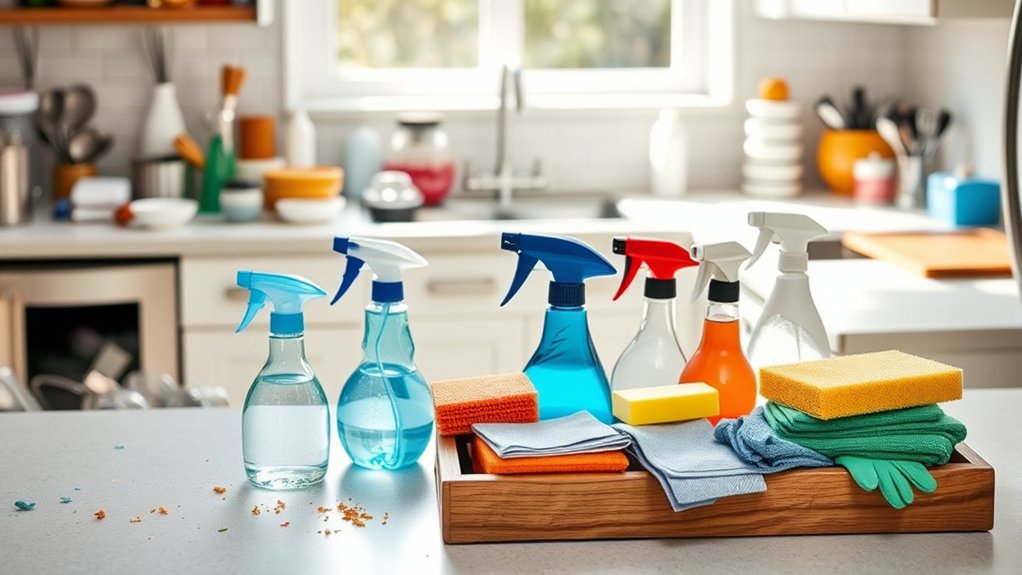
Before you begin cleaning, clear clutter from countertops and surfaces to create an open workspace. Start by organizing utensils, putting them back in their designated holders or drawers. This step prevents unnecessary mess and makes your cleaning process smoother.
Next, focus on disposing waste. Empty the trash bin and compost any food scraps you find. This helps eliminate odors and frees up space.
As you clear clutter, gather all your kitchen cleaning supplies like sponges, all-purpose cleaner, and microfiber cloths. Having everything within reach saves time and keeps you efficient. Don’t forget gloves to protect your hands.
Clean Kitchen Surfaces and Appliances
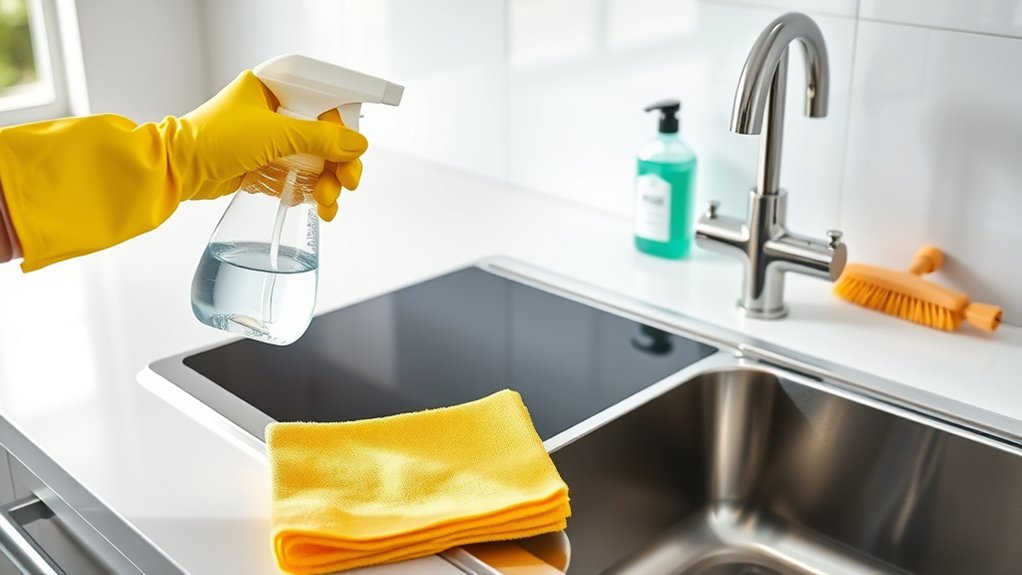
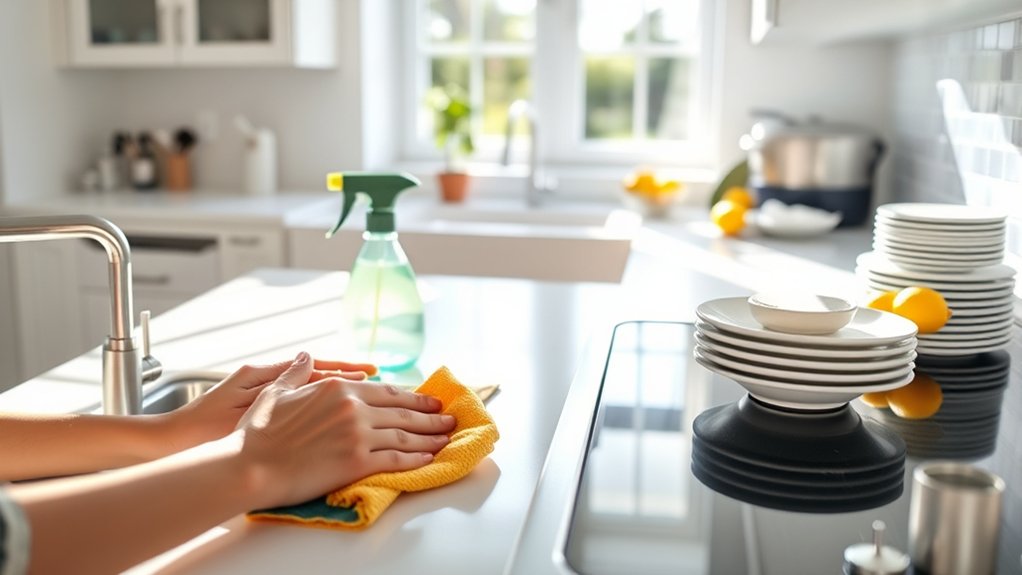
Once you’ve cleared clutter and gathered supplies, tackle kitchen surfaces and appliances by wiping down countertops, cabinet fronts, and backsplashes with an all-purpose cleaner. This step not only refreshes your kitchen but also supports effective kitchen organization by creating a clean, inviting space.
Start by clearing clutter and wiping kitchen surfaces to create a fresh, organized, and inviting space.
Next, focus on appliance maintenance to keep your kitchen running smoothly. Use a damp cloth and mild detergent to clean refrigerator doors and handles, removing fingerprints and spills.
Also, clean the microwave interior and exterior to eliminate food splatters. Don’t forget the stove top and control knobs, where grease and residue tend to build up.
Finally, wipe the dishwasher exterior and around seals to prevent buildup. Pay attention to these details regularly to prevent grime and extend appliance life.
Cleaning your surfaces and appliances thoroughly makes cooking more enjoyable and maintains a hygienic environment. By incorporating these habits, you’ll boost your kitchen organization and keep appliances working efficiently.
Clean Floors and Add Final Touches

How often do you check your kitchen floors for hidden dirt and spills? It’s easy to overlook this step, but clean floors make a huge difference in kitchen organization and overall hygiene.
Start by sweeping or vacuuming thoroughly to remove crumbs and dust. Then, mop with a suitable cleaner to tackle sticky spots and stains. Pay extra attention to corners and under appliances, where grime can build up unnoticed.
After floors are spotless, add final touches that boost both cleanliness and appliance maintenance. Wipe down appliance surfaces, handles, and control panels, ensuring they’re free of fingerprints and food residue.
Organize countertops and drawers to keep everything in its place. This prevents clutter and makes future cleaning easier. These small steps not only improve your kitchen’s appearance but also extend the life of your appliances and maintain a healthier cooking environment.
Frequently Asked Questions
How Often Should I Deep Clean My Kitchen?
You should deep clean your kitchen every three to six months to maintain good kitchen organization and appliance maintenance. This helps prevent buildup of grime and keeps appliances running efficiently.
If you cook frequently or have a large family, consider doing it every three months. Regular deep cleaning guarantees your kitchen stays hygienic, organized, and your appliances last longer.
Don’t wait until things pile up. Schedule it into your routine!
What Natural Cleaners Are Safe for Kitchen Use?
You can safely use natural ingredients like vinegar, baking soda, and lemon juice as eco-friendly solutions for your kitchen. These ingredients tackle grease, stains, and odors without harsh chemicals.
Mix vinegar and water for a disinfectant spray, sprinkle baking soda to scrub surfaces, and use lemon juice to cut through grime while leaving a fresh scent. These natural cleaners protect your health and the environment while keeping your kitchen spotless.
How Do I Prevent Mold in Kitchen Cabinets?
To prevent mold in your kitchen cabinets, apply mold-resistant coatings inside and outside the cabinets to create a protective barrier. Make sure you improve ventilation by installing exhaust fans or opening windows regularly to reduce moisture buildup.
Keep cabinets dry by wiping spills promptly and avoid storing damp items inside. These steps help you maintain a mold-free kitchen environment and protect your cabinets from damage caused by excess moisture.
Can I Use Bleach on Kitchen Countertops?
You wouldn’t pour bleach on a wooden table, yet many consider it for countertops. Whether you can use bleach depends on your countertop material.
For granite or natural stone, bleach can cause damage and discoloration. Laminate or tile might handle it better but still use it sparingly.
Instead, try bleach alternatives like vinegar or baking soda for safer cleaning. Always test a small area first to keep your countertop looking great.
How to Safely Clean Kitchen Sponges and Cloths?
You can safely clean kitchen sponges and cloths by running them through your dishwasher maintenance cycle on the top rack, using the hottest setting. This kills most germs effectively.
Also, use sponge drying techniques like squeezing out excess water and placing sponges in a well-ventilated area to air dry completely between uses. Avoid leaving them damp on countertops, as moisture encourages bacteria growth and odor development.
Conclusion
Just like a well-tended garden, your kitchen flourishes when you clear clutter and nurture every corner. Remember, a study found that a clean kitchen reduces stress by 30%, making cooking more enjoyable.
By tackling surfaces, appliances, and floors step-by-step, you create a space that invites creativity and comfort. So, roll up your sleeves and watch your kitchen transform from chaos into calm, a true reflection of your care and energy.
A clean kitchen is more than just neatness—it’s about making your cooking space inviting and stress-free.