10 Factors That Affect How Much a Kitchen Remodel Does Cost
Thinking about a kitchen remodel but worried about how much it might cost? You’re not alone. Many people struggle with budgeting for this big project because so many factors can influence the final price. Understanding what drives up costs can help you plan better and avoid surprises.
When planning your kitchen remodel, expect costs to rise with larger spaces and layout changes like moving plumbing or walls. Choosing high-quality materials, stylish finishes, and premium appliances adds to your budget, as do labor rates and permit fees.
Upgrading plumbing, electrical systems, or energy-efficient features also affects expenses. Plus, longer timelines can increase labor and rental fees.
If you want to understand how each factor influences your project, you’ll find plenty more insights ahead.
Key Takeaways
- Kitchen size and layout changes increase costs because they require more materials, labor, and sometimes structural modifications.
- Material quality and design choices have a big impact on your budget. Premium finishes and cabinetry will definitely raise expenses.
- Labor rates, contractor experience, permits, and inspection fees all play a role in the overall remodel costs and can affect how long the project takes.
- Plumbing and electrical upgrades, plus high-end appliances, add to expenses depending on how complex the work is and the brands you choose.
- Energy-efficient features and longer project timelines might increase upfront costs, but they can lead to savings in the long run.
How Kitchen Size Affects Remodel Costs

The size of your kitchen plays a crucial role in determining your remodel costs. When you have a larger space, you’ll need more materials and labor, which naturally increases expenses. For example, upgrading kitchen lighting in a bigger kitchen means purchasing more fixtures and possibly rewiring a larger area.
Smaller kitchens, on the other hand, require fewer lights, which helps keep the cost down.
Countertops materials also impact your budget based on kitchen size. Larger kitchens demand more surface area coverage, so you’ll spend more on granite, quartz, or other materials.
Even if you choose budget-friendly options, the quantity needed for a big kitchen can add up quickly. So, when planning your remodel, consider how the square footage influences your choices in kitchen lighting and countertops materials. These directly affect your overall spending.
Keeping your kitchen size in mind will help you set a realistic budget from the start.
Why Material Quality Changes Your Kitchen Remodel Budget
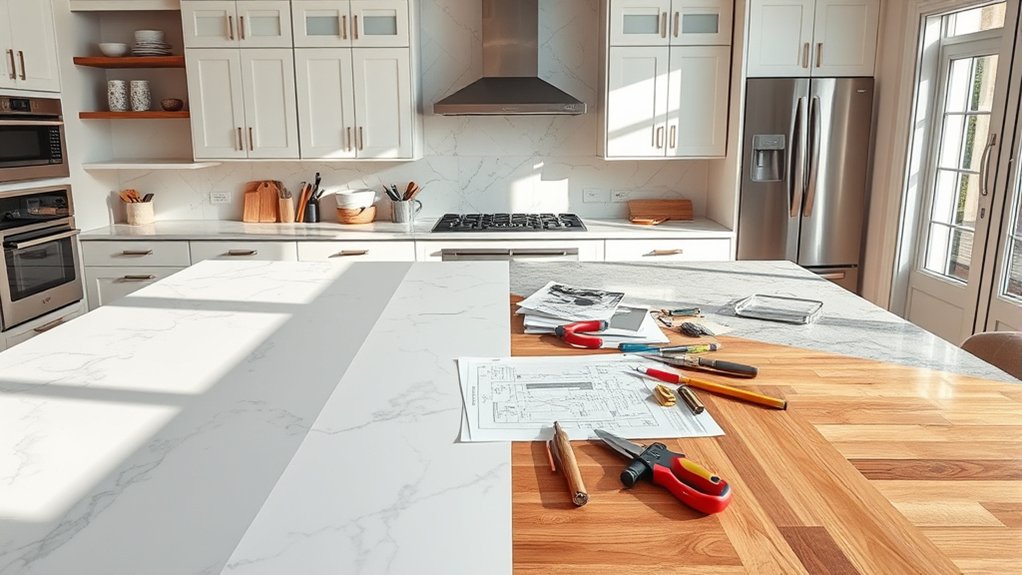
When you go for higher-quality materials, you’re really investing in durability that can save you money in the long run. Different materials come with all sorts of price tags, so your budget will change depending on what you choose. Knowing these cost differences helps you make smarter decisions for your kitchen remodel.
Impact of Material Durability
Choosing durable materials can considerably affect your kitchen remodel budget by reducing long-term maintenance and replacement costs. When you opt for materials with a longer lifespan, you avoid frequent repairs or early replacements that quickly add up.
High surface resistance, for example, helps countertops and flooring withstand scratches, stains, and heat, preserving their appearance and function over time. This durability means you won’t need to spend extra on refinishing or patching damage down the line.
While durable materials might seem pricier upfront, they save you money by minimizing upkeep and extending your kitchen’s overall lifespan. So, focusing on material strength ensures your investment lasts, preventing unexpected expenses and keeping your remodel budget more predictable.
Cost Variation by Material
Investing in higher-quality materials directly influences your kitchen remodel budget by affecting both upfront costs and long-term value. When you focus on material selection, you’ll notice significant cost fluctuation based on what you choose.
For example, opting for granite countertops instead of laminate can substantially increase your expenses, but it also adds durability and aesthetic appeal. Likewise, hardwood flooring typically costs more than vinyl but lasts longer and boosts your home’s value.
You’ll find that appliance finishes, cabinetry materials, and backsplash choices also contribute to these variations. Understanding how each material impacts your budget helps you make informed decisions without compromising your vision.
How Labor Costs Impact Your Kitchen Remodel Expenses

Since labor often accounts for a significant portion of your kitchen remodel budget, understanding how it influences costs can help you make smarter decisions. The contractor selection you make plays a huge role in determining labor expenses.
Experienced contractors might charge higher rates, but their labor efficiency often reduces the overall time and potential errors, saving you money in the long run. On the other hand, less experienced contractors might offer lower bids but take longer to complete the job, increasing labor hours and costs.
Labor efficiency directly impacts your remodel timeline and budget. Efficient workers complete tasks swiftly without compromising quality, minimizing labor hours and associated costs.
When interviewing contractors, ask about their team’s experience and how they plan to manage your project timeline. Remember, the cheapest labor isn’t always the best value. Balancing cost with contractor expertise and labor efficiency ensures your remodel stays within budget while maintaining quality.
How Plumbing and Electrical Updates Add to Costs
When you update your kitchen, plumbing upgrades can quickly raise your costs—especially if you need new pipes or fixtures. And it’s not just plumbing; electrical wiring expenses can add up too, especially if you’re installing more outlets or upgrading your panel to handle modern appliances. Knowing about these costs ahead of time really helps you plan a budget that covers all the necessary improvements without any surprises.
Plumbing Upgrade Expenses
Upgrading your kitchen’s plumbing can markedly impact your remodel budget, especially if you’re moving sinks, adding a dishwasher, or installing a new water filtration system. When you change plumbing fixtures’ locations, you might need to reroute pipes, which increases labor and material costs.
The type of pipe materials you choose also affects expenses. Copper pipes cost more than PVC or PEX but last longer and handle water pressure better. Ensuring your plumbing system maintains proper water pressure is essential for new appliances to function efficiently.
If your existing pipes are old or incompatible with modern fixtures, replacing them will add to your costs. By understanding these factors, you can plan your plumbing upgrades wisely and avoid unexpected expenses during your kitchen remodel.
Electrical Wiring Costs
Although plumbing upgrades can considerably impact your kitchen remodel budget, electrical wiring costs often add another layer of expense. When you update your kitchen, you might want to install new lighting fixtures or add wireless outlets for convenience.
These improvements require rewiring and sometimes upgrading your electrical panel to handle increased demand safely. Hiring a licensed electrician guarantees the work meets code, but it also adds to your costs.
If your kitchen layout changes or you add high-powered appliances, the wiring will need modifications, further increasing expenses. While wireless outlets offer modern convenience, they come at a premium compared to standard outlets.
Planning your electrical needs early helps you avoid surprises and keeps your remodel on budget without sacrificing functionality or safety.
How Layout Changes Influence Your Kitchen Remodel Price
Because changing your kitchen layout often involves moving plumbing, electrical outlets, and walls, it can considerably increase your remodel costs. If you’re aiming for an open concept by removing walls, expect to pay more for structural work and permits.
Relocating plumbing lines for sinks or dishwashers adds to labor and materials expenses. Electrical rewiring to fit new appliance locations also impacts your budget.
Here’s a quick cost breakdown based on typical layout changes:
| Layout Change | Estimated Cost Range | Key Cost Drivers |
|---|---|---|
| Wall removal | $1,200 – $5,000 | Structural supports, permits |
| Plumbing relocation | $500 – $2,500 | Pipes, labor, water shutoff |
| Electrical rewiring | $300 – $1,500 | Wiring, outlets, code upgrades |
How Cabinet Styles and Finishes Affect Your Costs
Adjusting your kitchen layout can considerably impact your budget, but the style and finish of your cabinets also play a big role in the overall cost. When you choose cabinet styles, simpler designs like flat-panel or shaker cabinets usually cost less than ornate or custom styles. The complexity of the cabinet doors, moldings, and hardware affects both material and labor expenses.
Finish options further influence your budget. Painted cabinets often come with a higher price tag due to the multiple coats and drying time required, while stained wood can be more affordable depending on the wood type. High-gloss or specialty finishes tend to increase costs as well. If you opt for custom colors or unique textures, expect to pay more.
How Appliance Upgrades Increase Kitchen Remodel Costs
When you go for high-end appliances, you’ll definitely see a noticeable increase in your kitchen remodel costs. But here’s the thing—these upgrades usually come with better energy efficiency. That means you could save money down the road on your utility bills. So, it’s all about finding the right balance between what you pay upfront and the savings you’ll enjoy later. Understanding that can really help you make the best choice.
High-End Appliances Pricing
Upgrading to high-end appliances can substantially boost your kitchen remodel costs. When you choose luxury features, you’re not just paying for function but also for aesthetic improvements that raise your kitchen’s overall look. Consider these factors:
1. Premium materials
Stainless steel, brushed brass, or custom finishes add to the price but create a sleek, modern appeal.
2. Advanced technology
Smart ovens, refrigerators with touchscreens, and induction cooktops come at a higher cost but increase convenience.
3. Brand reputation
High-end brands charge more for quality and design, which impacts your budget considerably.
Energy Efficiency Impact
Although energy-efficient appliances may cost more upfront, they can markedly impact your kitchen remodel expenses. Upgrading to Energy Star-rated refrigerators, ovens, or dishwashers raises your initial costs but lowers utility bills over time.
Beyond appliances, investing in insulation upgrades improves your kitchen’s energy retention. This reduces heating and cooling demands. If you’re adding solar panels, expect a significant boost in your remodel budget.
However, this eco-friendly investment cuts electricity costs and increases your home’s value. Balancing these improvements requires budgeting carefully. Energy-efficient choices raise immediate expenses but yield long-term savings.
When planning, consider how these upgrades align with your financial goals to make informed decisions that benefit both your wallet and the environment.
How Design Choices Affect Kitchen Remodel Costs
Because your design choices set the tone for the entire project, they play a major role in determining your kitchen remodel costs. When you pick certain elements, you directly influence your budget. For example, choosing bold color schemes can require specialized paint or custom cabinetry finishes, which may raise expenses.
Likewise, selecting high-end lighting fixtures adds both style and cost.
Here are three key design factors that affect your remodel budget:
- Color schemes: Custom or trendy colors often mean pricier materials or labor.
- Lighting fixtures: Statement pieces or smart lighting systems can increase costs.
- Material finishes: Premium countertops, backsplashes, and cabinetry finishes vary widely in price.
How Permits and Inspections Impact Your Budget
Securing the right permits and scheduling inspections can add unexpected costs to your kitchen remodel. You’ll need building permits to assure your project meets local codes and regulations. These permits aren’t just paperwork; they’re essential for legal compliance and safety.
Obtaining permits ensures your kitchen remodel complies with safety standards and local regulations, preventing costly issues later.
Depending on your location and the scope of work, building permits can vary in cost, so it’s smart to budget for them early.
Inspection fees also impact your budget. After work phases like electrical or plumbing, inspectors must verify everything’s up to code. These fees cover the cost of professional oversight and help avoid costly issues down the line.
Skipping permits or inspections might save money upfront but can lead to fines or forced redo work, driving up expenses. By including building permits and inspection fees in your planning, you’ll keep your remodel on track financially and legally, preventing surprises that could derail your budget.
How Project Timeline Influences Kitchen Remodel Costs
When you extend your kitchen remodel timeline, costs can quickly add up due to prolonged labor and equipment rentals. Proper project scheduling is key to keeping expenses in check. Delays often arise from contractor availability, pushing your timeline further and increasing costs. To manage this, focus on these areas:
- Labor costs: The longer the project runs, the more you pay workers daily, which adds up fast.
- Equipment and material rentals: Tools and machinery rented for your remodel accumulate fees the longer they’re needed.
- Opportunity costs: Extended timelines mean your kitchen is unusable longer, impacting daily life and possibly requiring temporary solutions.
Frequently Asked Questions
How Do Seasonal Trends Affect Kitchen Remodel Pricing?
Seasonal trends affect kitchen remodel pricing because you can take advantage of seasonal discounts during slower months. Contractors and suppliers often lower prices when demand drops, helping you save money.
However, trend fluctuations mean some materials or styles may cost more depending on the season’s popularity. By planning your remodel during off-peak times, you’re more likely to find better deals and avoid higher costs linked to peak demand or trendy upgrades.
Can Unexpected Structural Issues Increase Remodel Costs?
Ever wonder how structural surprises can derail your kitchen remodel budget? Yes, unexpected structural issues can definitely increase your costs.
When contractors uncover hidden damages like rotten beams or faulty wiring, they must address them before continuing. These repairs often require extra materials, labor, and time, pushing your expenses higher than anticipated.
How Does the Region or Location Impact Remodel Expenses?
Regional pricing plays a big role in your kitchen remodel expenses because the location influence affects labor rates, material costs, and permits. If you live in a high-demand area or a city with strict building codes, you’ll likely pay more.
Conversely, rural or less populated areas often have lower costs. You should research local pricing trends and compare quotes from contractors nearby to get a clearer picture of what your remodel might cost.
What Role Does Contractor Experience Play in Project Cost?
When it comes to contractor expertise, you get what you pay for. Cutting corners can cost you more in the long run.
Experienced contractors work efficiently, avoid costly mistakes, and often have trusted suppliers. This helps you stick to budget planning.
While their rates might be higher upfront, their knowledge guarantees your remodel runs smoothly. This saves time and money overall.
Choosing the right contractor is key to a successful, cost-effective kitchen remodel.
Are There Tax Incentives or Rebates for Kitchen Remodeling?
Yes, you can often take advantage of tax credits and rebate programs when remodeling your kitchen, especially if you install energy-efficient appliances or eco-friendly materials. These incentives help reduce your overall cost by giving you a percentage back or a direct rebate.
Be sure to check local, state, and federal programs, as they vary widely. Don’t forget to keep all receipts and documentation to claim these benefits when filing your taxes.
Conclusion
When you’re planning your kitchen remodel, remember: every choice you make shapes the final price. From size to materials, labor to layout, costs can add up quickly. Like ripples in a pond, small decisions create bigger waves.
By understanding these 10 factors, you’ll navigate your remodel with confidence and avoid surprises. So, take charge of your budget and turn your dream kitchen into reality without breaking the bank. Keeping these 10 factors that affect how much a kitchen remodel does cost in mind will help you stay on track.