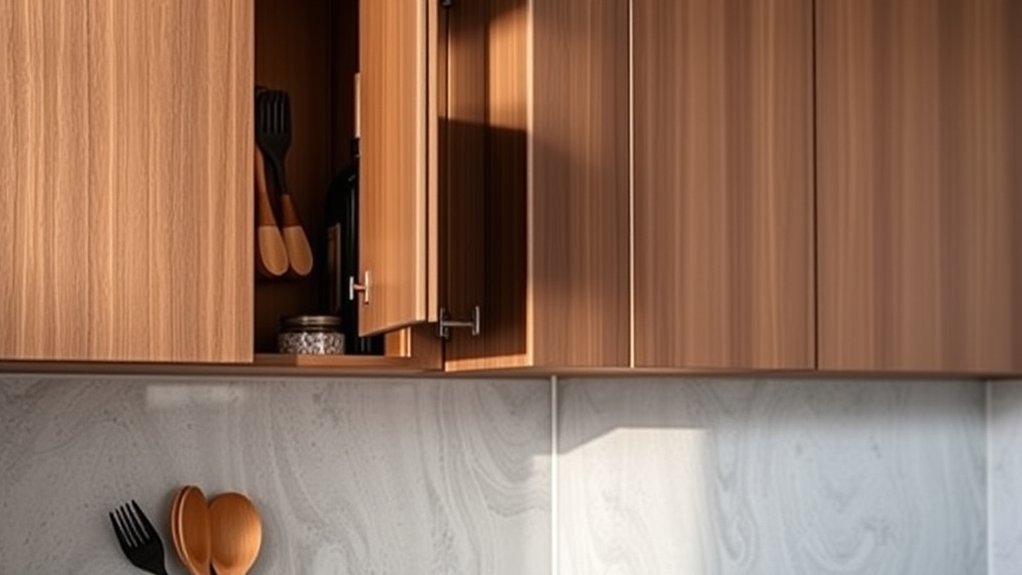
How Deep Should Upper Kitchen Cabinets Be?
Choosing the right depth for your upper kitchen cabinets can be surprisingly tricky. You’re not alone if you’ve struggled to find the perfect balance between storage space and kitchen flow. Many people want cabinets that hold all their essentials but don’t overwhelm the room or make appliances feel cramped.
You should choose upper kitchen cabinets about 12 inches deep to balance storage and accessibility without crowding your kitchen. This depth fits most dishes and daily items while keeping your space open and functional.
Shallower cabinets brighten smaller kitchens, while deeper ones offer more storage but might feel bulky. The right depth also helps appliances fit well and complements your backsplash and lighting.
Consider more to find the perfect balance for your kitchen’s size and style.
Key Takeaways
- Standard upper kitchen cabinets are typically 12 inches deep, balancing storage capacity and kitchen openness.
- Shallower cabinets enhance lighting integration and create an airy feel, which is ideal for small kitchens.
- Deeper cabinets, up to 24 inches, increase storage but may reduce movement and usually require organizers.
- Custom cabinet depths help fit unique layouts and appliances while maintaining design cohesion.
- Proper cabinet depth ensures appliance fit, backsplash alignment, and overall kitchen functionality.
Why Upper Cabinet Depth Matters in Your Kitchen

Although upper cabinet depth might seem like a minor detail, it plays a crucial role in your kitchen’s functionality and appearance. When you choose the right depth, you create a balanced look that complements your kitchen’s style and allows for practical storage.
Cabinets that are too deep can make your kitchen feel cramped, while shallow ones may limit what you can store. You’ll also want to contemplate how cabinet depth affects decorative accents; the right size can highlight trim, molding, or glass doors, enhancing your kitchen’s charm.
Plus, lighting placement depends heavily on cabinet depth. Properly sized cabinets ensure your under-cabinet or recessed lighting works efficiently, illuminating your workspace without creating awkward shadows.
This means you’ll have a kitchen that not only looks great but functions smoothly. Paying attention to these details helps you design a space that’s both beautiful and highly practical.
Standard Depth for Upper Kitchen Cabinets
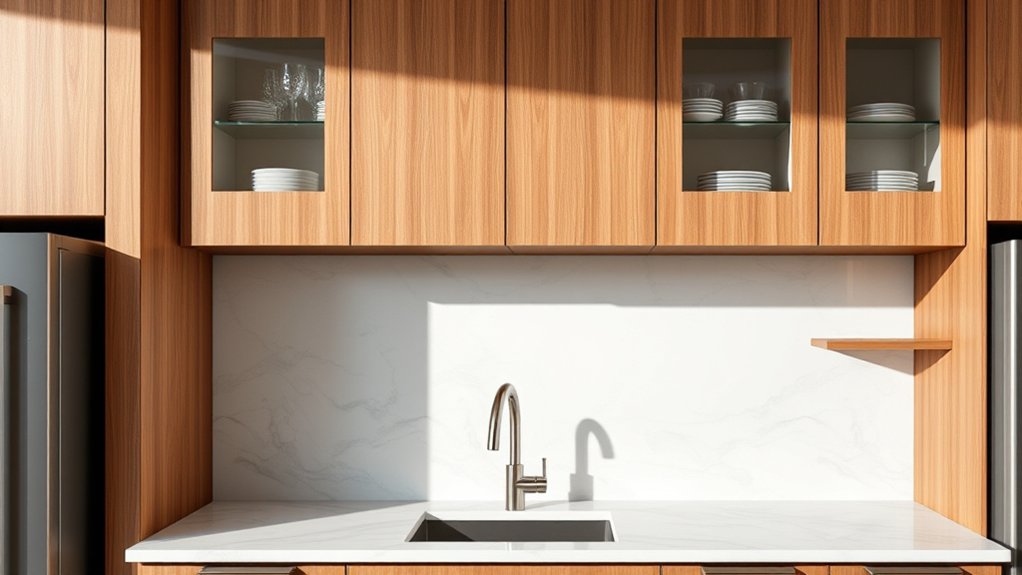
You’ll find that the typical depth for upper kitchen cabinets is around 12 inches. This size strikes a good balance between providing enough storage and keeping your kitchen feeling spacious. When deciding between standard and custom sizes, it really comes down to how you want your kitchen to look and function. So, let’s take a closer look at how these measurements can influence your overall design.
Typical Depth Measurements
When planning your kitchen layout, understanding the typical depth of upper kitchen cabinets helps you maximize storage without overcrowding the space. Most upper cabinets measure around 12 inches deep, striking a balance between functionality and design.
This depth guarantees you have enough room for everyday items like plates and glasses while keeping countertops accessible. Choosing this standard depth also allows you to experiment with color schemes and lighting options without overwhelming the room.
For example, lighter colors and under-cabinet lighting can make the kitchen feel more open, compensating for any visual bulk from the cabinets. Sticking to typical depth measurements simplifies installation, coordinates with appliances, and helps maintain a cohesive, efficient kitchen design that suits your needs perfectly.
Space Efficiency Considerations
Understanding the standard depth of upper kitchen cabinets plays a big role in maximizing your kitchen’s space efficiency. Typically, cabinets around 12 inches deep offer enough storage without overwhelming your workspace.
This depth allows you to fit essential items while keeping your counters clear for prep work. When selecting cabinets, consider how decorative accents might affect the overall depth and visual balance. You don’t want features that protrude too much, limiting movement or creating clutter.
Also, focus on material durability to guarantee your cabinets withstand daily use without warping or sagging. Durable materials maintain their shape, preserving both function and appearance over time.
Standard vs. Custom Sizes
Although standard upper kitchen cabinets typically come in a 12-inch depth, you might find that custom sizes better suit your space and storage needs. Standard depths work well in most kitchens, fitting seamlessly with common color schemes and flooring options.
But if you have an unusual layout or want to maximize storage, custom cabinets let you adjust depth to match your exact requirements. Custom sizes can also help balance proportions, ensuring your cabinetry complements your kitchen’s overall design.
When choosing, consider how deeper cabinets might impact your workflow and visual flow, especially with your chosen color schemes and flooring options. Ultimately, customizing cabinet depth offers flexibility, letting you create a kitchen that’s both functional and visually cohesive.
Choosing Cabinet Depth for Your Kitchen Size

Since your kitchen’s size directly impacts how functional and comfortable it feels, choosing the right cabinet depth is essential. In a smaller kitchen, shallower upper cabinets help maintain an open feel and prevent the space from feeling cramped.
You’ll also want to take into account how the cabinet depth interacts with your color schemes and lighting options. Lighter colors and well-placed lighting can make compact spaces seem larger.
In larger kitchens, deeper cabinets provide extra storage without overwhelming the room. Remember, the cabinet depth should complement your kitchen’s overall layout and flow to guarantee easy access and usability.
Think about how your daily routine will interact with cabinet placement; you don’t want cabinets that stick out too far or feel too shallow for your needs. Balancing depth with your kitchen’s size, color schemes, and lighting options creates a cohesive, functional space that feels just right for you.
Ideal Cabinet Depths for Popular Kitchen Styles
When choosing upper cabinet depths, you’ll want to match them to your kitchen’s style for the best look and function. Traditional kitchens often feature deeper cabinets because they offer more storage and a classic feel. On the other hand, contemporary designs usually lean toward shallower, sleeker options that keep things looking clean and modern. So, let’s take a closer look at the ideal depths for these popular styles to help you make the right choice.
Traditional Kitchen Cabinet Depths
How deep should your traditional kitchen cabinets be to balance style and function? Typically, a depth of 12 inches works best, offering enough room for dishes without overwhelming your space. Traditional kitchens emphasize vintage charm, so your cabinet dimensions should complement that aesthetic while remaining practical.
Pay close attention to material selection, as wood types and finishes highlight the classic look.
Consider these points when choosing cabinet depth:
- Make certain of sufficient storage without encroaching on countertop space
- Maintain proportionality with other kitchen elements like crown molding
- Choose materials that age well and improve the vintage feel
Contemporary Kitchen Cabinet Sizes
Contemporary kitchen cabinets typically range from 15 to 24 inches deep, striking a balance between sleek design and functional storage. When choosing cabinet depths, you’ll want to deliberate on how they complement your kitchen’s overall color schemes and flooring options.
Shallower cabinets, around 15 to 18 inches deep, maintain a clean, minimalist look that works well with light or neutral hues and modern flooring materials like polished concrete or large-format tiles. Deeper cabinets, closer to 24 inches, offer more storage but can overpower smaller spaces or clash with streamlined flooring designs.
To keep your kitchen cohesive, match cabinet depth with your color palette and flooring style. Lighter colors and simpler floors suit shallower cabinets, while richer tones and textured flooring can handle the visual weight of deeper units.
How Cabinet Depth Affects Kitchen Storage and Accessibility
Although deeper upper kitchen cabinets offer more storage space, they can make reaching items at the back more challenging. When deciding on cabinet depth, think about how you’ll organize your kitchen and access everyday essentials. You want your cabinets to complement your color schemes and lighting options, enhancing both function and style.
Here’s how cabinet depth impacts storage and accessibility:
Deeper cabinets hold bulkier items but may require step stools or pull-out shelves for easy access. Shallower cabinets keep items within arm’s reach, streamlining your cooking routine. Lighting options inside deeper cabinets become essential to illuminate hidden corners, preventing lost or forgotten items.
Balancing depth with accessibility ensures you maximize storage without sacrificing convenience. Consider your kitchen habits and storage needs carefully before choosing cabinet depth to create an efficient, user-friendly space.
How Cabinet Depth Shapes Kitchen Look and Movement
When you choose the depth of your upper kitchen cabinets, you directly influence both the room’s visual flow and how easily you move around. Shallower cabinets create an open, airy feel, making your kitchen seem more spacious and less cramped.
Choosing shallower upper cabinets enhances visual flow and creates a more open, spacious kitchen feel.
Deeper cabinets, on the other hand, add a substantial presence that can make the space feel cozier but might restrict movement if the kitchen is small.
Color coordination plays a key role here; lighter colors paired with shallow cabinets amplify openness, while darker hues on deeper cabinets bring warmth without overpowering the space.
Also, lighting integration is easier with shallower cabinets, allowing under-cabinet lights to illuminate countertops effectively and brighten the kitchen’s overall ambiance.
Comparing Shallow vs. Deep Upper Cabinets: Pros and Cons
Deciding between shallow and deep upper cabinets depends on your kitchen’s size, storage needs, and style preferences. Shallow cabinets offer a sleek, open feel, ideal for smaller kitchens, while deep cabinets provide more storage but can feel bulky. You’ll want to weigh the pros and cons carefully.
Shallow cabinets improve lighting integration by allowing under-cabinet lights to illuminate countertops more effectively. Deep cabinets give you extra space for bulkier items but may require more effort to reach the back. Decorative molding often complements shallow cabinets better, accentuating a streamlined look without overwhelming the space.
If you prioritize a spacious kitchen with modern touches, shallow cabinets with decorative molding and smart lighting integration might be your best bet. On the other hand, if storage is your main concern, deep cabinets deliver practicality, though you might lose some visual openness. Your choice should balance functionality with the kitchen’s overall aesthetic.
How to Measure and Plan for Upper Cabinet Depth
Since upper cabinet depth directly impacts both storage capacity and kitchen aesthetics, you’ll want to measure carefully before making your choice. Start by evaluating your kitchen’s layout and available wall space to confirm cabinets won’t overcrowd the area. Measure from the wall outwards, considering standard depths between 12 to 24 inches. Think about how the cabinet depth will affect your workflow and reachability.
Next, factor in your kitchen’s color schemes and lighting options. Lighter colors and well-placed lighting can make deeper cabinets feel less bulky, while darker tones and poor lighting might make them appear heavy. Plan your lighting to highlight cabinet contents, especially if you choose deeper cabinets that might create shadows.
Finally, consider what you’ll store inside. Tall items may require deeper cabinets, while shallow ones work for everyday dishes. Careful measuring and planning help you achieve a balance between function and style.
When to Choose Custom Upper Cabinet Depths
You’ll want to go with custom upper cabinet depths when space is tight or your appliances need a precise fit. It’s all about making sure everything fits just right. Custom depths also help maximize storage by tailoring cabinet size to your specific needs. So, you get more out of your kitchen without any wasted space. Let’s take a closer look at how these choices can actually improve your kitchen’s function and flow.
Assessing Space Constraints
When your kitchen layout limits available wall space or ceiling height, standard upper cabinet depths might not fit well. You’ll want to evaluate these space constraints carefully before choosing your cabinet depth. Custom upper cabinets can maximize storage without overwhelming your kitchen’s proportions or blocking light.
Consider how cabinet size affects your color schemes and lighting options since deeper cabinets can cast unwanted shadows or alter room brightness. When examining space, ask yourself:
- Will deeper cabinets crowd walkways or work areas?
- Do you have clearance above appliances or countertops?
- How do cabinet depth and placement impact natural and artificial light?
Matching Appliance Dimensions
How do your appliance dimensions influence the choice of upper cabinet depth? When your appliances, like microwaves or range hoods, have unique sizes, you might need custom upper cabinets to fit them perfectly.
Choosing the right cabinet depth ensures your appliances don’t stick out awkwardly or get hidden behind cabinet doors. Custom depths also allow you to maintain seamless color coordination between your cabinets and appliances, creating a cohesive look.
Moreover, adjusting cabinet depth can improve lighting options, helping you install under-cabinet lights that highlight your workspace without casting shadows. By matching your cabinet depth to your appliance dimensions, you not only improve the kitchen’s functionality but also keep a balanced, polished appearance tailored to your specific setup.
Enhancing Storage Functionality
Although standard upper cabinets suit many kitchens, opting for custom depths can considerably improve your storage functionality. You’ll gain more space tailored to your specific needs, making your kitchen more efficient.
When deciding on custom depths, think about how your color schemes and lighting options will complement the cabinet design. Deeper cabinets can accommodate larger items but may require better lighting to avoid dark corners.
Consider these factors:
- Adjust cabinet depth to fit bulky appliances or cookware without clutter.
- Use lighting options inside custom cabinets to boost visibility and highlight your color schemes.
- Coordinate cabinet depth with wall space to maintain a balanced, cohesive look.
Custom depths let you maximize storage without sacrificing style or accessibility in your kitchen.
How Cabinet Depth Affects Appliance Fit and Backsplash Installation
Since upper kitchen cabinet depth directly influences the space between your cabinets and appliances, it plays a crucial role in ensuring a proper fit. If your cabinets are too deep, appliances like microwaves or range hoods may not align well, affecting both function and aesthetics.
Furthermore, the cabinet material and color coordination must complement your appliances to create a seamless look. When installing a backsplash, the depth determines how much space you have to work with, which can impact both the design and installation process.
| Appliance Type | Ideal Cabinet Depth (inches) |
|---|---|
| Microwave | 12-15 |
| Range Hood | 15-18 |
| Refrigerator Frame | 24-30 |
Choosing the right cabinet depth ensures your appliances fit snugly and your backsplash installation remains straightforward, maintaining a cohesive kitchen design.
Frequently Asked Questions
What Materials Are Best for Durable Upper Kitchen Cabinets?
You’ll want cabinet material like plywood or solid wood for upper kitchen cabinets because they offer excellent durability factors such as resistance to warping and moisture. MDF is budget-friendly but less durable.
Look for finishes like laminate or thermofoil to boost durability and ease cleaning. By choosing quality cabinet material and considering durability factors, you’ll guarantee your upper cabinets stay strong and attractive for years, even with daily kitchen use.
How Do Cabinet Door Styles Impact Kitchen Aesthetics?
You might think cabinet door designs only hide your dishes, but they actually make or break your kitchen’s aesthetic appeal. Choosing sleek, modern doors adds a clean, contemporary vibe, while ornate, traditional styles bring warmth and character.
Can Upper Cabinets Be Installed Without Studs?
You generally shouldn’t install upper cabinets without studs because studs provide the necessary support for cabinet installation. However, if you’re set on studless mounting, you’ll need specialized hardware like heavy-duty anchors or a rail system designed to hold significant weight.
Keep in mind, studless mounting can be riskier and might not support heavy loads well. So it’s best to make certain your cabinets are properly secured to avoid accidents or damage.
What Is the Average Cost of Upper Kitchen Cabinets?
The average cost of upper kitchen cabinets typically ranges from $100 to $500 per linear foot, depending on materials and style. When you’re budget planning, consider both the cabinet price and installation costs.
To save money, follow installation tips like measuring carefully and choosing semi-custom options. By planning ahead and balancing quality with affordability, you can get cabinets that fit your kitchen and stay within your budget.
How to Maintain and Clean Upper Kitchen Cabinets Effectively?
You’ll want to clean your upper kitchen cabinets like a superhero battling grime! Start by wiping cabinet hardware regularly with a damp cloth to avoid buildup.
Use gentle cleaning techniques, like mild soap and water, to protect the finish. Avoid harsh chemicals that can damage surfaces. Don’t forget to dry thoroughly to prevent moisture damage.
Regular maintenance keeps your cabinets looking fresh and extends their lifespan, making your kitchen shine every day!
Conclusion
Choosing the right depth for your upper kitchen cabinets isn’t just about storage. It’s about creating a space that feels just right, like finding the perfect quill for your writing desk.
Whether you go standard or custom, think about your kitchen’s size, style, and how you use it daily. With careful planning, your cabinets will blend seamlessly.
This makes your kitchen both functional and inviting, ready for modern meals or a timeless feast. Remember, knowing how deep upper kitchen cabinets should be is key to achieving that perfect balance.