How Much to Install Kitchen Cabinets: 3 Key Costs
Looking to install new kitchen cabinets but feeling overwhelmed by the costs? You’re not alone—many people struggle to figure out exactly how much they need to spend to get the kitchen they want without breaking the bank. Understanding the key expenses involved can make your renovation smoother and help you avoid unexpected bills.
You’ll pay three main costs when installing kitchen cabinets: materials, labor, and extra work. Material choice—from solid wood to laminate—affects price and durability.
Labor costs depend on your layout, ranging from $300 for simple setups to over $1,000 for complex ones.
Don’t forget additional expenses like plumbing, electrical updates, or prepping the space, which can add up. Understanding these helps you budget smarter and avoid surprises as you plan your kitchen upgrade.
Key Takeaways
- Cabinet material choice, such as solid wood or laminate, significantly affects overall installation cost.
- Labor expenses vary by layout complexity, ranging from $300 for simple to $1,200 for complex installations.
- Additional costs arise from plumbing, electrical work, and necessary preparation like cabinet removal or wall repairs.
- Cabinet style and material compatibility influence both cost and long-term satisfaction with the installation.
- Proper scheduling and factoring in extra work help avoid delays and prevent budget overruns during installation.
Kitchen Cabinet Costs by Material Type
When choosing kitchen cabinets, the material you pick greatly impacts the overall cost. Different materials offer varying price points, and your choice should balance budget with your desired cabinet style and material durability.
Selecting the right cabinet material balances cost, style, and durability for your kitchen’s perfect fit.
For example, solid wood cabinets provide a classic look and strong durability but come at a higher price. On the other hand, laminate or MDF options are more budget-friendly but may not last as long or offer the same aesthetic appeal.
You’ll also find that plywood strikes a middle ground, offering decent durability and a good range of styles without breaking the bank. Keep in mind, the cabinet style you prefer, whether modern, traditional, or rustic, can influence which materials suit your kitchen best.
Prioritize materials that match both your design vision and durability needs to get the best value for your investment. This careful consideration will help you avoid costly replacements down the line.
Labor Costs for Kitchen Cabinet Installation
Choosing the right material for your kitchen cabinets is just one part of the budget puzzle. Labor costs for kitchen cabinet installation depend heavily on your cabinet layout and the installation timeline. Complex layouts with many corners, islands, or custom features require more time and skill, increasing labor expenses.
A straightforward, linear cabinet setup will cost less to install.
Here’s a quick look at typical labor costs based on cabinet layout complexity and estimated installation timeline:
| Cabinet Layout Complexity | Installation Timeline | Approximate Labor Cost |
|---|---|---|
| Simple (straight line) | 1-2 days | $300 – $500 |
| Moderate (L-shape) | 2-3 days | $500 – $800 |
| Complex (U-shape/island) | 3-5 days | $800 – $1,200 |
Knowing your cabinet layout upfront helps set realistic expectations for labor costs and schedule, making your kitchen renovation smoother.
Extra Kitchen Cabinet Installation Costs: Plumbing, Electrical, and Prep Work
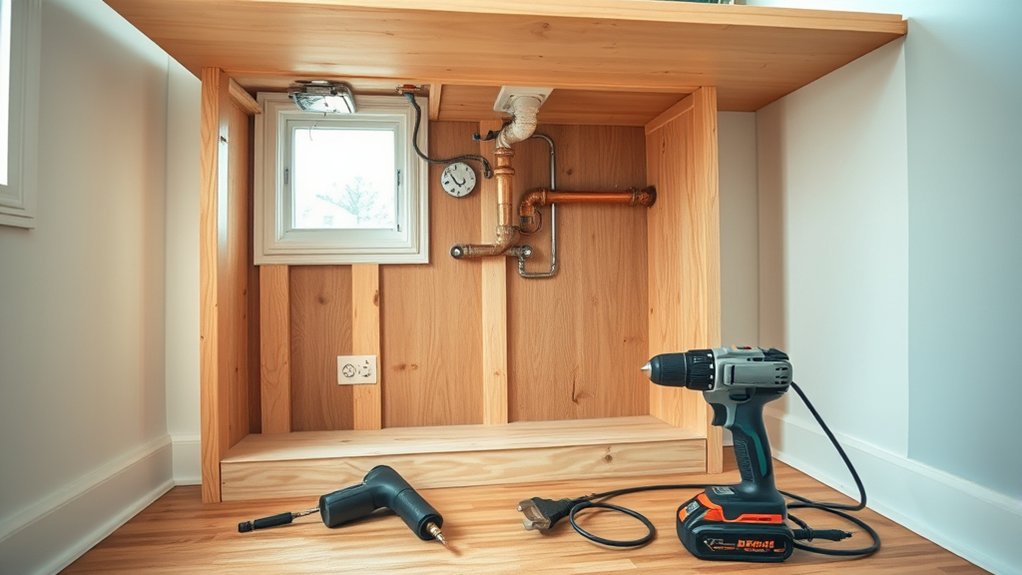
Although cabinet installation primarily focuses on carpentry, you’ll often encounter extra costs related to plumbing, electrical work, and prep tasks. These additional expenses can vary depending on your kitchen’s layout and the cabinet styles you choose.
For example, if you’re installing cabinets around existing plumbing or electrical outlets, you might need to hire professionals to move or update these systems. That adds to your budget. Prep work like removing old cabinets, repairing walls, or leveling floors also affects the installation timeline and overall cost.
Keep in mind that custom cabinet styles often require more intricate prep and adjustments, potentially increasing these expenses. Planning ahead helps you manage these extra costs without surprises.
Make sure to factor in the time needed for these tasks when setting your installation timeline, as delays in plumbing or electrical work can push back your project completion. Being proactive guarantees a smoother, more efficient cabinet installation process.
Frequently Asked Questions
How Do I Choose the Right Cabinet Style for My Kitchen?
You choose the right cabinet style by first contemplating your kitchen’s design aesthetics. Think about whether you want a modern, traditional, or rustic look.
Then, focus on cabinet material, since wood, laminate, and metal all offer different durability and appearances. Match the material to your lifestyle and budget.
Don’t forget to think about color and hardware, as they’ll improve the overall vibe. Trust your instincts to pick a style you’ll love daily.
What Tools Are Needed for DIY Cabinet Installation?
To build your dream kitchen, you’ll need the right tools as your trusted sidekicks. Grab a drill, stud finder, level, and clamps to secure your progress.
Don’t forget tape measures and laser tools to master measurement techniques. Precision is your secret weapon.
For cabinet hardware, a screwdriver set is essential to fasten knobs and hinges perfectly. With these tools, you’ll transform your space confidently and efficiently, like a pro craftsman.
How Long Does a Typical Kitchen Cabinet Installation Take?
A typical cabinet installation timeline usually takes one to three days, depending on your kitchen’s size and complexity. To stay on track, you’ll want to plan your scheduling carefully. Consider ordering cabinets ahead, clearing the space, and setting realistic work hours.
Don’t forget to factor in any unexpected delays. By managing these scheduling tips, you’ll keep your project moving smoothly and avoid unnecessary stress during your cabinet installation.
Can I Install Cabinets Myself or Should I Hire a Professional?
You might think tackling cabinet installation yourself saves money, but coincidence or not, unexpected safety risks and mistakes can drive costs up. When you weigh cost comparison, hiring a professional often ends up cheaper because they work efficiently and safely.
DIY safety concerns, like improper mounting, could lead to injury or damage. If you’re confident with tools and measurements, go ahead; otherwise, professionals offer peace of mind and long-term savings.
How Do I Maintain and Clean Kitchen Cabinets After Installation?
You should clean your kitchen cabinets regularly using gentle cleaning products to avoid damaging the finish. Wipe down the cabinet hardware with a soft cloth and mild cleaner to keep it shiny and functional.
Avoid harsh chemicals or abrasive tools, as they can scratch surfaces. For best results, clean spills immediately and dust your cabinets weekly. This way, your cabinets and hardware will stay looking fresh and last longer.
Conclusion
Now that you know the key costs, materials, labor, and extras like plumbing or electrical, you might think you’re ready to jump in. But before you start measuring and budgeting, there’s one essential factor that can make or break your project.
Curious what it is? Don’t rush just yet. Understanding this final piece will help you avoid surprises and guarantee your kitchen cabinet installation goes smoothly from start to finish.
Ready to find out how much to install kitchen cabinets?