7 Key Factors That Determine How Much a Kitchen Remodel Costs
If you’re thinking about remodeling your kitchen, you’re not alone. Many people struggle with figuring out how much it will actually cost. It can feel overwhelming to balance your dream design with a realistic budget. But understanding the main factors that influence kitchen remodel costs can make the process a lot easier.
When planning your kitchen remodel, seven key factors shape your budget. Your kitchen size affects material and labor costs. Bigger spaces mean higher expenses. Choosing cost-effective materials and layouts helps control spending, while labor and contractor fees vary by region and project complexity.
Upgrading plumbing, electrical systems, and appliances can add to costs. Plus, permits and inspections are essential for compliance. Understanding these can help you plan wisely, with more insights ahead to guide your decisions.
Key Takeaways
- Kitchen size impacts costs by increasing materials, labor, and lighting needs for larger spaces.
- Material choices, such as countertops and flooring, significantly affect overall remodeling expenses.
- Labor and contractor fees vary based on region, skill, and project complexity, influencing total costs.
- Plumbing and electrical upgrades add expenses due to rerouting, fixture replacement, and code compliance.
- Permits and inspections are mandatory, with costs varying by location and affecting the remodel budget.
How Kitchen Size Influences Remodel Costs

Because your kitchen’s size directly affects the amount of materials and labor needed, it plays a major role in your remodel costs. When you have a larger kitchen, you’ll need more cabinets, countertops, and flooring, which increases expenses.
Kitchen size greatly impacts remodel costs by increasing the materials and labor required for larger spaces.
You’ll also spend more on kitchen lighting to properly illuminate the space, ensuring every corner is functional and inviting. On the other hand, smaller kitchens may require creative storage solutions to maximize efficiency.
You might invest in custom shelving or pull-out cabinets, which can affect your budget differently than standard options. Labor costs also vary with size. Bigger kitchens take longer to remodel, raising the total price.
When planning, consider how your kitchen’s dimensions influence the types and quantities of materials and fixtures you’ll need. By understanding this, you can better anticipate costs and design a space that balances your needs with your budget.
Picking Kitchen Materials Within Your Budget
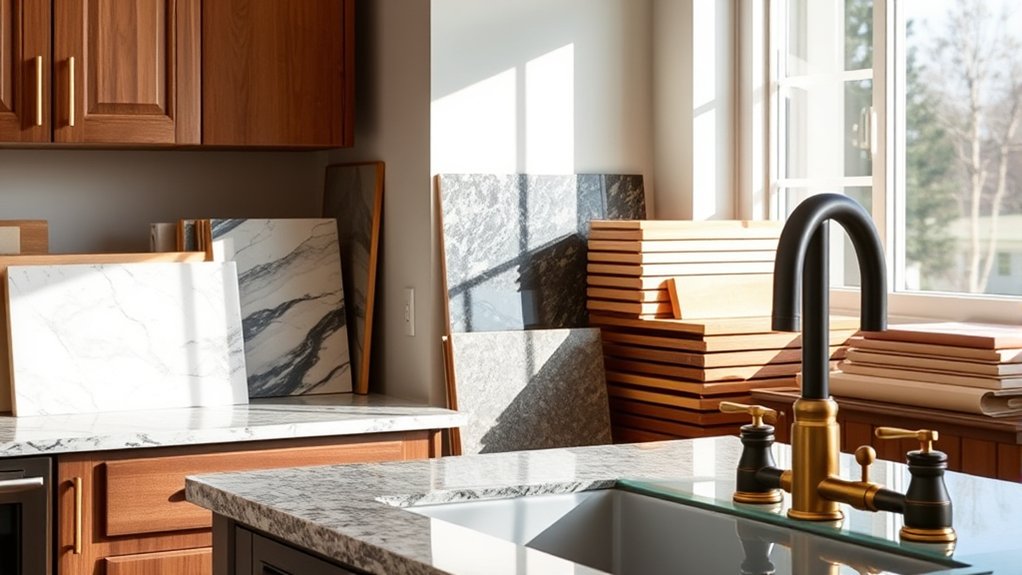
When you’re picking materials for your kitchen remodel, you’ll want to balance style and cost carefully. Affordable countertop options, budget-friendly cabinets, and cost-effective flooring can help keep your project on track without sacrificing quality.
Affordable Countertop Options
How can you update your kitchen without breaking the bank? Choosing affordable countertop options is key. You want materials that balance durability with a budget-friendly price and straightforward installation.
Laminate and butcher block are great choices. They offer style and strength without high costs or complex installation. Tile countertops also provide durability and a unique look but may require more careful installation.
| Material | Benefits |
|---|---|
| Laminate | Cost-effective, easy to install |
| Butcher Block | Warm look, repairable surface |
| Tile | Durable, customizable design |
Budget-Friendly Cabinet Choices
Affordable countertops set the tone for a budget-friendly kitchen, and cabinets play just as significant a role in keeping costs down. To stay within your budget, consider simple cabinet styles like shaker or flat-panel doors. They offer a clean look without the high price tag.
Opting for ready-to-assemble (RTA) cabinets can also save you money compared to custom options. Regarding cabinet hardware, choose basic knobs and pulls in durable but affordable materials like brushed nickel or matte black.
These small details can refresh your kitchen’s appearance without breaking the bank. By focusing on straightforward cabinet styles and cost-effective hardware, you can create a stylish, functional kitchen that fits your budget perfectly.
Cost-Effective Flooring Materials
Where should you start when choosing kitchen flooring that won’t blow your budget? Focus on materials that balance cost, durability, and style. Look for durable finishes that withstand spills and foot traffic without constant upkeep.
Eco friendly options like bamboo or cork not only reduce environmental impact but offer resilience too. Vinyl and laminate also provide budget-friendly alternatives with easy maintenance.
| Material | Cost Range | Benefits |
|---|---|---|
| Bamboo | $$ | Eco friendly, durable |
| Cork | $$ | Soft underfoot, eco friendly |
| Vinyl | $ | Water-resistant, low cost |
| Laminate | $ | Durable finish, easy install |
| Ceramic Tile | $$ | Long-lasting, stylish |
Choosing wisely helps you save money while upgrading your kitchen’s look and function.
How Kitchen Layout and Design Impact Costs
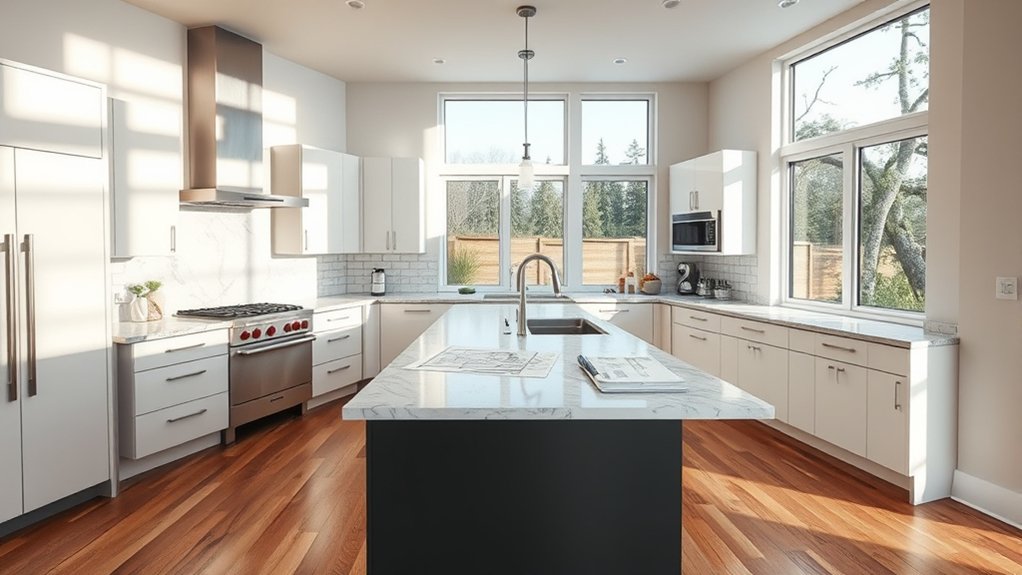
Your kitchen layout has a big impact on how much your remodel will cost. For example, deciding between an open or closed design can make a difference. Open layouts usually mean more structural work, which tends to drive up expenses.
Also, if you go for custom designs instead of standard options, you’ll see a noticeable change in your budget. So, it’s worth thinking about what fits your style and wallet before making a decision.
Open vs Closed Layout
How you design your kitchen layout can considerably influence your remodeling costs. Choosing between an open layout and a closed layout affects both materials and labor expenses. An open layout often requires removing walls, which raises costs due to structural work and permits.
Meanwhile, a closed layout keeps existing walls, typically lowering expenses but potentially limiting space and flow. Consider these factors when deciding:
- Open layout increases lighting and flooring needs due to expanded space
- Closed layout may reduce demolition and structural modifications
- Open layout can boost home value but involves higher upfront costs
- Closed layout offers privacy and defined areas but might feel cramped
Your choice between open and closed layouts will shape not only your budget but also your kitchen’s functionality and style.
Custom vs Standard Design
Although opting for a custom kitchen design can substantially improve your space’s uniqueness and functionality, it usually comes with higher costs compared to standard designs. When you choose custom features, you’re paying for tailored cabinetry, specialized layouts, and materials crafted to your exact preferences.
These elements boost your kitchen’s personality but increase labor and material expenses. On the other hand, standard options offer pre-made cabinets and common layouts that are quicker and cheaper to install. They may limit your design flexibility but help keep your remodel budget manageable.
Understanding this trade-off lets you decide whether investing in custom features aligns with your goals and budget or if standard options meet your needs without overspending. Your choice directly impacts the overall cost and final look of your kitchen remodel.
Understanding Labor and Contractor Costs
When planning a kitchen remodel, understanding labor and contractor costs plays a crucial role in staying within budget. Labor expenses often make up a significant portion of your total cost, so knowing what influences these charges helps you manage your spending effectively.
Contractor licensing guarantees you’re hiring qualified professionals, which can prevent costly mistakes down the line. Labor wage rates vary by region and skill level, so getting multiple quotes helps you find a fair price.
Keep these points in mind to control labor costs:
- Verify contractor licensing to ensure compliance and quality.
- Compare labor wage rates from different contractors.
- Ask for detailed estimates including labor hours and costs.
- Factor in potential overtime or unexpected delays.
What Appliance Upgrades Mean for Your Budget
Upgrading your kitchen appliances can considerably impact your remodeling budget, so it’s important to weigh the costs against the benefits. Choosing appliances with improved appliance energy efficiency may cost more upfront, but they save you money on utility bills over time. You’ll also reduce your environmental footprint, which is a bonus.
Incorporating smart kitchen technology, like connected refrigerators or voice-controlled ovens, adds convenience and modern appeal but pushes your budget higher. These advanced features can augment your cooking experience and increase your home’s resale value, making them worth considering if your budget allows.
Balance your priorities by deciding which upgrades fit your lifestyle and long-term savings goals. Avoid splurging on every new gadget unless you’ll use them regularly. Ultimately, focusing on efficient, quality appliances tailored to your needs will give you the best return on investment without overwhelming your remodel’s overall budget.
How Plumbing and Electrical Upgrades Increase Costs
Because plumbing and electrical systems are the backbone of your kitchen’s functionality, any changes to them can considerably increase your remodel costs. When you plan plumbing upgrades, you might need to move sinks, install new water lines, or upgrade to modern fixtures. All of these add labor and material expenses.
Plumbing and electrical changes are essential but can significantly raise your kitchen remodel expenses.
Electrical improvements often involve rewiring circuits, adding outlets, or upgrading the panel to support new appliances, which raises costs further.
Keep in mind these factors that impact your budget:
- Complexity of rerouting pipes or wires
- Upgrading to energy-efficient fixtures and appliances
- Compliance with current safety codes and standards
- Accessibility of existing plumbing and electrical systems
Since these systems are hidden behind walls, any unforeseen issues identified during the remodel can also increase costs. By anticipating these plumbing upgrades and electrical improvements, you can better prepare your budget and avoid surprises during your kitchen remodel.
Kitchen Remodel Permits and Inspection Costs
Plumbing and electrical upgrades often require official permits and inspections to guarantee the work meets local building codes. When you’re planning a kitchen remodel, securing the necessary building permits is essential. These permits ensure your project complies with safety standards and can prevent costly fines or delays.
The cost of building permits varies by location but typically ranges from a few hundred to over a thousand dollars. In addition to permits, inspection fees come into play. Inspectors visit your site at various stages to verify that the work meets code requirements.
These fees are usually separate from permit costs and can add several hundred dollars to your budget. Skipping permits or inspections isn’t worth the risk, as it can lead to problems when you sell your home or if unapproved work causes damage.
Factoring in building permits and inspection fees helps you plan a more accurate kitchen remodel budget.
Frequently Asked Questions
How Long Does a Typical Kitchen Remodel Take to Complete?
A typical kitchen remodel takes about 6 to 12 weeks to complete. You’ll want to keep timeline considerations in mind, like material availability and contractor schedules.
Be prepared for project delays. Unexpected issues with plumbing or electrical work often pop up. Staying flexible and communicating regularly with your contractor helps keep things on track.
With proper planning, you can minimize surprises and enjoy your new kitchen sooner than you think.
Can I Live in My Home During the Kitchen Remodel?
Yes, you can live in your home during the kitchen remodel, but it depends on the project’s scope. About 60% of homeowners choose this option despite the disruption.
You’ll need to plan your living arrangements carefully, as your kitchen will be unusable. Some people opt for temporary housing or set up a makeshift kitchen elsewhere in the house to stay comfortable. Just be ready for some noise, dust, and limited cooking options.
What Are the Best Ways to Finance a Kitchen Remodel?
You can investigate several financing options for your kitchen remodel. Renovation loans are popular because they bundle your home purchase and remodel costs into one loan.
If you already own your home, consider a home equity loan or line of credit for lower interest rates. Personal loans and credit cards work too but often have higher rates.
Choose the option that fits your budget and timeline best to keep your project on track.
How Do I Choose a Reliable Kitchen Remodeling Contractor?
Choosing a reliable kitchen remodeling contractor is like finding the perfect recipe; you need the right ingredients. Start your contractor selection by checking licenses, insurance, and reviews.
Perform a reliability assessment by asking for references and viewing past projects. Don’t hesitate to get multiple quotes and clarify timelines.
When you trust your contractor, your remodel flows smoothly, turning your vision into reality without unexpected surprises or delays.
Are There Eco-Friendly Options for Kitchen Remodeling?
Yes, you can definitely choose eco-friendly options for your kitchen remodel. Look for sustainable materials like bamboo or recycled glass for countertops and cabinets.
You’ll also want to invest in energy efficient appliances to cut down on electricity use. These choices not only reduce your environmental impact but often save you money in the long run.
Don’t hesitate to ask your contractor about green options. They’ll help you create a stylish, eco-conscious kitchen.
Conclusion
Think of your kitchen remodel like planting a garden. The size of your plot, the quality of your seeds, and the care you invest all shape the harvest. Just as you choose flowers that fit your space and weather, you’ll pick materials and designs that suit your budget and style.
With every upgrade, permit, and contractor’s touch, you’re nurturing growth. In the end, your kitchen blooms beautifully, worthy of the time, effort, and resources you’ve sown. Understanding these 7 key factors that determine how much a kitchen remodel costs will help you plan for the best possible outcome.