How Tall Should a Kitchen Table Be?
Finding the perfect kitchen table height can feel surprisingly tricky. You want something comfortable for meals, homework, or even casual gatherings, but many people struggle to figure out what height actually works best. You’re not alone in wanting a table that fits your space and lifestyle just right.
You’ll want your kitchen table to be between 28 and 30 inches tall for most everyday uses like meals and homework. Pair it with chairs that have an 18-inch seat height to keep about 10-12 inches of comfortable space between the seat and tabletop.
If you need a table for cooking or standing, consider counter-height (36 inches) or bar-height (40-42 inches) options. Choosing the right height also depends on your kitchen layout and style, so there’s more to investigate for a perfect fit.
Key Takeaways
- Standard kitchen tables are typically 28 to 30 inches tall. They pair best with 18-inch chairs for comfortable seating.
- Counter-height tables measure about 36 inches and work well with 24-inch stools. These are great for cooking or prep tasks.
- Bar-height tables range from 40 to 42 inches. They’re ideal for standing or using bar stools to promote upright posture.
- Maintain a 10-12 inch gap between the chair seat and tabletop. This spacing helps with ergonomic comfort and proper posture.
- Adjustable or custom tables optimize comfort and fit unique kitchen layouts when standard heights don’t suit your needs.
What Is the Standard Height for a Kitchen Table?
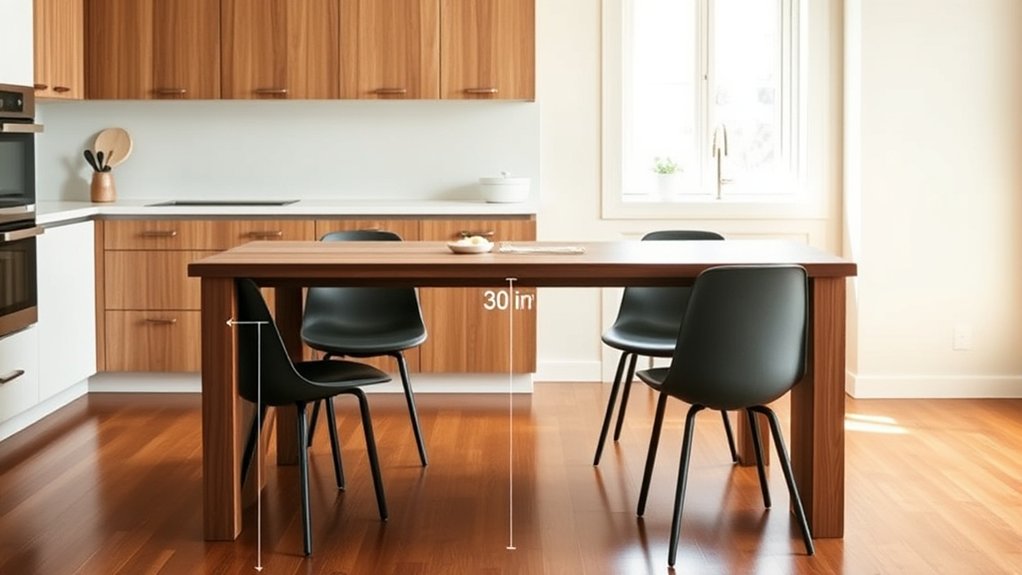
How tall should your kitchen table be to fit comfortably in your space? The standard height for most kitchen tables is around 28 to 30 inches. This height works well for everyday tasks, from casual meals to homework sessions.
The ideal kitchen table height is typically 28 to 30 inches for comfortable daily use.
When choosing a table, consider how it complements your kitchen decor, whether modern, rustic, or minimalist. The right height ensures comfort without disrupting the room’s flow.
Table materials also play a role. Wood tables often come in standard heights, but metal or glass tables might vary slightly. You want a table that suits your seating, usually allowing about 10 to 12 inches of space between the chair seat and the tabletop.
This gap helps you sit comfortably and move freely. Sticking to the standard height range will usually keep your kitchen functional and stylish, letting you focus on enjoying your space without awkward adjustments or discomfort.
How to Measure Your Space for the Perfect Table Height

Finding the right table height goes beyond standard measurements. It depends on the space you have available. Start by measuring the height from the floor to your kitchen chairs’ seat. This helps guarantee the table height complements your seating comfortably.
Next, measure the width and length of the area where the table will sit to maintain good traffic flow. Don’t forget to account for legroom and space for chairs to pull out easily.
Consider how the table’s height will blend with your kitchen decor and material options. For instance, heavier materials like stone or metal may need sturdier legs, which can affect overall height. Lighter materials, such as wood or glass, offer more flexibility in design and height.
How Your Kitchen Layout Affects Table Height

Since your kitchen layout dictates the available space and flow, it directly influences the ideal table height. When planning your kitchen table, consider these key layout factors:
Your kitchen layout shapes space and flow, guiding the perfect table height for comfort and functionality.
- Traffic flow If your kitchen has narrow pathways, a lower or compact table height prevents obstruction and keeps movement smooth.
- Proximity to counters When the table sits close to countertops or islands, matching or complementing their height maintains visual harmony and functional ease.
- Room function In open-plan kitchens, your table might double as prep space or a casual dining spot, so choose a height that balances comfort and practicality.
Also, your kitchen decor and material choices impact how the table fits into the space. For example, sleek metal legs might suit minimalist layouts, while wooden tables blend well with rustic designs.
How to Choose the Right Table Height for Eating
When you’re picking the right table height for eating, a good place to start is with the standard height—usually between 28 and 30 inches. It’s important that your chairs go well with this height so you can sit comfortably without feeling like you’re stretching or scrunching up.
Finding that perfect balance makes a big difference and helps create a pleasant dining experience every time you sit down to eat.
Standard Table Height
Although choosing the right kitchen table height might seem straightforward, it plays an essential role in your comfort while eating. The standard table height usually ranges between 28 to 30 inches, fitting most adults comfortably. When selecting your table, consider these points:
- Decor style – Your table should complement the room, whether modern or rustic, influencing height choices.
- Material choice – Heavier materials like wood often stick with the standard height, while metal or glass might allow more flexibility.
- Functionality – Think about how you use your table daily; a standard height suits most tasks, from dining to work.
Sticking to this range ensures you maintain good posture and enjoy every meal without strain.
Matching Chair Height
Choosing the right chair height is just as important as selecting the proper kitchen table height because the two work together to guarantee comfort while eating. When matching chair height to your kitchen table, aim for a 10 to 12-inch gap between the seat and the tabletop. This allows enough legroom and helps you sit comfortably without hunching or stretching.
Consider your decor style. Sleek, modern chairs may differ in height from rustic, farmhouse options. Material choice also impacts comfort and fit; cushioned seats or adjustable stools offer flexibility, while wooden chairs usually stick to standard heights.
Measure carefully, and test the combination if possible. Getting this balance right will strengthen both the look and functionality of your kitchen dining area.
Why Seating Height Matters for Kitchen Table Comfort
You’ll want to match your chair height to your kitchen table to keep your posture comfortable and supported. When your seating aligns properly with the table, it really helps reduce strain on your back and shoulders. Plus, this ergonomic setup makes every meal more enjoyable and helps prevent discomfort over time.
Ergonomic Seating Benefits
When your seating height matches your kitchen table, you’ll enjoy better posture and less strain on your back and neck. This alignment lets you sit comfortably and focus on your meal or tasks without discomfort. To maximize ergonomic benefits, consider these factors:
- Material choices: Select chairs with supportive materials that complement your table’s decorative accents, creating a cohesive and comfortable setting.
- Seat height: Make sure your chair height allows your feet to rest flat on the floor, promoting circulation and reducing pressure points.
- Back support: Opt for chairs that provide adequate lumbar support to maintain your natural spine curve.
Proper Chair And Table Alignment
Matching your chair height to your kitchen table isn’t just about aesthetics. It directly affects your comfort and posture. When your seating height aligns well with your table, you avoid strain and enjoy meals or tasks comfortably.
Consider how your kitchen decor and material choice influence chair and table dimensions. For example, thicker tabletops may require taller chairs.
| Chair Seat Height (in) | Table Height (in) | Ideal Gap (in) |
|---|---|---|
| 18 | 28-30 | 10-12 |
| 20 | 30-32 | 10-12 |
| 24 | 34-36 | 10-12 |
| Adjustable | Variable | 10-12 |
Aim for a 10-12 inch gap between chair seat and table surface for ideal comfort and style harmony in your kitchen decor.
Impact On Posture
Because seating height directly influences how you sit, it plays an essential role in maintaining good posture at your kitchen table. When your chair and table align correctly, you avoid slouching or straining your back and neck. Consider these key factors:
- Your feet should rest flat on the floor, guaranteeing stability and comfort.
- Your elbows should form a 90-degree angle on the table, preventing shoulder tension.
- Your spine should stay naturally straight, supported by your chair’s backrest.
Material choices affect comfort and durability, while decorative accents can improve your space without compromising ergonomics. Selecting the right height and materials ensures you maintain a healthy posture and enjoy your kitchen table longer. Don’t underestimate how these details impact your overall comfort and well-being.
How to Match Table Height With Chairs and Stools
Although choosing the right kitchen table height is essential, you also need to think about how it pairs with your chairs and stools. Aim for a 10-12 inch difference between the seat height and table surface for comfortable seating. For a standard 30-inch table, chairs with 18-inch seat height work best, while counter-height tables (36 inches) suit stools around 24 inches tall.
Consider your decor style and material choices when selecting chairs and stools. Sleek metal stools might complement a modern kitchen, while wooden chairs blend well with rustic or farmhouse tables. Matching materials or coordinating finishes create a cohesive look, enhancing both comfort and aesthetics.
How to Adjust Table Height for Cooking and Prep Tasks
To make cooking and prep easier, you’ll want your table height to be around the ideal counter height, which is usually about 36 inches. That way, it’s comfortable to work at without having to hunch over or stretch too much.
You might also want to consider adjustable tables. These let you switch between sitting and standing positions, which is great for keeping good posture and avoiding strain. Setting up your workspace like this can really help you stay comfortable, especially during those long prep sessions.
Ideal Counter Height
When you’re preparing meals or working at your kitchen table, having the right height can make a big difference in comfort and efficiency. The ideal counter height typically ranges from 34 to 36 inches. This balances ease of use with ergonomic support.
To find the perfect height for your kitchen decor and material selection, consider these factors:
- Your height and arm length. Choose a height where your elbows rest comfortably at a 90-degree angle.
- The primary tasks you perform. Chopping, mixing, or rolling dough may require slightly different heights.
- The type of material. Hard surfaces like granite or wood feel different under your hands, so test samples at various heights.
Adjusting your table to this ideal counter height streamlines your cooking and prep tasks. It makes kitchen work more enjoyable.
Adjustable Table Options
If you want to maximize comfort and efficiency in your kitchen, adjustable tables offer a flexible solution that adapts to different tasks and users. Historically, table heights varied based on regional cooking styles and available materials, influencing modern adjustable designs.
When choosing an adjustable table, consider material considerations like durability and ease of cleaning. Metal frames with wooden tops often balance strength and aesthetics well.
To adjust for cooking and prep, set the table height near your elbow level to reduce strain. Many models feature simple crank or pneumatic lift systems, letting you switch between sitting and standing positions effortlessly.
Ergonomic Workstation Setup
Although many overlook it, adjusting your kitchen table to the right height can considerably reduce strain during cooking and prep tasks. To set up an ergonomic workstation, start by measuring your elbow height while standing. Your table should be level with this to keep your arms at a comfortable 90-degree angle.
Next, consider the table’s material choices. Smooth, durable surfaces like hardwood or stainless steel support easy cleaning and withstand wear. Finally, add decorative accents such as cushioned mats or adjustable stools to improve comfort without sacrificing style.
Follow these steps:
- Align table height with your elbow level for natural posture.
- Choose materials that balance durability and ease of maintenance.
- Incorporate decorative accents that improve comfort and suit your kitchen’s look.
This setup helps you prep efficiently while protecting your body.
When to Go for Adjustable or Custom Kitchen Tables
Choosing an adjustable or custom kitchen table makes sense when standard sizes don’t fit your space or lifestyle. If your kitchen has an unusual layout or limited room, a custom table can maximize every inch while matching your needs.
Opt for adjustable or custom kitchen tables to perfectly fit unique spaces and lifestyles.
Adjustable tables offer flexibility, letting you change height depending on the task, whether dining, prepping, or working.
You can also blend vintage charm with modern aesthetics by selecting materials and designs that suit your personal taste. For example, a custom table with reclaimed wood and sleek metal legs combines rustic warmth with contemporary style perfectly.
Adjustable options often come in minimalist designs, fitting seamlessly into modern kitchens without overwhelming the space.
Ultimately, going custom or adjustable lets you tailor the table’s height and look, enhancing both comfort and decor. This way, your kitchen becomes a versatile, stylish hub that works precisely how you want it to.
How Different Table Heights Affect Comfort and Posture
Custom and adjustable kitchen tables give you control over height, but understanding how different heights impact your comfort and posture helps you make the best choice. When you pick a table, consider how it aligns with your body to avoid strain and discomfort.
- Standard height (28-30 inches): Ideal for most adults, this height lets you sit comfortably with your feet flat and elbows at a right angle, promoting good posture.
- Counter height (34-36 inches): Great for casual, raised seating, but may cause slouching if your chairs don’t match well or if you’re too short.
- Bar height (40-42 inches): Best for standing or stools, this height encourages upright posture but might not suit longer meals or extensive work.
Also, keep in mind how color schemes and material choices interact with your table’s height. A sleek, lighter material can visually balance taller tables, while darker tones suit lower, cozier setups.
How to Balance Style and Function in Kitchen Table Height
When you pick a kitchen table height, you need to balance style with function to create a space that’s both beautiful and practical. Start by considering how you’ll use the table daily, whether for meals, homework, or entertaining. Choose a height that supports comfort and posture to avoid discomfort during long gatherings.
Next, think about material choices. Wood offers warmth and durability, while metal or glass can add a modern touch. These decisions affect both style and how the table fits with your kitchen’s overall look.
Incorporate decorative accents like patterned chairs or a stylish centerpiece to boost visual appeal without compromising usability. Remember, your table should complement your kitchen’s design while meeting your practical needs.
Frequently Asked Questions
Can Kitchen Table Height Impact My Health Long-Term?
Yes, kitchen table height can impact your health long-term. If your table isn’t the right height, it can cause poor posture and discomfort, leading to back and neck pain over time.
Choosing a table that promotes posture improvement guarantees you sit comfortably without straining your body. Proper seating comfort helps you avoid slouching or awkward positions, which supports your spine and overall well-being for years to come.
Are There Ergonomic Guidelines for Kitchen Table Heights?
Yes, there are ergonomic guidelines for kitchen table heights to guarantee comfort and reduce strain. When choosing, consider design considerations like matching your chair height and allowing enough legroom.
You’ll want a table that supports good posture while fitting your kitchen’s style. Don’t forget your aesthetic preferences; your table should look great and feel right.
Balancing function with design ensures you’ll enjoy using the space every day.
Do Table Height Preferences Vary by Culture?
Yes, your table height preferences can vary a lot due to cultural dining habits. In some cultures, people sit on the floor or low cushions, so tables are much shorter.
In others, you use chairs and prefer taller tables. Your height preferences reflect how you eat and interact during meals, so considering cultural dining styles helps you choose the right table height that feels comfortable and natural for you and your family.
How Does Table Height Affect Children Using the Kitchen Table?
When kids sit at the kitchen table, it’s like fitting puzzle pieces together. If the table’s too tall, they’ll feel like tiny boats in a vast ocean. Adjustable height tables let you bring the surface down to their level, making mealtime comfy and safe.
You’ll also want to keep safety considerations in mind, like stable legs and rounded edges. This way, your little ones won’t tip over or get hurt while reaching for their snacks.
What Materials Influence the Ideal Kitchen Table Height?
Materials like solid wood, metal, and glass influence the ideal kitchen table height because of their material durability and aesthetic appeal. If you choose a sturdy material like hardwood, you can opt for a slightly taller table since it supports weight well.
Metal frames often allow for adjustable heights, giving you flexibility. Glass tables, while stylish, might need standard heights for stability. So, pick materials that balance durability and style with your height needs.
Conclusion
So, you want the perfect kitchen table height? Just wing it; who needs ergonomics when you can pretend limbo skills are a daily requirement? But seriously, getting the right height isn’t rocket science.
Measure, consider your space and seating, and don’t let your posture suffer for style. Your back and your guests will thank you. Unless you enjoy wobbly tables and awkward dinners, then by all means, defy the standards!
Remember, choosing the right kitchen table height makes all the difference in comfort and usability.