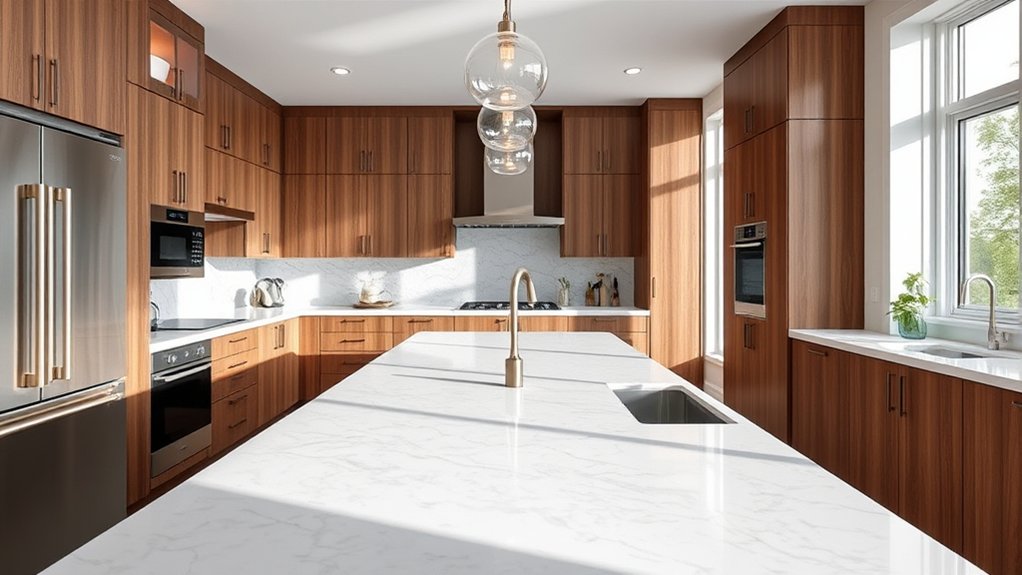
5 Factors That Affect How Much a Kitchen Island Does Cost
If you’ve ever dreamed of adding a kitchen island but felt overwhelmed by the costs, you’re not alone. Many people struggle to figure out what drives the price up or down, making it hard to plan their budget. Understanding the key factors that affect how much a kitchen island does cost can take the guesswork out of your project and help you make smarter choices.
Several factors will affect how much your kitchen island costs. First, the layout and location influence plumbing and electrical expenses.
Next, size and shape determine material and labor needs. Larger or custom shapes cost more.
Materials play a big role; granite or quartz raises prices, while laminate is budget-friendly.
Features like built-in appliances or custom lighting add complexity and expenses.
Understanding these elements helps you plan wisely, and there’s more detail to consider as you refine your design.
Key Takeaways
- Material choice, such as granite or laminate, significantly impacts the overall kitchen island cost.
- The size and shape influence labor and material expenses. Larger or more complex designs typically cost more.
- Location and kitchen layout affect plumbing and electrical installation costs, especially if modifications are needed.
- Features like built-in appliances, custom lighting, and cabinetry add to both material and labor expenses.
- Decorative finishes and accents increase costs based on design complexity and installation difficulty.
Typical Kitchen Island Cost Ranges to Expect
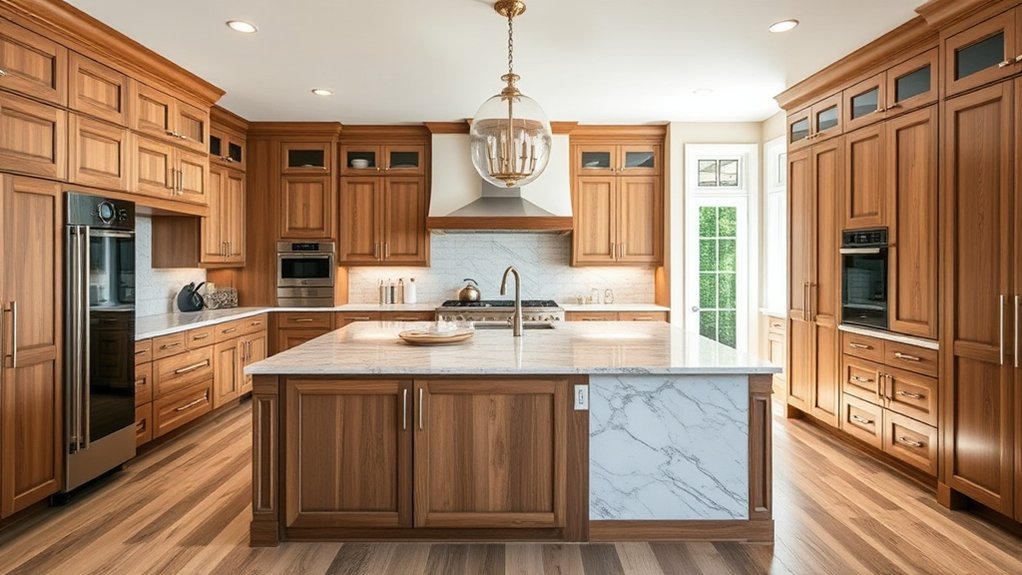
How much should you expect to spend on a kitchen island? Typically, prices range from $1,000 to $5,000 or more, depending on size, materials, and features. If you stick to a basic design with standard countertops and cabinetry, you’ll likely pay toward the lower end.
However, when you add decorative accents like intricate moldings or unique hardware, costs rise. Custom color options for cabinetry or countertops also affect your budget, especially if you choose premium finishes or bold hues that require special ordering.
Keep in mind, simple islands with laminate surfaces and minimal storage stay affordable, while those with high-end stone tops, built-in appliances, or seating areas jump into higher price brackets. You can control costs by selecting materials and decorative accents that fit your style without going overboard.
Knowing typical cost ranges helps you plan your kitchen upgrade realistically without surprises.
How Kitchen Layout and Location Affect Island Costs
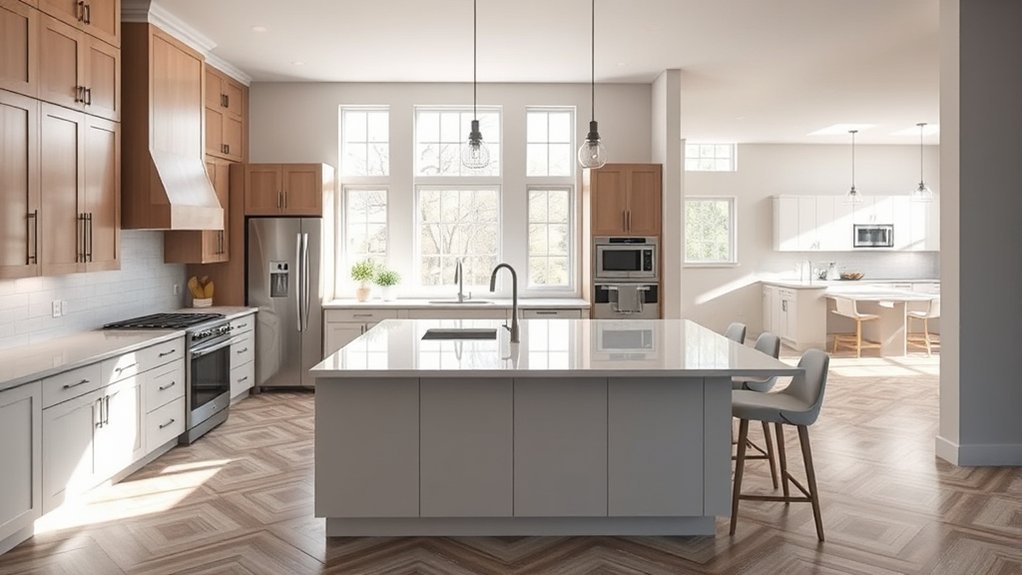
Because your kitchen’s layout and the island’s location play essential roles, they directly influence the overall cost of your project. If your island needs plumbing fixtures, such as a sink or dishwasher, placing it near existing water lines will save you money. Running new plumbing to a remote spot can considerably boost costs. Likewise, electrical wiring for appliances or lighting adds expenses depending on accessibility.
Your kitchen’s shape also matters. A centrally located island in an open layout might require more structural support or custom adjustments, raising the price. Plus, integrating decorative accents like built-in shelving or unique finishes can vary in cost based on how easily they fit into your current design.
Strategically planning your island’s location within your kitchen can help control expenses while maximizing functionality and style. By considering plumbing, wiring, and how your layout accommodates decorative accents, you can better estimate and manage your kitchen island costs.
How Size and Shape Affect Kitchen Island Cost
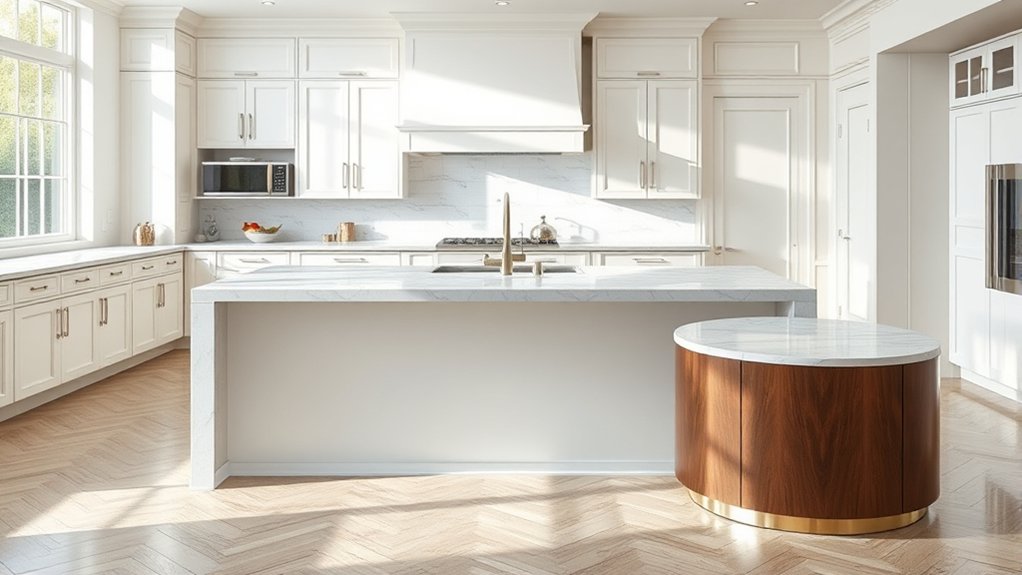
The size and shape of your kitchen island play a big role in determining the total cost. Larger islands require more materials and labor, naturally increasing expenses. If you opt for an unconventional shape, like a curved or multi-tiered design, you’ll likely pay more due to the added complexity in construction.
Even the layout affects how easily contractors can build your island, impacting labor costs.
When planning your island, consider how decorative accents and color options might influence price. While these don’t directly relate to size or shape, certain finishes or intricate details can complement specific island dimensions and styles, potentially raising overall costs.
On the other hand, a well-proportioned island that fits your kitchen space efficiently can help you avoid unnecessary expenses. By carefully balancing the size and shape with your budget, you ensure your kitchen island remains both functional and cost-effective without compromising style.
How Materials Influence Kitchen Island Cost
Since materials make up the core of your kitchen island, your choices directly impact its cost. Opting for high-end materials like granite or quartz will raise expenses, while laminate or butcher block can keep costs down. You’ll also want to evaluate how these materials pair with other elements, such as lighting fixtures. Premium fixtures designed to complement luxurious countertops may add to the budget, whereas simpler lighting keeps it minimal.
Additionally, if you plan to incorporate plumbing options like a sink or dishwasher, durable and water-resistant materials become essential. This need often pushes you toward pricier surfaces and cabinetry designed to withstand moisture. Keep in mind that some materials require more maintenance or professional installation, which can further influence your overall cost. By balancing aesthetics, durability, and functionality, you can select materials that fit your style and budget without unexpected expenses.
How Features and Installation Challenges Raise Costs
When you add extra features like built-in appliances or custom lighting, your kitchen island’s cost can quickly climb. Appliance integration demands not only the units themselves but also modifications to wiring and plumbing, which increase labor expenses.
Cabinet customization also plays a significant role; tailoring the cabinetry to specific dimensions or styles requires more skilled craftsmanship, driving up costs.
Installation challenges further affect your budget. If your kitchen space has uneven floors, limited access, or requires structural adjustments to support heavy countertops or appliances, expect higher fees. These obstacles lengthen installation times and may require specialized tools or professionals.
You’ll want to factor in these complexities early on to avoid surprises. By carefully considering the features you want and the installation environment, you can better manage how these elements raise costs. Balancing your desired functions with practical installation needs ensures a kitchen island that fits your space and budget.
Frequently Asked Questions
How Long Does It Take to Build and Install a Kitchen Island?
It usually takes about one to two weeks to build and install a kitchen island, depending on your design customization and material durability choices. If you go for more intricate designs or durable materials like granite or hardwood, expect a longer timeline.
Simple designs with standard materials can be quicker. Your contractor will handle most tasks, but staying involved guarantees the island meets your style and quality expectations without unnecessary delays.
Can I Finance the Cost of a Kitchen Island?
Yes, you can finance the cost of a kitchen island. Many retailers and contractors offer financing options to help manage your expenses.
Before you commit, focus on budget planning to determine how much you can comfortably afford each month. Exploring personal loans, credit cards with promotional rates, or even home improvement loans can provide flexible solutions.
Just make sure to compare interest rates and terms to find the best fit for your financial situation.
What Maintenance Is Required for Different Kitchen Island Materials?
Oh, you’ll love it; some materials demand your constant attention! With granite, enjoy low maintenance frequency and high material durability. Just a quick wipe and seal now and then.
Wood? It’s charming but requires frequent oiling and protection from moisture. Quartz is practically carefree, offering excellent durability with minimal upkeep.
Are Kitchen Islands a Good Investment for Home Resale Value?
Yes, kitchen islands can boost your home’s resale value, making them a smart investment. Buyers often see them as a desirable feature that adds both functionality and style.
When you choose a well-designed island with quality materials, you’re likely to get a better investment return. Just make sure it fits your kitchen layout and meets buyers’ expectations to maximize its appeal and value during resale.
How Do I Choose the Right Contractor for Kitchen Island Installation?
Wondering how to pick the right contractor for your kitchen island installation? Start by checking their experience with various design ideas and material options to guarantee they can bring your vision to life.
Look for reviews and ask for references to gauge their reliability. Don’t forget to confirm they’re licensed and insured.
Choosing someone who communicates clearly and understands your style will make the process smooth and stress-free.
Conclusion
When planning your kitchen island, remember it’s not just about numbers; it’s about crafting your dream centerpiece. Your layout, size, and materials all paint a unique picture, while special features add that extra sparkle.
Even tricky installations are part of the adventure, shaping your space’s personality. Welcome these factors as brushstrokes on your kitchen’s canvas.
By understanding these elements, you can turn cost into a worthwhile investment in the heart of your home with your perfect kitchen island.