5 Key Factors That Affect How Much a New Kitchen Does Cost
If you’ve ever dreamed of a stunning new kitchen but felt overwhelmed by the costs, you’re not alone. Many people struggle with figuring out how much a kitchen remodel will really set them back. Understanding what drives up the price can help you make smarter choices and avoid surprises.
When planning your new kitchen, five key factors will shape your budget. Your kitchen’s size and layout influence material and labor costs, especially if you expand or reconfigure plumbing and electrical systems.
Design complexity adds expenses through custom cabinetry and unique features.
Material choices affect durability and price, while labor quality and project timeline can raise or lower costs.
Ultimately, your appliance picks, from smart to energy-efficient models, impact your total spend.
Investigate these areas closely to better manage your kitchen remodel costs.
Key Takeaways
- Kitchen size and layout determine how much material and labor you’ll need, which directly impacts the overall renovation costs.
- Complex designs with custom cabinetry and unique features can increase project expenses significantly.
- Choosing materials like high-end cabinets and premium countertops affects both your upfront costs and long-term investment.
- The quality of skilled labor, how long the project takes, and any permit fees all influence labor and installation expenses.
- Appliance selection, including smart and energy-efficient models, plays a big role in your budget and how well your kitchen functions.
How Your Kitchen Size Affects Your Remodel Budget
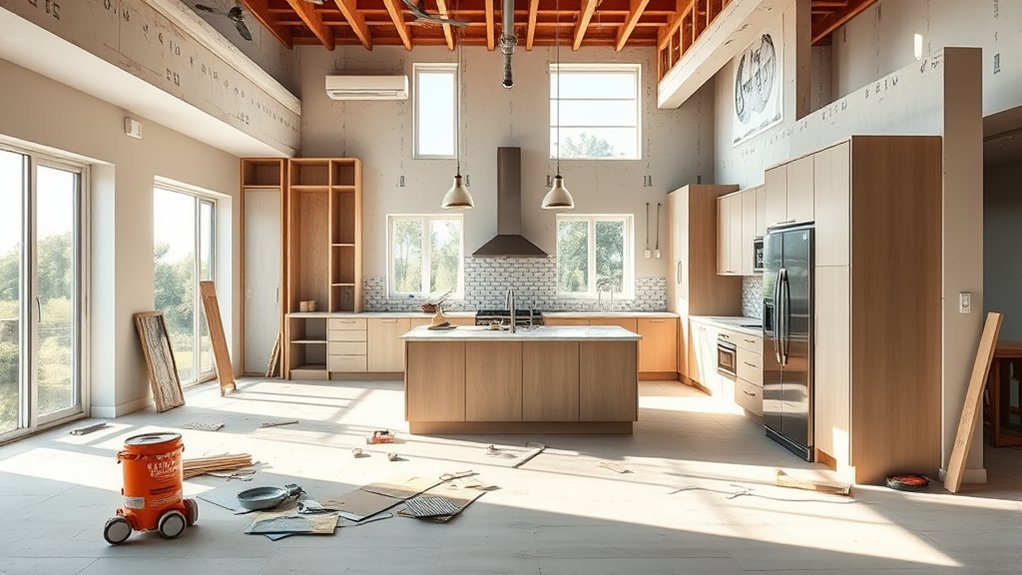
Although it might seem obvious, the size of your kitchen plays a major role in determining your remodel budget. When you have a larger space, you’ll need more materials, appliances, and labor, which naturally drives up costs.
The size of your kitchen directly influences your remodel budget through materials, appliances, and labor needs.
Even with a modest kitchen layout, the total expense can vary depending on how much you want to change. Smaller kitchens might save you money upfront, but you’ll need to be creative with storage solutions to maximize usability without overcrowding.
Your kitchen layout also impacts costs tied to plumbing and electrical work, which usually scale with size. If you’re expanding or reconfiguring, expect higher prices. On the other hand, if you stick to your existing footprint, you can control expenses more easily.
Ultimately, knowing your kitchen’s size helps you set realistic expectations and make informed decisions about what upgrades fit your budget. Focus on smart storage solutions to get the most out of your space without overspending.
How Design Complexity Drives Remodel Costs
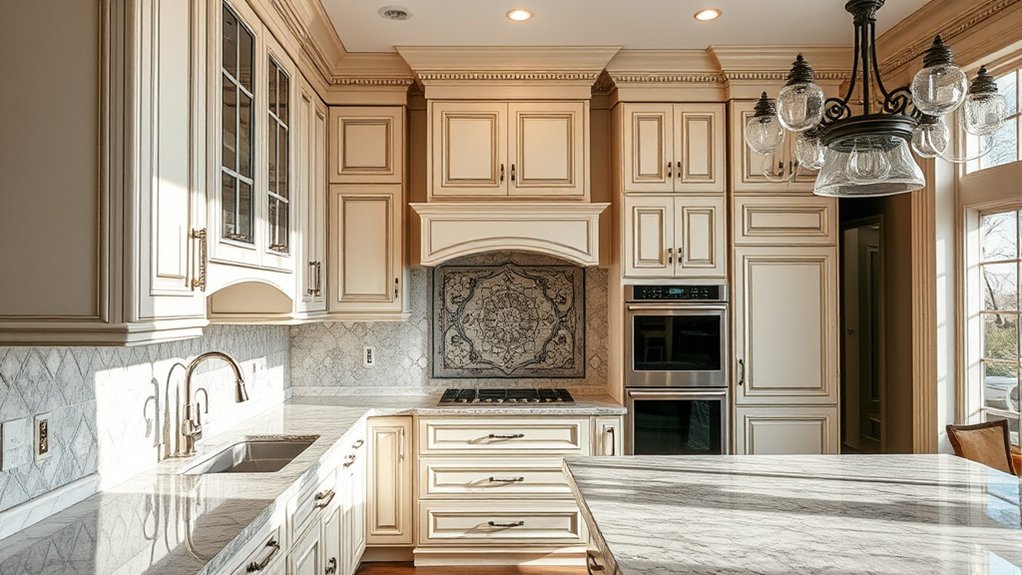
Once you’ve considered how your kitchen’s size influences the budget, the next factor to look at is design complexity. The more intricate your layout and features, the higher your costs will climb.
Complex designs often require skilled labor, custom cabinetry, and special installations, all of which add to the price. Moreover, incorporating the latest design trends or a bold color scheme can increase expenses because they may involve unique materials or finishes.
Keep these design complexity elements in mind:
- Custom cabinetry and built-ins that fit specific spaces
- Multi-functional islands or unique countertop shapes
- Coordinating a trendy color scheme with specialty lighting and fixtures
How Material Choices Affect Kitchen Remodel Costs
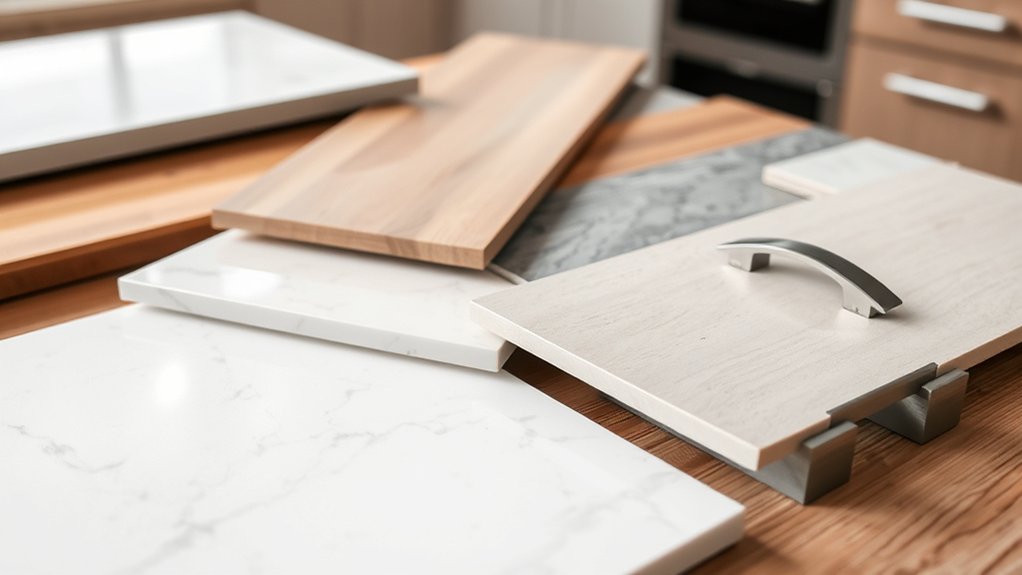
Because the materials you select directly impact both the look and longevity of your kitchen, they play an essential role in your remodel budget. Choosing higher-end cabinet materials or premium countertop options will raise costs, but they often provide better durability and style.
Conversely, budget-friendly materials can save money upfront but might require earlier replacement.
Here’s a quick look at common cabinet materials and countertop options and how they affect costs:
| Material Type | Cost Range |
|---|---|
| Solid Wood Cabinets | High |
| MDF or Particleboard | Low to Medium |
| Granite Countertops | High |
| Laminate Countertops | Low |
| Quartz Countertops | Medium to High |
When picking materials, balance cost with quality and maintenance needs to get the best value for your kitchen remodel.
How Labor and Installation Affect Remodel Costs
Since skilled labor is essential to bringing your kitchen remodel to life, the quality and cost of installation can considerably impact your overall budget. Labor costs vary based on your location, the complexity of the project, and the expertise of the contractors you hire.
Skilled labor quality and cost significantly influence your kitchen remodel budget, varying by location and project complexity.
Delays in the project timeline can increase labor expenses, especially if you need to coordinate multiple specialists. Furthermore, permit requirements can add time and cost, as inspections and approvals are necessary before proceeding.
To manage labor and installation costs effectively, consider these factors:
- Project timeline: Longer timelines usually mean higher labor costs due to extended work hours and scheduling challenges.
- Permit requirements: Securing permits may require additional fees and can delay the start or progress of work.
- Labor expertise: Hiring experienced professionals often costs more upfront but can prevent costly mistakes later.
Balancing these aspects helps you keep your remodel on budget without sacrificing quality.
How Appliances Impact Your Kitchen Remodel Cost
Labor and installation set the stage for your kitchen remodel, but the appliances you choose play a big role in shaping your final costs. When selecting appliances, consider how smart technology can increase upfront expenses but offer long-term convenience and energy savings.
Smart refrigerators, ovens, and dishwashers often come with premium prices, yet their efficiency and connectivity can improve your kitchen’s functionality. Eco friendly options also affect your budget. Appliances with ENERGY STAR ratings or sustainable materials may cost more initially but reduce your utility bills and environmental impact over time.
Balancing your desire for the latest smart features with eco friendly choices helps you manage costs while creating a modern, efficient kitchen. Ultimately, your appliance choices directly influence your remodel budget.
Frequently Asked Questions
How Long Does a Typical Kitchen Remodel Take?
A typical kitchen remodel usually takes about 6 to 12 weeks. You’ll want to factor in design trends, as incorporating the latest styles might extend your timeline.
Material costs also play a role. If you choose custom or hard-to-find materials, expect delays. You’ll be managing demolition, plumbing, electrical work, and installation, so plan accordingly.
Staying flexible helps you handle unexpected issues without stressing out your schedule.
Do I Need Permits for a Kitchen Renovation?
Yes, you usually need renovation permits for a kitchen remodel, especially if you’re changing plumbing, electrical, or structural elements. Permit requirements vary by location, so you should check with your local building department before starting.
Obtaining the right permits guarantees your work meets safety codes and avoids fines or delays. Skipping this step can cause problems when selling your home later, so it’s best to handle permits upfront.
Can I Live in My Home During the Remodel?
Think of your home like a stage during a play. Living arrangements shift as scenes change. Yes, you can live in your home during the remodel, but home occupancy depends on the renovation’s scope.
If you’re gutting the kitchen, expect dust and noise that disrupt daily life. Some homeowners find it manageable, while others prefer temporary housing. Plan ahead to balance comfort and construction chaos for a smoother experience.
How Do I Choose a Reliable Contractor?
You should start by checking the contractor’s reputation through online reviews and asking for references. Make sure they meet all licensing requirements in your area to avoid legal issues.
Don’t hesitate to ask about their experience with kitchen remodels specifically. Interview multiple contractors, compare quotes, and trust your instincts.
Choosing someone reliable means you’ll have peace of mind throughout the project, knowing the work will be done professionally and on time.
What Are Common Unexpected Costs in Kitchen Remodeling?
Unexpected fees often pop up during kitchen remodels, so don’t be surprised by hidden expenses. You might uncover outdated wiring that needs updating or plumbing issues behind walls.
Sometimes, materials cost more than expected or delivery delays add fees. Even permits or inspections can bring surprise charges. By anticipating these hidden expenses, you’ll stay prepared and avoid stress when your budget takes an unexpected hit during the project.
Conclusion
When planning your kitchen remodel, remember these five key factors shape your budget. For example, Sarah wanted a sleek, modern kitchen but opted for mid-range materials and simpler designs, saving thousands without sacrificing style.
By balancing size, design, materials, labor, and appliances, you can control costs while creating your dream space. Keep these in mind, and you’ll make smart choices that fit both your vision and your wallet when considering how much a new kitchen does cost.