7 Factors That Affect How Much It Costs to Paint Kitchen Cabinets
Trying to figure out how much it costs to paint kitchen cabinets can feel overwhelming. You’re not alone—many people struggle with budgeting this project because so many factors come into play. Understanding what drives the price can help you avoid surprises and make smarter decisions.
When painting your kitchen cabinets, several factors affect the cost. Your cabinet size and layout impact labor, with complex designs costing more. The material and condition influence preparation time and repairs needed. The type and quality of paint affect both price and durability.
Deciding between DIY and pros changes your expenses, while hardware and moldings add extra work. Knowing these elements helps you budget smartly and get the best results. Keep exploring to uncover all the details.
Key Takeaways
- Cabinet size, layout complexity, and condition directly influence labor and material costs because they affect access and repair needs.
- The type of cabinet material and required surface preparation play a big role in labor intensity and how well the paint will stick.
- Paint type, finish, and quality impact overall expenses. Premium and eco-friendly options usually cost more.
- The application method and extra features like hardware or moldings add to labor and extend the project duration, which raises costs.
- Balancing DIY versus professional services, and removing intricate features, can help optimize your budget and improve the final quality.
How Cabinet Size and Layout Affect Painting Costs
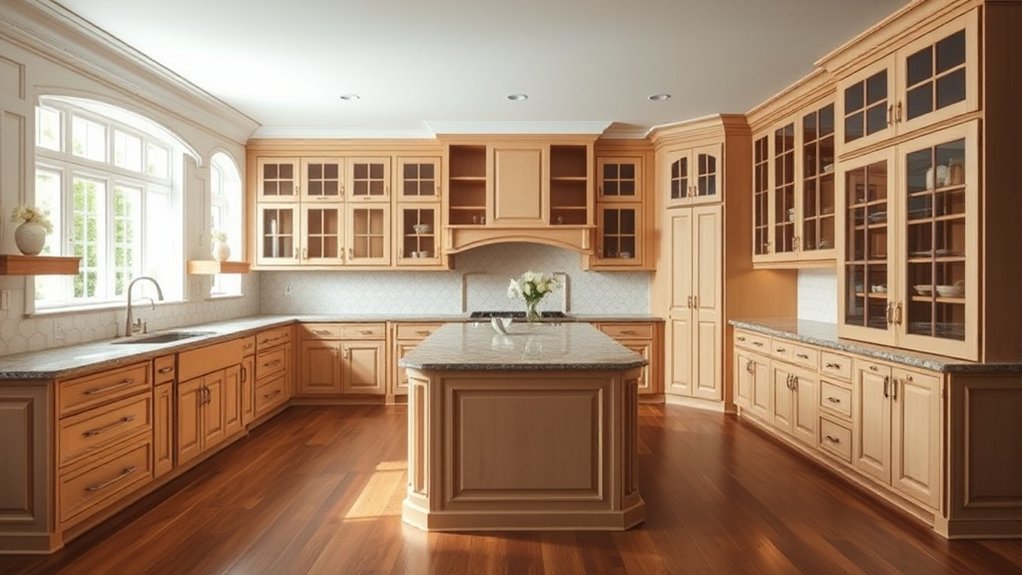
When you’re planning to paint your kitchen cabinets, the size and layout play a big role in determining the cost. A larger cabinet layout means more surface area to cover, which directly increases labor and material expenses.
The size and layout of your kitchen cabinets significantly influence painting costs due to increased surface area and labor.
If your kitchen has an open design with multiple cabinet sections, painters will need extra time to move around and prep each area carefully.
Space considerations also impact the pricing. Tight or awkwardly positioned cabinets make it harder to access all surfaces, requiring more detailed work and potentially specialized tools.
On the other hand, a straightforward cabinet layout with ample room to work can reduce both time and cost. Keep in mind that the complexity of cabinet doors, drawers, and built-in features within your layout adds layers of effort to the painting process.
How Cabinet Material Influences Painting Expenses
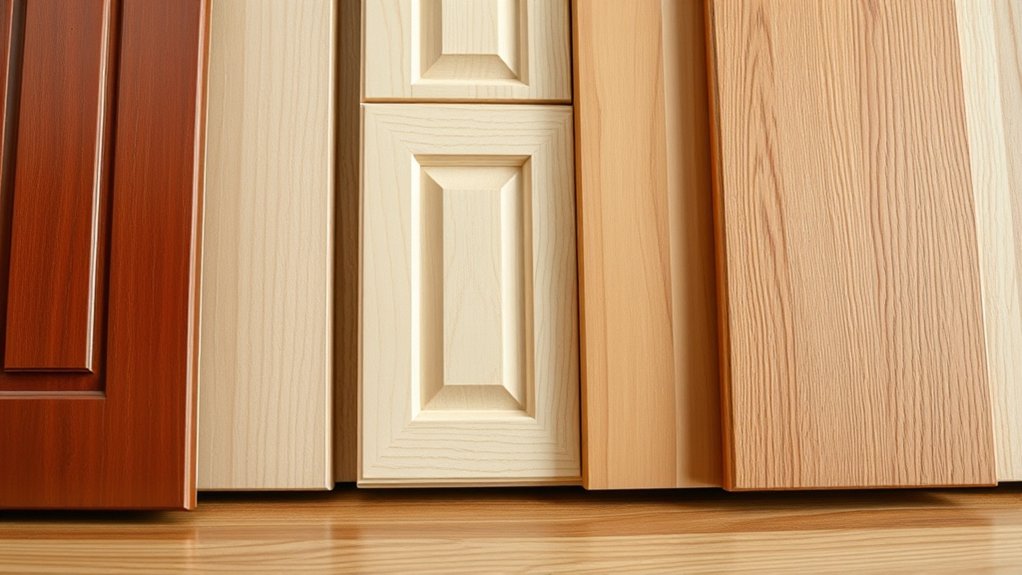
You’ll notice that the type of wood your cabinets are made from really affects the painting costs. That’s because different woods absorb paint in different ways. Now, if your cabinets have laminate surfaces instead of solid wood, that changes things too. It means more prep work and different materials are needed. Knowing these differences can help you budget your project more accurately.
Wood Types And Costs
Because different wood types absorb paint differently, the material of your kitchen cabinets directly impacts your painting costs. Woods with pronounced wood grain, like oak or pine, often require extra preparation to guarantee smooth coverage.
You might need additional sanding or sealing to prevent uneven absorption, which adds to labor time and expenses. Also, if your cabinets already have complex staining techniques, the painter must carefully strip or prime the surface to avoid blotchy finishes.
Hardwoods with tight grain usually demand less prep work, making them cheaper to paint. Understanding your cabinet’s wood type helps you anticipate the level of effort involved, so you can budget accordingly.
Choosing the right approach ensures you get a durable, attractive finish without unexpected costs.
Laminate Versus Solid Choices
Although laminate cabinets often come at a lower upfront cost, they usually require more intensive prep work before painting to guarantee proper adhesion. You’ll spend extra time sanding and priming because laminate’s smooth surface resists paint.
Solid cabinets, on the other hand, absorb paint better and give you a more durable, solid finish with less prep. This difference affects your overall painting expenses.
| Cabinet Material | Painting Considerations |
|---|---|
| Laminate | Requires thorough sanding, primer; less laminate durability after paint |
| Solid Wood | Easier prep; better paint adhesion; more durable solid finish |
| Cost Impact | Higher labor costs for laminate painting; lower for solid wood |
Choosing the right material helps you manage costs while achieving lasting results.
Why Surface Preparation Like Sanding and Priming Adds to Costs
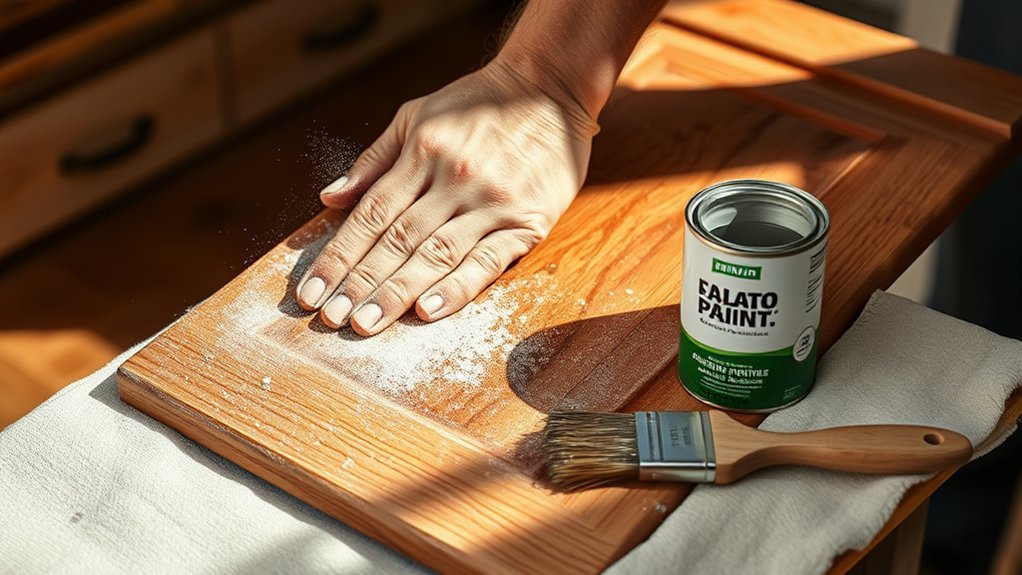
When preparing your kitchen cabinets for painting, sanding and priming play crucial roles that directly impact the overall cost. Proper sanding techniques ensure the surface is smooth and free of old finishes, which helps the paint adhere better and last longer.
This step can be labor-intensive, especially if your cabinets have intricate details or multiple layers of old paint. After sanding, surface priming is necessary to create a uniform base that prevents stains and uneven color from showing through the paint.
Using quality primer adds to material costs but improves durability and finish quality. Skipping or rushing these steps often leads to a less professional look and may require costly touch-ups later.
How Cabinet Condition Increases Repair and Painting Costs
If your cabinets have severe surface damage, you’ll need to do more extensive repairs before painting. This means more time and effort on surface preparation, which can quickly increase the overall cost.
On top of that, sometimes there are hidden structural problems that you might not notice right away. These issues can add unexpected expenses to the job, making it more costly than you initially thought.
Surface Damage Severity
How badly damaged your cabinets are can considerably impact the overall cost of painting them. Surface aging and finish peeling often signal deeper issues that require extra attention. When evaluating damage severity, consider these factors:
- Extent of surface aging. Older surfaces may need more restoration.
- Amount of finish peeling. Large peeled areas must be stripped and smoothed.
- Presence of cracks or dents. These require filling and sanding.
- Moisture damage. Warped or swollen wood can increase repair complexity.
Each of these issues adds time and materials to the job, driving up costs. The more severe the surface damage, the more work you’ll need before painting can begin. This directly affects your budget. Understanding the damage severity helps you anticipate expenses realistically.
Required Surface Preparation
Because your cabinet’s condition directly influences the preparation needed, you’ll find that more extensive repairs and surface treatments increase both labor and material costs.
If your cabinets have layers of grease, dirt, or old paint, thorough surface cleaning is essential before any new paint can properly adhere. This step takes extra time and effort, raising costs.
Moreover, dust removal plays a critical role; any leftover dust after sanding or cleaning can ruin the final finish, forcing you to redo parts of the job.
If your cabinets show signs of wear, such as chips or cracks, you’ll need to spend more on patching materials and additional sanding to smooth surfaces.
Proper preparation ensures a durable, professional-looking paint job, but it also means higher initial expenses.
Hidden Structural Issues
Surface preparation often uncovers hidden structural issues that can markedly impact your cabinet painting project’s cost. When cabinets show signs of wear, damage, or poor insulation, repairs become necessary before painting. These hidden structural issues can delay your timeline and increase expenses.
Here are key factors that raise costs due to cabinet condition:
- Repairing damaged wood or warped panels
- Fixing loose joints and hinges
- Replacing or enhancing cabinet insulation to prevent future damage
- Addressing mold or water damage inside cabinets
Ignoring these problems leads to poor paint adhesion and a short-lived finish. By tackling hidden structural issues early, you guarantee a smoother, longer-lasting paint job, though it will increase your initial investment.
How Paint Type and Quality Affect Your Painting Budget
Choosing the right paint type and quality can greatly impact your kitchen cabinet painting budget. Higher-quality paints often provide better coverage and durability, which can save you money on additional coats or touch-ups.
Also, staying updated with current color trends might influence your selection, as trendy shades sometimes come in premium paint lines. Eco-friendly paints are another factor to consider. They tend to cost more upfront but offer benefits like low VOCs and safer indoor air quality.
Here’s a quick comparison of common paint types and qualities:
| Paint Type | Cost per Gallon | Durability | Finish Options | Eco-Friendly Availability |
|---|---|---|---|---|
| Latex | $25 – $40 | Moderate | Matte, Glossy | Yes |
| Oil-Based | $30 – $50 | High | Satin, Glossy | Limited |
| Acrylic Enamel | $40 – $60 | Very High | Semi-Gloss | Yes |
| Eco-Friendly | $45 – $70 | Moderate-High | Matte, Glossy | Yes |
| Premium Brands | $50 – $80 | Highest | Various | Often |
Choosing wisely helps you balance budget with quality and style.
Comparing Costs: DIY vs. Professional Cabinet Painting
Understanding how paint type and quality influence your budget is just one piece of the puzzle when planning your kitchen cabinet makeover. Choosing between DIY and professional cabinet painting can considerably affect costs, kitchen color results, and cabinet durability.
Paint choice and whether you DIY or hire pros greatly impact your kitchen cabinet makeover budget and results.
When you do it yourself, you save on labor but risk uneven finishes or wasted materials. Hiring a pro costs more upfront but ensures expert prep, smooth application, and longer-lasting results.
Consider these key factors when deciding:
- Material expenses and equipment rental for DIY versus included supplies in professional quotes
- Time investment and skill level required to achieve your desired kitchen color
- Potential need for touch-ups or repainting due to less durable DIY finishes
- Warranty or guarantees offered by professionals on cabinet durability
How Cabinet Details Like Hardware and Moldings Raise Painting Costs
Although cabinet painting might seem straightforward, the presence of intricate hardware and detailed moldings can considerably drive up your costs. When your kitchen cabinets feature elaborate cabinet hardware, painters need extra time to carefully remove, clean, and reinstall each piece or work around them without causing damage. This meticulous process demands precision, increasing labor hours and overall expenses.
Molding details add another layer of complexity. Whether it’s crown molding, decorative trim, or raised panels, these elements require additional sanding, priming, and painting to guarantee a smooth, even finish. The more intricate and numerous the molding details, the longer the job takes, pushing costs higher.
If you want to keep expenses down, consider simplifying or removing ornate hardware and moldings before painting. Otherwise, expect your painter to charge more due to the extra care and time needed to handle these features properly.
Frequently Asked Questions
How Long Does It Typically Take to Paint Kitchen Cabinets?
It typically takes you about 3 to 5 days to paint kitchen cabinets properly. This timeline guarantees you prep the surfaces well, which is essential for cabinet durability and paint adhesion.
You’ll need time for sanding, priming, and applying multiple coats of paint, allowing each coat to dry thoroughly. Rushing can compromise the finish, so taking your time helps your cabinets look great and last longer.
Can Painting Cabinets Improve Kitchen Resale Value?
Yes, painting cabinets can improve your kitchen’s resale value, especially if you choose a high-quality paint finish that complements your cabinet material. Freshly painted cabinets make your kitchen look updated and well-maintained, which appeals to buyers.
Just make sure the paint finish suits the cabinet material, like using durable semi-gloss on wood or laminate, to guarantee longevity and a professional look. This simple upgrade can make your kitchen more attractive without a full remodel.
What Is the Best Season for Painting Kitchen Cabinets?
Think of painting your kitchen cabinets like baking a delicate cake. You want just the right environment. The best season is spring or fall when seasonal humidity is low and stable.
This helps paint dry evenly, boosting paint durability and preventing bubbling or peeling. Avoid humid summers or freezing winters because they can wreck your finish.
How Do Ventilation and Drying Times Affect Painting Projects?
Ventilation importance can’t be overstated when painting. It helps fumes escape and keeps the air fresh, making your workspace safer. Poor ventilation slows drying time impact, causing paint to take longer to cure, which can lead to smudges or uneven finishes.
You’ll want to keep windows open and use fans to speed up drying time impact. This ensures your paint job dries smoothly and looks professional while protecting your health.
Are There Eco-Friendly Paint Options for Cabinets?
You’d think eco-friendly finishes were some mythical potion only wizards use! But guess what? You can totally find green paint options for your cabinets that won’t poison your air or the planet.
These paints have low or zero VOCs, meaning you won’t choke on fumes while they dry. Plus, they come in gorgeous colors and last just as long. So, go green and make your kitchen beautiful and safe!
Conclusion
You might think painting your kitchen cabinets is a simple, cheap update, but as you’ve seen, several factors can drive up the cost. From cabinet size and material to prep work and paint quality, each detail matters.
So before you start, ask yourself: is DIY worth the risk, or will a pro save you time and money? Understanding these costs helps you make the smartest choice for your kitchen makeover and how much it costs to paint kitchen cabinets.