How to Clean Your Kitchen Drain in 7 Easy Steps
Dealing with a clogged or slow kitchen drain can be super frustrating, and if you’ve ever faced unpleasant odors or water that just won’t drain, you’re not alone. Many people struggle with keeping their kitchen drains clear and worry about the mess and hassle of fixing them. But don’t worry—there are simple ways to tackle this common problem and keep your kitchen running smoothly.
You can easily clean your kitchen drain by first spotting signs like slow draining or odors. Gather gloves, a plunger, and a drain snake to tackle blockages. Remove visible debris by hand, then use a plunger or snake for stubborn clogs.
Try natural cleaners like baking soda and vinegar to break down grease, and flush with hot water to clear residue. Keep up regular maintenance to prevent future issues. There’s more helpful advice to keep your drain flowing smoothly.
Key Takeaways
- Remove visible debris and food buildup using gloves, a flashlight, and tweezers. This helps avoid pushing clogs deeper into the drain.
- Use a plunger or drain snake to dislodge and extract stubborn blockages. Repeat until the water flows freely again.
- Pour baking soda followed by vinegar, let it fizz for 15 minutes, then flush with hot water. This naturally clears clogs.
- Regularly flush drains with boiling water. Also, avoid pouring fats or oils down the sink to prevent buildup.
- Use drain strainers consistently and dispose of food scraps in the trash. This helps maintain drain hygiene and prevent clogs.
How to Tell if Your Kitchen Drain Is Clogged
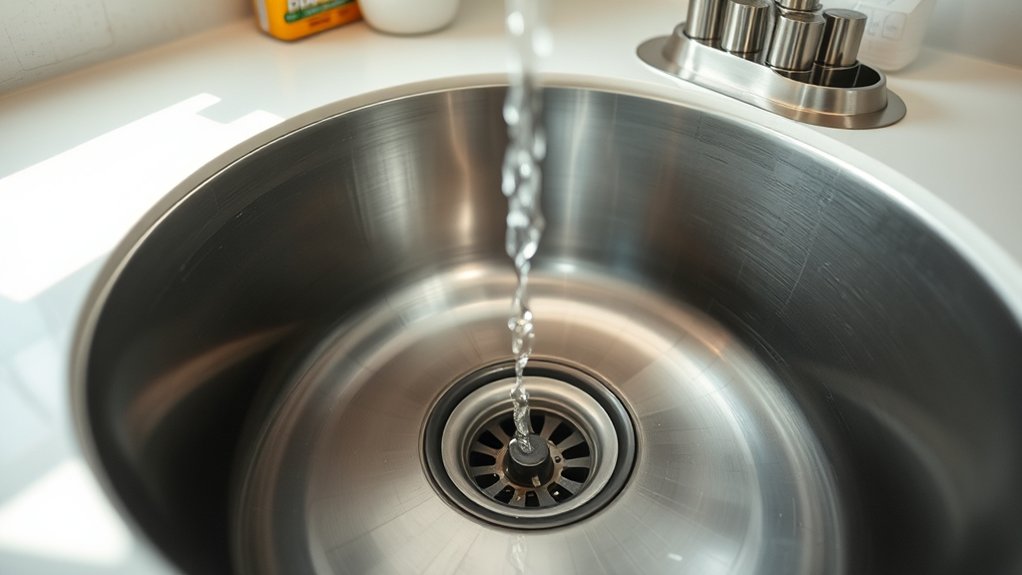
Although you might not notice it immediately, a clogged kitchen drain often reveals itself through slow draining water or unpleasant odors. When you see water pooling around the sink or draining sluggishly, it’s a clear sign of a blockage.
You’ll also want to pay attention to any persistent drain odor. That unpleasant smell usually means food particles and grease have built up inside the pipes, causing bacteria to grow. If you ignore these signs, water backup can worsen, leading to more serious plumbing issues.
You might even notice gurgling sounds when water tries to pass through the clog. These symptoms tell you it’s time to act before the problem gets out of hand. Catching the issue early helps you avoid costly repairs and keeps your kitchen running smoothly.
Get Your Tools Ready for Cleaning
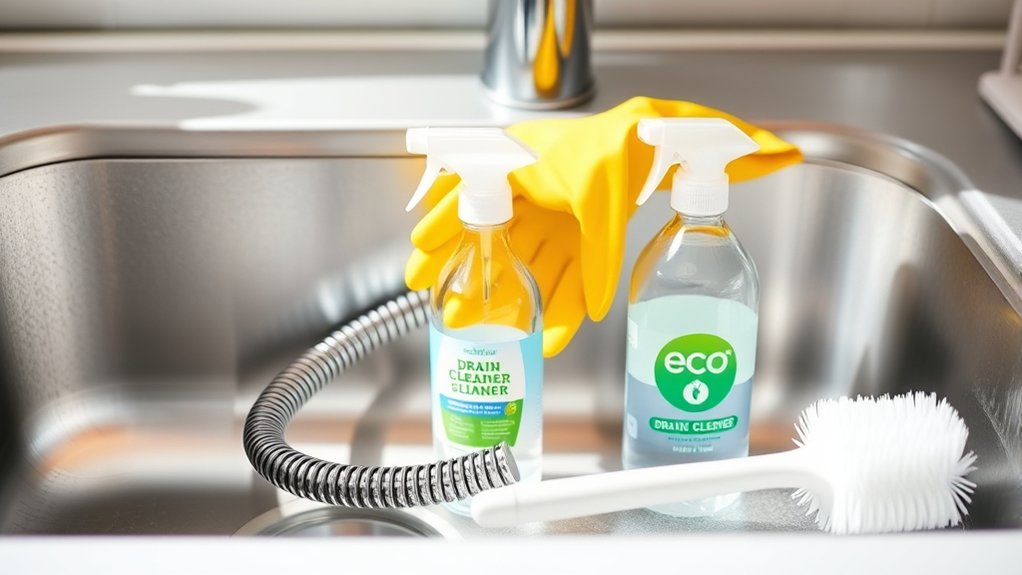
Before you start cleaning, gather the right tools to make the job easier and more effective. You’ll need a pair of rubber gloves, a bucket, a plumber’s snake or drain auger, a screwdriver, and a scrub brush. Having everything within reach saves time and prevents interruptions during cleaning.
Make certain your tools are in good shape. Check for any damage or rust, especially on metal parts, since poor tool maintenance can hinder your work or cause injury. If your gloves have holes or your scrub brush is worn out, replace them before you begin.
Don’t forget safety precautions. Wear gloves to protect your skin from harsh chemicals and dirty water. If you use any chemical cleaners, ensure the area is well-ventilated to avoid inhaling fumes. Keeping your workspace organized and using tools properly will help you clean your kitchen drain safely and efficiently.
Remove Visible Debris and Food Buildup by Hand
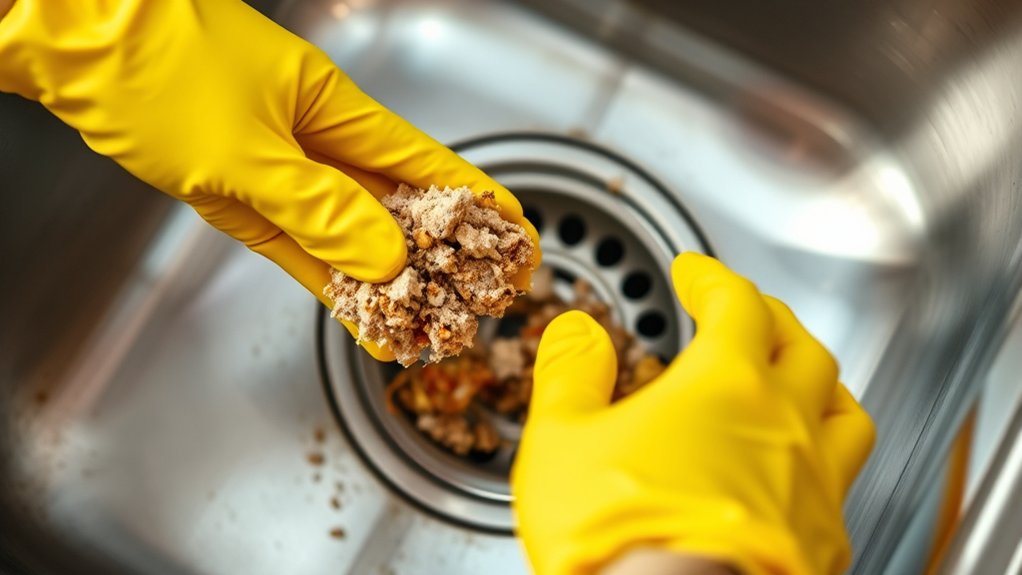
You’ll often find common blockages like food scraps, grease, and hair near the drain opening. So, start by putting on gloves to protect your hands. Then, gently remove any visible buildup. Taking your time and using safe techniques will help prevent pushing debris further down the pipe.
Identify Common Drain Blockages
When tackling a clogged kitchen drain, start by removing any visible debris and food buildup by hand. These blockages are often the main clog causes and can quickly lead to slow drainage or unpleasant odors. These are common drain symptoms.
You might notice water pooling around the sink or gurgling sounds when water drains. Besides food scraps, grease and soap scum often accumulate, creating stubborn clogs. Hair and small particles can also contribute.
Identifying these typical blockages early helps prevent more severe plumbing issues. By clearing out what you can see and reach, you address the root cause of many drainage problems.
This initial step sets the stage for deeper cleaning if needed, ensuring your kitchen drain flows smoothly again.
Safe Hand Removal Techniques
Clearing out visible debris and food buildup by hand can make a big difference in improving your kitchen drain’s flow. To do this safely, you need to prioritize hand safety and choose the right tools. Here’s how to proceed:
- Wear sturdy gloves to protect your hands from sharp objects and bacteria.
- Use a flashlight and a pair of needle-nose pliers or tweezers for effective tool selection to reach and grab stubborn debris without risking injury.
- Remove debris slowly, checking for any hidden sharp items or slippery buildup to avoid accidental cuts or slips.
Clear Stubborn Clogs With a Plunger or Drain Snake
Although some clogs can be fixed with simple methods, stubborn blockages often require a plunger or drain snake to get your kitchen drain flowing smoothly again. Start by using effective plunger techniques: make sure there’s enough water in the sink to cover the plunger’s cup, then create a tight seal over the drain.
Push and pull vigorously without breaking the seal to dislodge the clog. If plunging doesn’t work, it’s time to try drain snake usage. Insert the snake into the drain slowly and rotate its handle clockwise to break up or hook onto the blockage.
Once you feel resistance lessen, carefully pull the snake out, removing any debris caught on it. Repeat as needed until water flows freely. Both tools are simple but powerful, so using them correctly can save you time and prevent the need for harsh chemicals or costly plumber visits.
Use Natural Cleaners to Break Down Grease
Since grease buildup can seriously slow your kitchen drain, you’ll want to tackle it with natural cleaners that break down oils without harsh chemicals. Using natural cleaners is not only safer for your pipes but also better for the environment.
These cleaners effectively promote grease breakdown, preventing future clogs.
Here are three natural options to try:
- Baking Soda and Vinegar: Pour half a cup of baking soda followed by half a cup of vinegar down the drain. Let it fizz for 15 minutes to break down grease naturally.
- Lemon Juice: The acidity in lemon juice helps dissolve grease while leaving a fresh scent.
- Salt and Hot Water (let cool first): Salt scrubs the inside of pipes, assisting in grease breakdown when combined with natural heat.
Using these natural cleaners regularly keeps your drain clear and odor-free without relying on harsh chemicals.
Flush Your Drain With Hot Water to Remove Residue
You can flush your kitchen drain with hot water to help clear away leftover grease and soap buildup. Just pour boiling water slowly down the drain in stages. This way, it has time to break down the residue effectively.
Doing this is a simple step that keeps your pipes flowing smoothly and helps prevent clogs from forming. Give it a try next time you want to freshen up your drain!
Benefits of Hot Water
Flushing your drain with hot water offers several key benefits that help keep it clear and odor-free. Using the right water temperature plays an essential role in effective plumbing maintenance. Here’s why hot water is your drain’s best friend:
- Dissolves Grease and Residue: Hot water melts fats and oils that cold water can’t, preventing buildup that causes clogs.
- Disinfects the Drain: High water temperature kills bacteria and germs, reducing unpleasant smells and promoting hygiene.
- Improves Drain Flow: By loosening debris and flushing it away, hot water helps maintain smooth drainage and reduces plumbing issues.
Incorporating hot water into your routine is a simple, effective way to protect your pipes and keep your kitchen running smoothly.
How to Flush Properly
How exactly should you flush your kitchen drain with hot water to remove residue effectively? For proper flushing, boil water and pour it slowly down the drain in stages. This practice helps dissolve grease buildup and flush out debris, which is vital for good drain maintenance. Avoid pouring water too fast because it can cause blockages further down.
Here’s a quick guide to proper flushing:
| Step | Action | Purpose |
|---|---|---|
| 1 | Boil water | Heat breaks down grease |
| 2 | Pour slowly | Prevents sudden clogs |
| 3 | Repeat 2-3 times | Ensures thorough cleaning |
| 4 | Finish with cold water | Clears loosened residue |
Following these steps regularly supports your drain’s longevity and keeps it flowing smoothly.
Simple Tips to Keep Your Kitchen Drain Clear
Although kitchen drains often handle a steady flow of water and debris, they can still clog if not cared for properly. To keep your kitchen drain clear, focus on good kitchen organization and regular plumbing maintenance. By staying proactive, you’ll avoid costly blockages and unpleasant odors.
Here are three simple tips you can follow:
- Dispose of Grease Properly: Avoid pouring cooking oil or grease down the drain. Instead, collect it in a container and throw it in the trash to prevent buildup.
- Use Drain Strainers: Place strainers over your sink drains to catch food scraps and debris, minimizing what goes down the pipe.
- Flush with Hot Water Weekly: Run hot water through your drain regularly to help dissolve minor grease and soap residue.
Frequently Asked Questions
Can Chemical Drain Cleaners Damage My Pipes?
Yes, chemical drain cleaners can damage your pipes. The strong chemical reactions they cause can eat away at your pipes over time, leading to pipe corrosion.
If you use these cleaners frequently, you’ll increase the risk of weakening your plumbing system, especially if your pipes are old or made of metal. To protect your pipes, consider safer alternatives or use chemical cleaners sparingly and follow the instructions carefully.
How Often Should I Deep Clean My Kitchen Drain?
You might think deep cleaning your kitchen drain takes too much time, but it’s essential for proper drain maintenance. Aim to deep clean every three to six months to prevent buildup and odors.
If you cook a lot or notice slow drainage, increase the cleaning frequency. Regular attention keeps your pipes clear and helps avoid costly repairs, making your kitchen run smoothly without the hassle of tough clogs.
Are There Any Health Risks From a Clogged Kitchen Drain?
Yes, clogged kitchen drains can pose health hazards because they create an ideal environment for bacterial growth. When food particles and grease get trapped, bacteria multiply rapidly. This can lead to unpleasant odors and contamination.
You risk exposure to harmful germs that can cause illness if you don’t address the clog promptly. Regularly clearing your drain helps prevent these health issues and keeps your kitchen safe and hygienic.
Can a Garbage Disposal Cause Drain Clogs?
Yes, your garbage disposal can cause drain clogs if you’re not careful. Putting fibrous, starchy, or hard items down it can create buildup that slows water flow and leads to drain clogs.
You’ll want to avoid things like coffee grounds, grease, and large food scraps. Regularly running cold water while using the garbage disposal helps flush debris through, reducing the risk of future drain clogs and keeping your kitchen drain flowing smoothly.
What Should I Do if My Drain Smells Bad After Cleaning?
If your drain smells bad after cleaning, don’t worry. You should pour a cup of baking soda down the drain, followed by a cup of vinegar. Let it fizz for 10-15 minutes, then flush with hot water.
This combo helps neutralize drain odors and breaks down leftover grime. Also, check for trapped food or debris causing the smell, and clean the drain stopper regularly to keep odors at bay.
Conclusion
Now that you know how to tackle kitchen drain clogs step by step, why let a slow drain disrupt your day? With just a few tools and natural cleaners, you can keep your drain flowing smoothly.
Remember, regular maintenance prevents stubborn blockages and unpleasant odors. So don’t wait for a major clog. Take action now and enjoy a clean, hassle-free kitchen drain every time. Your sink will thank you!