What Is the Standard High for a Kitchen Counter?
Finding the perfect kitchen counter height can feel like a tricky puzzle. You want a space that’s comfortable for cooking and prepping but also easy on your back and wrists. If you’ve ever struggled with counters that felt too low or too high, you’re not alone. Many people face this challenge when designing or remodeling their kitchens.
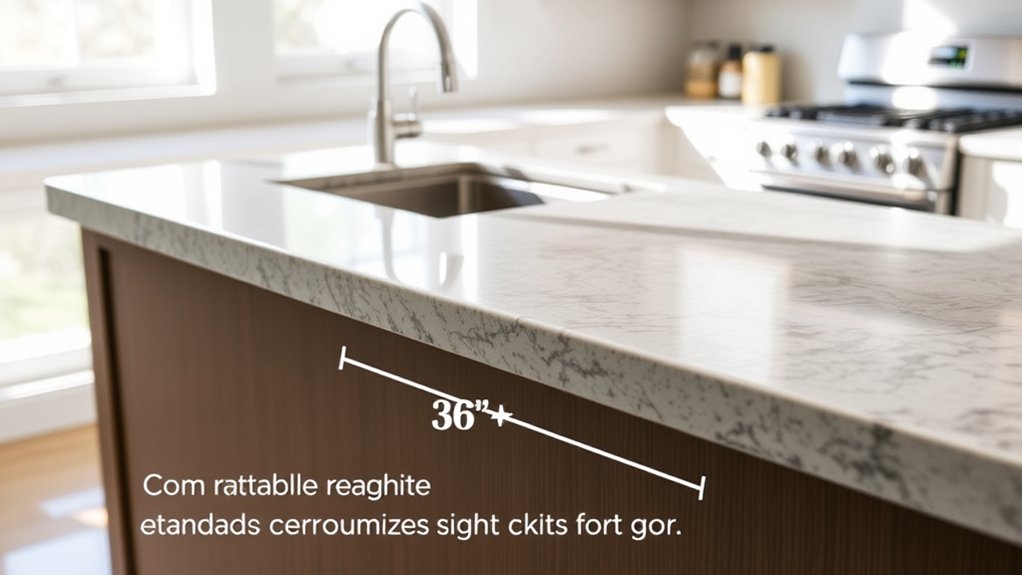
You’ll want your kitchen counter height to be about 36 inches. This standard height fits most users comfortably and works well for prepping, cooking, and cleaning tasks. It helps reduce strain on your back and wrists while providing a practical workspace.
If you’re taller or shorter, you might adjust it slightly for better comfort and safety. Understanding how height and task needs affect your choice can make your kitchen more ergonomic and inviting.
Keep exploring to find the perfect fit for your space.
Key Takeaways
- The standard kitchen counter height is typically 36 inches from the floor. This height is ergonomic for food preparation and dishwashing.
- Counter heights can vary. For example, 42 inches is common for bar seating, while contemporary low counters range from 30 to 34 inches.
- Measuring from the floor to your elbows bent at 90 degrees helps you find the ideal counter height.
- User height influences counter height choice. People under 5’4″ often prefer 34 to 35 inches, while those over 5’10” go for 37 to 39 inches.
- Standard height counters often pair with granite or quartz because these materials offer durability and aesthetic appeal.
What Is the Standard Height for a Kitchen Counter?

Although kitchen counters come in various styles and materials, their height generally follows a standard measurement to guarantee comfort and functionality. Most kitchen counters are set at about 36 inches from the floor, a height that works well for most people when preparing food or washing dishes.
Kitchen counters typically stand at 36 inches, ensuring comfort and functionality for everyday tasks.
This standard height fits seamlessly with various countertop materials, whether you prefer granite, quartz, or laminate, ensuring your workspace remains ergonomic and practical.
When selecting kitchen decor styles, keeping the countertop height consistent allows you to focus on aesthetics without sacrificing usability. Whether your kitchen features a modern minimalistic look or a traditional farmhouse vibe, the 36-inch counter height serves as a reliable baseline.
Sticking to this standard means you won’t have to adjust appliances or cabinetry, making renovation or design updates smoother. So, while your countertop materials and decor style define your kitchen’s personality, the standard height keeps everything comfortable and efficient.
How Your Height Affects the Ideal Kitchen Counter Height
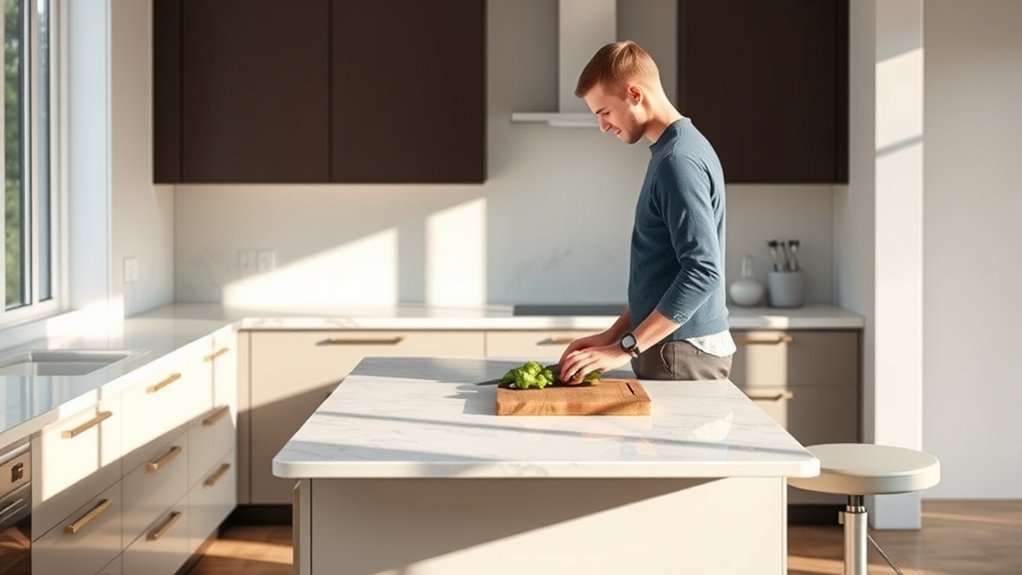
Because everyone’s height varies, the ideal kitchen counter height should adapt to your specific needs to maximize comfort and reduce strain. If you’re taller or shorter than average, customizing the counter height prevents discomfort during cooking and prep work.
You can also use counter height accessories, like adjustable stools or risers, to fine-tune your space without major renovations. Plus, choosing the right height complements kitchen counter aesthetics, maintaining a sleek and functional look.
Here’s a quick guide to help you gauge the best counter height based on your height:
| Your Height (in) | Recommended Counter Height (in) | Suggested Counter Height Accessories |
|---|---|---|
| Under 5’4″ | 34 – 35 | Step stools, lower cutting boards |
| 5’4″ to 5’10” | 36 | Standard stools, ergonomic mats |
| Over 5’10” | 37 – 39 | Adjustable stools, elevated cutting boards |
Adjusting your counter height guarantees both comfort and style in your kitchen workspace.
Why Counter Height Matters for Comfort and Safety

You want your kitchen counter height to fit your body so you don’t end up feeling strained or uncomfortable while you’re cooking. It really makes a difference in how easy and pleasant your time in the kitchen can be.
When your counter is the right height, it helps reduce the risk of injuries like cuts or falls because everything stays stable and within easy reach. That way, you can focus on what you’re making without worrying about accidents.
Ergonomic Benefits Explained
When you spend time cooking or prepping meals, the height of your kitchen counter directly affects your comfort and safety. Choosing the right height guarantees you work efficiently without straining your back or wrists.
Here are three ergonomic benefits you’ll notice:
- Reduced fatigue: Proper counter height minimizes bending, so you won’t tire quickly during meal prep.
- Improved posture: Standing comfortably prevents slouching, protecting your spine and reducing discomfort.
- Enhanced precision: When you’re comfortable, your movements become more controlled, improving cutting or mixing accuracy.
Plus, selecting the right height complements countertop aesthetics and supports material durability. You avoid unnecessary wear or damage from awkward positioning.
Paying attention to these details makes your kitchen a safer, more enjoyable space.
Preventing Kitchen Injuries
Although kitchen tasks may seem straightforward, working at the wrong counter height can cause discomfort that increases your risk of injury. When your counters are too high or too low, you might strain your back, shoulders, or wrists without realizing it.
Proper kitchen ergonomics helps you maintain a natural posture, reducing fatigue and preventing accidents like slips or cuts. By choosing the right counter height, you improve cooking safety by making tasks easier and more controlled.
You’ll avoid overreaching or awkward bending that could lead to spills or burns. Paying attention to kitchen ergonomics ensures your workspace supports your body, keeping you comfortable and safe while you cook.
Ultimately, the right counter height protects your health and improves your overall cooking experience.
How Prep and Cooking Counter Heights Differ
Because prep work and cooking involve different tasks, their counter heights often vary to improve comfort and efficiency. When choosing counter height materials and designing your kitchen counter décor, it’s essential to take into account these differences to create a functional space.
Here’s why prep and cooking counters differ:
- Prep Counters: Usually set between 36 to 38 inches high, this height suits tasks like chopping and mixing, reducing strain on your back and wrists.
- Cooking Counters: Often slightly lower, around 34 to 36 inches, to make stirring pots and handling pans easier and safer.
- Material Impact: Durable surfaces like quartz or granite can handle heavy prep work, while heat-resistant materials near cooking zones protect your counters and improve décor.
When to Choose Adjustable or Custom Counter Heights
You’ll want adjustable or custom counter heights when you need a bit of flexibility or have specific tasks that call for different levels. It’s all about making your kitchen work better for you. These options really help improve ergonomics, so you can work more comfortably.
Plus, picking the right height can make a big difference—it reduces strain and helps you get things done more efficiently. So, if you spend a lot of time in the kitchen, it’s definitely worth considering.
Benefits Of Adjustable Heights
When you need a kitchen workspace that adapts to different tasks or users, adjustable-height counters offer unmatched flexibility. Counter height adjustments allow you to create an ergonomic kitchen design that reduces strain and boosts comfort.
Here are three key benefits:
- Personalized Comfort: You can easily change counter heights to fit your height or the task at hand, preventing back and wrist pain.
- Multi-user Friendly: Families or shared kitchens benefit since everyone can adjust the counters to their preferences.
- Versatility: Whether prepping, cooking, or serving, adjustable surfaces help you switch roles smoothly without compromising posture.
Choosing adjustable counters means investing in a kitchen that works with you, not against you, making cooking and cleanup more enjoyable and efficient.
Custom Heights For Tasks
Adjustable-height counters offer great flexibility, but certain kitchen tasks benefit from counters set at specific custom heights. For example, if you do a lot of baking, a slightly lower counter can make kneading dough easier and reduce strain.
Conversely, taller counters work well for tasks like chopping vegetables or plating meals, especially if you’re standing for long periods. When planning your kitchen design, consider how different countertop materials might affect the feasibility of custom heights. Heavy materials like stone may require sturdier support.
Custom heights also let you tailor workstations to your personal workflow, improving efficiency. By choosing the right height for each task, you guarantee your kitchen feels comfortable and functional without compromising style or durability.
Ergonomics And User Comfort
Although standard counter heights suit many kitchens, ergonomics and user comfort often call for adjustable or custom options. You’ll want to contemplate these factors when deciding:
- User Height Variations If multiple people use the kitchen, adjustable counters prevent strain by fitting everyone’s needs.
- Task-Specific Needs Baking, chopping, or prep work may require different heights to reduce fatigue and improve efficiency.
- Aesthetic Integration Custom heights can complement your decorative accents and color schemes, ensuring comfort without sacrificing style.
Choosing adjustable or custom counters lets you create a kitchen that feels tailored to you. This approach boosts usability while blending seamlessly with your design, making your kitchen as inviting as it is functional.
How to Measure Yourself for the Right Counter Height
To find the right counter height for your kitchen, you need to measure yourself accurately. Stand straight with your arms bent at a 90-degree angle, as if you’re preparing food. Then, measure the distance from the floor to your elbows.
Measure from floor to elbows with arms bent at 90 degrees for the perfect kitchen counter height.
This measurement guides the ideal counter height, making sure you’re comfortable and reducing strain while cooking.
Once you know your ideal height, think about how your counter will blend with the overall kitchen design. Decorative accessories can enhance the look and feel of your workspace, so consider their placement and size relative to your chosen height.
Also, pay attention to color coordination between your counters, cabinetry, and accessories to create a harmonious environment.
Common Kitchen Counter Heights for Different Styles
Knowing your ideal counter height sets the foundation for choosing the right style that fits your kitchen’s function and aesthetic. Different kitchen design trends incorporate varying counter heights, often influenced by the countertop materials you select. Here are three common styles to contemplate:
- Standard Height (36 inches): This height suits most kitchens, offering comfort for food prep and cooking. It works well with durable countertop materials like granite or quartz.
- Bar Height (42 inches): Popular in kitchens with breakfast bars or casual dining areas, this height pairs nicely with stools and materials like butcher block, adding warmth and style.
- Low Height (30-34 inches): Favored in contemporary or minimalist designs, this height can complement sleek materials such as concrete or stainless steel, providing a modern edge.
How to Choose Kitchen Counter Height for Special Needs
When you’re choosing a kitchen counter height for special needs, the first step is to think about your own mobility and what feels comfortable for you. It’s really important to keep ergonomic design in mind so that using the counter is easy and doesn’t cause any strain. You might also want to look into adjustable counters—they can be a great way to add flexibility and make sure the height works for different tasks or users.
Assessing Individual Mobility Needs
Although standard kitchen counters typically measure around 36 inches in height, you’ll want to adjust this dimension to fit individual mobility needs. Tailoring your kitchen counter height guarantees comfort and accessibility for everyone using the space.
Here’s how to assess your needs:
- Measure the user’s elbow height when standing or seated to find the most comfortable counter level.
- Consider incorporating adjustable countertops or sections to accommodate different users.
- Plan storage solutions and decorative accents within easy reach to improve functionality without compromising style.
Considering Ergonomic Design Principles
Since ergonomic design focuses on maximizing comfort and efficiency, you should prioritize how your kitchen counter height supports your body’s natural movements. Choose a height that reduces strain on your back and wrists, especially if you have special needs.
Consider how your posture changes when preparing food or washing dishes, then select a counter height that aligns with those motions. Don’t forget that kitchen decor and material selection play roles too. Opt for materials that are easy to maintain and complement your space while also suiting your functional needs.
For example, softer materials may reduce fatigue if you lean on the counter often. Balancing these factors ensures your kitchen is both beautiful and comfortable, tailored specifically to your ergonomic requirements.
Adjustable Counter Height Options
If you have special needs, choosing an adjustable counter height can make your kitchen much more accessible and comfortable. Adjustable counters let you customize your workspace, improving both functionality and style. Here’s how to choose the right one:
- Consider Your Mobility: Select a height that suits sitting or standing positions, ensuring easy reach without strain.
- Incorporate Storage Solutions: Adjustable counters with built-in storage keep essentials within reach and reduce clutter.
- Add Decorative Accents: Choose finishes and accents that blend with your kitchen’s design, making the space inviting while functional.
How to Test and Finalize Your Kitchen Counter Height
When you’re ready to finalize your kitchen counter height, it’s important to test how it feels during everyday tasks. Try chopping vegetables, washing dishes, and using small appliances to see if the height suits your comfort.
Don’t forget to contemplate the impact of countertop materials and the kitchen backsplash, as these elements affect your workspace’s overall feel and usability.
Use this simple table to evaluate your experience:
| Task | Counter Height Comfort (1-5) |
|---|---|
| Chopping & prep | |
| Washing dishes | |
| Using appliances |
Rate each task from 1 (too low/high) to 5 (just right). If any score is below 4, adjust your counter height accordingly. Testing multiple heights in your actual kitchen setup or using adjustable models can help you decide.
This way, you guarantee your kitchen counter is not only stylish but practical for daily use.
Tips for Maintaining Comfort With Your Kitchen Counter Height
After testing your kitchen counter height, keeping that comfort over time requires some thoughtful adjustments. You want your workspace to stay functional and inviting, so consider these tips:
Maintaining kitchen counter comfort takes thoughtful tweaks to keep your workspace both practical and welcoming.
- Choose Durable Materials: Opt for materials with high durability to withstand daily wear and tear. This will help maintain your counter’s integrity and comfort without frequent repairs.
- Regularly Update Decorative Finishes: Revitalizing decorative finishes like paint or sealants not only improves your kitchen’s look but also protects the surface. This keeps it smooth and comfortable for use.
- Add Ergonomic Accessories: Incorporate accessories such as anti-fatigue mats or adjustable stools. These support your posture and reduce strain, complementing the counter height perfectly.
Frequently Asked Questions
What Materials Are Best for Kitchen Countertops?
You’ll want materials like quartz, granite, or solid surface for your kitchen countertops because they offer excellent material durability. These options resist scratches and stains, making countertop maintenance easier for you.
If you prefer something budget-friendly, laminate works well but needs more care. Marble looks stunning but requires frequent sealing to keep it pristine.
Choosing the right material means you’ll enjoy a beautiful, long-lasting countertop with less hassle.
How Much Does Kitchen Counter Installation Cost?
You’re looking to drop a small fortune on kitchen counter installation. Expect anywhere from $1,500 to $5,000 because who doesn’t love paying for countertop maintenance and the latest countertop design trends?
You’ll shell out more for luxe materials, but hey, it’s your kitchen runway. Remember, the flashier the design, the higher the bill, and the more you’ll pay to keep it spotless and trendy. Choose wisely, or your wallet will scream!
What Is the Average Lifespan of Kitchen Countertops?
You can expect your kitchen countertops to last anywhere from 10 to 30 years, depending on durability factors like material type and how well you handle countertop maintenance. For example, granite and quartz tend to last longer with proper sealing and cleaning, while laminate might wear out sooner.
Can Kitchen Counters Be Recycled or Repurposed?
You’ll be interested to know that about 80% of kitchen countertop materials can be recycled or repurposed. When you choose sustainable countertop options like reclaimed wood or recycled glass, you’re not only easing countertop maintenance but also reducing waste.
Instead of tossing old counters, consider donating or transforming them into new surfaces or art pieces. This approach helps you maintain an eco-friendly kitchen while keeping your space stylish and functional.
What Are the Most Popular Countertop Colors and Patterns?
You’ll find that countertop color trends lean toward neutral shades like whites, grays, and soft beiges, which offer a timeless look. If you want to make a statement, bold blacks or deep blues are gaining popularity.
As for pattern options for countertops, you can choose from classic marble veining, subtle speckles, or even dramatic, swirling granite designs. These patterns help you personalize your kitchen’s style while staying on trend.
Conclusion
Your kitchen counter isn’t just a surface; it’s the heart of your culinary journey. Choosing the right height is like finding the perfect rhythm in a dance, ensuring comfort and ease with every move.
When your counters match your needs, cooking becomes a seamless flow instead of a struggle. So, trust your body’s cues and craft a kitchen space where every meal starts with balance and joy.
Your perfect height is waiting to uplift your everyday, and knowing the standard high for a kitchen counter can help you get there.