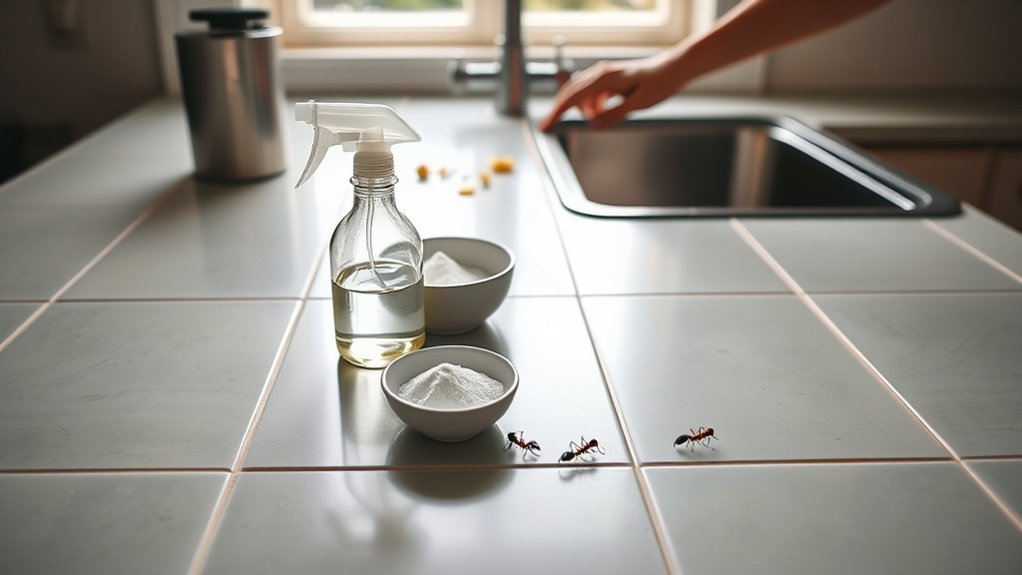
How to Get Rid of Ants in the Kitchen Step by Step
Dealing with ants invading your kitchen can be incredibly frustrating. You’re not alone—many people struggle with these tiny intruders disrupting their space and contaminating food. If you’ve been searching for effective ways to get rid of ants in the kitchen, you’re in the right place. Let’s dive into some practical solutions that can help you reclaim your kitchen from these persistent pests.
To get rid of ants in your kitchen, start by finding and sealing their entry points like cracks and gaps. Keep your kitchen clean by wiping surfaces, sweeping crumbs, and storing food in airtight containers. Fix leaks to cut off water, and use natural repellents or make homemade baits with sugar and borax.
If ants persist, apply commercial treatments carefully. Follow these steps, and you’ll soon uncover effective long-term tips and when to contemplate professional help.
Key Takeaways
- Identify and seal all ant entry points using caulk or weatherstripping to block cracks, gaps, and openings.
- Keep the kitchen clean by wiping surfaces, sweeping floors, promptly cleaning spills, and storing food in airtight containers.
- Use natural repellents like peppermint or lemon oil sprays. You can also place cinnamon or mint near entryways to disrupt ant trails.
- Set homemade sugar or protein baits with borax near trails and refresh them regularly to attract and eliminate ants.
- Monitor for persistent activity and seek professional pest control if infestations continue or nests are found inside walls.
Find Ant Entry Points In Your Kitchen
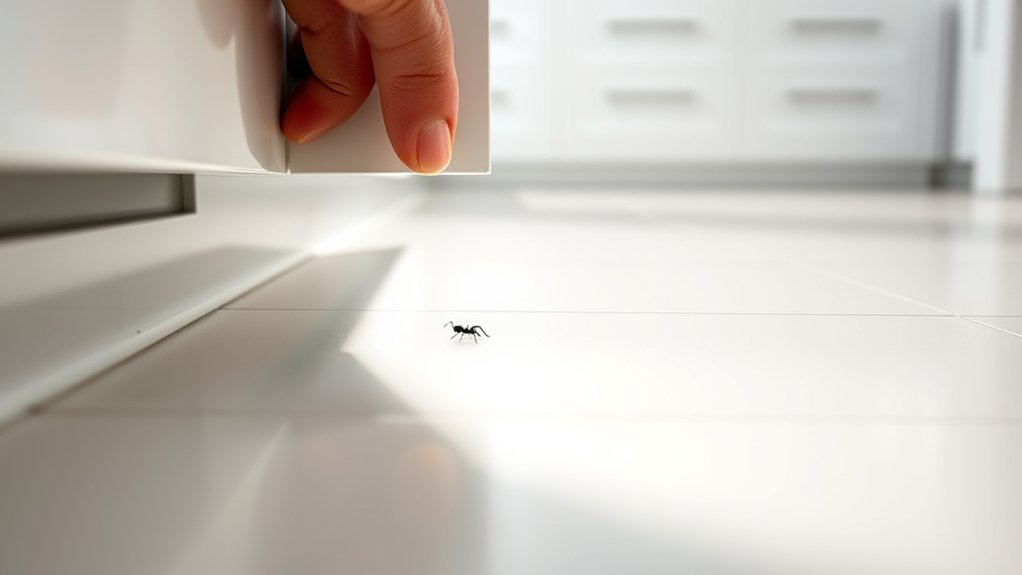
Before you can effectively eliminate ants, you need to find where they’re entering your kitchen. Start by observing ant migration patterns. Notice the trails they follow from outside to inside. This helps pinpoint entry points such as cracks, gaps in window frames, or openings around pipes.
Ant species identification is vital here because different species prefer different entryways. For example, carpenter ants often nest in wood and enter through wall voids. Sugar ants might come in through tiny cracks near food sources. Once you identify the species, you can better predict their migration routes and target their access points.
Use a flashlight and magnifying glass to inspect baseboards, door seals, and vents closely. Sealing these points will block their path and stop more ants from invading. You’ll be able to tackle the problem more efficiently by focusing on their exact entryways rather than random spots.
Clean Up Crumbs And Food Residue To Deter Ants
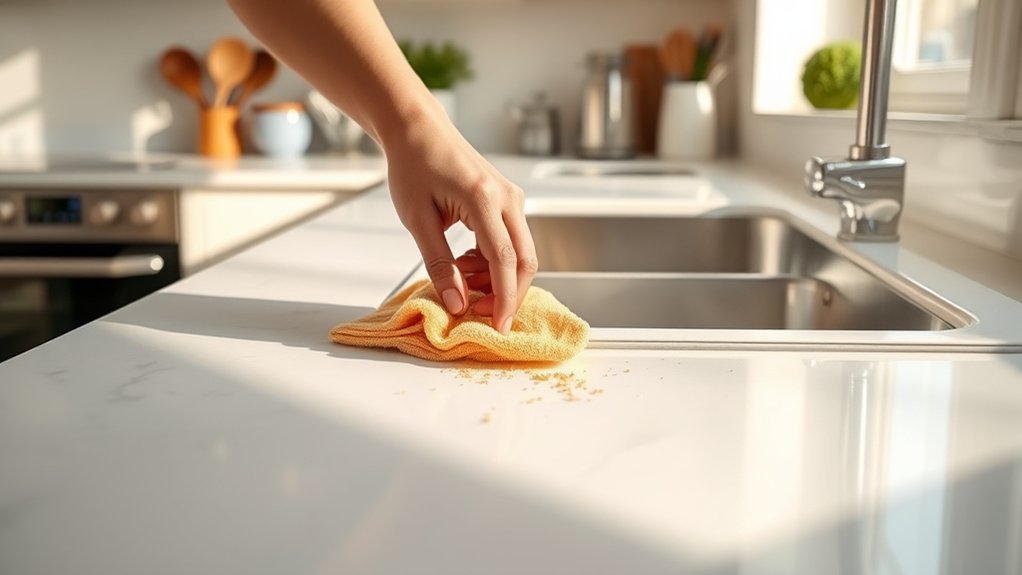
Since ants are attracted to food, keeping your kitchen spotless is key to deterring them. Understanding ant behavior helps you realize that even tiny crumbs or sticky residues act like signals guiding ants to your food sources. To break this cycle, focus on thorough cleaning and proper food storage.
Start by wiping down countertops and tables after every meal to remove crumbs. Sweep or vacuum floors regularly, especially under appliances. Clean sticky spills inside cabinets and pantry shelves. Store food in airtight containers to limit access.
Seal Up Entry Points To Stop Ants From Coming In
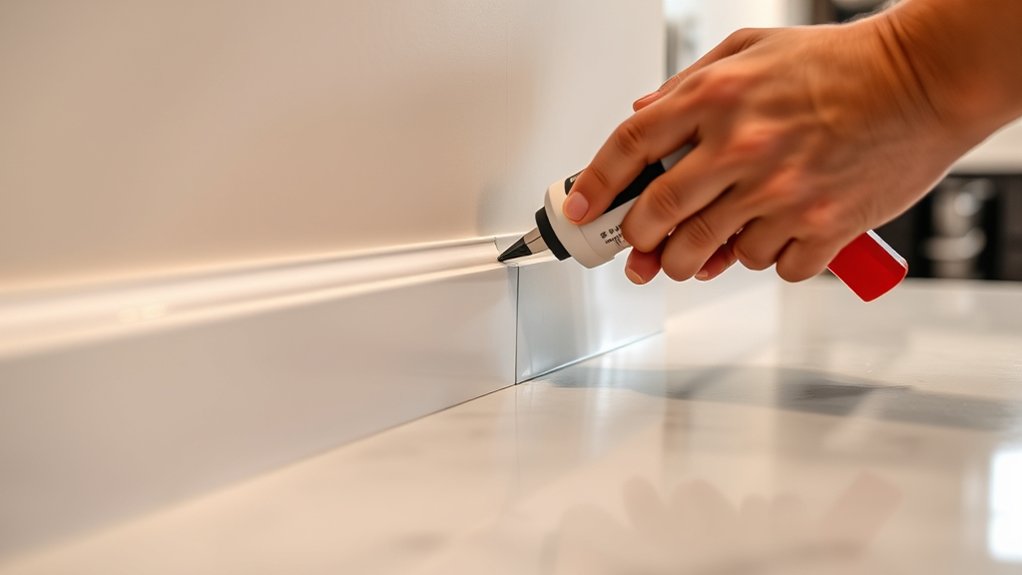
Although cleaning can reduce attractants, ants will keep coming if you don’t seal their entry points. Start by carefully observing ant trail patterns to identify where they enter your kitchen. These trails often lead directly to small cracks, gaps around windows, door frames, or holes in walls.
Once you spot these access points, seal them with caulk or weatherstripping to block their path. Pay special attention to areas near nesting locations, which may be hidden behind appliances or under cabinets.
Sealing these entry points not only stops ants from coming in but also disrupts their connection between food sources and nests. Remember, even tiny gaps can be an open invitation for ants, so be thorough.
Keep Kitchen Surfaces Dry To Remove Ants’ Water Source
If you want to keep ants at bay, you need to remove their water source by keeping your kitchen surfaces dry. Ant behavior heavily depends on access to water sources, so cutting off moisture can discourage them from invading. Focus on drying areas where water collects or lingers.
Make sure to wipe down countertops and sink edges after use. Also, fix any dripping faucets or pipes promptly. Avoid leaving wet sponges or dishcloths on counters. And keep the floor dry, especially near trash cans and pet bowls.
Inspect And Clean Regularly To Prevent Ant Returns
Keeping your kitchen surfaces dry helps cut off ants’ water supply, but staying vigilant with regular inspections and cleaning is just as important to stop them from coming back. Check under sinks, behind appliances, and around indoor plants where moisture or food crumbs can attract ants.
Wipe down counters daily and sweep floors to remove any tiny food particles. Use pest-proof containers to store pantry staples like sugar, flour, and pet food; these keep ants from accessing your supplies and make it easier to spot early signs of infestation.
Don’t forget to clean spills promptly and empty trash regularly. Inspect indoor plants for damp soil or fallen leaves that might harbor ants or other pests. By maintaining a clean, dry, and well-sealed kitchen environment, you minimize the chances that ants will return, saving you time and effort in the long run.
Regular upkeep is your best defense against persistent ant problems.
Repel Ants Naturally And Safely
You can keep ants away without harsh chemicals by using essential oils like peppermint or tea tree. These oils have strong scents that ants really don’t like.
Also, simple natural ingredients like vinegar or lemon juice work wonders. Just create a barrier with them, and ants usually won’t cross it.
Why not try making your own homemade deterrents? It’s a safe and natural way to protect your kitchen without any worry.
Essential Oils For Repelling
Why rely on harsh chemicals when you can repel ants naturally with essential oils? These potent ant repellents offer a safe, eco-friendly way to keep your kitchen ant-free.
You can easily create your own spray by mixing essential oils with water and a bit of vinegar. Try these oils to see what works best:
- Peppermint oil: Its strong scent disrupts ants’ trails.
- Tea tree oil: Known for antibacterial properties, it also repels ants.
- Lemon oil: The citrus smell confuses and deters ants.
- Eucalyptus oil: Powerful and refreshing, it keeps ants away effectively.
Simply spray around entry points, countertops, and pantry shelves. Essential oils provide a natural barrier without harmful residues, so you can protect your home and family safely.
Natural Barrier Ingredients
Besides essential oils, several natural ingredients create effective barriers that ants won’t cross. You can use herbal remedies like cinnamon, cloves, and mint leaves to form a protective line around your kitchen entry points. These ingredients disrupt ants’ scent trails, making your space less inviting.
Pest resistant plants such as rosemary and lavender not only add a fresh aroma but also naturally deter ants when placed near windows or doorways. Incorporating these plants into your kitchen environment creates a subtle but powerful defense without harmful chemicals.
Homemade Ant Deterrents
When ants invade your kitchen, homemade deterrents offer a natural and safe way to drive them away without relying on harsh chemicals. Understanding ant behavior helps you target their pathways and discourage them from exploring your food storage areas.
You can create effective barriers using simple household ingredients. Try these methods:
- Sprinkle cinnamon or cayenne pepper near entry points to disrupt their scent trails.
- Use vinegar mixed with water in a spray bottle to wipe down countertops and shelves.
- Place lemon juice along windowsills and doorways to repel ants.
- Set out small bowls of coffee grounds around the kitchen to confuse ants and deter them from foraging.
Make Homemade Ant Baits To Kill Kitchen Ant Colonies
Although store-bought ant baits can be effective, making your own homemade ant baits lets you control the ingredients and target specific ant species in your kitchen. You can choose sweet or protein-based ant bait recipes depending on the ants you’re dealing with.
For sugar-loving ants, mix borax with sugar and water; for protein-preferring ants, try borax with peanut butter. Once you prepare your bait, focus on DIY trap placement. Place small amounts of bait near ant trails, entry points, and hidden corners where ants gather.
Use shallow containers or bottle caps to hold the bait, preventing pets or children from accessing it. Check and refresh the bait every few days to maintain its effectiveness.
Use Commercial Sprays And Powders To Fight Ants
If you prefer a quicker solution, commercial sprays and powders offer powerful ways to eliminate ants in your kitchen. These products target ant behavior by disrupting their trails and killing workers on contact. You’ll find a variety of commercial products designed for different ant species and infestation levels. When using sprays and powders, apply them cautiously to avoid contaminating food or surfaces.
Here’s how to use these products effectively:
- Spray directly on ant trails, entry points, and nests to break their scent paths.
- Apply powders in cracks, crevices, and behind appliances where ants hide.
- Use baits with commercial insecticides that ants carry back to the colony.
- Follow the product instructions carefully for safe and effective results.
How To Fix Persistent Ant Problems That Won’t Go Away?
If ants keep coming back, the first thing you should do is find out where they’re getting in and seal those entry points. You can also try using natural repellents like vinegar or lemon juice to keep them away. And don’t forget to keep your kitchen super clean—no crumbs or spills—because that’s what usually attracts ants in the first place.
Identify Ant Entry Points
Where exactly are ants sneaking into your kitchen? Understanding ant behavior helps you spot their entry points more effectively.
Ants establish their habitat near food and moisture, so they’re drawn to cracks and gaps leading inside. Look closely around your kitchen for common access spots:
- Cracks in window sills and door frames
- Gaps around plumbing under the sink
- Small holes or crevices in walls and baseboards
- Spaces between countertops and cabinets
Use Effective Natural Repellents
Once you’ve pinpointed where ants enter your kitchen, the next step is to tackle the problem with natural repellents that keep them at bay without harmful chemicals. You can use natural repellents like vinegar, lemon juice, or essential oils such as peppermint and tea tree oil, which ants find unpleasant.
Spray these solutions around entry points and common ant trails to disrupt their scent paths. Moreover, consider placing ant deterrent plants like mint, basil, or rosemary near windows and doorways. These plants naturally repel ants and add a fresh aroma to your kitchen.
Using natural repellents and ant deterrent plants provides a safe, eco-friendly way to manage persistent ant problems, helping you maintain a pest-free kitchen without resorting to toxic chemicals.
Maintain Cleanliness Consistently
Although natural repellents help, you won’t solve persistent ant problems without keeping your kitchen spotless. Ant behavior is heavily influenced by food availability and scent trails, so impeccable kitchen hygiene is key. You need to remove anything that attracts ants and disrupts their paths.
Focus on these cleaning habits:
- Wipe countertops and tables immediately after meals
- Store food in airtight containers to limit access
- Sweep and mop floors daily to eliminate crumbs and spills
- Empty trash regularly and clean bins to avoid lingering odors
When To Call Professional Pest Control For Ants
If you’ve tried DIY methods and the ants keep coming back, it’s time to think about calling professional pest control. Understanding ant behavior and nesting habits can help you decide when to escalate the issue. Professionals can identify hidden nests and use targeted treatments that DIY solutions often miss.
Here’s when you should call an expert:
| Situation | Reason |
|---|---|
| Persistent ant trails | Indicates established nesting nearby |
| Multiple ant species | Complex infestation requiring expertise |
| Visible nests inside walls | Hard to reach and treat effectively |
| Allergic family members | Safety concerns demand professional help |
If ants invade repeatedly despite your efforts, professionals can pinpoint the source and apply safe, effective solutions. Don’t let ant problems persist. Act promptly to protect your kitchen and peace of mind.
Frequently Asked Questions
Are Ants Harmful to Humans or Pets?
Ants generally aren’t harmful to humans or pets, but you shouldn’t ignore them completely. Some people experience ants and allergies, especially if they’re sensitive to bites or ant secretions.
You’ll also want to watch out for pet risks from ant bites, as stings can cause irritation or allergic reactions in your animal companions. So, while ants aren’t usually dangerous, it’s smart to keep them under control to avoid any problems.
Why Do Ants Keep Returning Despite Cleaning?
Ants keep returning despite cleaning because their ant communication is incredibly efficient. When one ant finds food, it leaves a pheromone trail for others to follow.
Plus, their ant nesting habits mean colonies live nearby, often hidden inside walls or under floors. Even if you clean well, if the nest isn’t removed or sealed off, ants will keep coming back, guided by those chemical signals and the colony’s survival instincts.
Can Ants Damage Kitchen Appliances or Cabinets?
Imagine your kitchen cabinet wood warping after ants nest inside it. That’s a real risk. Yes, ants can damage kitchen appliances or cabinets, especially carpenter ants that burrow into wood.
Understanding ant behavior helps you spot early signs and act fast. You’ll want to focus on ant prevention by sealing cracks and removing food sources.
If you ignore them, their colonies can expand, causing costly damage over time.
Do Certain Foods Attract Ants More Than Others?
Yes, certain foods attract ants more than others because of their food preferences and attraction factors. You’ll notice ants are especially drawn to sweet items like sugar, honey, and syrup.
They also love greasy or protein-rich foods like meat and cheese. You should keep these foods sealed and clean up crumbs promptly since these attraction factors make your kitchen a hotspot for ants looking for easy meals.
How Long Does It Take to Eliminate an Ant Colony?
It usually takes a few weeks to a couple of months to eliminate an ant colony because ant behavior and colony reproduction keep the population growing. You’ll need to target the queen and disrupt their cycle to stop new ants from hatching.
Since workers constantly forage and bring food back, using baits that trick them is effective. Stay consistent; premature cleanup lets the colony rebound quickly due to their rapid reproduction.
Conclusion
Getting rid of ants in your kitchen is like closing the gates to an unwelcome army. By finding entry points, cleaning up crumbs, sealing cracks, and keeping surfaces dry, you cut off their supplies and access.
Regular inspection and homemade baits can strengthen your defense, while commercial treatments tackle stubborn invaders. If ants keep marching in, don’t hesitate to call a professional.
With these steps, you’ll reclaim your kitchen and keep it ant-free for good by getting rid of ants in the kitchen.