5 Easy Tips to Organize Kitchen Cabinets
If you’ve ever opened your kitchen cabinets only to be met with chaos, you’re not alone. Many people struggle with keeping their cabinets organized, making it hard to find what they need when cooking or cleaning. The desire for a neat, functional kitchen space is real, and luckily, there are simple solutions that can make a big difference.
Start by fully clearing your cabinets and sorting items into categories like pots, utensils, and canned goods. Then wipe down shelves for a fresh start. Arrange what you use daily within easy reach and store less-used items higher or farther back. Use smart storage like drawer inserts or magnetic spice racks to maximize space. Label everything clearly for quick access and set a routine to maintain order.
Keep going to uncover handy storage tricks and organization ideas that work best for you.
Key Takeaways
- Empty cabinets completely and sort items into categories like pots, pans, and utensils for better organization.
- Store frequently used items within easy reach and place less-used items higher or farther away.
- Use drawer inserts, magnetic strips, and pull-out trays to maximize storage space and make things more accessible.
- Label cabinet doors or drawers clearly to quickly identify contents and make restocking easier.
- Keep your cabinets organized by regularly cleaning, rotating items seasonally, and donating things you no longer use.
Clearing and Categorizing Kitchen Cabinets
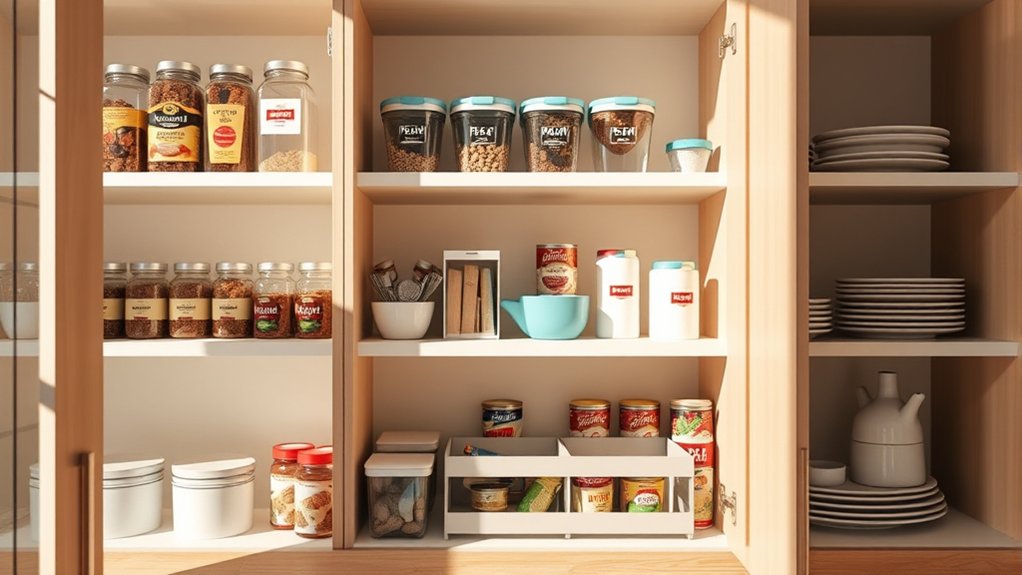
Before you reorganize, clear out your kitchen cabinets completely. This pantry cleanup step helps you see exactly what you have, making it easier to decide what to keep or toss. Empty every shelf and drawer so you can work with a blank slate.
As you remove items, sort them into categories: pots, pans, canned goods, and especially utensils. Utensil sorting is key to avoiding clutter and making sure everything has a designated spot later on.
Group similar items together and check for duplicates or things you rarely use. Don’t forget to wipe down shelves and drawers during this process to keep your cabinets fresh and clean.
This thorough clearing and categorizing phase sets the foundation for an organized kitchen, making the next steps much smoother and more efficient. Once you’ve completed this, you’ll be ready to arrange your kitchen cabinet items effectively.
Arrange Kitchen Cabinet Items by Frequency and Function
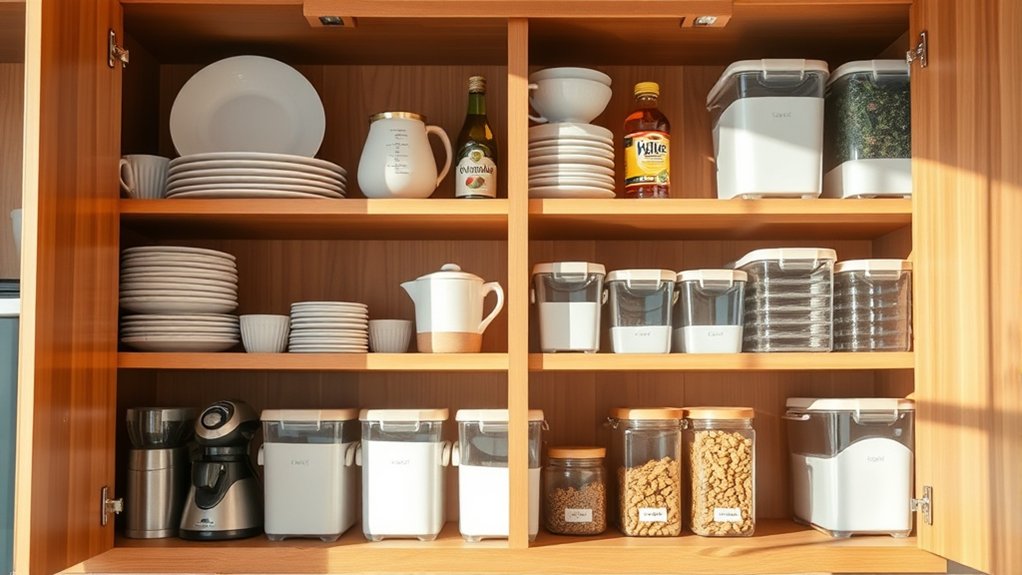
Once you’ve cleared and categorized your kitchen items, start arranging them based on how often you use them and their function. Place frequently used items like everyday dishes and utensils within easy reach.
Use decorative storage for less-used but visually appealing items to keep your space tidy and stylish. For appliance placement, keep daily-use gadgets near prep areas, while seasonal appliances can be stored higher or further away.
Here’s a simple way to organize:
| Frequency | Function |
|---|---|
| Daily use | Cooking utensils |
| Weekly use | Baking tools |
| Occasional use | Decorative storage items |
| Rare use | Seasonal appliances |
Smart Storage Ideas to Maximize Kitchen Cabinet Space
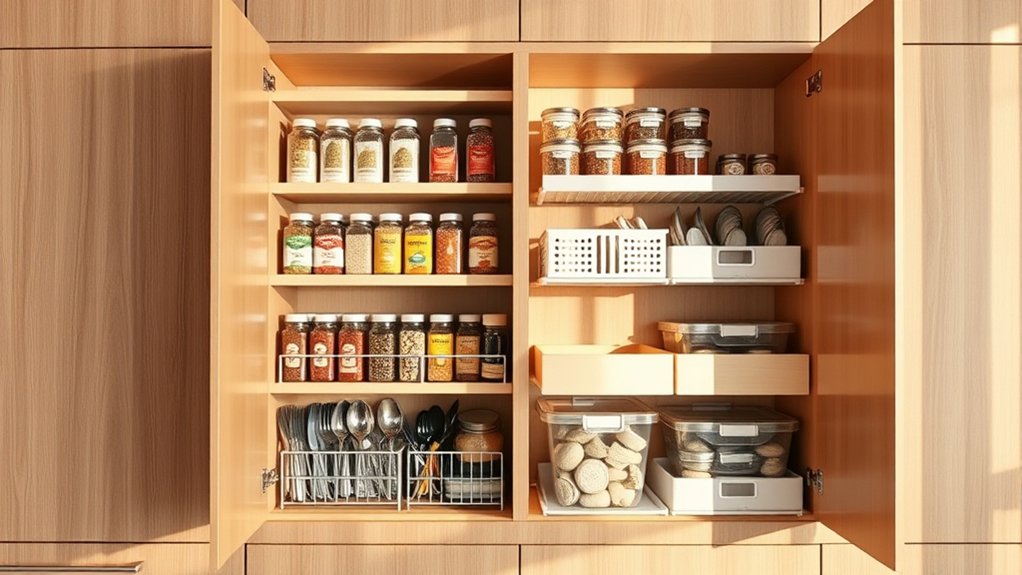
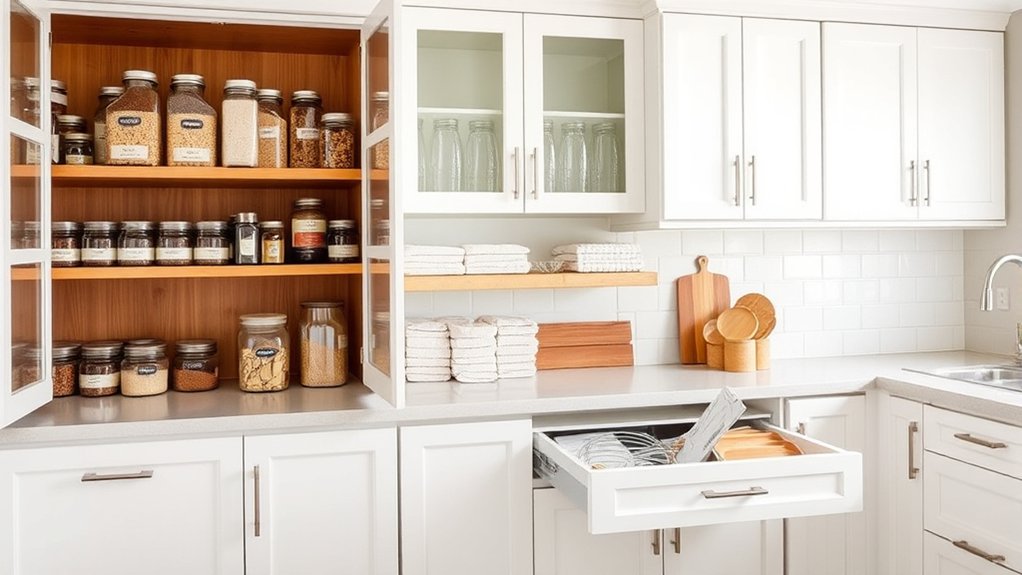
Although kitchen cabinets can quickly become cluttered, you can maximize their space with a few smart storage solutions. Start by incorporating innovative utensil storage, like drawer inserts or hanging racks, to keep your tools accessible without taking up counter space.
Next, try creative spice rack solutions such as magnetic strips inside cabinet doors or tiered shelves to organize spices neatly and save room. Finally, consider these three ideas to make the most of your cabinet space:
- Use adjustable shelves to customize vertical space for different items.
- Add pull-out baskets or trays to reach items at the back effortlessly.
- Install hooks or tension rods for hanging mugs or lids.
These strategies help you keep everything organized, easily reachable, and free from clutter. By thinking creatively and using these smart storage ideas, you’ll enjoy a more functional and spacious kitchen cabinet setup.
Label Your Kitchen Cabinets for Easy Access
When you label your kitchen cabinets, you make finding items quick and hassle-free. Kitchen labeling helps you and everyone in your household know exactly where everything belongs, cutting down on the time spent searching.
Start by choosing clear, easy-to-read cabinet tags that suit your kitchen’s style. You can use simple printed labels, chalkboard stickers, or even customized tags for a personal touch.
Choose clear, easy-to-read cabinet tags that match your kitchen’s style for a personalized and organized look.
Place cabinet tags on the outside of each door or drawer, indicating the contents inside like “Spices,” “Baking Supplies,” or “Cups.” This visual guide keeps your kitchen organized and helps prevent clutter from creeping back in.
Plus, kitchen labeling makes restocking pantry items easier because you’ll instantly spot when supplies are running low. By investing a little effort in labeling, you create a streamlined, efficient cooking space where everything is right where you need it.
Keep Your Kitchen Cabinets Organized Over Time
How do you maintain order in your kitchen cabinets long after the initial organization? Staying consistent with simple habits is key. Adding decorating tips can also make your cabinets inviting and encourage you to keep them tidy.
Here are three practical ways to keep your kitchen cabinets organized over time:
- Set a weekly cleaning routine. Dedicate a few minutes to wipe shelves and reorganize misplaced items. This helps prevent clutter buildup.
- Use clear containers and labels. They help you quickly find what you need and put things back in their spots.
- Rotate items seasonally. Regularly assess what you use and store or donate extras to avoid overcrowding.
Frequently Asked Questions
What Are the Best Materials for Kitchen Cabinet Shelves?
When choosing cabinet shelf types, you’ll want to go for durable shelving materials like plywood, MDF, or solid wood. Plywood stands out because it resists warping and holds weight well, while MDF offers a smooth finish and affordability.
Solid wood looks great and lasts long, but it can be pricier. Avoid particleboard if you want shelves that won’t sag or swell over time. Picking the right material keeps your shelves sturdy and reliable.
How Do I Clean Mold or Mildew Inside Kitchen Cabinets?
To clean mold or mildew inside kitchen cabinets, start by removing all items. Use a mixture of white vinegar and water or a baking soda solution to scrub affected areas. These mildew removal techniques help kill spores and eliminate odors.
After cleaning, dry the cabinets thoroughly to prevent mold growth. For mold prevention, keep cabinets ventilated and avoid moisture buildup by fixing leaks and wiping spills quickly.
Regular checks help you stay ahead of mold issues.
Can I Install Kitchen Cabinet Organizers Myself?
Yes, you can install kitchen cabinet organizers yourself, but it takes some planning. Installing cabinet dividers and choosing drawer inserts need careful measuring to fit your space perfectly.
While DIY is doable, consider whether you have the right tools and patience, as some organizers require precise placement. If you enjoy hands-on projects, this can save money and customize your storage.
But don’t hesitate to ask for help if it feels overwhelming.
What Lighting Options Improve Cabinet Visibility?
You can improve cabinet visibility by installing under cabinet lighting, which brightens your workspace without taking up room. LED strip lights are a great choice because they’re energy-efficient, easy to install, and provide even illumination inside your cabinets.
You can also use battery-operated puck lights for a no-wiring option. By adding these lighting solutions, you’ll quickly find items and make your kitchen feel more inviting and functional.
How Often Should Kitchen Cabinet Hardware Be Replaced?
How often should you replace kitchen cabinet hardware? Generally, you’ll want to inspect it every few years. Regular cabinet hinge maintenance and drawer slide repair can extend the life of your hardware, but if you notice squeaking, misalignment, or difficulty opening drawers, it’s time for a change.
Don’t wait until things break. Keeping your hardware in top shape guarantees smooth operation and keeps your kitchen looking fresh and functional.
Conclusion
By following these easy tips, you’ll turn your kitchen cabinets from chaos into calm in no time. Remember, a place for everything and everything in its place makes all the difference.
Keep sorting, labeling, and arranging based on how you use your kitchen daily, and you’ll save time and frustration. With a little effort, your cabinets will stay organized.
This proves that a stitch in time really does save nine when it pertains to kitchen clutter. Organizing your kitchen cabinets can truly transform your cooking space and daily routine.