How Deep Are Standard Kitchen Cabinets?
Struggling to find the perfect kitchen cabinets that fit your space and storage needs? You’re not alone. Many people wrestle with figuring out how deep kitchen cabinets should be to maximize functionality without overwhelming the room.
Knowing the right depth can make a huge difference in organizing your kitchen and improving your workflow.
Standard kitchen base cabinets are usually 24 inches deep, giving you plenty of space for pots, pans, and appliances. Wall cabinets typically measure around 12 inches deep to balance storage with easy reach.
You’ll also find shallower or deeper options depending on your kitchen’s size and needs.
Material choices and custom depths can impact durability and style. If you want to optimize your kitchen’s storage and workflow, exploring these details will help you make the best choice.
Key Takeaways
- Standard base kitchen cabinets are typically 24 inches deep to accommodate pots, pans, and appliances efficiently.
- Wall cabinets usually have a depth of 12 inches, but they can range from 9 to 15 inches depending on your storage needs.
- Shallow cabinets, which are between 6 to 8 inches deep, are mainly used for display or minimalist kitchen designs.
- Custom cabinet depths can vary widely to fit unique kitchen layouts and specific appliance sizes.
- Material choice and kitchen size influence cabinet depth for optimal storage, accessibility, and design flow.
Standard Depth of Kitchen Base Cabinets
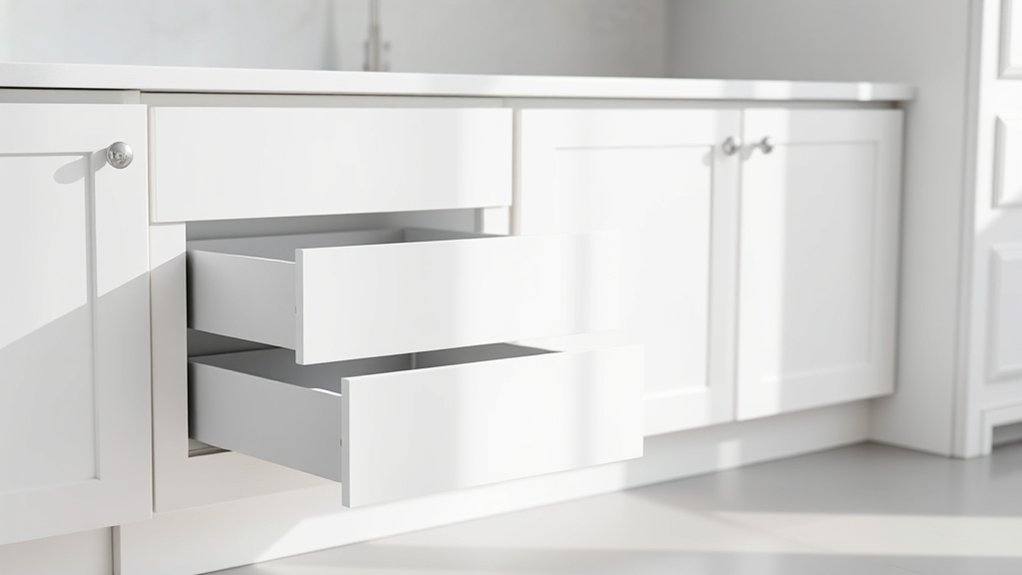
When you plan your kitchen layout, understanding the standard depth of kitchen base cabinets is essential. Typically, these cabinets measure 24 inches deep, which provides ample space for storing pots, pans, and other kitchen essentials.
Knowing the standard 24-inch depth of base cabinets ensures efficient kitchen storage and layout planning.
Knowing this helps you arrange your kitchen workflow efficiently. The cabinet material you choose, whether solid wood, plywood, or MDF, influences durability and weight, but the depth remains consistent across types.
Cabinet finishing also plays a role in the final look and function of your base cabinets. For example, a high-gloss finish might resist stains better, while a matte finish could hide scratches more effectively.
When selecting your base cabinets, confirm the depth complements your countertops and appliances for a seamless fit. Sticking to the standard 24-inch depth allows you to avoid costly adjustments later and ensures your kitchen feels balanced and functional.
Keep these factors in mind for a practical and stylish kitchen design.
Typical Cabinet Depth for Kitchen Wall Cabinets

When you’re picking out wall cabinets, you’ll notice that the standard depth is usually around 12 inches. But it’s not a one-size-fits-all situation—cabinets can range anywhere from 9 to 15 inches deep. It really depends on what you need to store and how your kitchen is set up. Knowing these sizes makes it easier to choose cabinets that fit your space just right.
Standard Wall Cabinet Depth
Most kitchen wall cabinets have a standard depth of 12 inches, which balances storage capacity with space efficiency. When choosing your cabinets, consider cabinet materials like plywood or MDF, which affect durability and weight.
Cabinet finishes, such as laminate or wood veneer, also impact your kitchen’s style and maintenance needs. This standard depth fits most kitchens, providing enough room for plates, glasses, and pantry items without overwhelming your space.
| Cabinet Depth | Common Materials | Popular Finishes |
|---|---|---|
| 12 inches | Plywood, MDF | Laminate, Veneer |
| 15 inches | Solid Wood | Painted, Stained |
| 18 inches | Metal, Composite | Glossy, Matte |
Sticking with 12 inches keeps your kitchen functional and stylish.
Variations in Cabinet Sizes
While 12 inches is the standard depth for kitchen wall cabinets, you’ll find variations that better suit different storage needs and design preferences. Choosing the right depth can improve cabinet aesthetics and increase material durability by preventing overloading.
Here are some common variations you might encounter:
- 9 inches deep for a minimalist look and lighter material use
- 15 inches deep to accommodate larger dishes and appliances
- 18 inches deep for maximum storage without overwhelming the kitchen space
- Custom depths tailored to fit unique kitchen layouts or appliances
- Shallow cabinets (6-8 inches) for decorative or glassware display
Why Cabinet Depth Matters for Kitchen Workflow and Storage
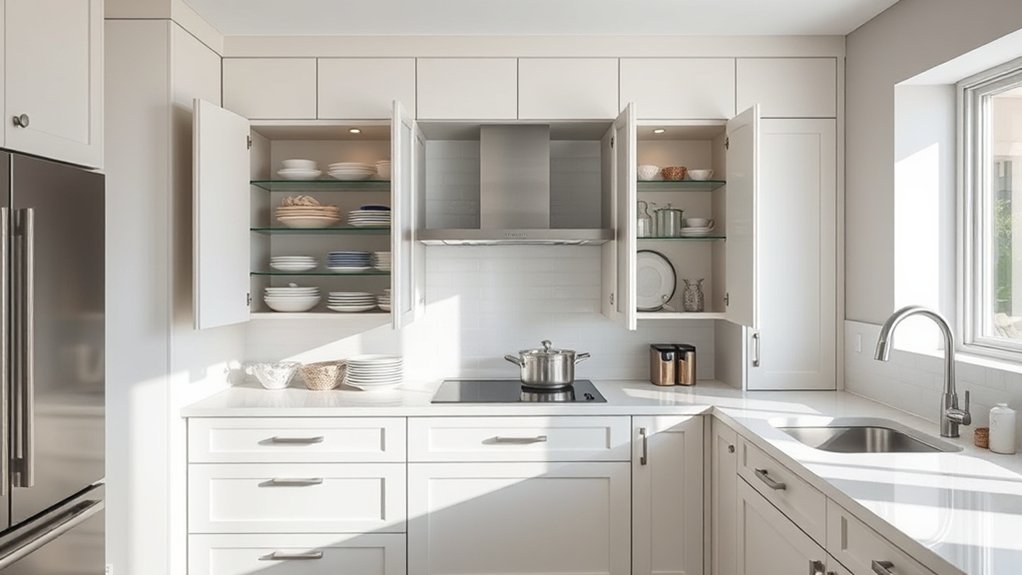
You’ll want to choose the right cabinet depth to keep your kitchen workflow smooth and efficient. It’s all about finding that sweet spot where you maximize storage but don’t end up with items that are hard to reach. Let’s take a closer look at how striking this balance can really improve your daily cooking experience.
Optimizing Kitchen Efficiency
Because kitchen tasks demand speed and organization, cabinet depth plays a crucial role in optimizing your workflow and storage options. Choosing the right depth guarantees you access items quickly without awkward reaches or clutter. It also impacts how well your kitchen lighting highlights the workspace and how cabinet materials handle wear and tear.
Consider these points to improve your kitchen efficiency:
- Shallow cabinets keep essentials within easy reach.
- Deeper cabinets store larger pots and appliances neatly.
- Proper depth boosts natural and artificial kitchen lighting.
- Durable cabinet materials withstand frequent use.
- Balanced depth prevents overcrowding, maintaining a clean look.
Maximizing Storage Space
How can the right cabinet depth transform your kitchen storage? Choosing cabinets with the proper depth allows you to fit more items without overcrowding your space.
Deeper cabinets increase storage capacity, helping you organize pots, pans, and pantry essentials more efficiently. This means less clutter on your countertops and a smoother workflow.
When you consider material durability alongside depth, you guarantee your cabinets withstand everyday use while maintaining their structure. Durable materials handle heavier loads, so you don’t have to worry about sagging shelves.
Plus, integrating color coordination with your cabinet depth choices improves visual harmony, making your kitchen feel more spacious and inviting. By balancing depth, durability, and color, you maximize storage while maintaining a stylish, functional kitchen environment.
Enhancing Accessibility and Reach
Maximizing storage capacity is only part of the equation. Making certain you can easily access everything stored is just as important. The depth of your kitchen cabinets directly impacts your workflow, helping you grab what you need without hassle.
Shallower cabinets improve reach, reducing the risk of knocking over decorative accents or struggling with heavy materials. Plus, quality material durability ensures your cabinets withstand daily use while keeping accessibility smooth.
Consider these tips to improve accessibility and reach:
- Opt for pull-out shelves or drawers
- Use adjustable shelving to customize space
- Install soft-close hinges for easier access
- Choose cabinet depths that fit your kitchen layout
- Combine decorative accents with functional design
This way, your kitchen stays organized, stylish, and user-friendly.
Common Kitchen Cabinet Depth Variations and When to Use Them
When planning your kitchen layout, understanding common cabinet depth variations helps you choose the right options for both style and function. Standard base cabinets typically measure 24 inches deep, which suits most kitchens by providing ample storage and countertop space.
Wall cabinets usually come in 12-inch depths, perfect for keeping items within easy reach without overwhelming the space. You might consider deeper wall cabinets, around 15 to 18 inches, if you want innovative storage solutions that accommodate larger dishes or appliances.
Material selection also impacts your choices. Lighter materials work well for deeper cabinets to avoid added weight, while durable options suit frequently used base cabinets.
Shallow cabinets, around 12 to 15 inches deep, fit well in smaller kitchens or tight spaces, offering storage without sacrificing room. By understanding these depth variations, you can tailor your kitchen’s design to fit your needs and maximize every inch efficiently.
How Cabinet Depth Influences Appliances and Countertops
Because cabinet depth directly affects the fit and function of your appliances and countertops, you’ll want to take these measurements carefully during your kitchen design. If your cabinets are too deep, appliances may protrude or look awkward, while shallow cabinets might leave gaps or reduce countertop workspace.
The choice of cabinet materials and finishing techniques also plays a role in how your countertops align and how appliances fit seamlessly.
Consider these points when planning:
- Confirm appliance depth matches cabinet depth for a flush look.
- Choose cabinet materials that support your desired countertop weight.
- Account for finishing techniques that add thickness to cabinet faces.
- Verify countertop overhang suits cabinet depth to avoid imbalance.
- Plan space for appliance ventilation and ease of use without obstruction.
How Cabinet Depth Affects Your Kitchen’s Storage Space
Your cabinet depth doesn’t just influence how appliances and countertops fit. It also plays a big role in how much storage space you actually get. When you choose deeper cabinets, you naturally gain more room to store bulky items like pots, pans, and small appliances.
However, deeper cabinets can sometimes make it harder to reach items at the back. So, consider organizing solutions that maximize accessibility.
Keep in mind that cabinet durability is essential when opting for deeper units, as they often bear more weight. Selecting high-quality materials not only supports heavier loads but also extends the lifespan of your cabinets.
Materials like solid wood or plywood offer better strength compared to particleboard. This helps your storage last longer without sagging or warping.
How to Measure Your Kitchen Cabinets Accurately
Accurately measuring your kitchen cabinets guarantees a perfect fit and smooth installation. To ensure your cabinets complement both material durability and design aesthetics, follow these key steps. Start by gathering a reliable tape measure, a level, and a pencil to jot down your numbers.
Measure the height, width, and depth of each cabinet separately. Also, check wall space for any obstructions like outlets or vents.
Note the thickness of cabinet materials to assess durability. Record measurements at multiple points to account for uneven walls. Use a level to ensure your cabinets will sit straight and align with your kitchen’s design aesthetics.
Choosing Cabinet Depth Based on Kitchen Size
When you’re picking out cabinet depth, think about how much room you actually have in your kitchen. If your kitchen is on the smaller side, going with shallower cabinets can help keep things feeling open and easy to move around in.
On the other hand, if you’ve got a larger kitchen, deeper cabinets are a great way to add extra storage without making the space feel cramped. It’s all about balancing storage needs with how you want your kitchen to feel.
Small Kitchen Depth Choices
Although small kitchens often limit your options, choosing the right cabinet depth can maximize both storage and workspace. When working with limited space, you want cabinets that don’t overwhelm the room but still offer functionality.
Modern design trends favor shallower cabinets around 12 to 15 inches deep to keep your kitchen open and airy. Material choices also matter because lighter materials can help prevent a cramped feel.
To make the most of your small kitchen, consider these tips:
- Opt for shallow upper cabinets to avoid crowding
- Use open shelving to visually expand space
- Select slim, sleek cabinet profiles for a modern look
- Choose light-colored materials to brighten the room
- Incorporate pull-out organizers to maximize storage efficiency
This approach balances aesthetics and utility perfectly.
Large Kitchen Cabinet Sizes
A large kitchen gives you the freedom to choose deeper cabinets that provide ample storage and workspace. When selecting cabinet depth, you can go beyond the standard 24 inches to 30 inches or more, maximizing both functionality and style.
Deeper cabinets improve cabinet aesthetics by creating a more substantial, custom look that complements your spacious kitchen. However, it’s important to take into account material durability since larger cabinets bear more weight and frequent use.
Opt for high-quality materials like solid wood or reinforced plywood to ensure your cabinets hold up over time. By balancing cabinet depth with durable materials, you’ll enjoy a kitchen that’s not only visually appealing but also practical and long-lasting, perfectly suited to your large kitchen’s scale and needs.
How Custom Cabinets Differ in Depth From Standard Sizes
Since custom cabinets are tailored to fit your specific space and needs, their depths often vary considerably from standard sizes. When you choose custom craftsmanship, you gain flexibility that lets you optimize every inch of your kitchen.
Unlike standard cabinets, which typically have fixed depths, custom options can be designed to accommodate unique layouts, appliances, and storage preferences. Your material selection also impacts depth, as thicker or specialty materials might require adjustments.
Here’s how custom cabinets differ in depth from standard ones:
- Designed to fit awkward or non-standard wall spaces
- Adjusted for larger or smaller appliances
- Customized storage solutions, like deeper drawers or shelves
- Tailored to match specific material thicknesses
- Altered to improve kitchen ergonomics and workflow
Considerations When Adjusting Cabinet Depth in a Remodel
When you adjust cabinet depth during a remodel, you must balance aesthetics, functionality, and space constraints to achieve the best results. Start by considering the cabinet material, as some materials handle deeper cuts or modifications better than others. For example, solid wood cabinets can often be customized more easily than particleboard, which may require reinforcement.
Next, think about how deeper cabinets will affect your kitchen’s flow and usability. Too deep and you might lose valuable walking space; too shallow and storage suffers.
Also, don’t overlook color coordination. If you’re mixing new deeper cabinets with existing ones, matching colors precisely keeps your kitchen looking cohesive. Sometimes, slight color variation can be fixed with paint or finishes, but it’s easier to plan ahead.
Finally, measure carefully to confirm that appliance clearance, countertop overhangs, and backsplash align well with your adjusted cabinet depth. Paying attention to these details ensures your remodel is both beautiful and practical.
Frequently Asked Questions
What Materials Are Commonly Used for Standard Kitchen Cabinets?
You’ll find standard kitchen cabinets commonly made from plywood, MDF, or solid wood. These materials balance durability and cost, letting you choose cabinet finishes that match your style.
For a sleek look, you might go with painted or stained finishes. Don’t forget cabinet hardware like handles and knobs, as they play a big role in both function and design.
Picking the right combination helps your kitchen look great and work well every day.
How Much Do Standard Kitchen Cabinets Typically Weigh?
Standard kitchen cabinets typically weigh between 50 to 150 pounds, like a small dog you can easily lift. When you consider cabinet weight distribution, it’s vital to evenly spread the load to avoid stress points.
You’ll want to factor in structural support considerations, especially if you’re installing heavy countertops or appliances. Proper support ensures your cabinets stay sturdy and last longer without sagging or damage.
What Are the Most Popular Cabinet Door Styles?
The most popular cabinet door styles you’ll find are Shaker, raised panel, and flat-panel. Shaker doors offer a clean, simple look that works with many cabinet finishes. Raised panel doors add a classic touch, while flat-panel doors give a modern vibe.
Don’t forget, the right cabinet hardware can completely change your cabinet’s look. It enhances whichever style you choose and complements your kitchen’s overall design seamlessly.
How Do Cabinet Depths Affect Kitchen Lighting Options?
Cabinet depth variations directly impact your kitchen lighting options by influencing lighting fixture placement. Deeper cabinets can block natural or overhead light, so you’ll need under-cabinet lighting or strategically placed fixtures to brighten workspaces.
Shallower cabinets allow more light flow but might limit where you install lights. By considering cabinet depth variations, you can plan lighting fixture placement to guarantee your kitchen stays well-lit and functional.
Are Standard Kitchen Cabinets Environmentally Friendly?
You know what they say: “A stitch in time saves nine.” When you choose standard kitchen cabinets, you can opt for eco friendly finishes and sustainable materials that minimize environmental impact.
These choices help reduce harmful chemicals and promote responsible forestry practices. By selecting cabinets made with these green options, you’re not only enhancing your kitchen but also contributing to a healthier planet for future generations. It’s a small step with big rewards.
Conclusion
When choosing kitchen cabinet depth, keep in mind that “measure twice, cut once” really applies. Getting the right depth ensures your workflow stays smooth and storage fits your needs perfectly. Whether you stick with standard sizes or go custom, understanding how depth affects appliances and countertops helps you avoid costly mistakes.
By considering your kitchen’s size and layout, you’ll create a space that’s both functional and beautiful. This makes your cooking experience truly enjoyable. Remember, knowing how deep standard kitchen cabinets are is key to making the best choices for your space.