How to Get Rid of Roaches in the Kitchen in 3 Simple Steps
Dealing with roaches in your kitchen can be frustrating and stressful. You’re not alone—many people struggle with these unwelcome pests invading their cooking spaces. The good news is, getting rid of roaches doesn’t have to be complicated or overwhelming.
To get rid of roaches in your kitchen, start by locating their hiding spots like under sinks, behind appliances, and inside cabinets. Next, remove food crumbs and clean surfaces thoroughly to cut off their food supply.
Finally, use safe methods such as bait traps, natural repellents, and keep your kitchen dry and clutter-free. Following these simple steps consistently will reduce roach activity.
Keep going to uncover more ways to protect your space from them for good.
Key Takeaways
- Identify and remove roach hiding spots like behind appliances, under sinks, and inside cabinets.
- Clean up food crumbs and spills immediately to eliminate roach attractants.
- Use cockroach bait and natural repellents near walls and suspected hiding places.
- Maintain a dry, clutter-free kitchen and seal cracks to prevent roach entry.
- Establish daily cleaning routines and monitor regularly to keep roaches away.
How to Find and Remove Roach Hiding Spots in Your Kitchen
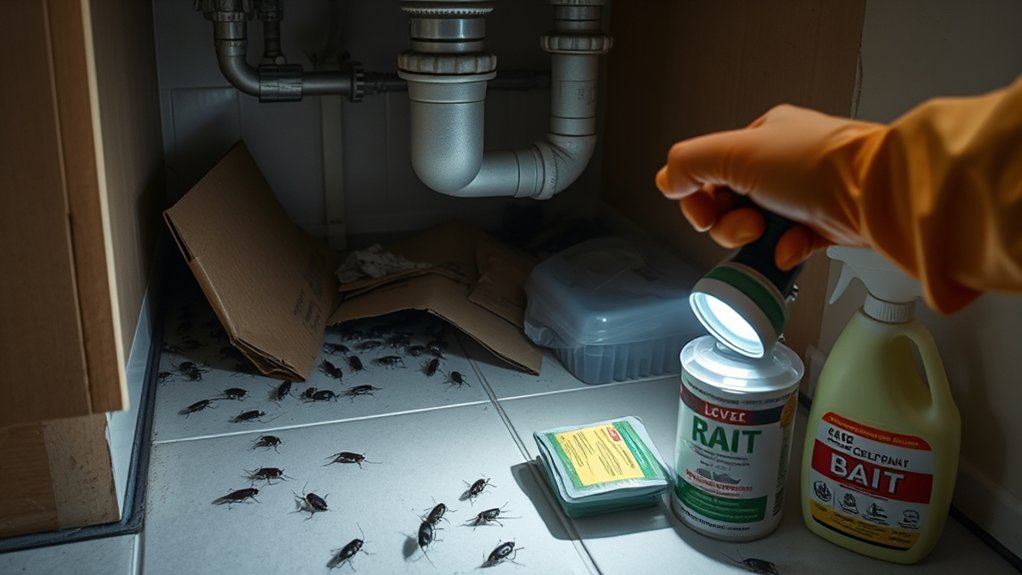
Before you can effectively eliminate roaches, you need to identify their hiding spots in your kitchen. Start by checking hidden corners where roaches often hide during the day. These include behind appliances, under the sink, inside cabinets, and along baseboards. Roaches prefer dark, warm, and moist areas, so be thorough in your inspection.
Next, look for food crumbs, which attract roaches and signal their presence. Pay close attention to countertops, floors, and pantry shelves where crumbs tend to accumulate. Don’t forget to check inside drawers and under cutting boards too.
Once you spot these spots, clean them immediately to remove food sources and disrupt roach activity. Vacuum and wipe down all surfaces, focusing on hidden corners and tight spaces. By identifying and removing these hiding places, you considerably reduce roaches’ ability to thrive in your kitchen, setting the stage for effective control measures.
Safe and Effective Ways to Get Rid of Roaches in Your Kitchen
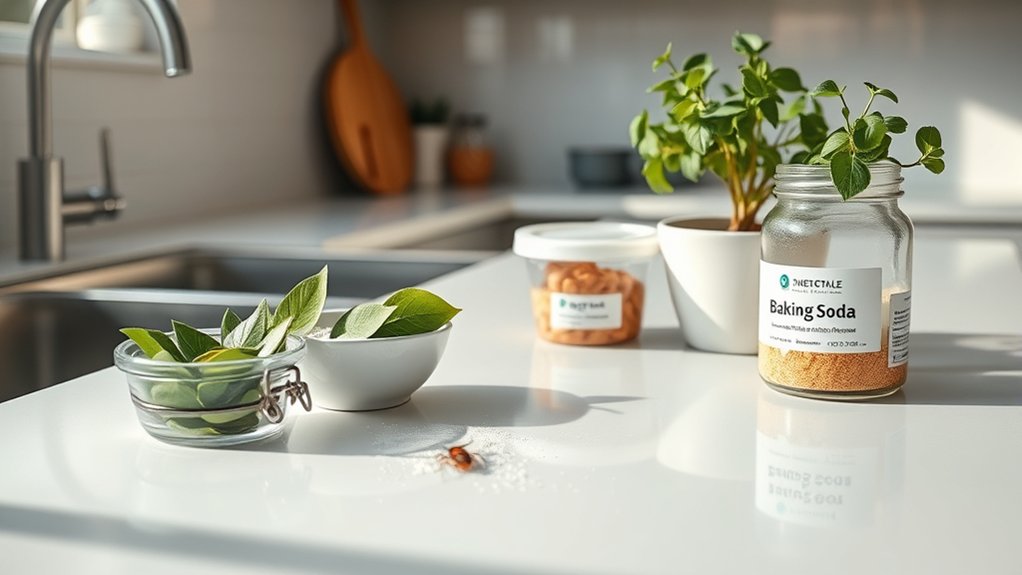
While roaches can be stubborn pests, you can get rid of them safely and effectively by combining proper cleaning, strategic use of natural repellents, and targeted treatments. Start by placing cockroach bait in corners and near suspected hiding spots. These baits lure roaches and eliminate entire colonies without harsh chemicals.
Next, use natural repellents like peppermint oil or bay leaves to keep them from coming back. Keep your kitchen dry and crumb-free to reduce what attracts them.
| Method | Description | Tips |
|---|---|---|
| Cockroach Bait | Poisoned bait attracts roaches | Place near walls and cabinets |
| Natural Repellents | Oils and herbs repel roaches | Use peppermint or bay leaves |
| Cleaning | Remove food, water, and hiding spots | Wipe counters daily, fix leaks |
| Traps | Sticky traps catch roaches | Check and replace regularly |
Smart Kitchen Habits to Prevent Roaches From Coming Back
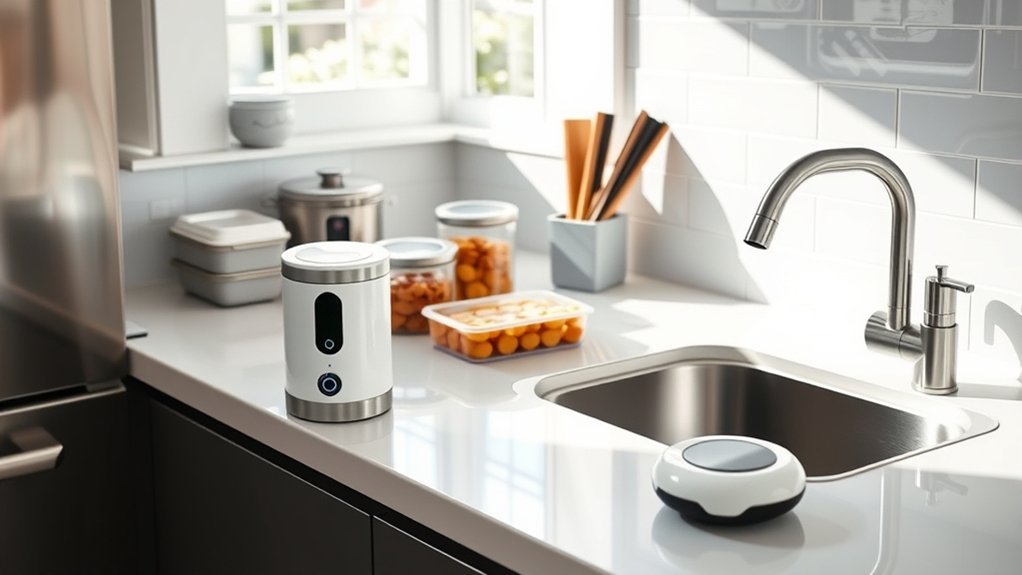
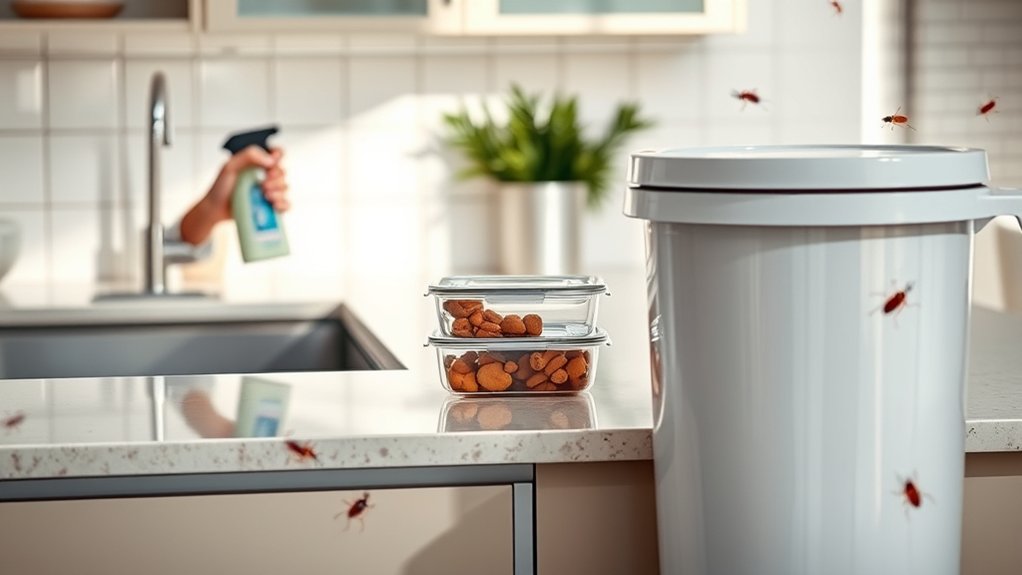
Combining cleaning, natural repellents, and targeted treatments can get rid of roaches, but maintaining those results means adopting smart kitchen habits. You need to establish consistent cleaning routines. Wipe down counters, sweep floors, and wash dishes promptly to eliminate food sources.
Don’t forget to empty trash regularly and store food in airtight containers to starve roaches out. Pest proofing strategies are just as crucial. Seal cracks and gaps around doors, windows, and pipes where roaches can sneak in.
Fix any leaks because roaches thrive in moisture. Also, keep clutter to a minimum since roaches love hiding spots. By combining these habits with your previous treatments, you’ll create an environment that’s hostile to roaches.
Staying vigilant with cleaning routines and pest proofing strategies ensures roaches won’t find your kitchen inviting again. The key is consistency. Make these habits part of your daily kitchen care, and you’ll keep your space roach-free for good.
Frequently Asked Questions
Are Roaches Harmful to Pets?
Yes, roaches can be harmful to your pets because they carry bacteria and allergens that might cause health issues. When dealing with roaches, you should prioritize pet safety by avoiding toxic chemicals or using pet-safe treatments.
Chemical exposure from traditional pesticides can pose serious risks to your animal companions. So always choose pet-friendly options and keep your pets away from treated areas to protect their well-being while handling a roach problem.
Can Roaches Cause Allergies or Asthma?
Yes, cockroach allergens can cause allergies and act as asthma triggers. When you’re exposed to their droppings, saliva, or shed skin, your immune system might react, leading to symptoms like sneezing, coughing, or wheezing.
If you have asthma, these allergens can worsen your condition, causing more frequent or severe attacks. So, it’s important you minimize exposure to cockroach allergens to protect your respiratory health.
How Quickly Do Roaches Reproduce?
Roach breeding happens at a surprising pace, like a quiet storm gathering strength. You’ll find their reproduction cycle can turn small problems into big ones in just weeks.
Female roaches lay dozens of eggs, and these hatch in about a month. If you don’t act fast, you’ll quickly see their numbers multiply, making control much harder.
Staying vigilant helps you keep that storm from becoming a full-blown invasion.
Do Roaches Die Immediately After Treatment?
Roaches don’t usually die immediately after treatment. When you use chemical treatments, it might take hours or even days for them to die because these products often work by disrupting their nervous system gradually.
DIY remedies like boric acid or bait traps also take time since roaches need to consume or come into contact with them. You’ll see results faster if you combine treatments and keep your kitchen clean to prevent reinfestation.
Are There Natural Predators of Roaches?
Yes, there are natural predators of roaches, but relying on them alone isn’t practical for your kitchen. Creatures like spiders, centipedes, and certain beetles feed on roaches, offering a form of predator control.
However, these aren’t always enough to keep roach populations down. Instead, you might want to combine natural repellents like essential oils with targeted predator control to effectively manage infestations without harsh chemicals.
Conclusion
Roaches can carry over 30 different kinds of bacteria, making them a serious health risk in your kitchen. By finding and removing their hiding spots, using safe and effective treatments, and adopting smart habits like keeping surfaces clean and food sealed, you can protect your home.
Taking these simple steps not only gets rid of roaches but also keeps your kitchen healthier and more inviting. Don’t let these pests take over. Act now to get rid of roaches in the kitchen!