How to Degrease Kitchen Cabinets in 5 Simple Steps
If you’ve ever tried to clean your kitchen cabinets, you know how stubborn grease can be. Many people struggle with greasy buildup that dulls the look of their cabinets and makes their kitchen feel less fresh. You’re not alone—tackling grease is a common challenge, but with the right approach, it doesn’t have to be a headache.
To degrease your kitchen cabinets in five simple steps, first gather microfiber cloths, a degreasing solution, gloves, and a soft brush.
Next, remove dust and dirt by wiping all surfaces and corners.
Then, mix a homemade degreaser using water, vinegar, and dish soap.
After that, scrub the grease gently, focusing on handles and edges.
Finally, rinse with a damp cloth and dry thoroughly to prevent streaks.
Keep going to reveal tips for tackling tough grease spots.
Key Takeaways
- Gather microfiber cloths, degreasing solution, gloves, a soft-bristle brush, and paper towels before starting.
- Remove dust and dirt from cabinets using a soft cloth or vacuum with a brush attachment.
- Mix a homemade degreaser with warm water, white vinegar, dish soap, and optional lemon juice or baking soda.
- Scrub grease buildup gently with a microfiber cloth and soft brush. Focus on handles and edges where grease tends to collect.
- Rinse cabinets with a damp cloth and dry thoroughly with a microfiber towel to prevent streaks and moisture buildup.
Gather Supplies Needed to Degrease Kitchen Cabinets
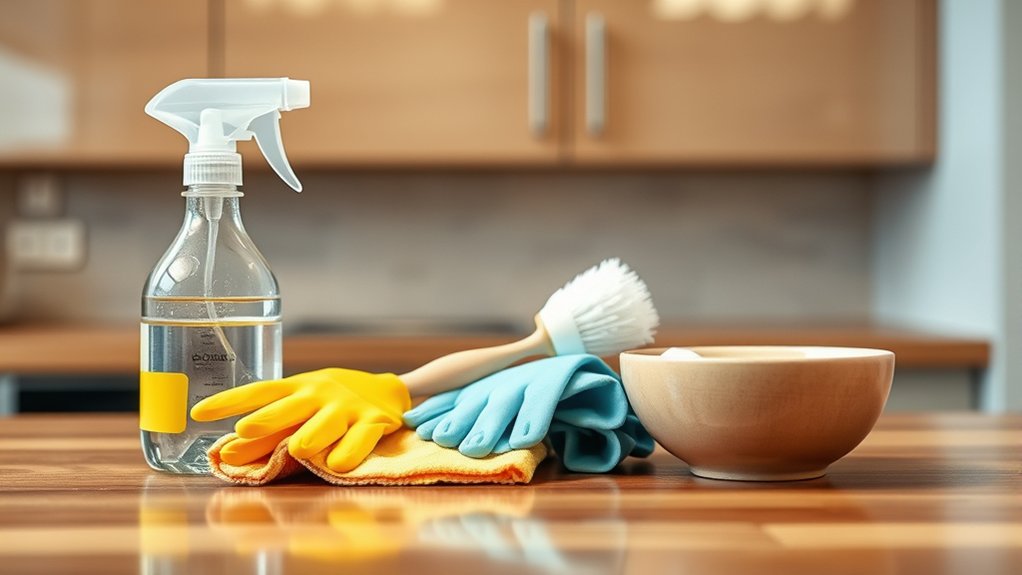
Where do you begin when tackling greasy kitchen cabinets? First, gather all the supplies you’ll need for effective cabinet cleaning and grease removal. Start with a few microfiber cloths; they’re great for trapping grease without scratching surfaces.
Next, get a bucket or spray bottle filled with a degreasing solution, either a commercial cleaner designed for kitchen use or a homemade mix of warm water, dish soap, and vinegar. Don’t forget rubber gloves to protect your hands from harsh chemicals and to keep your grip steady.
A soft-bristle brush or an old toothbrush will help you reach stubborn grease in corners and crevices. Having paper towels or a clean dry cloth nearby lets you wipe down surfaces after cleaning. By organizing these supplies first, you streamline the grease removal process and guarantee you’re ready to tackle your cabinets efficiently without interruption.
Prepare Your Kitchen Cabinets by Removing Dirt and Dust
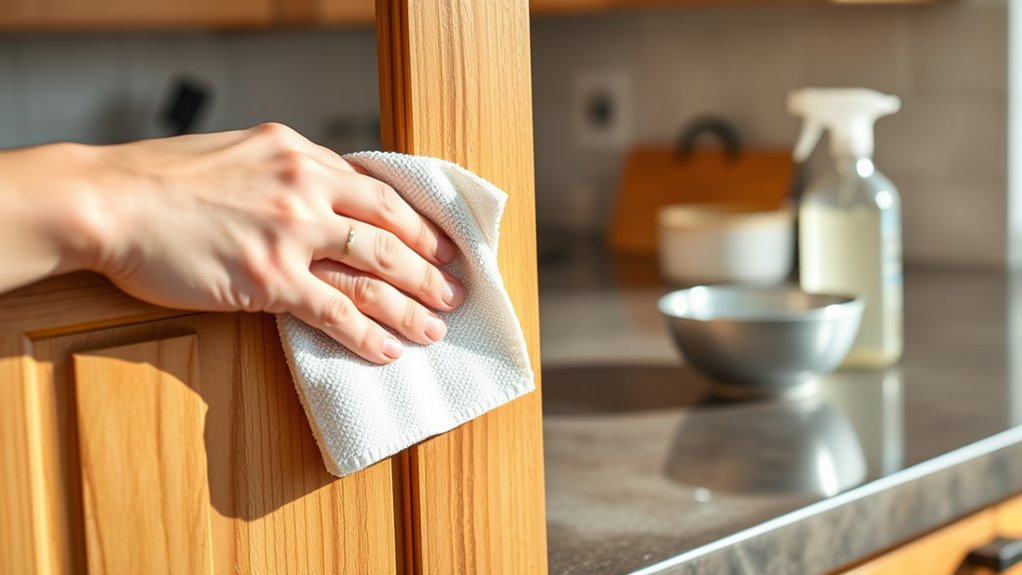
How do you make sure your kitchen cabinets are truly ready for degreasing? Start with thorough cabinet cleaning by removing all visible dirt and grime. Use a soft cloth or microfiber duster to gently wipe each cabinet surface, focusing on corners where dust tends to accumulate. This dust removal step is essential. You don’t want to trap dirt under your degreaser, which can make the cleaning less effective.
Next, open all cabinet doors and drawers to dust inside, including shelves. Use a vacuum with a brush attachment if you have one; it can quickly capture stubborn dust particles. Pay special attention to handles and edges, as these areas often collect buildup.
Once you’ve removed all dust and dirt, your cabinets will be primed for the next stage of cleaning. This careful preparation guarantees the degreaser can work directly on grease and stains, making your cabinet cleaning more efficient and successful.
Mix a Homemade Degreaser That Cuts Grease
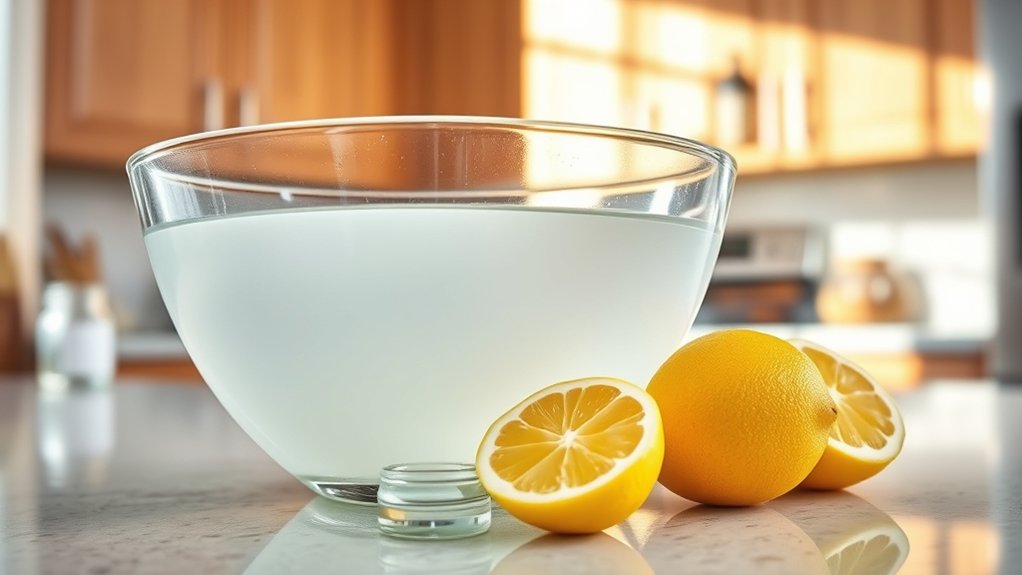
With your cabinets free of dust and grime, you’re ready to tackle the grease that dulls their appearance. One effective cleaning technique involves mixing a homemade degreaser using simple ingredients you likely have at home. Combine one cup of warm water with a quarter cup of white vinegar and a teaspoon of liquid dish soap. This blend cuts through grease without harsh chemicals, making it an excellent alternative solution for maintaining your kitchen’s finish.
For tougher grease, add a few drops of lemon juice or a teaspoon of baking soda to boost the degreaser’s power. Pour the mixture into a spray bottle for easy application. Always shake well before use to ensure ingredients mix properly.
This homemade degreaser is safe on most cabinet surfaces, eco-friendly, and budget-friendly. It’s a smart way to keep your cabinets looking fresh while avoiding commercial cleaners laden with toxins.
Scrub Away Grease Buildup on Your Cabinets
Although your homemade degreaser loosens much of the grime, you’ll need to scrub your cabinets to remove stubborn grease buildup. Start by dipping a soft sponge or microfiber cloth into the degreaser solution, then gently scrub the cabinet surfaces in circular motions.
Focus on areas around handles, edges, and the lower parts of the doors where grease tends to accumulate most. For tougher spots, a soft-bristled brush can help you get deeper without damaging the cabinet finish.
Rinse and Dry Cabinets for a Fresh, Grease-Free Finish
Once you’ve thoroughly scrubbed away the grease, you’ll want to rinse your cabinets to remove any leftover residue. This step is essential to protect your cabinet finishes and maintain effective grease prevention. Use a clean, damp cloth or sponge with warm water to gently wipe each surface. Avoid soaking the cabinets, especially if they’re made of wood, to prevent damage.
After rinsing, dry your cabinets promptly to prevent moisture buildup, which can harm finishes and encourage grime accumulation. Here’s how to guarantee a fresh, grease-free finish:
Use a microfiber cloth for gentle, streak-free drying. Pay special attention to edges and corners. Open cabinet doors to air dry interiors. Avoid harsh chemicals that can degrade finishes. Regularly rinse and dry cabinets to maintain grease prevention.
Following these steps will keep your kitchen cabinets looking clean and protected, extending the life of your cabinet finishes.
Frequently Asked Questions
How Often Should I Degrease My Kitchen Cabinets?
You should degrease your kitchen cabinets every 1 to 3 months, depending on your cooking habits. Maintaining a regular cleaning frequency helps prevent grease buildup and keeps your cabinets looking fresh.
If you cook frequently or use a lot of oil, consider degreasing more often. Consistent cabinet maintenance not only improves appearance but also extends the life of your cabinets by protecting the finish from damage caused by grease and grime.
Can I Use Commercial Degreasers Safely on All Cabinet Materials?
Of course, you can just splash commercial cleaning products everywhere because all cabinet materials love harsh chemicals, right? Actually, no. You need to check your cabinet materials first; wood, laminate, and painted surfaces react differently to commercial degreasers.
Some can cause damage or discoloration. Always test a small hidden area and follow product instructions carefully. Using the right cleaner protects your cabinets while keeping them grease-free and looking great.
What Causes Grease Buildup on Kitchen Cabinets Initially?
Grease buildup on your kitchen cabinets happens mainly because cooking fumes carry tiny grease particles. When you cook, especially frying or sautéing, these particles float in the air and settle on surfaces.
If your kitchen ventilation isn’t strong enough, it can’t remove those particles effectively, so they stick to your cabinets over time. Improving ventilation and cleaning regularly can help prevent that greasy layer from forming in the first place.
Are There Any Natural Oils That Can Protect Cabinets After Cleaning?
Yes, you can use natural oils like coconut oil or jojoba oil as protective coatings for your cabinets after cleaning. These natural oils create a subtle barrier that helps repel moisture and dirt, keeping your cabinets looking fresh longer.
Just apply a small amount with a soft cloth and buff gently. This method not only protects your cabinets but also improves their natural wood grain without harsh chemicals.
How Do I Prevent Future Grease Buildup on Kitchen Cabinets?
To prevent future grease buildup on your kitchen cabinets, improve your kitchen ventilation by using an exhaust fan or opening windows while cooking. This helps reduce airborne grease particles.
Also, adjust your cooking habits by covering pans to minimize splatters and wiping cabinet surfaces regularly with a mild cleaner. These simple steps keep your cabinets cleaner longer and reduce tough grease deposits that are harder to remove later on.
Conclusion
Think of degreasing your kitchen cabinets like clearing fog from a window. You reveal the true shine beneath.
Just like one family found their once sticky cabinets sparkling after a simple homemade mix, you’ll see how easy it is to bring back that fresh, clean look.
With just a little effort and the right steps, your kitchen will feel welcoming and bright again, free from grime and grease that once clouded its beauty. Degreasing kitchen cabinets is the key to restoring their natural charm.