How Do You Spell Kitchen Correctly?
Struggling to spell common words correctly can be frustrating, especially when the spelling looks tricky at first glance. If you’ve ever found yourself second-guessing how to spell “kitchen,” you’re not alone. Many people struggle with this word because of its unique letter combination, but don’t worry—we’ve got you covered.
You spell “kitchen” as K-I-T-C-H-E-N, the same in British, American, and Australian English. Although pronunciation may vary, especially the “tch” sound, this doesn’t change how the word is spelled.
People often mix up the letter order because of uncommon letter clusters like “tch.” To avoid mistakes, try breaking it into “kit” and “chen” or use mnemonic tricks. Keep these tips in mind, and you’ll soon master this spelling with confidence and ease.
Key Takeaways
- The correct spelling of “kitchen” is K-I-T-C-H-E-N across all English dialects.
- Focus on the “-tchen” ending to avoid common misspellings like “kichen” or “kitcen.”
- Use mnemonic devices like “Keep It Tidy, Clean Every Nook” to remember the letter sequence.
- Employ digital tools such as Grammarly or spell-checkers for real-time spelling verification.
- Practice breaking the word into parts and visualizing kitchen items to reinforce correct spelling.
How Do You Spell “Kitchen” Correctly?
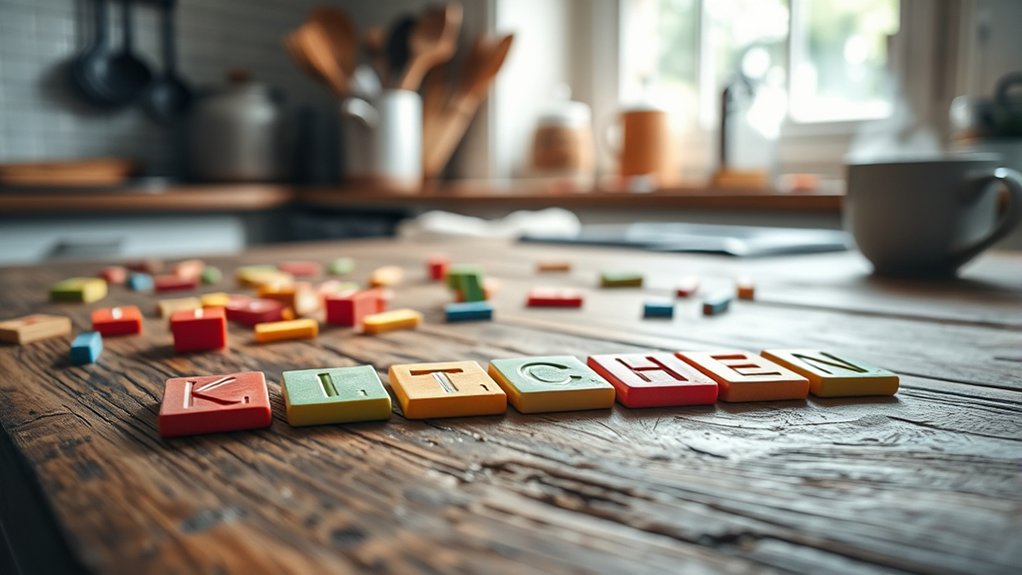
How do you spell “kitchen” correctly? You’ll want to remember it’s spelled K-I-T-C-H-E-N. It’s a straightforward word, but knowing the correct spelling matters, especially if you’re involved in kitchen design or writing about culinary skills.
When you’re planning a kitchen design, precise communication is key, whether you’re discussing layout or appliances. Misspelling “kitchen” can confuse your message, making it harder to share your ideas.
Whether you’re a chef improving your culinary skills or a designer creating the perfect cooking space, getting the spelling right reflects your professionalism. You don’t want simple mistakes distracting from your expertise or creativity.
Why Do People Often Misspell “Kitchen”?

Because the word “kitchen” combines several tricky consonant sounds, people often misspell it by mixing up letters or leaving some out. You might find yourself uncertain about which letters to include, especially since the “tch” cluster isn’t common in all English words.
The tricky consonant cluster in kitchen often leads to letter mix-ups and common misspellings.
Its historical origins trace back to Old English “cycene,” which evolved over time, causing some confusion in spelling conventions. Furthermore, regional variations in pronunciation influence how you might spell it.
For example, certain dialects soften or alter sounds, leading to phonetic spellings that don’t match the standard form. When you hear these regional differences, it’s easy to subconsciously apply them in writing, resulting in errors.
Knowing that “kitchen” has a layered history and is pronounced differently across regions helps explain why you and others often misspell it. Recognizing these factors can prepare you to focus on the correct spelling despite the tricky sounds and variations you encounter.
Common “Kitchen” Misspellings and How to Avoid Them
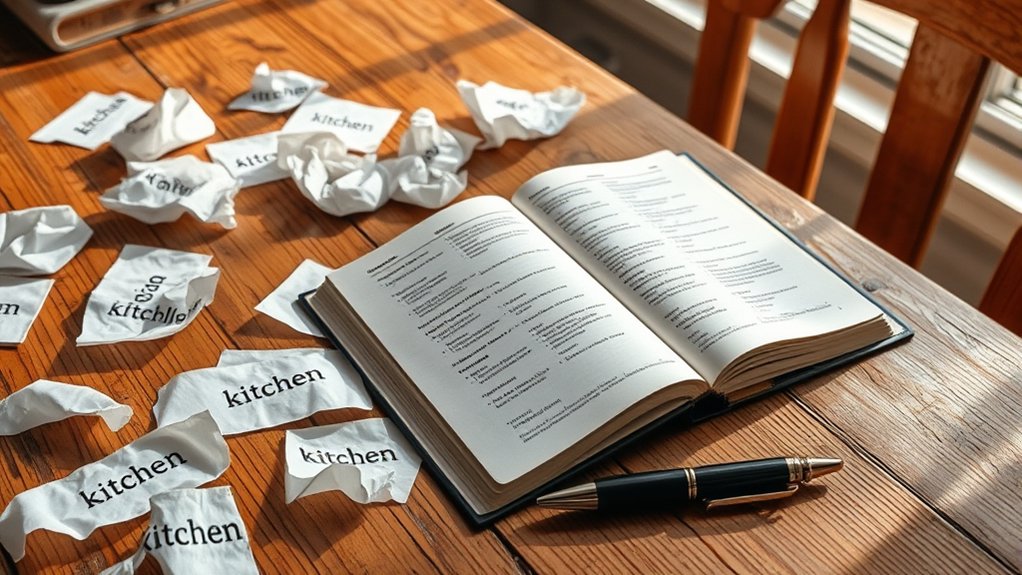
Understanding why “kitchen” poses spelling challenges helps you recognize common mistakes people make. Misspellings like “kichen,” “kitcen,” or “kitchin” often occur because the word’s pronunciation can trick you into omitting or rearranging letters. To avoid these errors, focus on the consistent “-tchen” ending, which aligns with many terms in culinary vocabulary.
Remember, “kitchen” combines “kit” and “chen,” so keeping those parts intact is key. You can also improve your spelling by staying updated on kitchen design trends, as the word frequently appears in related articles and discussions. Reading such content reinforces the correct form.
Practicing writing “kitchen” alongside other culinary terms helps solidify your recall. When in doubt, use reliable spell-check tools or refer to trusted culinary sources. By understanding common pitfalls and integrating spelling practice into your daily exposure to culinary vocabulary and kitchen design trends, you’ll confidently avoid frequent mistakes.
Does “Kitchen” Spelling Vary by English Dialect?
Although English dialects often differ in pronunciation and vocabulary, the spelling of “kitchen” remains consistent across them. Whether you’re reading British English, American English, Australian English, or other regional dialects, you’ll find “kitchen” spelled the same way. This consistency helps avoid confusion and maintains clarity in written communication.
Historically, English spelling has seen variations, but “kitchen” has stayed relatively stable. Unlike some words that evolved differently in various dialects, “kitchen” didn’t develop alternative spellings based on region. This stability reflects its straightforward phonetic structure and widespread use.
Are There Pronunciation Challenges That Affect Spelling “Kitchen”?
While the spelling of “kitchen” stays the same across English dialects, you might still encounter challenges when pronouncing it. Pronunciation influences how you mentally process the word, which can lead to spelling challenges, especially if you’re learning English or dealing with regional accents.
Pronunciation affects how we process and spell “kitchen,” especially for learners and those with regional accents.
For example, the “tch” sound in “kitchen” can be tricky since it combines a “t” and “ch” sound. Some people might pronounce it more softly or emphasize different syllables, affecting how they hear and then spell the word.
These pronunciation influences don’t change the correct spelling, but they can cause confusion, particularly for non-native speakers. When you hear “kitchen,” you might think of a slightly different sound, which makes you second-guess the spelling.
Understanding these pronunciation influences helps you stay confident in spelling “kitchen” correctly, despite any speech variations you or others might have.
How to Use “Kitchen” in Sentences
Now that you know how to spell “kitchen,” let’s check out some common sentences you can try. You’ll notice how the context changes the way “kitchen” fits smoothly into what you’re writing or saying. This way, you’ll get better at using the word confidently and correctly.
Common Sentence Examples
When you picture the word “kitchen,” you probably think of a place where meals come to life. Using “kitchen” in sentences can be straightforward and practical. For example, you might say, “The kitchen design features an open layout,” which highlights the space’s structure.
Or, “She’s learning culinary terminology to improve her cooking skills in the kitchen,” showing how the word fits naturally in discussing food preparation. You can also say, “We spent the weekend remodeling the kitchen,” or “The kitchen smells of fresh bread,” to describe everyday experiences.
These examples show how “kitchen” works well when describing spaces, activities, and even specific culinary contexts. When you use it correctly, your sentences become clear and relatable.
Contextual Usage Tips
Understanding how “kitchen” fits naturally in sentences helps you use it more effectively in different contexts. When talking about cooking techniques, you might say, “The kitchen is perfect for experimenting with new cooking techniques.” This shows how the space supports culinary creativity.
If you’re focusing on kitchen organization, you could write, “Good kitchen organization makes meal prep faster and more enjoyable.” Using “kitchen” alongside specific themes makes your sentences clearer and more engaging.
Try to connect “kitchen” with activities or features related to the space, like appliances, cleanliness, or design. This way, you’ll create relevant, meaningful sentences that resonate with your readers.
Keep your usage practical, and you’ll communicate ideas about kitchen life effectively every time.
Easy Tips to Remember the Correct Spelling of “Kitchen
You might often mix up the letters when spelling “kitchen,” especially with tricky parts like the “tch.” But don’t worry! You can use simple mnemonic devices that make remembering the correct order a lot easier. Let’s take a look at some common mistakes and a few easy tricks you can try.
Common Spelling Mistakes
Many people mix up the spelling of “kitchen,” often confusing the placement of the “t” and “c.” You might find yourself tempted to spell it as “kichen” or “kitchen,” but remembering the sequence “k-i-t-c-h-e-n” can help you avoid these common errors.
When you focus on cooking tips or improving kitchen organization, it’s easy to overlook the spelling details. Mistakes usually happen because you rush or rely on phonetics, writing what sounds right instead of what’s correct.
To keep your spelling sharp, pay attention while reading recipes or organizing your cooking space. Practicing the correct form in everyday writing will make the right spelling second nature. Avoid shortcuts like dropping letters or swapping them around. Accuracy matters, especially in words related to your daily cooking environment.
Mnemonic Devices for Spelling
Although spelling “kitchen” might seem tricky at times, using mnemonic devices can make it much easier to remember the correct sequence of letters. You can tackle common spelling challenges by breaking the word into parts, like “kit” and “chen.”
One simple mnemonic technique is to think, “Keep It Tidy, Clean Every Nook,” which helps you recall each letter in order. Another approach is to visualize a kitchen scene, associating each letter with an item: ‘K’ for kettle, ‘I’ for island, and so on.
These mnemonic techniques turn spelling from a guessing game into a memorable process, so you won’t mix up the “t” or “ch.” By practicing these tips, you’ll confidently spell “kitchen” right every time.
Best Tools and Apps to Check “Kitchen” Spelling
How can you quickly make sure the word “kitchen” is spelled correctly every time? You can rely on several handy tools and apps designed to catch spelling errors instantly. Grammarly, for instance, not only checks your spelling but also offers suggestions to improve your writing flow.
Microsoft Word’s built-in spell check is another reliable choice, perfect if you’re drafting content about kitchen decor or explaining culinary techniques. If you prefer mobile options, apps like Ginger and Hemingway Editor provide real-time corrections and readability improvements.
Google Docs also offers a convenient spell checker that works seamlessly when you’re writing recipes or articles about kitchen design. By using these tools, you avoid embarrassing mistakes and guarantee your writing looks polished.
Whether you’re describing the latest kitchen decor trends or detailing complex culinary techniques, these apps help keep your spelling on point, saving you time and boosting your confidence.
Why Spelling “Kitchen” Right Makes Your Writing Clearer
When you spell “kitchen” correctly, your readers immediately understand your message without distraction. Clear spelling guarantees your writing flows smoothly, especially when discussing essential topics like cooking techniques.
If you misspell “kitchen,” readers might stumble, losing focus on the important details you’re sharing. Accurate spelling also reflects your attention to detail, which builds trust when you cover necessary kitchen safety tips.
You want your audience to take your advice seriously, whether it’s about handling knives properly or maintaining a clean environment to prevent accidents. Clarity in your writing helps avoid misunderstandings that could lead to unsafe practices.
By getting “kitchen” right every time, you support the overall professionalism of your content. It keeps your writing sharp and focused, ensuring your readers absorb useful information without unnecessary confusion or distraction.
This small but essential detail improves both the quality and credibility of your work.
Tips for Teaching Kids and Learners to Spell “Kitchen”
Since spelling can be challenging for kids and learners, you can use simple, engaging techniques to help them remember how to spell “kitchen.” Breaking the word into smaller parts, like “kit” and “chen,” makes it easier to tackle.
You might create a fun story linking these parts to everyday cooking techniques used in a kitchen. For example, talk about a “kit” of cooking tools and the “chen” where the magic happens.
Visual aids work well, too. Show pictures of kitchen design elements alongside the word to build associations. Encourage learners to write the word repeatedly while saying each syllable aloud.
Games like spelling bees or matching games with kitchen-related words reinforce memory. You can also involve kids in real cooking activities, having them spell “kitchen” as they practice cooking techniques.
This hands-on experience connects the word to its meaning, improving retention. With these approaches, spelling “kitchen” becomes less intimidating and more fun for learners.
Frequently Asked Questions
What Is the Origin of the Word “Kitchen”?
You’ll find that the word “kitchen” originates from the Old English term “cycene,” which traces back to the Latin “coquina.” This reflects historical culinary terms tied to food preparation spaces.
As you investigate cultural kitchen practices, you’ll see how the concept evolved across societies, highlighting the importance of cooking areas in homes. Understanding this origin helps you appreciate how kitchens have always been central to daily life and culinary traditions worldwide.
Are There Any Famous Literary Quotes Featuring the Word “Kitchen”?
You’ll find famous literary quotes that capture the kitchen’s warmth, the kitchen’s chaos, the kitchen’s heart. Kitchen symbolism in literature often represents nourishment, family, and transformation.
For example, in Louisa May Alcott’s *Little Women*, the kitchen is a place of comfort and growth. When you read these quotes, you see how the kitchen transcends mere space. It becomes a symbol of life’s essential rhythms and relationships.
How Has the Design of Kitchens Evolved Over Time?
You’ve seen kitchen layout innovations transform spaces from closed-off rooms to open, multifunctional hubs. Cultural influences on kitchen design have introduced diverse materials, colors, and appliances, reflecting global tastes.
Today, you’ll find ergonomic setups, smart technology, and sustainable features blending seamlessly. As lifestyles change, your kitchen evolves from just a cooking area to a social and creative space, showing how design adapts to both function and cultural expression over time.
What Are Common Kitchen-Related Idioms or Phrases?
You’ll find common kitchen-related idioms like “too many cooks spoil the broth” and “beat around the bush” use cooking terminology and culinary metaphors to express life’s truths. Visualize a cluttered kitchen. This shows how too many people interfering causes problems.
Another phrase, “bring home the bacon,” means earning a living. These expressions tap into familiar cooking scenes, helping you understand complex ideas through relatable culinary imagery.
Which Kitchen Appliances Are Essential in Most Households?
You need a few essential kitchen appliances to keep things running smoothly. A refrigerator, stove, and microwave are must-haves.
If you want to upgrade, consider luxury appliances like smart ovens or wine coolers. Don’t forget energy-efficient gadgets such as LED-lit refrigerators or induction cooktops. They save money and reduce your carbon footprint.
These essentials and upgrades help you cook efficiently while enjoying modern conveniences every day.
Conclusion
So, now that you know how to spell “kitchen” correctly, you’ll never confuse it with a “kitchin” or a “kitchenen” again because who wouldn’t want their cooking space to have a secret identity? Ironically, the word is straightforward, yet it trips up so many.
Just remember: keep it simple, trust your memory, and let those handy apps be your spelling sous-chefs. Your writing and your readers will thank you for serving the right word every time.
When it comes to spelling kitchen correctly, a little practice goes a long way!