10 Factors That Affect How Much an Outdoor Kitchen Costs
Planning an outdoor kitchen is exciting, but figuring out the cost can feel overwhelming. You’re not alone—many people struggle with understanding what drives the price up or down. Knowing the key factors can help you make smart choices without breaking the bank.
Several factors affect how much your outdoor kitchen will cost. Your location and site prep impact expenses, especially if utilities are far or the terrain is uneven.
Materials and design complexity play big roles. Durable stainless steel costs more than wood, and larger or custom layouts add price.
Appliances, permits, plumbing, and electrical work all influence your budget. Timing your project and planning for future maintenance can save money.
Keep exploring for practical tips to make smart choices.
Key Takeaways
- Location and site preparation affect costs through grading, utility access, and permit fees.
- Material choices impact price, with durable options like granite and stainless steel costing more.
- Kitchen size and design complexity increase expenses due to labor, materials, and layout intricacies.
- Appliance selection and custom features raise costs, especially for energy-efficient or built-in options.
- Installation methods influence budget, with professional work costing more but reducing errors and delays.
How Location and Site Preparation Affect Outdoor Kitchen Costs
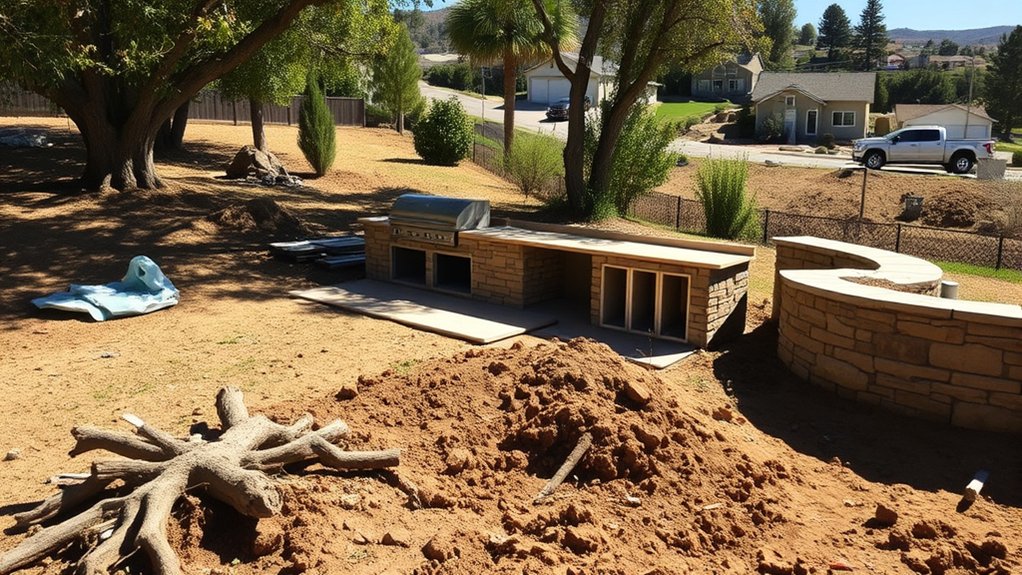
Because the location of your outdoor kitchen determines much of the groundwork needed, it directly impacts your overall costs. If you choose a spot far from existing utilities, expect higher landscaping costs to accommodate plumbing and electrical work.
Uneven or sloped terrain may require extra grading or retaining walls, adding to expenses. Furthermore, your local municipality might require permitting fees before construction, especially if you’re installing gas lines or significant electrical systems. Failing to budget for these permits can lead to unexpected delays and fines.
You’ll want to contemplate proximity to your house for convenience, but also how accessible the site is for contractors and equipment. A well-planned location minimizes both landscaping costs and permit complications while streamlining installation.
Choosing Outdoor Kitchen Materials: Budget Tips and Trade-Offs
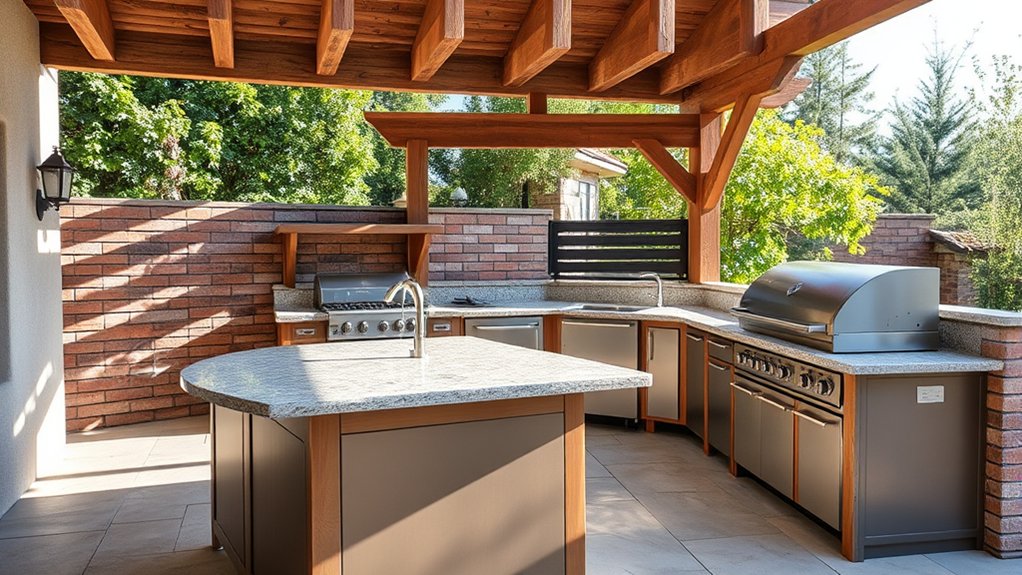
When you’re picking out materials for your outdoor kitchen, it’s all about finding the right balance between durability and cost to get the best bang for your buck. Some materials will last longer, but they usually come with a higher price tag. On the other hand, you might save some money upfront with other options, though they may need more upkeep down the road.
You’ll also want to think about how these materials fit with your style and the overall vibe you’re going for. After all, you want a space that not only works well but also feels like your own little outdoor retreat.
Material Durability vs. Cost
Although choosing materials for your outdoor kitchen, you’ll quickly find that durability often comes at a higher price. Material selection plays a vital role in balancing long-term value with upfront costs.
For example, stainless steel offers excellent resistance to rust and weather but can be pricey. On the other hand, materials like treated wood or composite may cost less initially but might require more maintenance over time.
Understanding durability trade-offs helps you decide where to invest more and where to save without compromising functionality. Prioritize materials that withstand your climate and usage patterns to avoid costly repairs later.
Aesthetic Appeal Considerations
While durability is essential, you’ll also want to take into account the aesthetic appeal of your outdoor kitchen materials. They set the tone for your entire space. Color coordination plays a key role in creating harmony, while lighting effects can improve ambiance and highlight design features.
Balancing these with your budget requires thoughtful trade-offs.
| Material | Color Coordination | Lighting Effects | Cost Impact | Maintenance |
|---|---|---|---|---|
| Granite | Wide range, natural hues | Reflects warm light | High | Low |
| Brick | Earthy tones | Diffuses light softly | Moderate | Moderate |
| Stainless Steel | Sleek, modern | Reflects bright light | High | Low |
| Concrete | Customizable colors | Absorbs light | Low | Moderate |
| Tile | Vibrant, varied patterns | Enhances with accents | Moderate | High |
Choose materials that align with your style and budget while maximizing visual impact.
Outdoor Kitchen Size and Layout: What Influences the Price?

The size of your outdoor kitchen really impacts the overall cost—bigger spaces need more materials and labor. Plus, the layout matters a lot. If it’s a complex design or includes multiple cooking zones, that can drive the price up even more. But here’s the good news: by planning smartly, you can keep costs in check without giving up on how well it works.
Square Footage Impact
Your outdoor kitchen’s size plays a major role in determining its overall cost. The larger the square footage, the more materials and labor you’ll need, which naturally drives up the price.
When planning your space, keep in mind that expanding your kitchen often means incorporating extra features like landscaping improvements and outdoor lighting to create a cohesive, inviting atmosphere. These additions not only improve functionality but also add to the total expense.
Smaller kitchens require fewer resources and less installation time, making them more budget-friendly. However, if you want ample space for cooking, dining, and entertaining, expect the cost to increase with every additional square foot.
Balancing your desired size with these factors helps you control your outdoor kitchen’s budget effectively.
Design Complexity Effects
Because intricate designs require more specialized materials and skilled labor, they can substantially increase your outdoor kitchen’s cost. When you opt for custom cabinetry and innovative lighting, expect a higher price tag due to the craftsmanship and technology involved.
Your kitchen’s shape and layout also influence expenses; complex curves or multi-level counters add to labor time and material waste.
| Design Aspect | Impact on Cost | Example Features |
|---|---|---|
| Custom Cabinetry | High | Specialty wood, unique sizes |
| Innovative Lighting | Moderate to High | LED accents, smart controls |
| Layout Complexity | Moderate to High | Multi-level, curved counters |
| Material Quality | High | Stone countertops, stainless steel |
| Labor Skill Level | High | Expert masonry, electrical work |
Choosing complexity means investing more for a standout outdoor kitchen.
Selecting Cost-Effective Appliances for Your Outdoor Kitchen
When choosing appliances for an outdoor kitchen, you’ll want to balance quality and budget to get the best value. Start by exploring outdoor appliance trends, which often emphasize durability and multi-functionality without breaking the bank. Look for brands that specialize in outdoor use to guarantee your appliances withstand weather conditions while maintaining performance.
Energy efficiency is another key factor that can save you money over time. Appliances with Energy Star ratings or similar certifications consume less power, helping reduce your utility bills. Consider LED lighting, energy-saving grills, and refrigerators designed specifically for outdoor use. These choices not only cut costs but also align with sustainable living.
Custom Features That Can Increase Your Outdoor Kitchen Budget
Although custom features can make your outdoor kitchen truly unique, they often come with a higher price tag. Adding custom lighting not only improves ambiance but also boosts functionality, allowing you to cook and entertain after dark. However, specialized fixtures and professional wiring can increase your costs considerably.
Built-in seating is another popular upgrade that adds comfort and style to your space. This feature requires extra materials and labor since it’s integrated into the kitchen design, pushing your budget higher.
When you opt for these tailored elements, remember they’re investments in both aesthetics and usability. Still, you should weigh how much you value these improvements against their impact on your budget.
Custom features like lighting and seating transform your outdoor kitchen into a personal retreat, but they do come with added expenses you need to plan for carefully. Balancing these choices is key to creating a space you’ll love without overspending.
DIY vs. Professional Installation: Which Saves You More?
Deciding between DIY and professional installation can considerably impact your outdoor kitchen costs. When weighing cost comparison, you’ll find that DIY installation might save money upfront, but it demands time, skills, and tools. Professional installation costs more initially but can prevent costly mistakes and ensure quality results.
Consider these factors when choosing installation methods:
- Skill level: DIY requires confidence in electrical, plumbing, and masonry work.
- Time investment: Professionals finish faster, saving you from prolonged project delays.
- Long-term costs: Errors during DIY can lead to repairs, negating initial savings.
If you’re experienced and have the time, DIY can reduce labor expenses. However, for complex builds or if you want peace of mind, hiring pros might save you money over time. Ultimately, your budget, skills, and schedule will guide which installation method saves you more.
Permits and Regulations: What Outdoor Kitchen Costs to Expect
Before you start building, it’s a good idea to check your local permit requirements because they can add to your overall costs. You’ll also want to keep in mind any inspection fees that might come with approvals along the way. And don’t forget to take a look at zoning rules and restrictions—they could impact what you’re allowed to build and where.
Local Permit Requirements
Since outdoor kitchens often involve electrical, plumbing, and structural work, you’ll likely need local permits to guarantee your project meets safety codes and regulations. Understanding local regulations helps you avoid costly delays or fines. Permit fees vary depending on your location and the project’s complexity, so be prepared to factor these into your budget.
Here’s what you should consider regarding local permit requirements:
Confirm which permits apply to your outdoor kitchen, such as electrical, plumbing, or building permits.
Check your municipality’s guidelines on permit fees and application processes.
Submit detailed plans for approval to ensure compliance with zoning and safety standards.
Inspection Fees Impact
Although you might have budgeted for permits, don’t overlook inspection fees, which can add up quickly during your outdoor kitchen project. These fees cover multiple site evaluations to guarantee your build meets safety and code requirements.
Each inspection you schedule, whether for electrical, plumbing, or structural compliance, comes with a separate cost that varies by location. If your project requires several inspections at different stages, those fees can substantially increase your overall expenses.
To manage costs, plan ahead and coordinate inspections efficiently. Understanding the inspection fees early helps you avoid surprises and keeps your project on budget. Remember, a thorough site evaluation is essential not just for safety but also to prevent costly rework that could arise from missed compliance during inspections.
Zoning and Restrictions
Inspection fees are just one part of the permitting process you’ll face when building an outdoor kitchen. You’ll also need to navigate zoning compliance and restriction enforcement, which can add unexpected costs and delays.
Local governments enforce rules to guarantee your project meets safety and community standards. Before you start, check for:
- Setback requirements dictating how far your kitchen must be from property lines
- Restrictions on structures like roofs, walls, or plumbing
- Limits on gas or electrical connections outdoors
Failing to comply can lead to fines or costly modifications. By understanding zoning and restrictions upfront, you’ll avoid surprises and keep your outdoor kitchen project on budget and schedule.
Always consult your local building department to ensure smooth approval.
Plumbing and Electrical Work: Essential Costs to Consider
When planning your outdoor kitchen, you’ll need to factor in the costs of plumbing and electrical work, as these are essential for functionality and safety. Proper plumbing lets you install sinks and ice makers, while electrical work powers lighting, appliances, and outlets.
Both require careful planning for landscaping integration to maintain your yard’s flow and appearance. Weatherproofing considerations are critical to protect wiring and pipes from outdoor elements, preventing costly repairs.
Here’s a quick breakdown of typical costs:
| Component | Estimated Cost Range |
|---|---|
| Plumbing (sink, lines) | $500 – $2,000 |
| Electrical (wiring, outlets) | $800 – $3,000 |
| Weatherproofing materials | $200 – $600 |
| Landscaping integration | $300 – $1,000 |
Budgeting for these ensures your outdoor kitchen works smoothly and lasts longer without unexpected issues. Don’t overlook hiring licensed professionals for safe, code-compliant installation.
How Seasonal Timing Can Impact Outdoor Kitchen Pricing
Since outdoor kitchen projects depend heavily on weather conditions and contractor availability, timing your installation can substantially affect the overall cost. If you schedule your build during peak seasons, when demand is high and weather is favorable, prices tend to rise. On the other hand, off season planning can save you money as contractors often offer seasonal discounts to attract business in slower months.
To make the most of seasonal timing, consider these points:
- Schedule your project during late fall or winter when outdoor work slows down.
- Look for seasonal discounts that contractors advertise during off-peak periods.
- Be flexible with your timeline to take advantage of lower rates and better contractor availability.
Budgeting for Maintenance and Long-Term Outdoor Kitchen Care
Although installing an outdoor kitchen can be a significant investment, budgeting for its maintenance and long-term care is just as important to protect your spending. You’ll want to set aside funds to clean and service appliances regularly, ensuring they function efficiently and last longer.
Don’t forget that materials like stone countertops and cabinetry may need sealing or repairs over time to withstand weather effects. Landscaping accessories around your kitchen, such as planters or pathways, also require upkeep to maintain their appearance and prevent damage.
Outdoor lighting is another essential aspect to consider. Keeping lights in good working order not only enhances safety but also extends your kitchen’s usability into the evening. Replacing bulbs, checking wiring, and cleaning fixtures should be part of your routine budget.
Frequently Asked Questions
How Does Weather Affect the Durability of Outdoor Kitchen Materials?
Weather impact plays a huge role in material longevity for your outdoor kitchen. If you don’t choose weather-resistant materials, rain, sun, and temperature changes can cause rust, warping, or cracking.
You’ll want materials like stainless steel, stone, or treated wood that can handle moisture and UV rays. By picking durable materials, you’ll protect your kitchen from weather damage and enjoy it longer without costly repairs or replacements.
What Are the Best Outdoor Kitchen Designs for Small Backyards?
For small space outdoor kitchens, you’ll want compact, efficient design ideas that maximize every inch. Consider L-shaped or single-wall layouts to keep things streamlined. Multi-functional appliances and built-in storage help you stay organized without crowding your backyard.
Portable grills or foldable countertops are great too, giving you flexibility. By choosing sleek, space-saving designs, you’ll create a stylish and functional outdoor kitchen that fits perfectly in your small backyard.
Can I Add Smart Technology to My Outdoor Kitchen?
Yes, you can definitely add smart tech to your outdoor kitchen! Integrating kitchen automation makes cooking and entertaining easier by allowing you to control appliances, lighting, and even temperature right from your smartphone.
You can set timers, adjust grills, or monitor your fridge remotely, which adds convenience and efficiency. Smart tech transforms your outdoor space into a modern, high-tech cooking hub that’s both fun and functional.
How Do I Choose the Right Outdoor Kitchen Seating Options?
You’ll want to pick outdoor kitchen seating that balances seating comfort and material durability. Think about how long you’ll sit and what weather it must withstand. Opt for cushioned chairs or benches for comfort, but make sure the materials resist sun, rain, and wear.
Aluminum, teak, or synthetic wicker are great durable choices. Also, consider the style and size to fit your space and match your outdoor kitchen’s vibe perfectly.
What Are the Eco-Friendly Options for Outdoor Kitchen Construction?
You can build your outdoor kitchen using sustainable materials like bamboo, reclaimed wood, or recycled metal to keep it eco-friendly. Choose eco-friendly appliances that use less energy, such as solar-powered grills or energy-efficient refrigerators.
Incorporating natural stone or concrete made from recycled content also helps. These choices not only reduce your environmental impact but also create a stylish, durable space you’ll enjoy for years.
Conclusion
You’ve seen how every choice, from location to materials, appliances to permits, shapes your outdoor kitchen’s cost. But here’s the twist: the final price isn’t just numbers on a page. It’s about balancing dreams with budgets, style with function.
Before you plunge in, ask yourself what’s the one feature you *can’t* live without? Because that choice might just be the secret to crafting the perfect space without breaking the bank. Ready to decide on your outdoor kitchen cost?