3 Budget Factors for How Much to Remodel a Kitchen
Remodeling your kitchen can feel overwhelming, especially when you’re trying to balance your dream design with a realistic budget. You’re not alone—many people struggle with figuring out how much to spend without breaking the bank. Understanding the main budget factors can take the guesswork out and help you make smarter choices.
When planning your kitchen remodel, your budget will hinge on three key factors: the size and layout, material and appliance choices, and design complexity. Larger or irregular kitchens increase costs due to extra labor and materials.
Picking durable, energy-efficient appliances helps control long-term expenses without overspending upfront. Complex designs with custom cabinetry or unusual features add significant costs, so simplifying your layout can save money.
Investigate these areas more to make smart remodeling decisions.
Key Takeaways
- Kitchen size directly impacts costs because of material, labor, and potential layout complexity. Larger kitchens usually mean more expenses overall.
- Selecting durable, energy-efficient materials and appliances helps balance upfront costs with long-term savings. It’s smart to think about how choices pay off over time.
- Design complexity, like custom cabinetry and unique shapes, significantly raises remodeling expenses. More intricate designs require more work and materials.
- Moving plumbing or electrical fixtures adds substantial costs to kitchen remodel budgets. It’s often one of the pricier parts of a renovation.
- Simplifying layouts and choosing semi-custom cabinetry can help control labor and material expenses. Keeping things straightforward can save money without sacrificing style.
Why Your Kitchen’s Size and Layout Matter for Your Budget
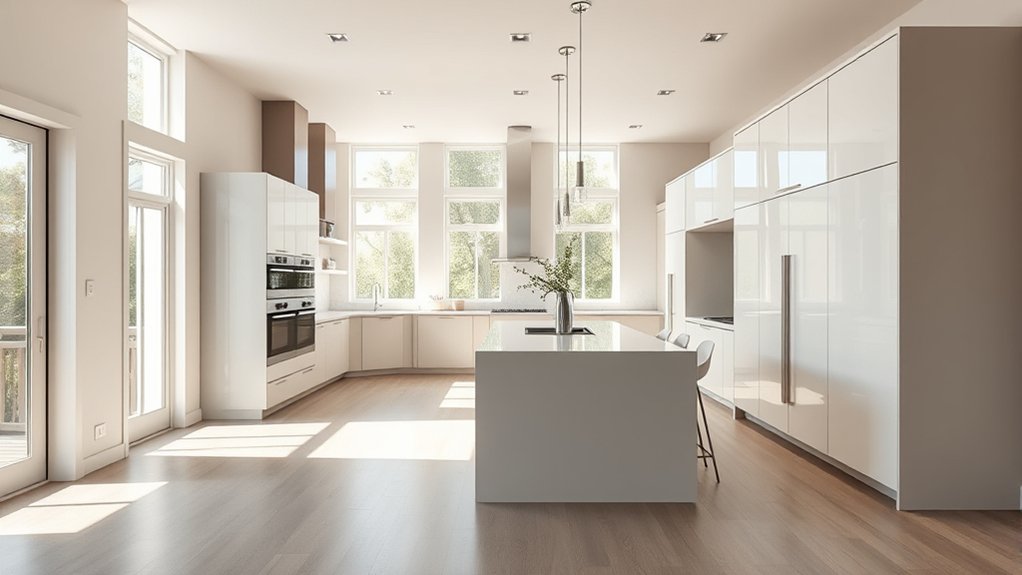
Your kitchen’s size and layout play a huge role in shaping your remodel budget. When you have a larger space, you’ll need more materials and labor, which naturally drives up costs. An open layout might require additional considerations for kitchen lighting to guarantee the entire area is well-lit, potentially increasing your expenses.
On the other hand, a compact kitchen limits how much you spend on flooring options but can pose challenges in maximizing functionality without costly custom solutions.
If your kitchen’s layout requires moving plumbing or electrical fixtures, expect your budget to rise considerably. Also, irregular or complex layouts might demand tailored cabinetry or special flooring cuts, adding to the cost.
How to Choose Materials and Appliances Within Your Kitchen Remodel Budget

When selecting materials and appliances, balancing quality with cost can make or break your kitchen remodel budget. You want materials that offer lasting material durability without overspending. Likewise, appliances with high energy efficiency can save you money long-term, even if they cost more upfront. Prioritize what matters most to you and your lifestyle to avoid unnecessary expenses.
Consider these tips to keep your budget in check while choosing the right materials and appliances:
- Opt for durable surfaces like quartz or engineered stone that resist wear and tear, reducing future repair costs.
- Select appliances rated highly for energy efficiency; they lower utility bills and contribute to a greener home.
- Mix and match mid-range and premium materials to balance aesthetics with affordability.
How a Complex Design Can Cost You More (And What to Do About It)
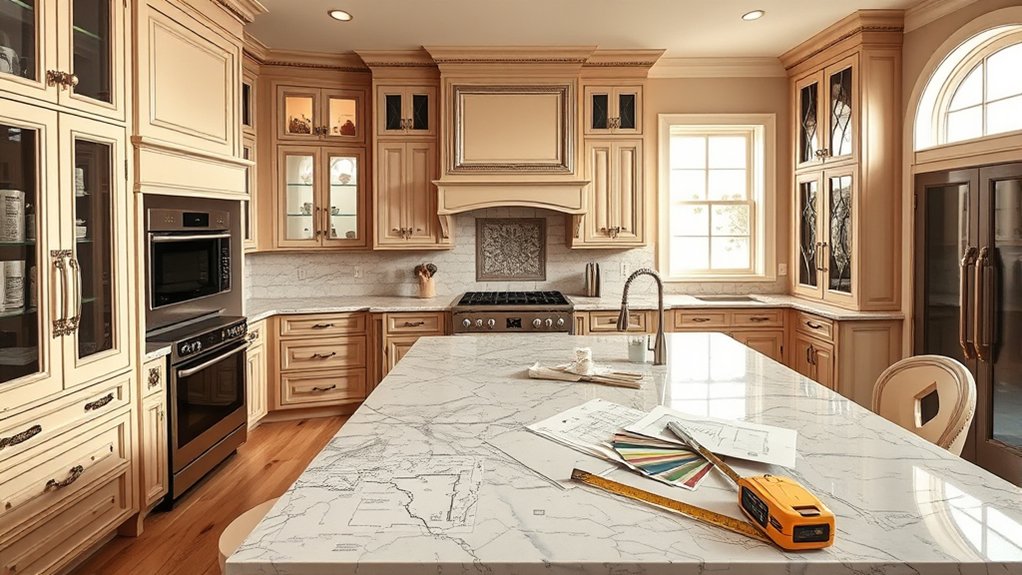
Balancing quality materials and appliances is a smart way to manage your kitchen remodel budget, but the design itself can considerably impact costs too. When you increase design complexity, you invite cost escalation. Intricate layouts, custom cabinetry, or unusual shapes require more labor and materials, which quickly add up.
Here’s a quick look at how design choices affect your budget:
| Design Element | Complexity Level | Impact on Cost |
|---|---|---|
| Cabinetry | Simple | Moderate |
| Custom | High | |
| Layout | Standard | Low |
| Multi-zone | High | |
| Countertops | Straight | Moderate |
| Curved/Island | High |
To control expenses, simplify your layout, opt for semi-custom cabinets, and limit unusual features. This approach keeps your dream kitchen within reach without compromising style.
Frequently Asked Questions
How Long Does a Typical Kitchen Remodel Take?
A typical kitchen remodel takes about 6 to 12 weeks, depending on the scope and complexity. You’ll want to contemplate design trends to keep your kitchen stylish and functional, which can affect the timeline.
Material selection also plays a big role. Custom cabinets or specialty countertops might extend the project. If you stay flexible and plan ahead, you can enjoy a smooth remodel that brings your dream kitchen to life without unnecessary delays.
Can I Live in My Home During the Remodel?
You might think living in your home during a kitchen remodel is impossible, but many people do it successfully. You’ll need to plan your living arrangements carefully to maintain comfort and minimize disruption.
Keep home safety in mind. Watch out for construction hazards, dust, and noise. Setting up a temporary kitchen space can help you manage meals.
With good preparation, you can stay put and navigate the remodel without moving out.
What Permits Are Needed for a Kitchen Remodel?
You’ll need permits for major changes in your kitchen remodel, especially if you’re altering plumbing, electrical, or structural elements. Check local building codes to know exactly what’s required.
You’ll have to submit a permit application detailing your plans to your city’s building department. This guarantees your remodel meets safety standards and avoids fines.
It’s best to get permits before starting work to keep everything on track and legal.
How Do I Find a Reliable Contractor?
To find a reliable contractor, start by asking for recommendations and checking online reviews. During contractor selection, interview several candidates to assess their experience and communication.
Don’t hesitate to request references and verify their past work. Make certain they provide a detailed cost estimation to avoid surprises. Trust your gut. Choose someone who listens and understands your vision.
This approach helps guarantee your kitchen remodel goes smoothly and stays within budget.
What Are Common Unexpected Costs in Kitchen Remodeling?
Nearly 30% of kitchen remodels run over budget due to unexpected expenses. When you delve into your project, watch out for hidden fees like electrical upgrades, plumbing fixes, or asbestos removal. These can pop up once walls come down or cabinets are removed.
You’ll also want to budget for last-minute changes or material delays. Being prepared for these surprises helps you avoid stress and keeps your remodel on track.
Conclusion
Think of your kitchen remodel like baking a cake: the size and layout are your basic ingredients, materials and appliances add flavor, and the design complexity is the icing. Just like a cake can overflow if you add too much frosting, your budget can balloon if you don’t balance these factors.
By planning thoughtfully, you’ll create a kitchen that’s both stunning and affordable, proving that smart choices make all the difference in the final slice of your kitchen remodel budget.