How to Sharpen Kitchen Knives in 5 Easy Steps
Struggling to keep your kitchen knives sharp and ready to use? You’re not alone. Many people find it frustrating when their knives become dull, making meal prep slower and less enjoyable. Luckily, sharpening your kitchen knives doesn’t have to be complicated or time-consuming.
With the right tools and a little practice, you can bring back that razor-sharp edge in no time.
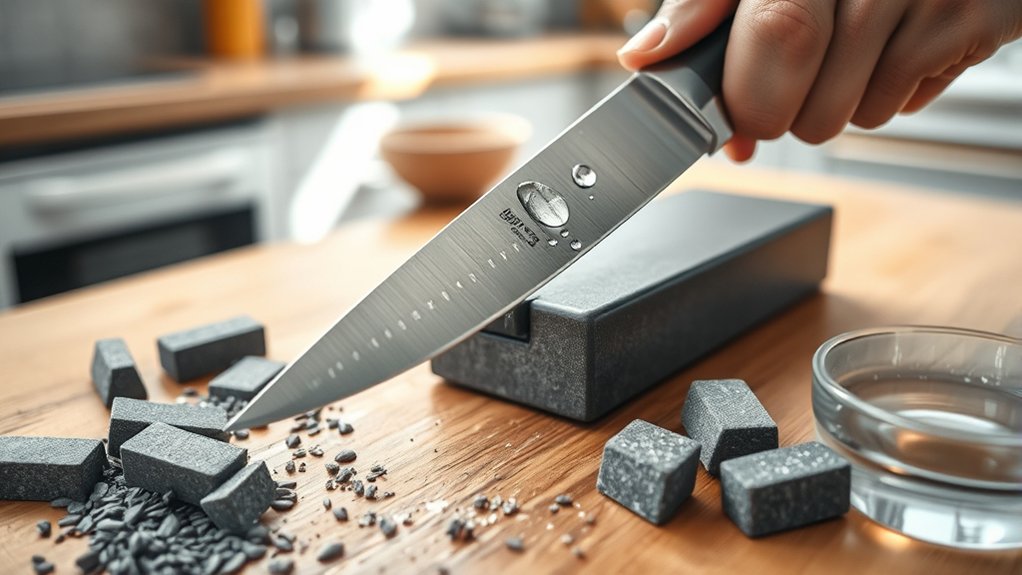
To sharpen your kitchen knives in five easy steps, start by choosing quality whetstones or manual sharpeners to maintain a precise angle. Clean and dry your knife, then set up a clear, stable workspace with good lighting.
Hold the blade at about 15-20 degrees and slide it evenly across the stone without pressing hard. Test sharpness with a paper or tomato slice, then fine-tune if needed.
Follow these basics, and you’ll soon master keeping your knives razor-sharp with confidence.
Key Takeaways
- Clean and dry the knife thoroughly to ensure safe and effective sharpening.
- Choose a quality whetstone or manual sharpener and keep a consistent 15-20 degree angle while sharpening.
- Use gentle, even strokes. Draw the blade smoothly across the sharpening surface without pressing hard.
- Test sharpness by slicing paper or a tomato. If needed, fine-tune the edge with a finer grit.
- Clean, dry, and store knives properly after sharpening to keep the edge sharp and prevent damage.
Best Tools for Sharpening Kitchen Knives
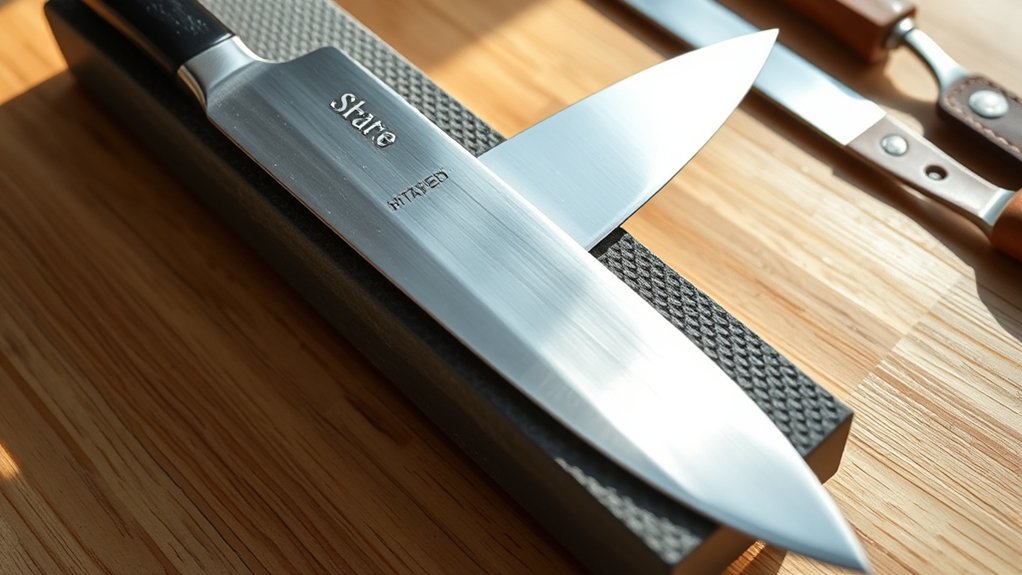
When sharpening your kitchen knives, which tools should you choose to get the best results? You want something reliable that balances effectiveness with knife safety. Many people believe sharpening myths, like using any rough surface will do or that electric sharpeners are always best.
Choosing the right sharpening tools ensures effective, safe knife care and debunks common sharpening myths.
In reality, a quality whetstone or sharpening steel offers precision and control, reducing the risk of damaging your blade or injuring yourself. Manual tools allow you to maintain the correct angle, which is essential for a sharp edge and safe use.
Avoid cheap gadgets that can strip your knife’s edge or cause slips. Remember, the right tool combined with proper technique keeps your knives sharp and safe to handle. Don’t fall for myths promising instant perfection without effort. Knives need consistent care with the right equipment to perform well and last long.
Stick to trusted tools and focus on safety every time you sharpen.
Get Your Knife and Workspace Ready

Choosing the right sharpening tool sets the stage, but getting your knife and workspace ready makes the process smoother and safer. Start by cleaning your knife thoroughly to remove any food particles or grease. Dry it completely to prevent slipping.
Next, clear your workspace and ensure it’s well-lit and stable. A clutter-free area helps you focus and reduces the risk of accidents.
When you hold your knife, pay attention to your knife grip. Grasp the handle firmly but comfortably, keeping control without tension. This grip lets you maintain the correct sharpening angle consistently.
The sharpening angle usually ranges between 15 to 20 degrees for kitchen knives, but check your knife’s specifications for accuracy.
Set your sharpening tool on a non-slip surface or secure it as instructed. By preparing your knife and workspace thoughtfully, you’ll sharpen more confidently and effectively, setting yourself up for success in the next steps.
How to Sharpen Your Kitchen Knives
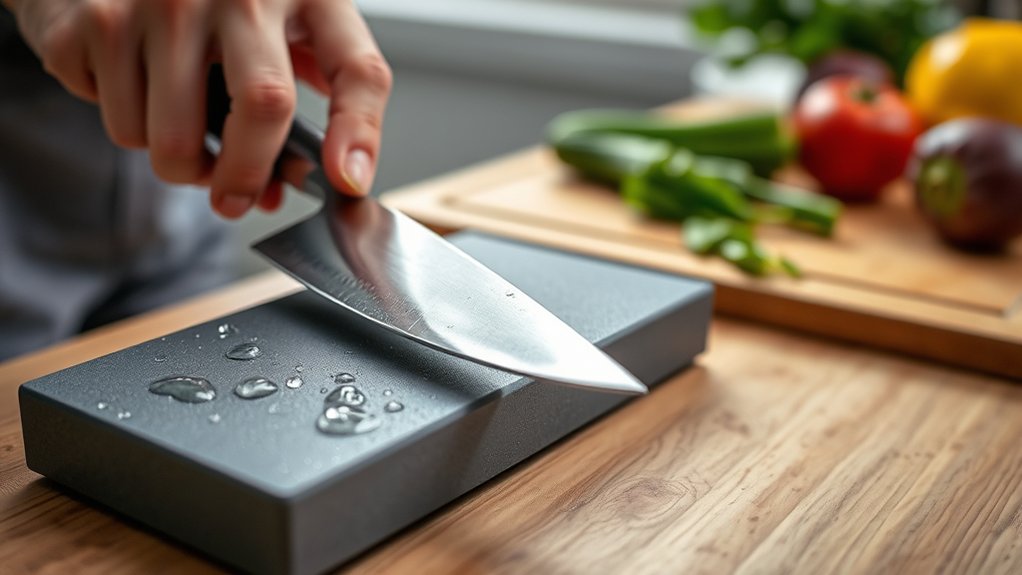
Wondering how to get your kitchen knives razor-sharp? Start by choosing the right sharpening tool. Whetstones are popular, but manual or electric sharpeners work well too.
Always maintain knife safety by keeping your fingers clear of the blade and sharpening surface. Hold the knife at a consistent angle, usually around 20 degrees, and draw the blade smoothly across the stone or sharpener. Avoid pressing too hard; gentle, even strokes do the trick.
Don’t fall for common sharpening myths like using the back of the blade or that more strokes equal sharper knives. Quality over quantity matters. Also, avoid sharpening your knives too frequently, as this wears down the blade prematurely.
Test and Fine-Tune Your Knife’s Sharpness
After sharpening your kitchen knife, you’ll want to test its sharpness to make sure it’s ready for precise cutting tasks. Begin by evaluating how cleanly it slices through simple items. Use these three steps to fine-tune your blade:
- Paper Test: Hold a sheet of paper and slice it with your knife. If the blade smoothly cuts through without snagging, your blade angle is likely spot on. If not, adjust the angle slightly and resharpen using a finer sharpening grit.
- Tomato Test: Try slicing a ripe tomato. A sharp knife should easily glide through the skin without crushing the flesh. If it squashes, your edge may need more honing.
- Fingernail Test: Gently drag the blade across your fingernail at a shallow angle. A sharp blade will catch slightly. If it slides off, refine the edge by repeating the last sharpening step with the finest grit.
Following these checks guarantees your knife performs at its best before moving on.
Maintain Your Sharp Kitchen Knives
To keep your kitchen knives sharp and reliable, you need to maintain them regularly. After sharpening, clean your knives with warm water and mild soap, then dry them immediately to prevent rust and corrosion.
Always handle your knives with care to guarantee knife safety. Never try to catch a falling knife, and keep your fingers clear of the blade while cutting.
Proper storage solutions also play an essential role in maintaining sharpness. Use a knife block, magnetic strip, or blade guards to protect edges from dulling and avoid tossing knives loosely in drawers.
When you store knives correctly, you reduce the risk of accidents and extend their lifespan.
Frequently Asked Questions
Can I Sharpen Serrated Knives With These Methods?
Think of your serrated edges as tiny mountain peaks; they need special care to keep their shape. You can’t use regular sharpening techniques meant for smooth blades because they’ll wear down those peaks unevenly.
Instead, you should use a tapered sharpening rod or a ceramic stick designed for serrated knives. This way, you’ll preserve the valleys and ridges, keeping your serrated edge sharp and ready for precise cutting every time.
How Often Should I Sharpen My Kitchen Knives?
You should sharpen your kitchen knives regularly to keep them in top shape. For effective knife maintenance, aim to sharpen them every 1 to 3 months, depending on how often you use them.
If you notice your knives struggling to cut or slipping, it’s time to sharpen. Remember, frequent honing between sharpening sessions helps maintain the edge, reducing the need for sharpening frequency.
Stay consistent, and your knives will perform well.
What Are the Risks of Sharpening Knives Incorrectly?
If you sharpen knives incorrectly, you risk damaging the blade and compromising blade safety. Using an improper technique can cause uneven edges, chips, or a dull blade faster than usual.
You might also slip, leading to cuts or injuries. To keep your knives effective and safe, always use the right tools and methods.
Taking shortcuts or rushing can lead to accidents or costly blade damage you don’t want to deal with.
Can Electric Sharpeners Damage My Knives?
Electric sharpeners can be a double-edged sword in terms of knife safety. If you use the wrong sharpening tools or apply too much pressure, you risk damaging your blades by removing too much metal or ruining the edge angle.
However, if you follow the instructions carefully and pick a quality sharpener, you’ll keep your knives sharp and safe. Always prioritize controlled, gentle strokes to protect your valuable kitchen tools.
Is Professional Knife Sharpening Worth the Cost?
Yes, professional knife sharpening can be worth the cost if you value precision and longevity. When you compare the cost of professional services to buying new knives or using less effective sharpening techniques, it often saves money in the long run.
Pros use advanced sharpening techniques that restore your blades better than most home methods. If you want sharp, safe knives without hassle, investing in professional sharpening is a smart choice.
Conclusion
Now, imagine slicing through ripe tomatoes with ease, each cut smooth and precise. With just a few simple steps, your kitchen knives can regain that effortless sharpness, turning meal prep into a joy rather than a chore.
Keep your tools ready and practice regularly. Watch your blades sing through ingredients like a hot knife through butter.
Sharpening isn’t just maintenance. It’s the secret to cooking confidently every day with sharp kitchen knives.