How to Get Rid of Gnats in Your Kitchen Fast
Dealing with gnats in your kitchen can be incredibly frustrating, and if you’re struggling to get rid of them fast, you’re not alone. Many people face this pesky problem, especially when these tiny bugs seem to appear out of nowhere and multiply quickly.
Fortunately, there are effective ways to tackle this issue and reclaim your kitchen.
To get rid of gnats in your kitchen fast, start by removing any overripe fruit, rotting produce, and standing water to halt breeding. Clean surfaces, sinks, and garbage areas thoroughly, and make sure to dry out houseplant soil.
Use natural traps like apple cider vinegar with dish soap to catch them quickly.
Fix leaks and keep food sealed to prevent return. For more effective tips and long-term solutions, you can investigate additional strategies tailored to your kitchen’s needs.
Key Takeaways
- Remove overripe fruit, standing water, and organic debris immediately to eliminate gnat breeding sites.
- Clean countertops, sinks, trash bins, and drains thoroughly to remove food residues and moisture.
- Use natural traps like apple cider vinegar with dish soap to quickly catch and reduce gnat populations.
- Store fruits and leftovers in sealed containers or refrigerators to prevent attracting gnats.
- Fix leaks and keep the kitchen dry to disrupt gnat breeding conditions effectively.
Why Are Gnats Buzzing Around Your Kitchen?
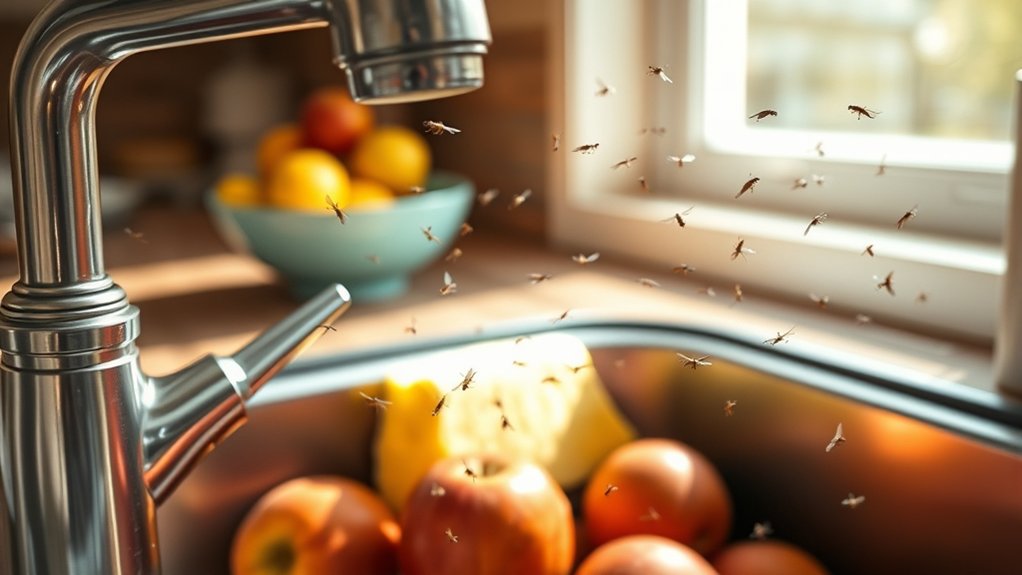
Although gnats seem harmless, they’re actually attracted to specific conditions in your kitchen that make it easy for them to thrive. Understanding gnat behavior helps you see why they keep buzzing around. These tiny pests are drawn to moisture, decaying organic matter, and leftover food, especially fruit and sugary substances.
Gnats thrive in moist, food-rich environments, especially where fruit and sugary residues are left unattended.
You might notice them hovering near sinks, garbage disposals, or overripe fruit bowls. Their rapid breeding cycle means a small problem can quickly become an infestation if left unchecked.
Knowing their habits lets you tailor effective pest control methods. Instead of just swatting them away, you can tackle their breeding grounds by removing sources of attraction.
Keeping surfaces clean, sealing food properly, and fixing leaks disrupts their environment. By addressing these factors, you reduce the chances of gnats sticking around and multiplying.
This approach not only controls the current population but also prevents future invasions, making your kitchen a less inviting place for these nuisances.
Quick Steps to Stop Gnats From Breeding
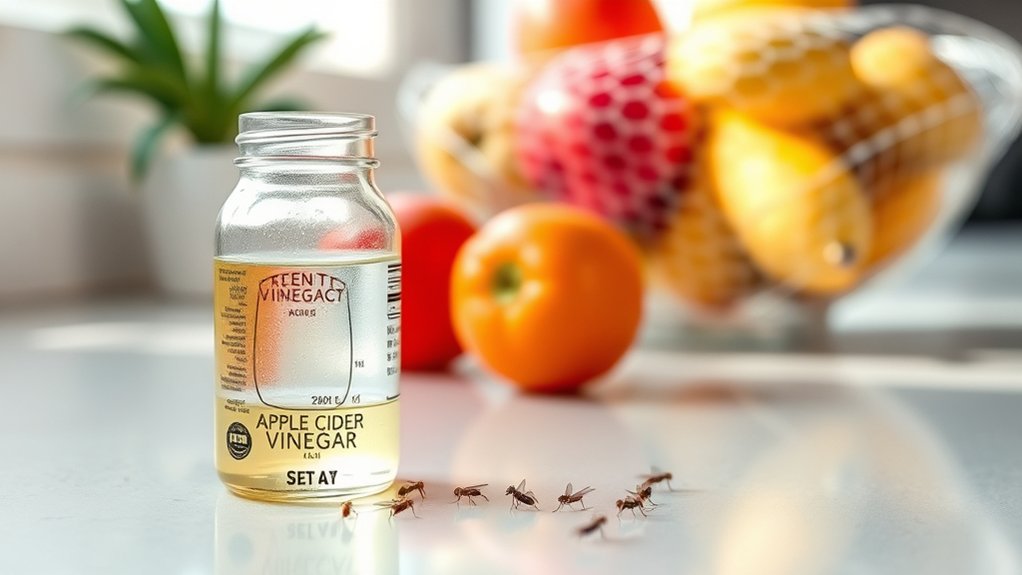
To stop gnats from breeding, you first need to get rid of their breeding spots, like overripe fruit and any standing water around. These are the main places where they lay their eggs.
You can also try using natural repellents, like vinegar traps or essential oils, to keep them from hanging around. These methods work pretty well and are easy to set up.
Eliminate Breeding Sources
Since gnats multiply quickly in damp, decaying matter, you’ll need to identify and remove their breeding grounds to stop their population from growing. Understanding the gnat lifecycle helps you target their breeding habits effectively.
Gnats lay eggs in moist organic material like overripe fruit, food scraps, or wet soil. By regularly cleaning spills, disposing of rotting produce, and keeping trash sealed, you cut off their breeding sites.
Check under sinks and around drains where moisture accumulates, as these are prime spots for larvae development. Also, avoid overwatering houseplants since soggy soil attracts gnats to lay eggs.
Taking these steps interrupts the gnat lifecycle early, preventing new generations from hatching and helping you regain control of your kitchen quickly.
Use Natural Repellents
When you want to stop gnats from breeding quickly, natural repellents offer a safe and effective solution. These repellents help keep fruit flies and other plant pests away without harmful chemicals. By using natural ingredients, you protect your kitchen and plants at the same time.
Try these natural repellents to deter gnats:
- Apple cider vinegar traps: Attract fruit flies and trap them.
- Essential oils: Peppermint, eucalyptus, or citronella oils repel gnats.
- Fresh basil or mint plants: Place near fruit bowls to keep pests away.
- Lemon slices with cloves: A natural scent that deters gnats and fruit flies.
Using these methods regularly prevents gnats from breeding and keeps your kitchen fresh and pest-free.
Cleaning Your Kitchen to Remove Gnats’ Sources
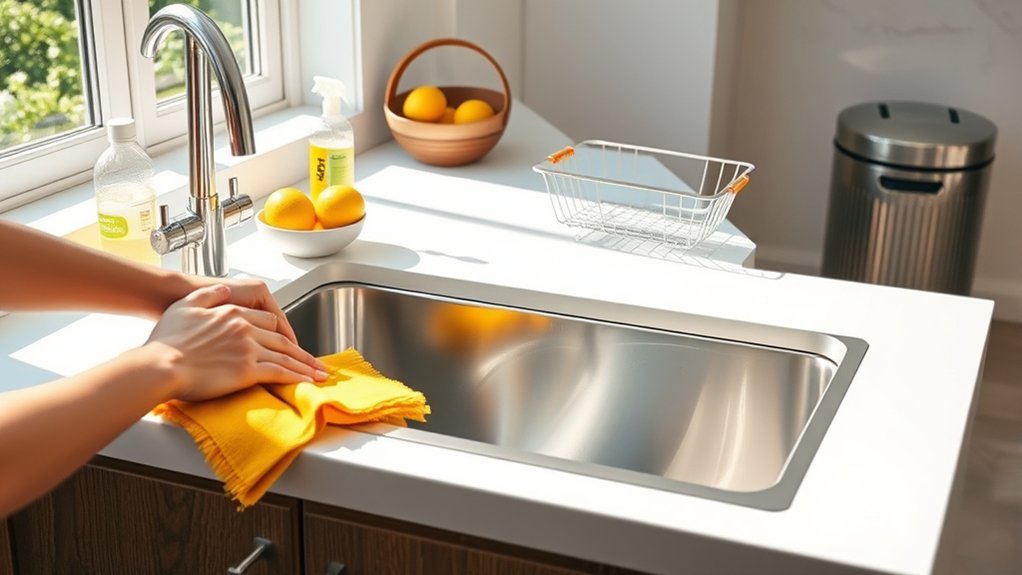
To get rid of gnats, start by wiping away any food residue from countertops and sinks. You’ll want to toss out any overripe or rotting produce too, since that really attracts these pests. Keeping your kitchen clean like this cuts off their main sources and helps prevent new infestations from popping up.
Eliminate Food Residue
Although gnats are tiny, they thrive on the smallest bits of food residue left in your kitchen. To maintain proper food hygiene and effective pest control, you need to eliminate these tempting crumbs and spills. Focus on cleaning areas where food particles accumulate, and don’t let leftovers linger.
Concentrate on wiping down countertops and stove tops after every meal. Also, clean crumbs from the floor and under appliances.
Make sure to rinse and scrub recycling bins and trash cans regularly. And wash dishes and utensils promptly without leaving them out.
Dispose Of Overripe Produce
Keeping your kitchen spotless won’t stop gnats if you leave overripe fruit sitting out. These fruits are prime breeding grounds that fuel the gnat lifecycle, attracting these pests in no time.
To break this cycle, promptly dispose of any overripe or rotting produce. Check your fruit bowls daily and toss anything soft, bruised, or fermenting.
Don’t forget to inspect common houseplant pests, as gnats often lay eggs in the damp soil of potted plants. Removing decayed fruit and maintaining dry soil cuts off their food and breeding source.
Best Homemade Traps to Catch Kitchen Gnats Fast
When gnats invade your kitchen, homemade traps offer a quick and effective way to catch them before their numbers grow. Using simple DIY remedies, you can set up pest control traps without harsh chemicals. These traps attract gnats and trap them, making it easy to reduce their population fast.
Try these effective homemade traps:
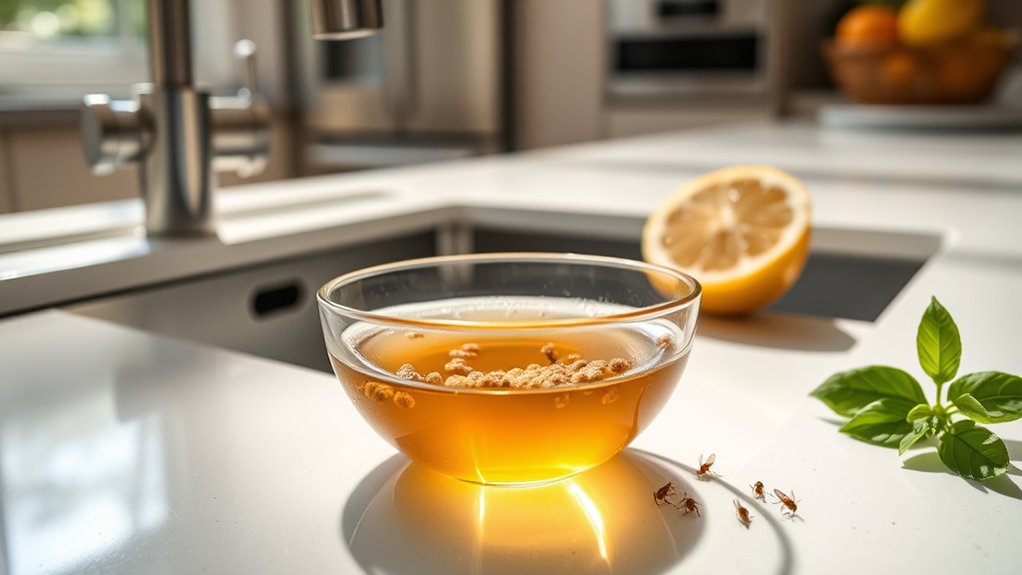
- Apple Cider Vinegar Trap: Fill a bowl with apple cider vinegar, add a few drops of dish soap, and leave it uncovered. The vinegar lures gnats, and soap breaks surface tension, trapping them.
- Fruit Trap: Place overripe fruit in a jar, cover it with plastic wrap, poke small holes, and watch gnats get in but not out.
- Wine Trap: Use leftover red wine in a container with dish soap to attract and catch gnats.
- Milk, Sugar, and Pepper Trap: Heat milk with sugar and pepper, pour it into a dish; gnats are drawn in and drown.
These quick DIY remedies help you control gnats efficiently without expensive products.
How to Use Natural Repellents to Keep Gnats Away
You can keep gnats away naturally by using essential oils like peppermint, eucalyptus, or lavender—because gnats really don’t like those scents. Just mix a few drops of any of these oils with water in a spray bottle, and you’ve got yourself an easy and effective repellent for your kitchen.
On top of that, homemade vinegar traps work wonders. They actually attract gnats and trap them, which helps cut down their numbers pretty quickly. It’s a simple way to keep those pesky little bugs at bay!
Essential Oils That Repel
Although gnats can be persistent, using essential oils offers a natural and effective way to keep them at bay. Essential oils act as a safe pest control method, repelling gnats without harsh chemicals. You can easily incorporate these oils around your kitchen to create an inhospitable environment for gnats.
Try these essential oils for the best results:
- Peppermint oil: Its strong scent deters gnats immediately.
- Lavender oil: Pleasant for you but unpleasant for pests.
- Eucalyptus oil: Disrupts gnat activity and keeps them away.
- Lemon oil: Acts as a natural insect repellent with a fresh aroma.
Simply dilute a few drops in water and spray around problem areas or use a diffuser for continuous protection.
Homemade Vinegar Traps
Since gnats are attracted to the smell of vinegar, homemade vinegar traps provide a simple and effective way to catch and reduce their numbers in your kitchen. To make one, pour apple cider vinegar into a small bowl and add a few drops of dish soap.
The vinegar lures fruit flies and gnats, while the soap breaks the surface tension, trapping them. Place these traps near fruit bowls, compost bins, or any area where gnats gather.
You can cover the bowl with plastic wrap and poke small holes to increase effectiveness. Refresh the trap every few days to keep it working well.
This natural method helps control gnats without chemicals, making your kitchen a less inviting place for these pesky flies.
Safe Use of Chemical Solutions for Gnats
When dealing with gnats in your kitchen, handling chemical solutions carefully guarantees both effectiveness and safety. You need to prioritize chemical safety to avoid health risks for you and your family. Always read and follow the pesticide use instructions on the label before applying any product.
Here are key tips to keep in mind: Wear gloves and a mask to minimize skin contact and inhalation. Use chemical solutions only in well-ventilated areas to reduce fumes. Keep pesticides out of reach of children and pets at all times. Apply chemicals directly to infested areas, avoiding food preparation surfaces.
Preventing Gnats With Proper Food Storage
After using chemical solutions carefully to eliminate gnats, the next step is to stop them from coming back by storing your food properly. Proper food storage is a vital part of pest control methods, especially for fruit preservation. Gnats are attracted to exposed fruits and leftovers, so sealing food tightly can cut off their food source and breeding grounds.
Here’s a simple guide to help you keep gnats away through smart storage:
| Food Type | Storage Tip |
|---|---|
| Fresh Fruits | Store in refrigerator or sealed containers |
| Leftovers | Use airtight containers |
| Vegetables | Keep in perforated bags with ventilation |
| Dry Goods | Store in sealed jars or bins |
Implement these steps consistently to maintain a gnat-free kitchen. By controlling how you store food, you’re applying effective pest control methods that limit gnat attraction and support lasting fruit preservation.
How to Fix Moisture Issues That Attract Kitchen Gnats
Although proper food storage is essential, moisture problems in your kitchen can still attract gnats. These tiny pests thrive in damp environments, so tackling moisture control is key to keeping them away. Start by inspecting areas where water tends to accumulate and fix any leaks immediately. You should also improve drainage solutions around sinks and appliances to prevent standing water.
Here’s how you can fix moisture issues effectively:
- Repair dripping faucets and pipes promptly to eliminate water sources.
- Use a dehumidifier or exhaust fan to reduce humidity levels.
- Guarantee drainage systems are clear and directing water away from your kitchen.
- Wipe down countertops and sinks regularly to remove excess moisture.
How to Spot and Identify Different Kitchen Gnats
Controlling moisture helps reduce gnat populations, but knowing how to spot and identify the different types of kitchen gnats can make your efforts more effective. Gnat behavior varies by species, so mastering identification techniques helps you target the right problem.
Pay attention to size, color, and where they gather.
| Gnat Type | Identification Tips |
|---|---|
| Fruit Flies | Small, tan, hover near fruits |
| Fungus Gnats | Tiny, black, found near soil |
| Drain Flies | Moth-like wings, around drains |
| Phorid Flies | Humpbacked, quick erratic flight |
Long-Term Tips to Keep Your Kitchen Gnat-Free
To keep your kitchen gnat-free over time, you’ll need to adopt consistent habits that eliminate their breeding grounds and food sources. Understanding gnat behavior helps you stay one step ahead. These pests thrive in moist, organic environments and reproduce quickly. Proper pest identification ensures you’re targeting the right problem without wasting effort.
Consistent habits and understanding gnat behavior are key to effectively preventing infestations in your kitchen.
Here are some long-term tips to maintain a gnat-free kitchen:
- Keep your sink drains clean and dry, as gnats often breed in moist residues.
- Store fruits and vegetables in the fridge or sealed containers to cut off food sources.
- Take out garbage regularly and use tightly sealed bins to prevent attracting gnats.
- Fix leaks and reduce excess moisture around your kitchen to disrupt gnat breeding spots.
Frequently Asked Questions
Can Gnats Cause Health Problems in the Kitchen?
Yes, gnats can cause health problems in your kitchen by contaminating food and surfaces. They thrive in high indoor humidity, making your kitchen a perfect breeding ground.
You’ll want to reduce humidity and use effective pest control methods to keep them at bay. Ignoring them can lead to bacteria spread and potential allergic reactions.
Taking quick action helps protect your health and keeps your kitchen clean.
Are Gnats Attracted to Specific Types of Fruit?
Yes, gnats are definitely attracted to specific types of fruit, especially those that are overripe or starting to show signs of fruit decay. When fruit begins to rot, it releases sugars and moisture that draw gnats in.
You should watch out for moisture sources around your kitchen too, like damp sinks or spills, because these create perfect breeding grounds. Keeping fruit fresh and dry helps keep gnats away.
How Quickly Do Gnats Reproduce in the Kitchen?
You’ll notice gnats multiply almost like a tiny, buzzing storm in your kitchen. Their gnat lifespan is short, about a week, but in that time, they lay hundreds of eggs.
Warm, moist breeding conditions near your fruit or sink make them reproduce rapidly, sometimes within days. If you don’t act fast, you’ll see new generations emerging every few days, turning your kitchen into a breeding ground before you realize it.
Do Gnats Bite or Sting Humans?
Gnats don’t bite or sting humans, so you don’t have to worry about painful bites. Their behavior mainly involves hovering around food and moisture.
While they’re annoying, their presence signals that pest control methods are needed to stop them from multiplying. You should focus on eliminating sources of attraction like overripe fruit and damp areas to effectively manage gnat behavior and keep your kitchen pest-free.
Can Pets Attract or Spread Gnats in the Kitchen?
Yes, pets can attract and even spread gnats in your kitchen. Their behavior, like leaving food scraps or dirty water bowls, creates a perfect environment for gnats to thrive.
Plus, animal scents on your pet’s fur or in their bedding can draw gnats closer. You’ll want to clean up regularly and keep pet areas tidy to reduce gnat attraction.
Managing pet behavior helps keep your kitchen gnat-free and fresh.
Conclusion
So, you’ve got gnats buzzing like they own your kitchen. How charming! But unless you enjoy tiny, annoying roommates, you’ll want to act fast.
Clean up, trap those pests, and fix moisture problems like a pro. Remember, letting your kitchen become a gnat playground isn’t exactly the latest trend in home décor.
With these quick tips, you’ll kick those pesky gnats out and reclaim your space because your kitchen should be for cooking, not for hosting insect parties. Getting rid of gnats in your kitchen fast is easier than you think!