7 Standard Depths of Kitchen Cabinets You Should Know
Choosing the right kitchen cabinet depth can feel overwhelming. You want a space that’s functional and stylish, but with so many options, it’s easy to second-guess your choices. You’re not alone—many people struggle to find the perfect balance between storage, appliance fit, and kitchen flow.
You should know that standard kitchen cabinet depths vary to suit different needs: base cabinets are typically 24 inches deep, wall cabinets commonly 12 inches, but can go up to 15 or 24 inches for extra storage.
Pantry cabinets range from 12 to 24 inches depending on what you store. Appliance sizes also affect cabinet depth choices, especially for built-ins.
Matching depth with your storage and layout ensures a functional, balanced kitchen. Keep exploring to find out how to optimize these choices perfectly.
Key Takeaways
- Base cabinets commonly have a standard depth of 24 inches for optimal countertop and storage space.
- Wall cabinets typically range from 12 to 24 inches deep. But 12 inches is most standard for everyday storage.
- Pantry cabinets vary between 12 and 24 inches. Usually, 12 to 15 inches works for small items, while 18 to 24 inches is better for bulk storage.
- Deeper cabinets, like 15 or 24 inches, accommodate larger appliances and bulky cookware efficiently.
- Custom cabinet depths offer flexibility to match specific kitchen layouts and storage needs. They also improve accessibility.
Standard Depths for Base Kitchen Cabinets
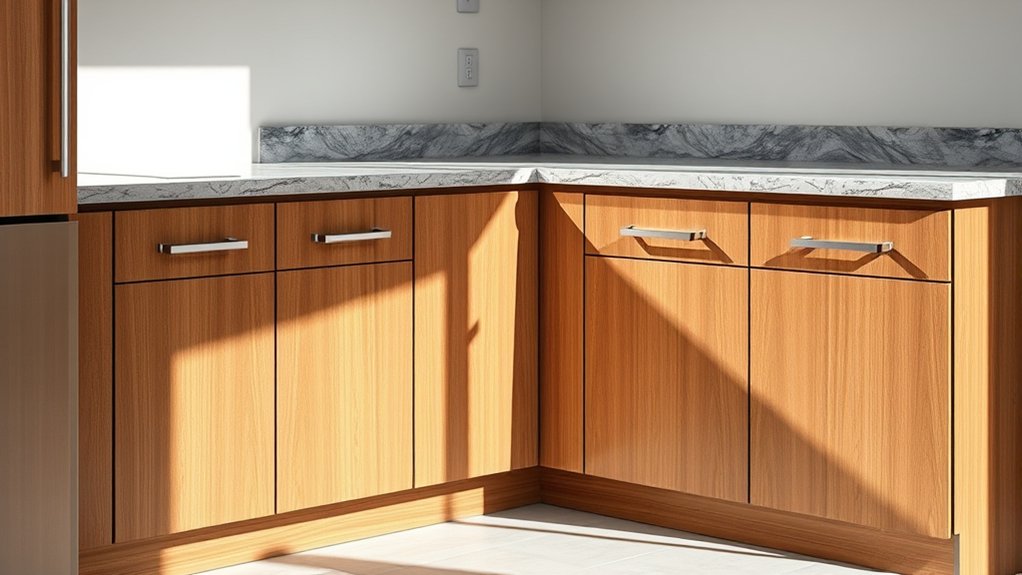
When planning your kitchen layout, understanding the standard depths for base cabinets is essential. Typically, base cabinets measure 24 inches deep, giving you enough space for countertops and storage without overcrowding your kitchen.
This depth balances functionality and comfort, allowing you to reach items easily while maintaining clear walkways. Choosing cabinets with quality material durability ensures they withstand daily use, moisture, and weight over time.
Durable materials also retain their look, preserving your kitchen’s aesthetic appeal. When you pick the right depth, you optimize both practicality and style. You’ll find that base cabinets come in various finishes and materials, so you can match your kitchen’s theme perfectly.
Typical Depths for Wall-Mounted Kitchen Cabinets
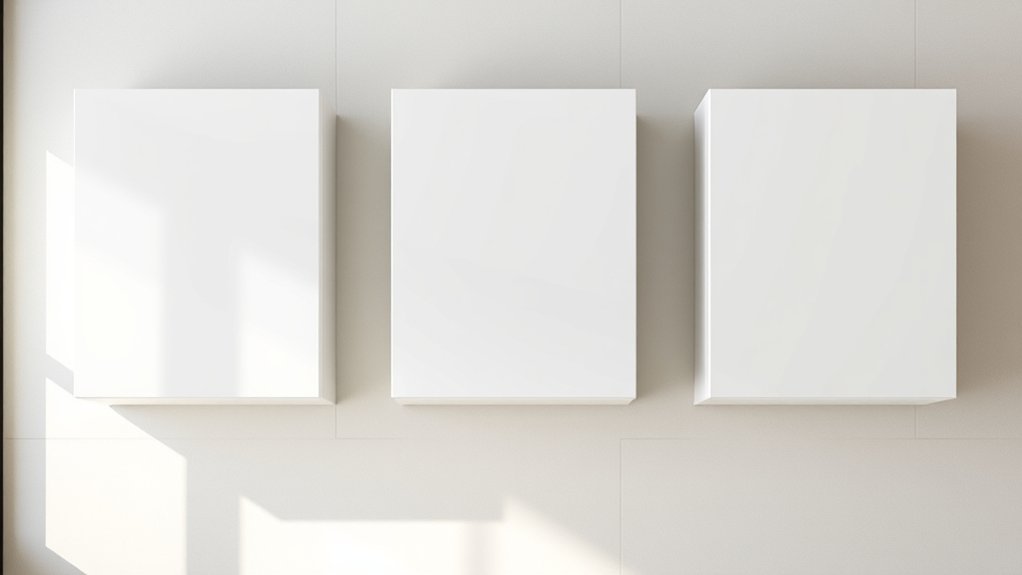
When you’re picking out wall-mounted kitchen cabinets, the standard depth is usually about 12 inches. This size is great because it keeps your kitchen feeling open and airy. Plus, it still gives you enough storage space for your everyday needs.
You’ll also want to consider how these cabinet depths work with your countertops and appliances. Getting the right fit helps you make the most of your workspace and keeps everything looking balanced.
Standard Wall Cabinet Depths
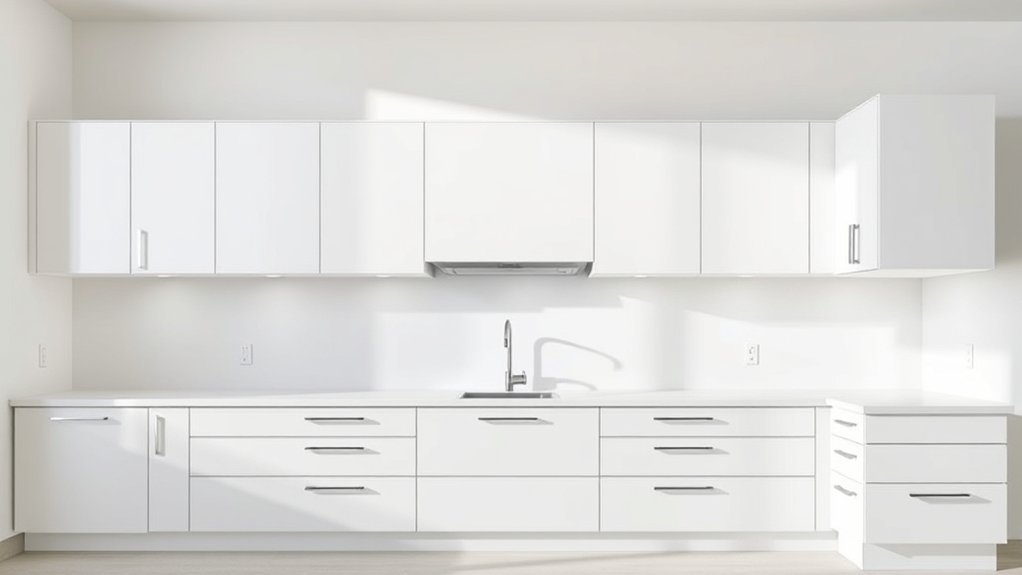
Most standard wall cabinets range between 12 and 24 inches deep, with 12 inches being the most common for kitchen use. When choosing your wall cabinets, you’ll find that the depth impacts both storage and the kitchen’s overall look.
Typically, 12-inch depth works well for most kitchens, offering enough room for plates and glasses without overwhelming the space. You can also find deeper options, like 15 or 24 inches, if you need extra storage.
Keep in mind that cabinet material and color options play a big role in your choice. Wood, MDF, and metal cabinets each come in various finishes and colors, allowing you to customize your kitchen’s style while maintaining functional depth.
Selecting the right combination helps your kitchen stay stylish and practical.
Space Considerations for Cabinets
Cabinet depth plays a key role in how your kitchen feels and functions, especially with wall-mounted units. When choosing typical depths, you need to balance storage needs with available space to avoid overcrowding your kitchen.
Standard wall cabinets usually range from 12 to 24 inches deep, but selecting the right depth depends on your kitchen layout and how much countertop space you want below. Cabinet materials affect weight and durability, so keep that in mind during installation.
Proper installation techniques guarantee your cabinets are securely mounted, preventing sagging or misalignment over time. By considering these factors, you can optimize both the utility and aesthetic of your space without compromising movement or accessibility in your kitchen.
Pantry Cabinet Depths and Sizes in Kitchens
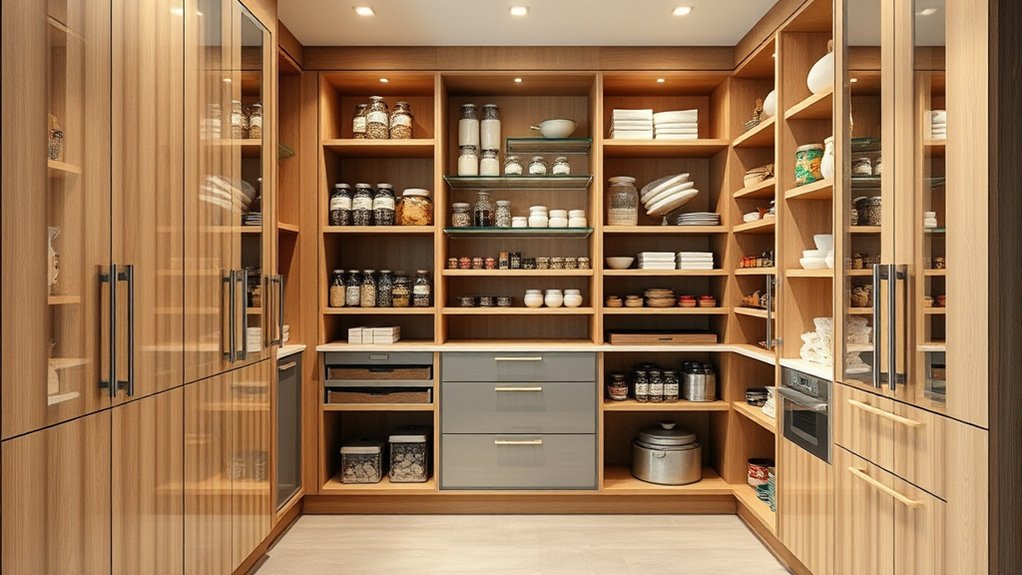
When you’re picking out pantry cabinets, it’s important to think about the standard depths that will work best with your kitchen layout. You want something that not only fits well but also gives you plenty of storage space.
If your kitchen has some tight spots or unusual shapes, custom sizes might be the way to go. They can help you make the most out of every inch available.
Standard Pantry Cabinet Depths
Although pantry cabinets come in various sizes, their depth plays a crucial role in maximizing storage and accessibility in your kitchen. Standard pantry cabinet depths usually range from 12 to 24 inches, balancing space and convenience.
When choosing the right depth for your pantry, consider:
- 12-15 inches: Ideal for decorative accents and slim storage without overwhelming your kitchen space.
- 18 inches: The most common depth, offering ample room for canned goods and everyday items.
- 24 inches: Provides maximum storage, perfect if you stock bulk items or large containers.
- Material choices: Deeper cabinets often require sturdier materials to support heavier loads and maintain durability.
Selecting the correct depth guarantees your pantry complements your kitchen’s style while maximizing functional storage.
Custom Pantry Size Options
If you want your pantry to perfectly fit your kitchen and storage needs, exploring custom size options is the way to go. Custom pantry sizes allow you to tailor depth, height, and width, improving pantry organization with custom shelving that maximizes every inch.
Whether you need shallow shelves for spices or deep shelves for bulk items, customization makes it possible.
| Pantry Depth (inches) | Ideal Use |
|---|---|
| 12-15 | Small items, spices, canned goods |
| 18-24 | Standard pantry shelving |
| 30+ | Large appliances, bulk storage |
Choosing custom pantry dimensions guarantees your kitchen flows smoothly and your pantry organization matches your lifestyle perfectly.
Maximizing Pantry Storage Space
How can you make the most of your pantry space without overcrowding it? Start by choosing pantry cabinet depths that balance storage capacity and accessibility. Standard depths around 24 inches work well, but you can customize sizes to fit your kitchen’s layout.
To maximize space efficiently, consider these tips:
- Install adjustable shelves to customize storage heights.
- Use pull-out drawers or baskets for easy access.
- Select cabinet hardware that complements your decorative finishes, adding style and function.
- Incorporate clear containers to keep items visible and organized.
How Appliance Sizes Influence Kitchen Cabinet Depths
Since appliances come in a variety of sizes, you need to take into account their dimensions when choosing your kitchen cabinet depths. Appliance placement plays a vital role because larger appliances like refrigerators and ovens often require deeper cabinets to fit seamlessly and avoid awkward gaps.
Consider appliance sizes and placement to choose cabinet depths that ensure a seamless, gap-free fit.
If you’re installing built-in appliances, your cabinets must accommodate their specific depths to maintain a smooth, integrated look.
Designer preferences also influence cabinet depth decisions. Some designers prefer shallower cabinets around appliances to create more open space, while others opt for deeper units to maximize storage behind or adjacent to appliances.
By considering both appliance size and how you plan to position them, you’ll guarantee your kitchen layout is functional and visually balanced.
Ultimately, aligning your cabinet depths with appliance dimensions helps you avoid installation issues and creates a cohesive design that suits your cooking needs and style. Don’t overlook this step; it’s key to a well-planned kitchen.
Optimizing Drawer Cabinet Depths for Better Storage
Optimizing drawer cabinet depths lets you maximize your kitchen’s storage efficiency without wasting space. When selecting drawer depths, you want to balance capacity with accessibility. Too deep, and it’s hard to reach items; too shallow, and you lose valuable storage.
Here’s how to optimize drawer cabinet depths effectively:
- Match drawer depth to the cabinet material strength. Solid wood supports deeper drawers better than particleboard.
- Use standard depths of 18 to 22 inches to ensure you can access items comfortably.
- Consider decorative accents like beveled edges or inlays that don’t reduce usable space but improve style.
- Organize contents with adjustable dividers tailored to drawer depth. This boosts usability and minimizes clutter.
Custom Kitchen Cabinet Depths: When to Go Beyond Standard
Although standard cabinet depths suit many kitchens, there are times when customizing depth can improve both function and design. When you opt for custom kitchen cabinet depths, you can tailor storage to your specific needs. This makes better use of awkward spaces or enhances accessibility.
Innovative design plays a key role here. Deeper cabinets can accommodate larger appliances or bulkier cookware, while shallower options may better fit narrow spaces without crowding your kitchen.
Keep material considerations in mind, too. Deeper cabinets require sturdier materials to maintain durability and avoid sagging over time. Also, custom depths might affect door and drawer hardware choices, so plan accordingly.
Tips for Choosing Cabinet Depths That Fit Your Kitchen
When choosing cabinet depths, consider how you use your kitchen daily to guarantee your storage fits both your space and lifestyle. Start by evaluating your kitchen layout and how much room you have for cabinets without crowding walkways.
Next, think about the types of items you store. Deeper cabinets suit bulky appliances, while shallower ones keep everyday essentials accessible.
Here are four tips to help you pick the right cabinet depths:
- Match cabinet material with your depth choice. Some materials handle weight better in deeper designs.
- Explore finish options that complement your kitchen style and make maintenance easier.
- Balance upper and lower cabinet depths for a cohesive look and functional workflow.
- Prioritize ergonomics. Make sure you can reach everything comfortably without straining.
Frequently Asked Questions
How Do Cabinet Depths Affect Kitchen Lighting?
Cabinet depths directly impact your kitchen lighting by influencing how light spreads across surfaces. Deeper cabinets can create shadows, reducing brightness and affecting cabinet aesthetics.
You’ll want to balance depth to make sure enough light reaches inside, enhancing interior organization. Proper lighting highlights your cabinet’s design and helps you find items easily.
What Materials Are Best for Durable Kitchen Cabinets?
Think of choosing cabinet materials like picking a sturdy backpack for a hiking trip. It needs to handle weight and rough use. You’ll want hardwoods like maple or oak for durability and timeless appeal.
Pair these with quality cabinet hardware to make certain smooth operation. Don’t forget interior organization systems made from metal or heavy-duty plastic. They keep everything accessible and lasting.
This combo guarantees your kitchen cabinets stay strong and functional for years.
How Often Should Kitchen Cabinets Be Refinished or Replaced?
You should refinish kitchen cabinets every 5 to 10 years, depending on wear and tear. Using fresh cabinet paint can instantly refresh their look without a full replacement.
Pay attention to hardware selection too. Updating handles and knobs gives your cabinets a modern vibe. Replace cabinets only when they’re structurally damaged or outdated beyond repair.
Regular maintenance and smart updates can extend their life and keep your kitchen looking sharp.
Are Deeper Cabinets Harder to Clean and Maintain?
Yes, deeper cabinets can be harder to clean and maintain. You’ll face cabinet cleaning challenges since reaching the back corners requires more effort.
Dust and crumbs tend to collect in deeper spaces, making regular maintenance trickier. To avoid maintenance challenges, you might need to organize items carefully and use tools like extendable dusters.
Staying on top of cleaning will help keep your cabinets looking great despite their depth.
Do Cabinet Depths Impact Kitchen Resale Value?
You’ll find that cabinet depths can make or break your kitchen’s resale value faster than a lightning bolt. Buyers today don’t just look at size; they want cabinet color trends that pop and sustainable material options that show eco-consciousness.
If your cabinets are too shallow or too deep, it might throw off functionality and appeal. Balancing trendy colors with practical depths and green materials can seriously boost your home’s market edge.
Conclusion
Choosing the right kitchen cabinet depths is like finding the perfect rhythm in a dance. It keeps your space flowing smoothly and your storage in harmony.
By understanding the standard depths and when to customize, you’ll create a kitchen that fits your lifestyle like a glove. So, don’t just settle for the usual. Let your cabinets be the unsung heroes that make your kitchen sing with efficiency and style every day.
Remember, knowing the standard depths of kitchen cabinets helps you design a space that works beautifully for you.