How Tall Are Standard Kitchen Counters?
Struggling with uncomfortable kitchen counters that leave your back aching or wrists sore? You’re not alone. Many people find that their kitchen setup just doesn’t feel quite right when prepping meals or cooking. Finding the perfect counter height can make all the difference in comfort and efficiency.
Standard kitchen counters are typically about 36 inches tall, designed to fit most adults comfortably for everyday tasks like prepping and cooking. This height helps reduce strain on your back and wrists, promoting better posture and efficiency.
Keep in mind, materials like thicker granite can slightly raise the final height, so customization might be needed. If you want to investigate how counter height impacts comfort, tasks, and kitchen design, there’s plenty more to uncover.
Key Takeaways
- Standard kitchen counters are typically 36 inches tall from the floor to the countertop surface. This height comes from ergonomic design for a comfortable standing workspace and general kitchen tasks.
- Countertop material thickness, such as granite or wood, can slightly affect the overall counter height.
- Variations exist with lower counters (30-34 inches) for seating and higher counters (38-42 inches) for bar areas.
- Custom counter heights improve comfort and function based on user height and specific kitchen activities.
What Is the Standard Height for Kitchen Counters?
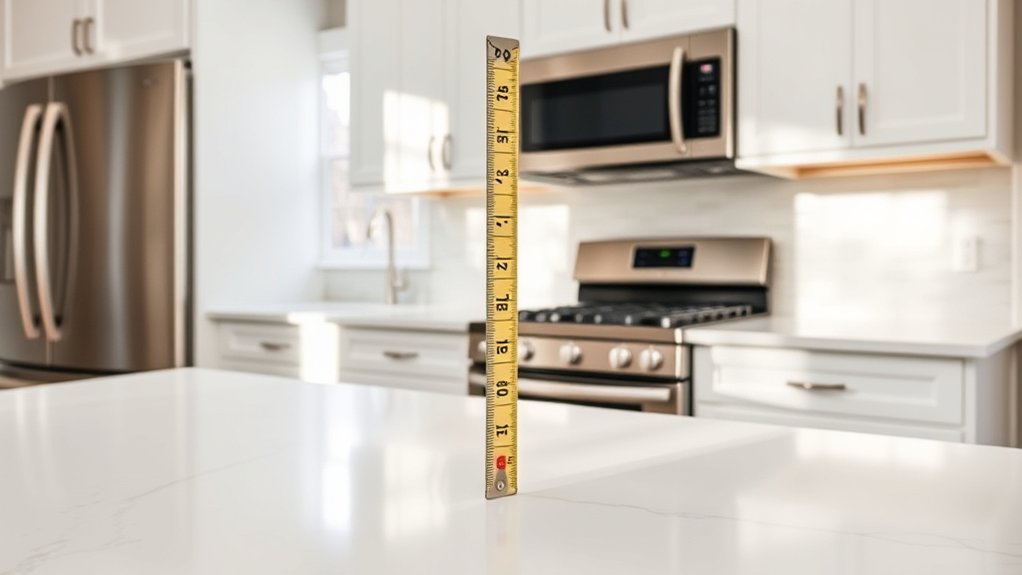
Although kitchen designs vary widely, the standard height for kitchen counters typically measures around 36 inches from the floor. This measurement comes from the counter height history, where designers aimed to create a comfortable workspace for most people standing upright. Over time, this height became a norm due to its practicality in kitchens across homes and commercial spaces.
You should also consider the material influence when understanding counter height. Different materials like granite, wood, or laminate can affect the thickness of the countertop, slightly altering the total height. For example, thicker stone slabs may raise the counter surface, while thinner materials keep it closer to the standard. When planning your kitchen, knowing this helps you maintain the right balance between height and functionality. So, while 36 inches is the typical measurement, material choices can subtly impact the final counter height you’ll work with every day.
Why Does Kitchen Counter Height Matter for Comfort?

Choosing the right kitchen counter height goes beyond standard measurements because it directly affects your comfort while cooking and preparing food. When your counter height matches your needs, you reduce strain on your back, shoulders, and wrists, making meal prep more enjoyable. Ergonomic design plays a key role in creating a kitchen that feels natural and efficient to use.
If your counter height is off, you’ll likely experience discomfort or fatigue faster. Proper counter height supports good posture and smooth movements, helping you stay comfortable during long cooking sessions.
Consider these factors for comfort related to counter height:
- Reduces repetitive strain and muscle fatigue
- Enhances efficiency by minimizing awkward bending or reaching
- Supports a natural, relaxed posture for your height
How to Measure Your Kitchen Counter Height
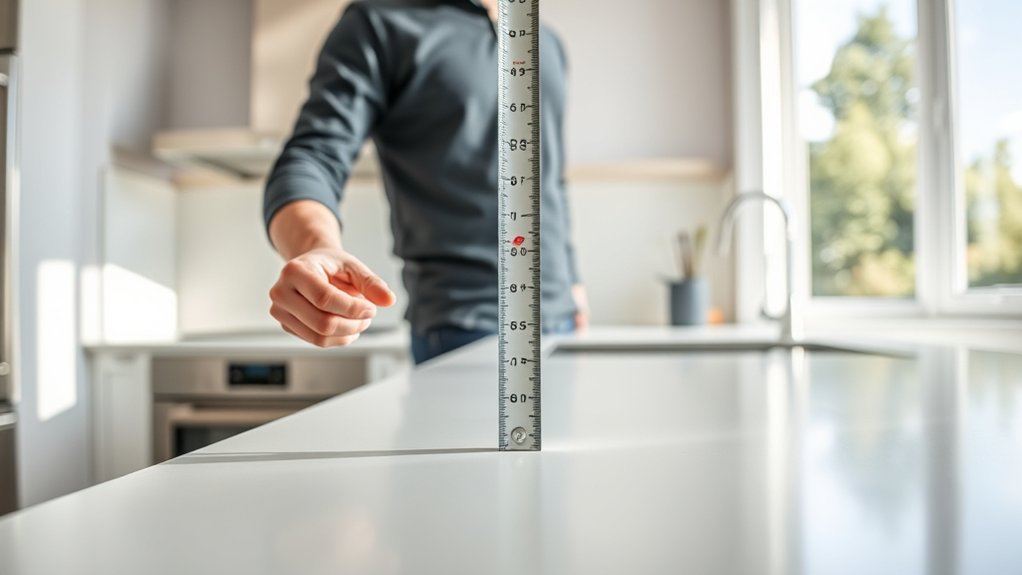
When you measure your kitchen counter height, you’ll get a clear idea of whether it suits your needs or if adjustments are necessary. Start by using a tape measure to check the distance from the floor to the countertop surface at several points. This helps account for any unevenness caused by different countertop materials or installation techniques.
Make sure to measure straight up from the floor, avoiding any toe kicks or cabinet bases that could affect accuracy. If you have a layered countertop, like one with a thick stone slab or a raised edge, measure the full height including those materials.
Note that installation techniques such as shimming or leveling can slightly alter the final height, so it’s good to measure after installation. Taking precise measurements guarantees you can decide if your counters offer the right comfort and functionality or if modifications are needed to better fit your kitchen workflow.
What Are Common Variations in Kitchen Counter Height?
Since kitchen tasks vary widely, your counter height might need to differ from the standard 36 inches. You’ll find that common variations often depend on who uses the kitchen and the types of activities you do. For instance, shorter users might prefer lower counters, while taller individuals benefit from a higher surface.
Moreover, the choice of countertop materials can influence the height adjustment since some materials require thicker bases, slightly raising the surface.
Here are common variations to consider:
- Lower counters (30-34 inches): Ideal for seated tasks or children’s use.
- Standard height (36 inches): Fits most standing adults and general kitchen work.
- Higher counters (38-42 inches): Suited for taller users and bar-style seating areas.
When planning your kitchen, think about these height adjustments and how your chosen countertop materials might affect the final measurement to ensure comfort and functionality.
How Kitchen Counter Height Affects Different Tasks
You’ll notice that kitchen counter height really makes a difference in how comfortable you feel while prepping food or baking. When the height is just right, it can reduce strain on your back and arms, making tasks like kneading dough feel a lot easier. Plus, it’s not just about cooking — the right height also helps when it’s time to clean up, so you’re not bending over too much. It all adds up to a much more enjoyable kitchen experience.
Ergonomics For Food Preparation
Although kitchen counter height might seem like a small detail, it plays a crucial role in how comfortably and efficiently you can perform various food preparation tasks. When your counters are at the right height, you reduce strain on your back and wrists, making chopping, mixing, and plating easier.
Consider how different countertop materials and decorative accents might influence your workflow too. They can affect your reach and movement around the kitchen.
To optimize ergonomics, focus on matching counter height to your primary food prep activities, ensuring enough space for comfortable arm movement, and choosing countertop materials that combine durability with ease of cleaning.
Impact On Baking Comfort
Matching your kitchen counter height to your activities can considerably improve your comfort, especially when baking. When your counter height suits your stature, you won’t strain your back or wrists while mixing dough, rolling out pastry, or decorating cakes. Proper height lets you maintain good posture, making repetitive tasks less tiring.
Beyond function, counter height aesthetics play a role too. Taller counters can create a more dramatic look, while lower ones feel more inviting for detailed work like icing or shaping. Choosing decorative surfaces that are smooth and easy to clean complements the height, helping your baking flow smoothly.
Ultimately, aligning your counter height with baking tasks turns your kitchen into a comfortable, efficient space where creativity thrives without physical discomfort.
Suitability For Cleaning Tasks
When tackling cleaning tasks in the kitchen, counter height plays an essential role in your ease and efficiency. If the counter is too low, you might find yourself bending over frequently, which can strain your back during extended cleaning sessions.
Conversely, a counter that’s too high can make scrubbing and wiping awkward, reducing your overall effectiveness.
With the right counter height, you can comfortably manage various cleaning tasks like wiping down surfaces without unnecessary bending, scrubbing tough stains with proper advantage, and organizing and cleaning dishes without strain.
Choosing a counter height suited to your stature ensures that cleaning tasks don’t become a chore. It improves your posture and saves time, letting you maintain a spotless kitchen effortlessly.
How Counter Height Influences Accessibility and Ergonomics
You’ll find that the right counter height can really help reduce strain on your back and wrists while you work. It makes a big difference in how comfortable you feel. Plus, it makes your kitchen more accessible for everyone. Whether you’re standing, seated, or using a wheelchair, the right height matters. Choosing the proper height guarantees comfort and ease for all users.
Ergonomic Benefits Of Height
Although standard kitchen counters are designed for general use, their height plays a crucial role in your comfort and accessibility while cooking or preparing meals. Choosing the right height helps reduce strain on your back and wrists, making daily tasks easier.
Ergonomic counter heights align with your natural posture, preventing fatigue during extended kitchen activities.
Consider these ergonomic benefits:
- Minimizes bending or reaching, protecting your spine.
- Improves precision and control when chopping or mixing.
- Supports better circulation by allowing comfortable standing positions.
As kitchen design trends evolve, integrating ergonomic counter heights with your preferred countertop materials ensures a stylish yet functional workspace. By prioritizing height, you create a kitchen that’s not only visually appealing but also tailored to your well-being and efficiency.
Accessibility For Different Users
How does counter height impact accessibility for everyone using your kitchen? Counter height adjustments play a vital role in making your kitchen comfortable and functional for all users.
When you tailor counter heights to different needs, you improve ergonomics and guarantee no one struggles with tasks. Plus, thoughtful adjustments can blend seamlessly with your kitchen’s aesthetic design.
| User Type | Ideal Counter Height | Benefit | Design Consideration |
|---|---|---|---|
| Children | 28-30 inches | Easier reach | Lower cabinets, bright colors |
| Adults (average) | 36 inches | Comfortable posture | Standard design |
| Taller Adults | 38-42 inches | Reduces back strain | Custom elevated counters |
| Wheelchair Users | 28-34 inches | Wheel access, comfort | Open space underneath |
Adjusting your counters boosts accessibility without sacrificing style.
When to Choose Custom Counter Heights
When standard counter heights don’t fit your needs, opting for custom heights can make a big difference in comfort and functionality. You might find that adjusting the height improves your cooking experience or better suits your kitchen’s layout. Customizing also allows you to select countertop materials that complement your design while optimizing your workspace.
You should consider custom counter heights if you want to:
- Improve ergonomics for specific tasks like chopping or baking
- Maximize storage options by aligning counters with cabinets or appliances
- Accommodate family members with unique height requirements
Choosing custom heights lets you tailor your kitchen to how you work and live. It ensures your counters aren’t just standard but perfectly suited to your lifestyle, making meal prep easier and more enjoyable. By thinking about your preferred countertop materials and storage needs, you create a kitchen that’s both beautiful and practical.
What Are the Differences Between Kitchen Island and Main Counter Heights?
Customizing your countertop heights can greatly improve your kitchen’s functionality, but it’s also important to understand the typical differences between kitchen island and main counter heights. Main counters usually stand around 36 inches tall, offering a standard surface for prepping and cooking.
Kitchen islands, however, often feature counter height variations tailored to their specific use. For example, some islands are built slightly higher, around 42 inches, to serve as casual dining spots or bar areas.
These variations support an ergonomic design, helping you maintain comfortable posture whether chopping vegetables or sitting with friends. When planning your kitchen, consider how you’ll use each surface. A taller island might suit seating, while a standard-height main counter works well for food prep.
How Kitchen Counter Height Affects Cabinets and Appliances
Because countertop height directly influences the space beneath, it affects the size and placement of your cabinets and appliances. When you choose a taller or shorter counter, you’ll need to evaluate how it changes cabinet dimensions and the fit of appliances like dishwashers or ovens. For instance, a higher countertop may require taller base cabinets or specialized appliance sizes.
Countertop height impacts cabinet size and appliance fit, requiring careful planning for dimensions and compatibility.
Keep these in mind:
- Your countertop materials can add thickness, altering the effective height and cabinet clearance.
- Appliances have standard dimensions, so counter height adjustments might limit your options.
- Decorative accents on cabinet doors or moldings must complement the altered height to maintain a balanced look.
Tips for Choosing the Right Kitchen Counter Height
When choosing your kitchen counter height, think about what feels comfortable for you as you go about your daily tasks. Ergonomics play a big role here—they can help reduce strain when you’re prepping food or cooking.
You might also want to consider having different heights for specific tasks, like chopping or baking. This way, your kitchen can be more efficient and tailored to what you do most.
Ergonomic Considerations
Although standard kitchen counters have a typical height, you should consider your own comfort and daily tasks to choose the right counter height. Ergonomics plays a key role in preventing strain during food prep and cooking. When selecting your countertop materials, keep in mind how they feel under your hands and how easy they are to clean.
Also, think about color coordination with your kitchen’s design. This can visually improve your workspace and make it more inviting.
To optimize ergonomics, focus on:
- Adjusting counter height to match your elbow height for comfortable chopping and stirring
- Choosing materials that balance durability and tactile comfort
- Coordinating colors to reduce visual fatigue and create a pleasant cooking environment
These steps ensure your kitchen is both functional and enjoyable to use.
Task-Specific Heights
Your comfort and daily tasks should guide the height of your kitchen counters. If you spend a lot of time chopping vegetables, a slightly lower counter might reduce strain on your wrists. For baking, a higher surface lets you knead dough comfortably. Consider task-specific heights to maximize efficiency and ease.
Don’t forget how decorative accents and material choices affect both style and function. Thicker materials might raise the counter, while sleek decorative accents can visually slim it down. Adjustable or varied-height counters also let you tailor the space for different activities.
Frequently Asked Questions
What Materials Are Best for Kitchen Counter Surfaces?
Granite and quartz are great choices for kitchen counter surfaces because they offer excellent countertop durability and require minimal material maintenance. If you want something budget-friendly, laminate works well but might not last as long.
Solid surface materials like Corian are easy to maintain and repair. You’ll want to avoid softer stones like marble if you need something that resists scratches and stains.
Always balance durability with how much upkeep you’re ready for.
How Do Kitchen Counter Heights Vary Internationally?
You might think kitchen counter heights are the same everywhere, but counter height variations are quite common internationally. While the U.S. standard is about 36 inches, European counters often sit lower, around 34 to 35 inches, matching their shorter average height.
International standards reflect local ergonomics and cooking habits, so if you’re remodeling or buying appliances abroad, you’ll want to verify these differences to guarantee comfort and functionality.
What Is the Average Cost to Install Kitchen Counters?
You’ll typically spend between $2,000 and $5,000 to install kitchen counters, depending on material and size. Choosing countertops with ergonomic design can save you discomfort during cooking.
Keep in mind, materials like granite or quartz cost more but offer easier countertop maintenance. If you want a balance of style, durability, and comfort, investing in quality installation pays off long-term by reducing upkeep and enhancing your kitchen’s usability.
How Do Kitchen Counter Heights Affect Resale Value?
Think of kitchen counter height ergonomics like the foundation of a house. It sets the tone for comfort and usability. If your counters are too low or too high, buyers might see it as a hurdle, reducing resale value impact.
Are There Safety Standards for Kitchen Counter Edges?
Yes, there are safety standards for kitchen counter edges to prevent injuries. You’ll want to focus on counter edge safety by choosing rounded or beveled edges, which reduce the risk of cuts and bumps.
Incorporating ergonomic counter design helps you work comfortably and safely by minimizing strain and accidents. Following these guidelines guarantees your kitchen is both functional and safe, especially if you have kids or frequently cook in tight spaces.
Conclusion
Choosing the right kitchen counter height isn’t just about measurements. It’s about creating a space that feels just right for you. While standard heights offer a solid starting point, don’t hesitate to tweak them to fit your unique rhythm and comfort.
After all, your kitchen should be a welcoming stage where every task flows smoothly. So, take a moment, measure thoughtfully, and let your counters work quietly behind the scenes. This way, your cooking experience will be effortlessly enjoyable with the perfect kitchen counter height.