Snake a Kitchen Sink in 7 Easy Steps
Dealing with a clogged kitchen sink can be incredibly frustrating, and if you’ve ever faced this mess, you’re not alone. Many people struggle with slow drains and stubborn blockages that disrupt daily routines.
The good news is, with the right tools and a bit of know-how, you can clear your kitchen sink quickly without calling a plumber.
To snake your kitchen sink in 7 easy steps, start by gathering tools like a plumber’s snake, wrench, bucket, and gloves, and clear the sink area.
Place a bucket under the trap, loosen slip nuts, and remove the trap to access the drain pipe.
Insert the snake carefully, rotating and pushing to break up the clog.
Then, remove the snake, flush the drain with hot water, reassemble the trap, and test for leaks.
Keep going to find out tips for when to call a plumber.
Key Takeaways
- Prepare by gathering tools, clearing the sink area, and organizing your workspace. This helps ensure safety and efficiency.
- Remove the sink trap by loosening slip nuts. Place a bucket underneath to catch any water.
- Insert the snake carefully into the drain pipe. Feed it straight and navigate bends gently.
- Rotate the snake handle clockwise while pushing forward. This helps break up and dislodge the clog.
- Remove the snake, clean debris, then flush with hot water. Reassemble the trap and test for leaks.
Gather Tools and Clear Your Kitchen Sink Area

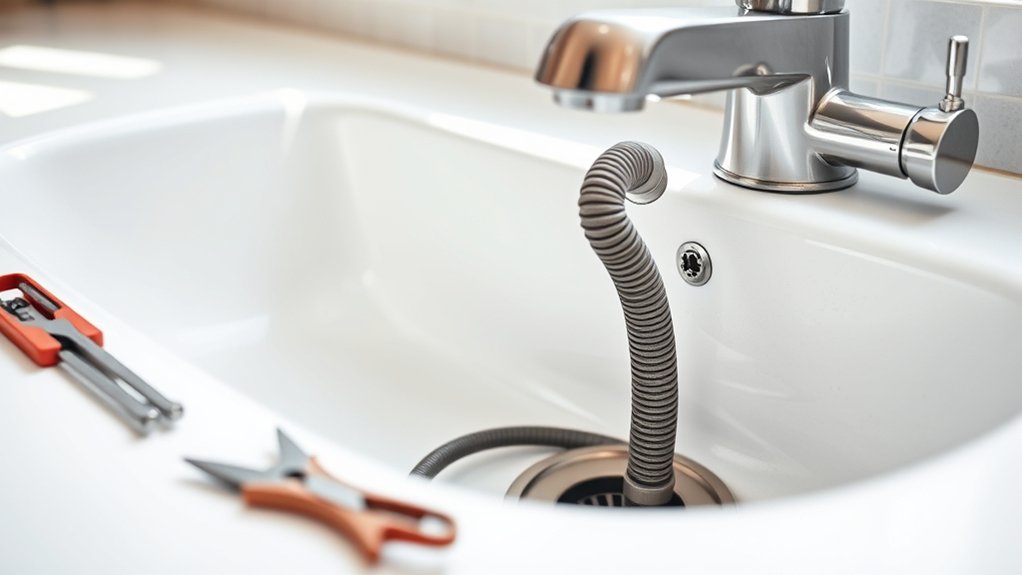
Before you begin snaking your kitchen sink, gather all the necessary tools and clear the area around the sink. This step is key to maintaining good kitchen organization and ensuring you have everything ready without interruption. You’ll want a plumber’s snake, bucket, gloves, and possibly a wrench close at hand.
Clearing the sink area also means removing dishes, cleaning supplies, and anything else that clutters the countertop or under the sink cabinet.
Incorporating this into your regular cleaning routines makes the process smoother and less stressful. When your kitchen is organized, you can focus on the task without distractions.
Plus, having a tidy workspace helps prevent accidents and makes cleanup easier afterward. Taking these simple steps up front saves time and frustration when snaking the drain, letting you tackle clogs efficiently and keep your kitchen functioning well.
Remove the Sink Trap to Access the Drain Pipe

How do you get better access to the drain pipe? The key is to remove the sink trap, the curved section of pipe under your kitchen sink. This part often collects debris and causes blockages, so taking it off is essential for effective plumbing maintenance.
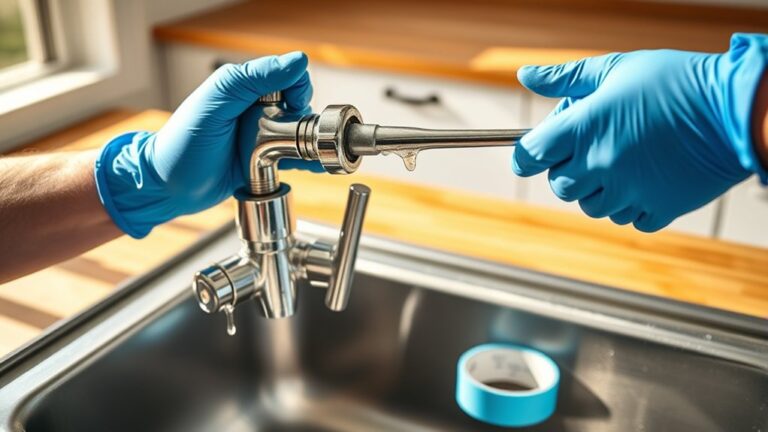
First, place a bucket underneath to catch any water. Then, use a wrench or your hands to loosen the slip nuts connecting the trap to the drain pipe and the wall pipe. Be gentle to avoid damaging any fittings, especially in older kitchen designs where pipes might be more fragile.
Once removed, you’ll have clear access to the straight drain pipe, making it easier to snake and clear clogs. Removing the trap not only helps you reach the blockage but also allows you to inspect and clean this critical component, keeping your kitchen plumbing in good shape and preventing future backups.
Put the Snake Into the Drain Pipe
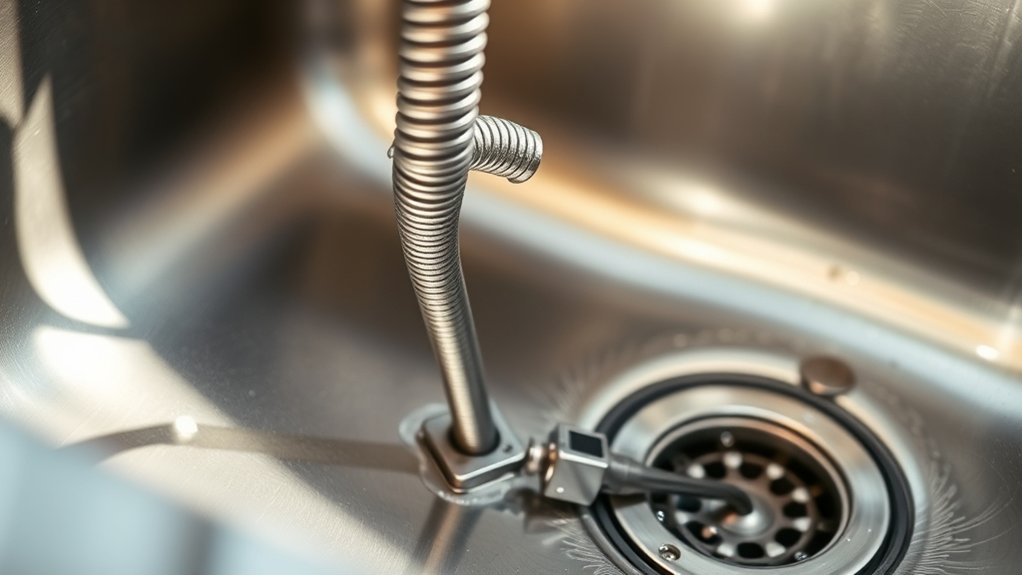
With the sink trap removed, you have a clear path to the drain pipe where the clog is hiding. Carefully take your snake and insert its end into the pipe opening. Make sure you feed it straight in to avoid damaging the pipe’s interior.
Keep a firm grip on the snake’s handle as you guide it deeper. If you feel resistance, don’t force it; instead, gently wiggle the snake to navigate bends.
This step is essential for effective clog prevention and future maintenance. By properly inserting the snake now, you reduce the risk of pushing debris further down or causing pipe damage.
Rotate and Push the Snake to Break Up the Clog
Once the snake is firmly inside the pipe, start rotating its handle clockwise while gently pushing it forward. This rotating technique helps the snake’s tip cut through or latch onto the clog. Use a controlled pushing method to avoid damaging your pipes or getting stuck.
Insert the snake, rotate clockwise, and gently push to break through clogs without damaging pipes.
Here’s how to effectively break up the clog:
- Rotate the handle steadily to engage the snake’s coil with the blockage.
- Push the snake forward incrementally, feeling for resistance or movement.
- If resistance increases, pause rotation and gently pull back slightly before pushing again.
- Repeat this rotating technique and pushing method until you feel the clog loosen or the snake moves freely.
Retrieve the Snake and Flush the Drain With Water
After you’ve loosened or broken up the clog, carefully pull the snake out of the drain while continuing to rotate the handle. This helps prevent the cable from snagging or causing damage to your pipes.
Once the snake is free, inspect it for debris and clean off any buildup. Proper cleaning of the snake after use is essential for effective drain cleaning and prolongs the tool’s life.
Next, flush the drain with plenty of hot water. Pouring hot water helps wash away any remaining debris and clears loosened buildup, ensuring smoother drainage.
This step is crucial in plumbing maintenance to avoid future clogs and maintain optimal water flow. If the water drains quickly and without backing up, you’ve successfully cleared the blockage.
Reassemble the Sink Trap and Test Drainage
Before you can call the job done, you’ll need to reassemble the sink trap carefully to guarantee a proper seal and prevent leaks. Follow these steps to finish up your drain maintenance:
- Gather your cleaning supplies and wipe down the trap parts to remove any residue or debris.
- Align the trap pieces correctly, ensuring the washers and slip nuts are in place.
- Tighten the connections by hand, then give them a slight turn with pliers. Don’t overtighten to avoid damage.
- Run water through the sink to test drainage and check for leaks under the trap.
If the water flows smoothly and no leaks appear, you’ve successfully cleared the blockage and completed your drain maintenance. Proper reassembly is crucial to avoid future problems, so take your time. Now, your sink should work efficiently and be free of clogs!
When to Call a Plumber: Signs You Need Professional Help
If your kitchen sink keeps clogging no matter what you do, it’s probably time to call in some help. Also, keep an eye out for low water pressure or any strange noises coming from the pipes. When you notice these signs, it’s a good idea to get a professional plumber involved before the problem gets any worse.
Persistent Drain Blockages
When your sink remains stubbornly clogged despite your best efforts, it’s time to recognize the signs that require professional help. Persistent blockages often indicate deeper issues like root intrusion or pipe corrosion, which need expert attention.
Here’s when you should call a plumber:
- Water drains slowly even after snaking, suggesting serious blockage.
- You notice foul odors coming from the drain, signaling decay or buildup.
- Frequent clogs reoccur in a short time, indicating an underlying problem.
- Visible damage or rust on pipes points to corrosion that could cause leaks.
Ignoring these signs can lead to costly repairs. A plumber has the tools and skills to address root intrusion, corrosion, and other hidden causes effectively. This can save you time and hassle.
Water Pressure Issues
How do you know if your water pressure problems require a plumber’s expertise? If you notice inconsistent water flow or a sudden drop in pressure that you can’t fix with a simple pressure adjustment, it’s time to call a professional.
DIY fixes might help with minor clogs or valve tweaks, but persistent low pressure often signals deeper issues like pipe corrosion, leaks, or faulty pressure regulators. If your water flow remains weak despite your efforts, a plumber can diagnose and resolve the root cause safely and effectively.
Ignoring these signs may lead to bigger problems, affecting your kitchen sink’s performance and possibly causing damage. Don’t hesitate to seek professional help when pressure adjustment no longer improves your water flow.
Unusual Noises Detected
Although some kitchen sink noises are normal, unusual sounds like banging, whistling, or grinding often indicate plumbing issues that need professional attention. When you detect such sounds, it’s essential to perform a basic noise diagnosis before attempting sound troubleshooting yourself.
Here’s when you should call a plumber:
- Loud banging occurs after turning off the faucet, signaling water hammer.
- Persistent whistling suggests a valve or pipe blockage.
- Grinding noises from the garbage disposal could mean mechanical failure.
- Continuous dripping or gurgling sounds point to possible clogs or leaks.
Ignoring these noises can worsen damage. A professional plumber uses advanced noise diagnosis techniques to pinpoint the exact issue and fix it safely, saving you time and costly repairs.
Frequently Asked Questions
What Types of Snakes Are Best for Kitchen Sink Clogs?
When dealing with kitchen sink clogs, the best snake types you’ll want are hand-crank snakes or drum augers. They’re designed for tight spaces and can effectively break through grease and debris.
Using the right snake helps you maintain your drain better, preventing future blockages. Remember, regular drain maintenance with these snake types saves you from costly plumbing calls and keeps your kitchen sink flowing smoothly.
Can Chemical Drain Cleaners Damage My Plumbing?
Absolutely, chemical drain cleaners can wreak havoc on your plumbing material. If you enjoy chemical reactions that eat away at pipes like a science experiment gone wrong, then go ahead!
These harsh chemicals might corrode metal pipes or even damage PVC, turning your plumbing into a costly disaster zone. So, if you treasure your pipes, steer clear of chemical cleaners.
Opt for safer alternatives to keep your plumbing intact and your wallet happy.
How Often Should I Snake My Kitchen Sink to Prevent Clogs?
You should snake your kitchen sink every 6 to 12 months as part of regular plumbing maintenance to prevent clogs. If you notice slow drainage or unpleasant odors, perform a drain inspection sooner.
Staying proactive helps avoid major blockages and costly repairs. Regular snaking clears buildup before it becomes problematic, keeping your plumbing running smoothly.
Don’t wait for signs of trouble; consistent care saves you time and hassle in the long run.
Are There Natural Alternatives to Unclogging Drains?
Think of your drain as a garden. Sometimes it just needs gentle nurturing. You can tackle clogs with eco-friendly solutions like baking soda and vinegar, a classic homemade remedy that bubbles away grime naturally.
Pour half a cup of baking soda, followed by vinegar. Let it fizz for 15 minutes, then flush with hot water. This method’s safe, effective, and won’t harm your pipes or the environment.
What Safety Precautions Should I Take While Snaking a Drain?
You should always wear gloves and eye protection to avoid contact with debris or chemicals during plumbing inspection and drain maintenance. Make sure the area is well-lit and ventilated.
Turn off the water supply before you start to prevent accidental flooding. Use tools carefully to avoid damaging pipes.
After snaking, inspect the drain thoroughly to guarantee it’s clear. Following these precautions keeps you safe and protects your plumbing system.
Conclusion
Now that you’ve tackled unclogging your kitchen sink with these seven easy steps, you can enjoy smooth drainage again. Remember, a stitch in time saves nine. Addressing clogs early prevents bigger problems down the line.
If you notice persistent blockage or slow drainage despite your efforts, don’t hesitate to call a plumber. Taking quick action keeps your kitchen running smoothly and saves you from costly repairs later. Keeping your kitchen sink clear is key to avoiding future headaches.