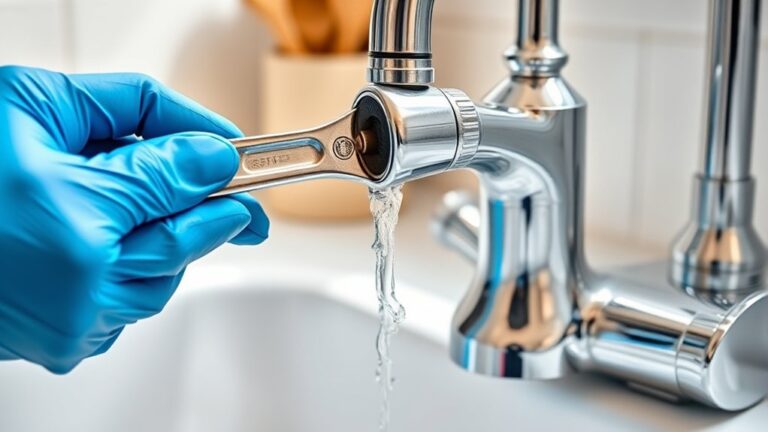
How to Unclog Kitchen Sink With Garbage Disposal in 3 Easy Steps
Dealing with a clogged kitchen sink can be incredibly frustrating, especially when you have a garbage disposal to manage. You’re not alone—many people struggle with slow drains or blockages that disrupt their daily routines. Luckily, unclogging your kitchen sink with a garbage disposal doesn’t have to be a headache.
To unclog your kitchen sink with a garbage disposal, first turn off and unplug the disposal or switch off its circuit breaker for safety.
Next, use a plunger or plumber’s snake to remove any blockages carefully, wearing gloves to protect your hands.
Finally, run plenty of water to test the drain and make sure everything’s flowing smoothly.
Following these simple steps will help keep your sink clear and avoid future problems. There’s more you can do to maintain it efficiently.
Key Takeaways
- Turn off and unplug the garbage disposal or switch off the circuit breaker before starting.
- Use a flashlight to inspect for visible clogs without inserting hands into the disposal.
- Employ a plunger to create suction and dislodge minor debris blocking the drain.
- Use a plumber’s snake for deeper clogs that the plunger cannot clear.
- Run plenty of water through the drain after clearing to ensure proper flow and check for lingering blockages.
How to Safely Get Your Garbage Disposal Ready
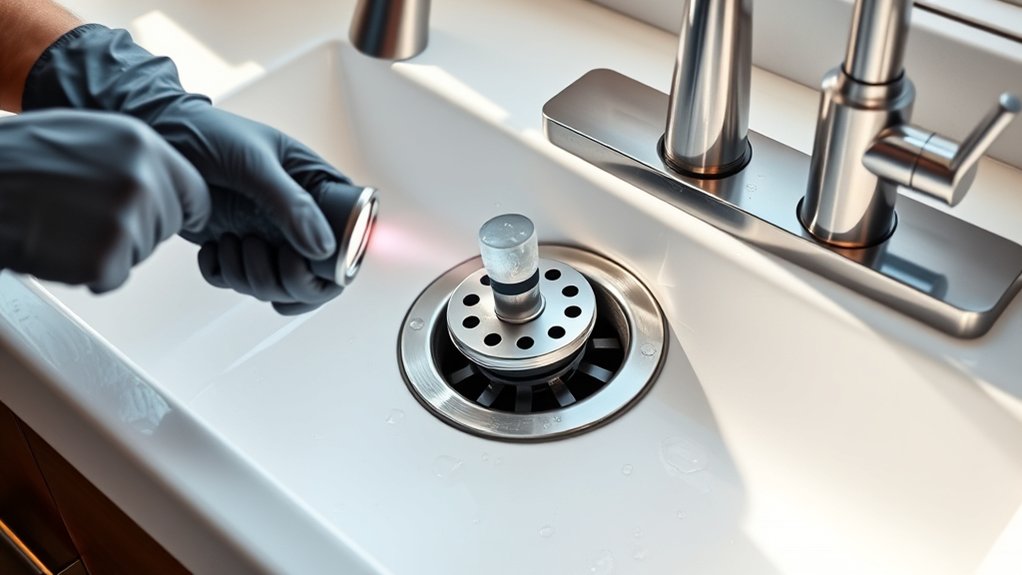
Before you begin unclogging your kitchen sink, make sure to turn off the garbage disposal and unplug it or switch off the circuit breaker. This step is vital for disposal safety to prevent accidental activation while you work.
Once powered down, consult your maintenance checklist to verify you have the right tools and protective gear ready, such as gloves and safety glasses. Check the disposal unit for any visible damage or loose parts before proceeding.
Avoid sticking your hand inside the disposal even when it’s off; use a flashlight to inspect the area. Confirm the sink area is dry to prevent slips or electrical hazards.
Clear Kitchen Sink Clogs Using Simple Tools

When you notice your kitchen sink draining slowly or not at all, simple tools like a plunger or a plumber’s snake can quickly clear most clogs without needing professional help. Start with a plumbing diagnosis by checking for visible blockages in the drain or garbage disposal.
Use a plunger to create suction and dislodge debris blocking water flow. If that doesn’t work, a plumber’s snake can reach deeper clogs by breaking them up or pulling them out. Always wear gloves and work carefully to avoid damaging pipes or the disposal unit.
Performing regular drain maintenance, like flushing with hot water and avoiding grease buildup, helps prevent future blockages. By using these basic tools and techniques, you can save time and money while keeping your kitchen sink running smoothly.
Test Your Kitchen Sink and Prevent Future Clogs
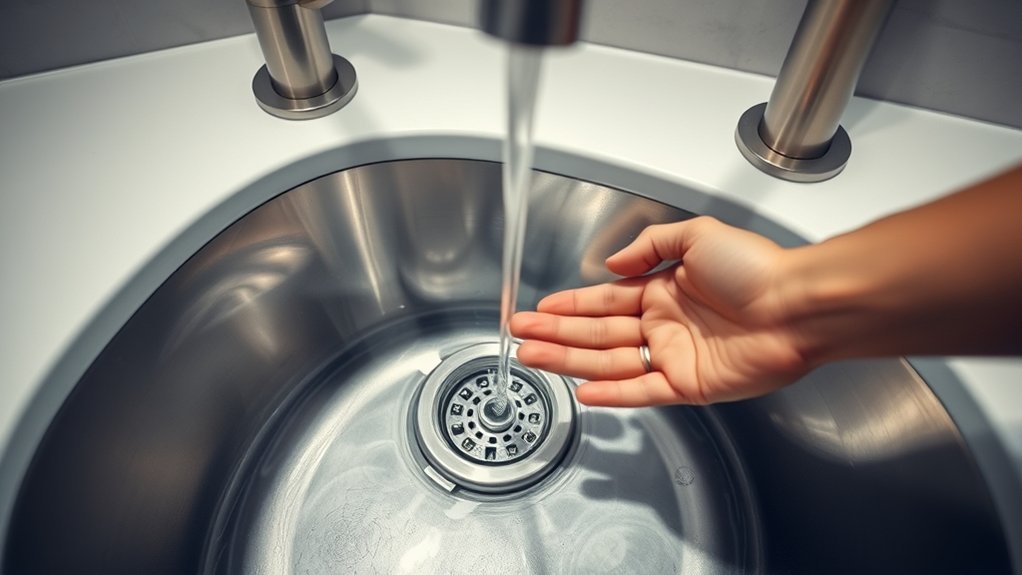
Even if your sink seems to be draining fine after clearing a clog, you should test its flow to verify everything works properly. Run plenty of water through the drain and watch how quickly it empties. If water pools or drains slowly, there might still be a partial blockage. Doing a thorough drain inspection helps you catch lingering issues before they get worse.
Regular plumbing maintenance is key to preventing future clogs. Avoid putting fibrous, starchy, or greasy substances into the disposal, and always run cold water while using it. Schedule periodic checks to make sure all parts work smoothly and no buildup forms inside the pipes. Staying proactive with drain inspection and maintenance keeps your kitchen sink working efficiently and helps you avoid costly repairs later. Remember, testing your sink after unclogging isn’t just about confirming success; it’s about preventing problems before they start.
Frequently Asked Questions
Can I Put Grease Down the Garbage Disposal?
No, you shouldn’t put grease down the garbage disposal. Grease disposal can cause serious clogs and damage because it solidifies and sticks inside your pipes.
To keep your disposal working well, practice good disposal maintenance by scraping grease into the trash instead. Also, run cold water while using the disposal to help flush away small particles.
Taking these steps will save you from costly repairs and keep your kitchen running smoothly.
What Foods Should I Avoid Putting in the Disposal?
You should avoid putting fibrous food scraps like celery, onion skins, and corn husks in your garbage disposal, as they can tangle and clog the blades. Also, stay away from starchy foods like pasta and rice, which can swell and block pipes.
Hard items like bones or fruit pits can damage the disposal. Proper disposal maintenance means only grinding soft, small scraps to keep everything running smoothly and prevent costly clogs.
How Often Should I Clean the Garbage Disposal?
You’ll want to give your garbage disposal a little spa day every week or two. Sticking to a regular cleaning schedule helps keep odors at bay and guarantees smooth operation.
For easy disposal maintenance, grind ice cubes and citrus peels monthly to freshen and sharpen the blades. This simple routine prevents buildup, extending your disposal’s life and keeping your kitchen smelling delightful.
Don’t skip this small but mighty habit!
Is It Safe to Use Chemical Drain Cleaners With a Disposal?
You shouldn’t use chemical drain cleaners with your garbage disposal because they can damage the disposal’s blades and pipes. Instead, try chemical alternatives like baking soda and vinegar for safer disposal maintenance. These natural options help break down clogs without harsh chemicals.
Regularly flushing your disposal with hot water also keeps it running smoothly. By avoiding strong chemicals, you’ll extend your disposal’s life and prevent costly repairs.
Can a Garbage Disposal Handle Bones or Large Pits?
No, your garbage disposal isn’t designed for bone disposal or large pit handling. Throwing bones or big pits in there can damage the blades and motor.
Instead, you should avoid putting hard, tough materials down the disposal to keep it running smoothly. If you accidentally drop a large pit or bone in, turn off the unit immediately and remove the debris manually to prevent costly repairs.
Conclusion
Now that you’ve tackled your clogged kitchen sink with these easy steps, you’re back in the driver’s seat. With a little elbow grease and the right tools, clearing a blockage isn’t rocket science.
Just remember, a stitch in time saves nine. Regular maintenance keeps your garbage disposal running smoothly and prevents future headaches.
Keep these tips handy, and you’ll handle any clog like a pro, making your kitchen flow effortlessly with a well-functioning garbage disposal.