How to Get Rid of Kitchen Ants Fast
Dealing with kitchen ants can be incredibly frustrating. If you’ve ever found those tiny invaders marching across your countertops, you’re not alone. Many people struggle to keep their kitchens ant-free despite regular cleaning and vigilance.
The good news? There are effective ways to get rid of kitchen ants fast and keep them from coming back.
To get rid of kitchen ants fast, start by wiping your countertops and floors to remove food crumbs and spills that attract them. Seal food in airtight containers and fix any leaks to cut off water sources.
Use vinegar or natural sprays to disrupt their trails, and plug cracks with caulk to block entry points.
You can also try quick homemade baits like sugar and borax. If ants persist, there are safe commercial sprays and more strategies you can investigate to keep them away for good.
Key Takeaways
- Clean countertops, floors, and sinks immediately to remove food crumbs and spills that attract ants.
- Store all food in airtight containers to eliminate accessible food sources for ants.
- Seal cracks and entry points around windows, doors, and pipes using silicone caulk or weatherstripping.
- Use commercial indoor-safe ant sprays directly on trails and nests. Just be sure to follow the label instructions carefully.
- Apply natural repellents like vinegar, lemon juice, or peppermint oil to disrupt ant trails and keep them from coming back.
Why Kitchen Ants Invade and Where They Hide

Although kitchen ants may seem like random visitors, they actually invade your home searching for food, water, and shelter. Different ant species have unique behavior patterns that influence where they hide and how they forage.
For example, sugar ants are attracted to sweet spills, while carpenter ants seek moisture and wood. You’ll find these ants hiding in cracks, behind appliances, or near water sources like sinks. Their behavior drives them to establish trails from their nest to your kitchen’s food supply.
Understanding these patterns helps you identify their hiding spots, making it easier to target them. Since ants are social insects, they rely on chemical trails to guide others, so disrupting these trails can prevent more ants from invading.
How to Tell Which Ants Are Invading Your Kitchen

Identifying the type of ants invading your kitchen is key to choosing the right treatment method. To start, focus on ant species identification by observing their size, color, and body shape. Common kitchen invaders include tiny black ants, larger carpenter ants, and reddish-brown fire ants. You can also take photos and compare them to online guides for accuracy.
Next, conduct a behavioral patterns analysis. Watch when and where the ants forage. Some prefer sugary foods, while others go for greasy crumbs. Notice their trail patterns. Some ants travel in long lines, showing organized foraging behavior, while others move more randomly. Understanding these habits helps you target their food sources and nesting sites.
Quick Kitchen Cleaning to Remove Ant Food Traces
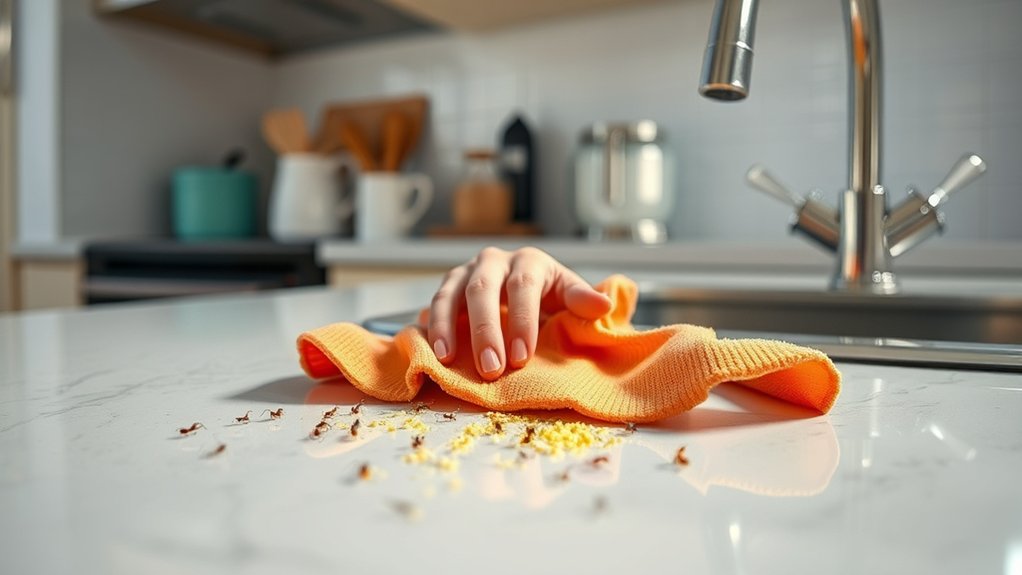
Since ants are drawn to even the smallest food particles, you need to clean your kitchen quickly and thoroughly to remove any traces that attract them. Understanding ant colony behavior helps you target their food sources effectively.
Different ant species identification is vital because some ants prefer sugary foods, while others go for proteins or grease.
Focus on these key cleaning spots to disrupt their trails and prevent return visits:
| Kitchen Area | Cleaning Tip |
|---|---|
| Countertops | Wipe daily with soapy water |
| Floors | Sweep and mop regularly |
| Trash Bins | Empty often, clean spills promptly |
| Pantry Shelves | Store food in airtight containers |
| Sink & Drains | Remove crumbs, fix leaks |
Homemade Ant Baits You Can Make Fast at Home
When ants invade your kitchen, you can quickly create effective homemade baits using common household ingredients. Understanding ant behavior helps you craft baits that attract them away from nesting sites. Since ants forage for food to bring back to their colony, your bait needs to be both appealing and easy to transport.
Try these fast homemade ant baits:
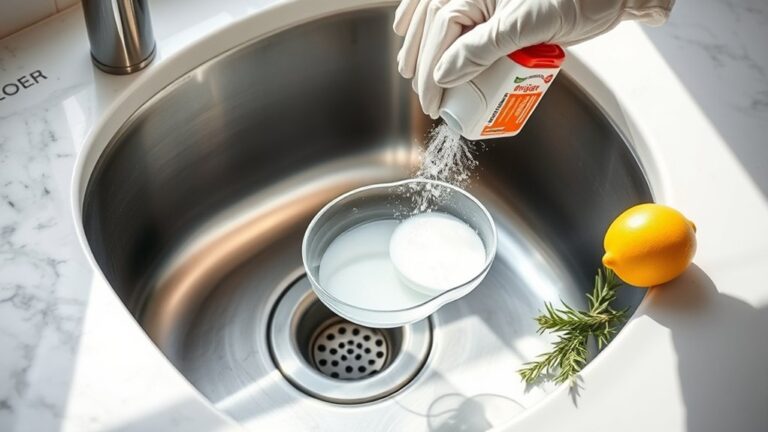
Mix sugar and borax with water to lure and poison ants. Combine peanut butter and baking soda for a protein-rich bait. Use honey diluted with a little water for a sweet trap. Blend powdered sugar with borax for a dry bait option. Create a syrup of sugar and water with a few drops of dish soap.
Place these baits near ant trails and suspected nesting sites. This method exploits ant behavior, helping you control the infestation effectively without harsh chemicals.
Repel Kitchen Ants With Vinegar and Natural Sprays
After setting effective homemade baits, you can also repel kitchen ants using natural sprays like vinegar. Ant behavior relies heavily on scent trails to communicate and navigate, so disrupting these trails with vinegar confuses them and keeps them away.
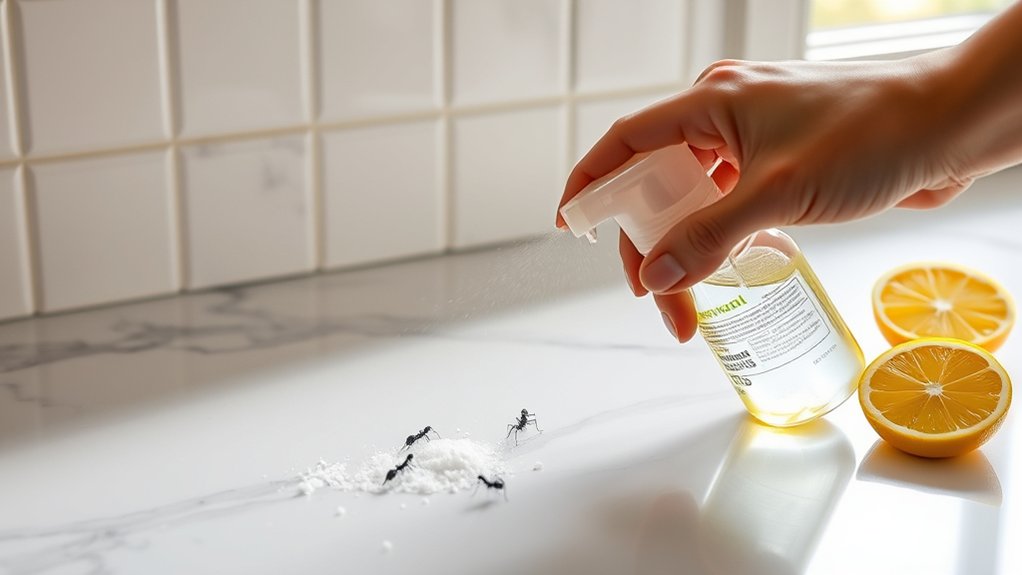
Simply mix equal parts water and white vinegar in a spray bottle and apply it to areas where ants enter or travel. You can also try natural repellents like lemon juice, peppermint oil, or tea tree oil. These substances interfere with the ants’ chemical signals, making your kitchen less inviting.
Spray these natural solutions on countertops, baseboards, and around windows to create a barrier ants avoid. Using natural repellents is safe, eco-friendly, and won’t expose your family or pets to harsh chemicals. Keep reapplying after cleaning or spills to maintain effectiveness.
How to Seal Entry Points to Stop Kitchen Ants
First, you’ll want to look for where ants are sneaking into your kitchen—think cracks around windows, doors, or pipes. Once you spot these entry points, grab some caulk or weather stripping and seal them up tightly. Doing this will stop ants from coming inside and help keep your kitchen ant-free.
Identifying Common Entry Points
Although ants can squeeze through surprisingly small gaps, spotting their common entry points is key to keeping them out of your kitchen. Ant pheromone trails often lead right back to these entryways, marking paths for the colony to follow, sometimes signaling a colony relocation. To effectively seal off their access, you need to identify where they’re getting in.
Look for entry points like:
- Cracks around windows and door frames
- Gaps near plumbing pipes under sinks
- Spaces around electrical outlets
- Openings in the foundation or walls
- Small holes in screens or vents
Once you identify these spots, you can block them to stop ants before they even enter, cutting off their trails and preventing colony relocation inside your kitchen.
Effective Sealing Materials
When you spot the entry points ants use, choosing the right sealing materials becomes essential to block their access effectively. Start by applying sealing barriers like silicone caulk or weatherstripping around windows, doors, and cracks. These materials offer excellent adhesion and flexibility, making them ideal for irregular surfaces.
For larger gaps, expanding foam works well, providing a durable, long-lasting seal that ants can’t easily penetrate. Don’t forget to check the material durability. Select options that withstand moisture and temperature changes common in kitchens.
Avoid temporary fixes like tape or paper, which ants can bypass quickly. By using high-quality sealing barriers with strong material durability, you create a reliable defense that keeps ants out and prevents future infestations efficiently.
When and How to Use Commercial Ant Sprays Safely
When you choose a commercial ant spray, go for one that’s labeled safe for indoor use and specifically effective against kitchen ants. It really makes a difference to pick the right product.
Always make sure to follow the instructions carefully. This helps you avoid any unwanted exposure to harmful chemicals.
When you apply the spray, target only the areas where you see ant trails or nests. And remember to keep it away from your food and utensils to stay safe.
Choosing The Right Spray
Since kitchen ants can be persistent, choosing the right commercial spray is essential for effective control. Start by focusing on ant species identification; knowing the type of ant helps you pick a spray formulated for that species.
Next, do a spray effectiveness comparison by reading reviews and product labels to find one that targets your specific ants. Consider these factors:
- Active ingredients suited for your ant species
- Residual effect duration
- Safety for indoor use around food
- Ease of application and coverage
- Quick knockdown versus long-term control
Selecting a spray that balances these aspects means you’ll tackle the infestation efficiently. Remember, the right spray combined with correct usage will save you time and prevent repeated treatments.
Safe Application Tips
Choosing the right spray sets you up for success, but applying it safely guarantees you protect your kitchen and family. First, identify the ant species you’re dealing with since different types respond differently to treatments. Understanding pest behavior helps you target their trails and nesting sites effectively.
Always read the label instructions carefully to avoid overuse or exposure to harmful chemicals. Ventilate your kitchen well during and after applying the spray, and keep children and pets away until it dries completely.
Apply sprays only to cracks, crevices, and entry points, not directly on food preparation surfaces. By respecting these safety tips, you assure effective control without risking your household’s health. Safe application is key to a pest-free kitchen and your peace of mind.
Tips to Prevent Future Kitchen Ant Infestations
To keep your kitchen ant-free, you need to tackle the problem before it starts. Understanding the ant species around your home and their nesting behavior helps you prevent infestations effectively. Different ants prefer different nesting spots, so knowing this lets you disrupt their habits early on.
Prevent kitchen ants by learning their species and nesting habits to disrupt infestations before they begin.
Here are some practical tips to stop ants from coming back:
Keep food sealed in airtight containers to cut off their food source. Clean up crumbs and spills immediately to avoid attracting ants. Seal cracks and entry points where ants might enter your kitchen.
Remove standing water and fix leaks, since ants need water to survive. Store trash in sealed bins and take it out regularly to prevent nesting near your home.
How to Monitor and Maintain an Ant-Free Kitchen
To keep ants from coming back, you’ll want to check your kitchen regularly for any signs of activity. It’s a good idea to stay on top of cleaning—wiping up crumbs and spills right away because that’s what attracts them. Also, don’t forget to seal up any little cracks or entry points where ants might sneak in. That way, you’re cutting off their access before they even get inside.
Regular Kitchen Inspections
Although ants can be persistent, you can stay ahead by conducting regular kitchen inspections. Checking your kitchen routinely helps you spot ant trails early and prevent infestations. Pay close attention to areas where cooking tips suggest storing food and avoid clutter that attracts ants.
Here’s what you should focus on during inspections:
- Examine behind and under appliances for hidden crumbs or spills.
- Inspect pantry shelves and food containers for signs of ants.
- Look closely around kitchen decor, like plants or decorative bowls.
- Check window sills and door frames for entry points.
- Monitor sinks and drains for moisture that ants love.
Effective Cleaning Habits
Since ants are attracted to food residue and spills, maintaining effective cleaning habits is essential for keeping your kitchen ant-free. Understanding ant behavior helps you realize they follow scent trails to food sources, so wiping down countertops and sweeping floors daily disrupts these trails.
You should clean up crumbs, spills, and sticky spots promptly to deny ants any incentive to invade. Empty trash regularly and store food in sealed containers to improve kitchen hygiene.
Don’t forget to clean under appliances and around sinks, where moisture and crumbs often accumulate. By staying consistent with these habits, you monitor your kitchen environment closely, preventing ant infestations before they start.
Maintaining this routine is your best defense against persistent ants invading your space.
Sealing Entry Points
One of the most important steps you can take to keep ants out is sealing their entry points. Start by carefully inspecting your kitchen for cracks and gaps where ants enter. Use ant trail identification to locate these access points, noting different paths for various ant species. Ant species differentiation helps you understand which entryways they prefer. Once identified, seal them promptly to block access.
Here’s how to maintain an ant-free kitchen:
Seal cracks around windows, doors, and pipes with caulk
Repair damaged screens and weather stripping
Fill gaps along baseboards and cabinets
Use weatherproof sealant on external walls
Regularly check for new ant trails and reseal if needed
When Kitchen Ants Require Professional Help
If you’ve tried common DIY methods and ants keep returning, it’s time to contemplate professional help. Professionals can perform accurate ant species identification, which is vital because different species require specific treatments. They also understand ant behavior patterns, helping them target nests you might miss.
If the infestation spreads beyond your kitchen or you notice structural damage, don’t hesitate to call an expert. Persistent ants might indicate a large colony or multiple entry points you can’t easily seal. Professionals use specialized tools and products not available to the public, ensuring a more thorough eradication.
Plus, they can provide preventative advice tailored to your home’s unique situation. Hiring a pro saves you time and frustration, preventing the problem from worsening. When DIY isn’t enough, trusting a trained pest control specialist is the fastest way to reclaim your kitchen from ants once and for all.
Frequently Asked Questions
Can Kitchen Ants Harm My Health or Contaminate Food?
Yes, kitchen ants can harm your health and contaminate food because they often carry bacteria picked up from unsanitary places. To protect yourself, focus on ant prevention by keeping your kitchen clean and using proper food storage techniques.
Seal food in airtight containers and clean up crumbs or spills quickly to stop ants from invading. You’ll reduce the risk of contamination and keep your kitchen safer for you and your family.
Do Different Ant Species Require Different Treatment Methods?
Yes, different ant species do require different treatment methods. You’ll want to identify the ant species first because some respond better to bait traps, while others need sprays or natural remedies.
For example, carpenter ants might need more aggressive treatment since they damage wood. Sugar ants often go for sweet baits. Tailoring your approach based on the ant species makes your efforts more effective and helps eliminate them faster.
How Long Does It Typically Take to Eliminate a Kitchen Ant Infestation?
Back in the days of knights and castles, conquering an ant colony required patience. Typically, you’ll see progress within a few days, but complete pest eradication can take up to two weeks.
Ant colony behavior means you must target the queen and trails consistently. Since ants communicate and adapt quickly, your pest eradication timeline depends on persistence.
Don’t expect overnight results; keep treating and cleaning to break their cycle effectively.
Are There Any Pet-Safe Ant Control Options for Kitchens?
Yes, you can use pet safe remedies to tackle kitchen ants without harming your animal companions. Natural deterrents like vinegar, lemon juice, and cinnamon work well to repel ants.
You can also sprinkle diatomaceous earth around entry points. It’s safe for pets but deadly to ants. Just make sure to keep bait stations out of your pet’s reach, and you’ll manage ants effectively while keeping your kitchen safe for everyone.
Can Outdoor Ant Nests Affect Indoor Kitchen Ant Problems?
Yes, outdoor nests can definitely affect your indoor kitchen ant problems. Ants from these nests often venture inside looking for food and water. If you don’t address outdoor nests, your indoor issue will persist or worsen.
When treating these nests, consider the environmental impact. Opt for pet-safe, eco-friendly solutions to avoid harming beneficial insects or plants. Managing outdoor nests helps reduce indoor ant invasions effectively and responsibly.
Conclusion
So, you’ve battled those tiny invaders with vinegar sprays, homemade baits, and a spotless kitchen, only to realize ants are surprisingly persistent houseguests. Funny how something so small can cause such a big fuss, right?
But don’t worry, with these quick tricks and a bit of vigilance, you’ll show those ants the door for good. Just remember, in the war against kitchen ants, you’re the one in command, not them!
With the right approach, getting rid of kitchen ants fast is totally doable. Stay consistent, and those pesky ants won’t stand a chance.